My Shopping Cart
| Bulk Discounts Prices | |
| Quantity | Price |
| 1 | $142.50 |
Shipping will be calculated at checkout or added separately.
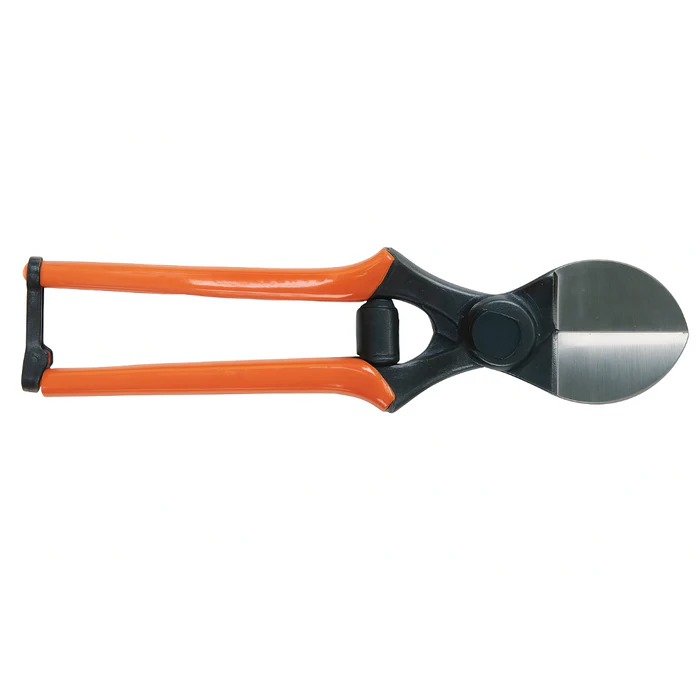
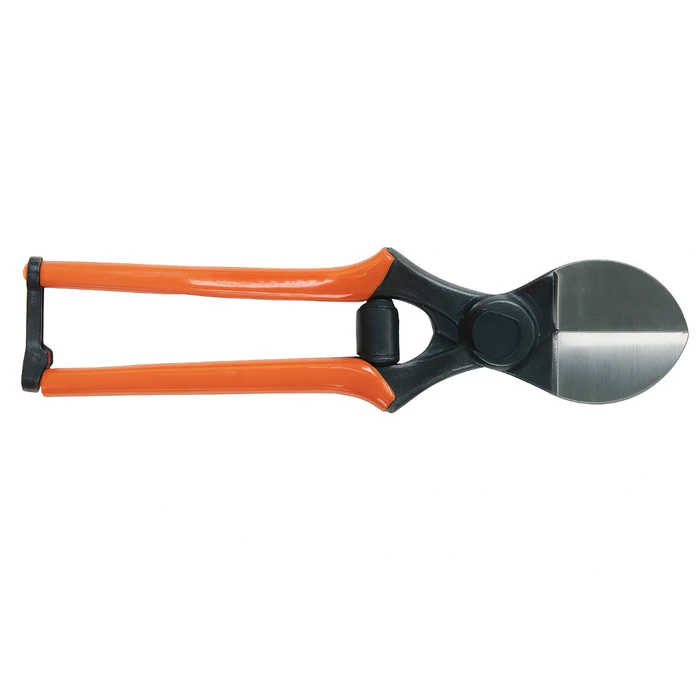
Experience the peak of precision Italian engineering with the Lisam Double Blade Secateur (Model GT180). This professional-grade pruning tool features an innovative dual-blade configuration designed to optimise wood-cutting mechanics. Unlike traditional bypass or anvil secateurs, the two opposing, flush-faced blades meet perfectly right at the centre of the branch. This symmetrical cutting action drastically reduces the physical effort required while creating an impeccably smooth slice.
Constructed for industrial agricultural use, this secateur features a heavy-duty drop-forged steel body that ensures maximum structural strength and long-term tool reliability. The unique flush-faced blade design minimises cell crushing, which facilitates rapid tissue healing and prevents pathogens from infiltrating fresh cuts. This flat-profile design makes it highly specialised for flush-to-stem work, offering unmatched accuracy for training vines and delicate plant maintenance.
Best For: Professional horticulturists, commercial vineyard and orchard workers, and precision gardeners who need an elite double-blade pruner for effortless cuts, close disbudding, and training fruit trees or ornamental stock.
Simultaneous Dual-Cutting Action: Two opposing razor-sharp blades slice into the wood concurrently, equalising penetration forces to slice through branches with half the crushed tissue of a single-blade shear.
Promotes Rapid Plant Healing: The centre-meeting blade alignment prevents crushing and bark tearing, creating clean margins that encourage faster wood recovery and minimise disease risks.
Heavy-Duty Drop-Forged Build: Forged from high-grade carbon steel to provide immense tool strength, resistance to handle flexing under load, and exceptional blade edge retention.
Flush-Faced Training Blades: Designed with flat, flush-aligned exterior blade faces, allowing the operator to cut perfectly level against the parent trunk—ideal for precision disbudding and canopy training.
Authentic Italian Workmanship: Designed, manufactured, and hand-finished in Italy to satisfy the strict performance standards of commercial European viticulture.
Product Package INCLUDES:
| Specification | Product Detail |
|---|---|
| Brand | LISAM Italy |
| Model Number | GT180 |
| Type | Double Blade Secateur / Centre-Action Precision Pruner |
| Cutting Action Profile | Dual-Blade Symmetrical Cutting (Centre-Meeting) |
| Blade Material | Premium Forged High-Carbon Steel |
| Blade Face Design | Two Flush-Faced Blades (Ideal for Disbudding) |
| Handle & Body Material | Heavy-Duty Drop-Forged Steel |
| Total Tool Length | Approximately 200 mm |
| Total Tool Weight | 0.3 kg |
| Tool Finish | Polished Forged Steel Blades with Comfort Coated Handles |
| Country of Origin | Made in Italy |
Bypass or Parrot-beak secateurs: as the name suggests the blade bypasses the counter blade to make a cut. (i.e. the action is similar to scissors). ?One blade is convex and the other concave. The main reason you would use the bypass to cut smaller branches and dense foliage as the blades are thinner and allow easier manoeuvrability e.g. with vines or roses.
Anvil secateurs: Have an upper blade which pushes down to an anvil counter blade (i.e. they close to a flat surface). The blade is bigger than the Bypass and the action tends to slice rather than squash the branch. Anvil secateurs will give a clean cut. Anvil is used for softer wooded trees and plants like Cherries, Pear and Olives.
Double-Blade secateurs: Have two identical blades if you compare to the anvil or bypass type? These secateurs make a cut by slicing the branch from two sides of the stem. Since you are cutting equally from both sides you tend to finish the cut in the middle of the stem where a lip is present. The reason for the lip at the end of the stem is to create angles each side and ensure that no water can settle on the cut to help the wound heal without the added risk of infection.
When you use secateurs on a regular basis you need to take into account the clunk/jarring factor to reduce the impact for RSI (Repetitive Strain Injury) purposes of each of these models:
The clunk or jar factor is what you feel at the end of a cut. A bypass secateurs gives the biggest clunk and you find these types of secateurs are not the choice of Arborists. Whereas Double-blade type secateurs have some jarring and the Anvil has no jarring at all and is usually the choice for Arborists.
What else to look for when choosing the right secateurs?
Everyone has a different sized-hands and secateurs are made in a facade of different sizes and shapes. Feel the secateurs in your hands open and close them like you are making a cut and feel if your hand can extend the reach of the handles when open. ?Rolling handles may be an option or not. The rolling handle model are usually more expensive and may not be better for the fit of your hand.
Everyone has a different sized-hands and secateurs are made in a facade of different sizes and shapes. ?Feel the secateurs in your hands open and close them like you are making a cut and feel if your hand can extend the reach of the handles when open. ?Rolling handles may be an option or not. The rolling handle model are usually more expensive and may not be better for the fit of your hand.
Here are some other facts about secateurs:
The next time you look for secateurs, take into consideration the application and frequency of use. ?Choose what is comfortable and practical for your application!
More about:
A successful Grove Management Plan must cover these key areas:
"A grove without an effective irrigation system is unlikely to deliver consistent yields year after year. Many growers still underestimate the water needs of olive trees, and few actually monitor soil moisture levels. This is why so many groves have never achieved a commercial crop." Marcelo Berlanda Specialist Olive Consultant
Water stress negatively affects flowering, fruit set, oil accumulation (oil production), fruit size (table olives), fruit quality, and overall tree health. However, many growers lack a proper system to monitor soil moisture or manage irrigation effectively.
Marcelo recommends:
"Growers should inspect soil moisture weekly during spring and summer, and every two weeks in autumn and winter. Use a shovel to dig at least 400mm under the tree canopy to check moisture. If the soil is hard to dig, it’s too dry – even if the canopy shows no visible signs of stress."
Advanced soil moisture monitoring tools can also provide reliable data on a digital display or computer dashboard.
For optimal grove health, growers must consistently check soil moisture and prevent water stress.
As discussed previously, taking leaf samples is essential to assess your trees’ nutritional status. This information guides the creation of a fertiliser program, a critical component for boosting or maintaining yields.
Typically, no fertiliser is needed in winter, unless you’re addressing soil amendments. However, some groves have severe nutrient deficiencies requiring fertiliser even in winter. Where proper irrigation systems aren’t in place, growers must broadcast fertiliser before rain to allow rainfall to incorporate nutrients into the soil profile, an inefficient use of resources but often the only option.
When applying fertiliser in these conditions, target the area beneath the canopy and, if possible, cultivate the soil to improve incorporation and reduce product loss.
Olives need four essential nutrients: Nitrogen, Phosphorus, Potassium, and Calcium. Check product labels carefully. As a general guideline, aim for:
Avoid pruning during the coldest part of winter and when it’s wet or foggy to reduce the risk of bacterial and fungal disease spread.
The main goals of pruning are to remove dead wood, reduce canopy size, restore tree balance, encourage healthy new growth, and increase fruit set in spring.
Tip: After pruning, apply a copper-based spray to protect wounds from infection by fungi and bacteria.
Pest & disease management is crucial for sustaining yield and tree health. Winter’s colder temperatures reduce insect activity, offering a prime time to tackle pest issues.
Set up a comprehensive Pest and Disease Monitoring Program. During winter, check-marked trees (previously affected by pests or diseases) every two weeks; in spring, check weekly. Look under leaves and on new growth for signs like crawlers, yellow spots, black sooty mould, or anything unusual.
Proactive, weekly management is essential for a successful grove.
If you need further assistance, please contact us.
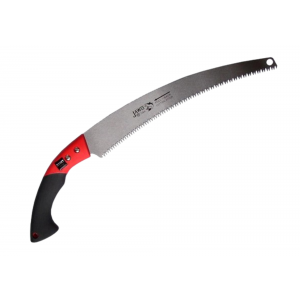
The teeth on Silky Saws are like super sharp little chisels that are dragged across the surface of a branch with each chisel taking a bite out of the wood it is cutting. Using Japanese ingenuity, saws cut on the pull stroke and to stop the saws binding they developed a process that is called among other things, taper or hollow grinding. What they did was get a big round grinding stone and ground their saw blades so the thickest part of the blade was at the teeth and it tapered into the middle of the blade and then thickened slightly to the top of the blade. This meant that the blade was thickest at the teeth, less thick at the top and thinnest in the middle. The grinding technique produced a saw that allowed a thinner saw to cut through a branch quicker, without binding.
When you cut green wood with a Silky Saw or pruning saws and Secateurs, you are going to get sap on the blade area. The more you cut, the more sap you are going to get a build-up of and it's most noticeable in the middle (from top to bottom) of the saw blade. Remember how the middle of the blade is the thinnest part of the blade. It is easier for the sap to stick there as it isn?t being rubbed against as much. So that night, you put the saw back in the scabbard and pick it up again the next day and do some more pruning and shaping of trees and bushes. Overnight the sap dries and hardens and is easier for the sap to stick to the blade again the next day... so the process continues. Soon you think your saws are getting blunt because it is much harder than when you first purchased to cut through a branch. With all the sap build-up, you are trying to pull a blade through a cut that is now thinner than the blade with its sap build-up.
The solution is 2 minutes of TLC for your saw blades at the end of the day with the Saw Cleaner solution. This anti-bacterial organic oil spray based on Tea Tree Oil is the solution for removing sap from Saw blades and sticky substances. We use it, we swear by it and we have used it to make sap covered Saws and Secateurs look and cut like new again.? ?View before and after images above.
Sap build up is often mistaken for blade dullness, but it is actually the main cause of reduced cutting performance in pruning saws and secateurs. Because the blade is thinnest in the middle, sap easily accumulates, hardens, and increases friction, making cutting more difficult while also increasing the risk of rust and corrosion.
Using the Saw Cleaner – Tea Tree Environmental Solution 100 mL Spray helps remove sap and resin, reduce bacteria and mould, and protect blades from rust. Regular cleaning with this natural tea tree–based formula supports tool hygiene, maintains sharp cutting performance, and extends the life of pruning equipment.
INFORMATION SHEET - THE OLIVE CENTRE
Girdling is a readily used practice in citrus and stone fruit orchards where it is typically used as a technique to increase fruit size.
Biennial bearing can be a serious problem in olive trees which can result in heavy crop losses to producers. Under non-irrigated conditions, yields can fall substantially or drop to zero making the production year uneconomical to harvest. Girdling may be a practice if done under the right conditions and timing could increase the production of an olive tree.
What does Girdling or cincturing involve?
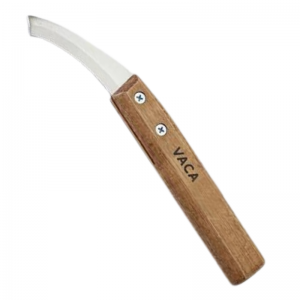
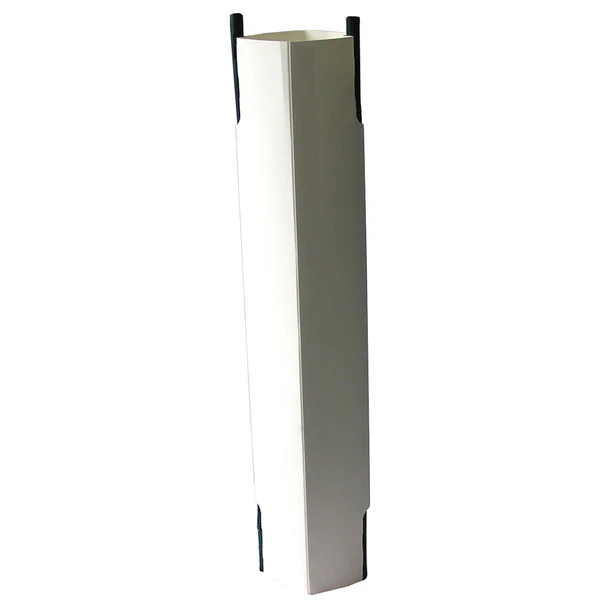
Girdling also known as cincturing which is a horticultural practice involving eliminating up to a 1.5cm strip of bark around the trunk to stop the translocation of photosynthates to the root system. A girdling knife or cincturing tool is used to cut the bark of the olive tree.
Researchers in Israel* found that 15mm scaffolds covered with CaCO3 mineral oil and wax or PVC cover were most effective in facilitating wound healing. PVC treatment was more rapid in wound healing. During the first prevailing year after girdling found a 40% in increase yield. Another study from Spain~ that looked into optimal widths and timing found that removing a 15mm band of bark 30 days before full bloom increased the fruit weight from 3.9g in the ungirdled trial to 4.7g.
Wounds with untreated scaffolds in the Israel study saw a drop in yield.
The width of the scaffold and healing duration as well as the time of year in which the girdling was carried out all had bearing on an increase or decrease in production. The Israel study found that girdling olive trees increased the yield in the season following treatment with later girdling causing an increase in fruit set only.
Several scaffolds were used in the studies from 30mm to 5mm where the 5mm girdles were reported to heal too quickly and had no effect on increased production.
It was also noted that trees that were about to produce a high yield did not respond to girdling and in some cases actually reduced the yield. Long-term studies need to be conducted to ascertain if alternate scaffold girdling should be considered.
The studies were interesting because there is potential that girdling practiced correctly in an olive grove may have a positive outcome for increased yield output however, the width of the girdle, healing timing, and time of year need to be taken into account when considering employing this technique in a commercial grove and can also have a positive effect on production in the alternate bearing years.
* STUDY
*S. Lavee, A Hadkal, Y Ben Tal
Department ofOiei and Viticulture, ARO, Volcani Center, Bet Dagan, Israel
ABSTRACT
The effect of scaffold girdling on the productivity of olive trees was studied on four cultivars grown under intensive irrigated conditions. Girdling increased the yield when done in midwinter (December-February) and to a lesser extent in April. A girdling width of 10-15 mm covered with PVC tape was most effective and promoted rapid healing. Uncovered girdling wounds healed very slowly, with a resultant decline of the scaffold. Girdling increased both inflorescence formation and fruit set. With cv Manzanillo young scaffolds were more responsive than old ones. The responses of different scaffolds on the same tree to girdling were independent of each other. The degree of response of a scaffold to girdling depended on the potential yield of the scaffold in the year of treatment. No direct prevailing effect of the girdling on of the following year's yield was noted.
Read the full study: Girdling olive trees, a partial solution to biennial bearing. I. Methods, timing and direct tree response: Journal of Horticultural Science: Vol 58, No 2
~ STUDY
López-Rivares, E. P. ; Suárez-García, M. P.
Escuela Universitaria de Ingeniería Técnica Agrícola, Seville, Spain.
ABSTRACT
Six-year-old multi-trunk olive trees (cv. Manzanilla) growing under controlled irrigation in an 'off' year were girdled at monthly intervals from 15 Dec. to 15 Apr., removing 10 mm-wide rings of bark. In a separate trial, trees of the same cultivar growing under similar conditions were girdled by removing a 5-, 10- or 15-mm-wide ring of bark in Apr., i.e. a month before full bloom. Ungirdled trees served as controls. Girdling date had no significant effect on either flowering or fruit set. Removing a 15-mm-band of bark at 30 days before full bloom increased individual fruit weight from 3.9 g in the ungirdled control to 4.7 g.
Read the full study: Olive tree girdling: optimum timing and widths.
SMART PRUNING FOR STRONGER, HIGHER-YIELD OLIVE TREES
By Marcelo Berlanda, Agronomist & Consultant for The Olive Centre
“Olive trees must put out fresh growth each year to produce fruit.”
Training shapes the tree to support efficient harvesting and encourage early production
When trees reach the canopy size best suited to their environment, yields may begin to drop. This often happens because the inner canopy receives limited sunlight, leading to leaf loss and a reduced Leaf-to-Wood Ratio. If a tree grows beyond its ideal size, it creates challenges for mechanical harvesters. Excess height and width, along with thick branches, can strain or damage harvesting equipment, reduce fruit removal efficiency, and slow the harvest. Because olive trees need to produce new shoots annually to maintain fruiting, consistent growth is essential—and pruning becomes an important management practice. Pruning improves fruit size, oil content, light penetration, and the Leaf-to-Wood Ratio. It also stimulates fresh growth and lowers water and fertiliser demand.
1- TREE TRAINING
Purpose: Establish early productivity with stronger yields, extend the productive lifespan of the tree, enhance fruit quality, and prepare trees for the harvesting system used in the grove.
Timing: Training occurs within the first three years of the tree’s development.
In the first year, pruning is minimal (assuming nursery trees arrive with a good structure). Remove lower or overly vigorous branches that compete with the central leader. The goal is to maintain an upright main trunk with outward-growing horizontal branches. Water shoots should be removed so they do not compete for nutrients and moisture.
During the second and third years, gradually remove lower branches below approximately 600–1000 mm.
A balance is essential. Removing too much canopy reduces the tree’s photosynthetic area, slowing its progress until new growth resumes.
Light pruning involves removing only small sections of foliage (such as a few short shoots), which keeps the tree stable. This can be done from August through late May.
Heavy pruning removes larger amounts of foliage, prompting a stronger regrowth response but also increasing frost risk. Heavy cuts should generally be delayed until late September unless conditions are warm enough to begin earlier.
Tree training may also include tying and skirting as part of shaping and preparation.
2- PRODUCTION
Young trees contain many non-productive branches because they are still actively growing. Once these branches mature and begin producing fruit, they eventually become exhausted and stop fruiting. At that point, they need to be removed to make room for new productive growth and renewal of the canopy.
LoIf the bloom is light, pruning should focus mainly on non-productive wood to preserve as much fruiting potential as possible. In years with heavy bloom, pruning can be more assertive without significantly reducing the crop.
Timing: From bud break through early December.
3- AFTER HARVEST (CLEANING)
The goal at this stage is to remove large damaged branches left behind after mechanical harvest. This step can be postponed by applying copper after harvest and waiting until spring to remove the affected wood.
Read More: ● Marcelo Berlanda ● Mechanical Pruning ● Mechanical Harvesting
Marcelo Berlanda’s “Pruning for Production” guide highlighted why olive pruning is vital to sustain yields. This article builds on that foundation, focusing on how to encourage the growth of productive fruiting wood in Australian olive groves.
Olive trees bear fruit on one-year-old shoots – the growth produced in the previous season. Ensuring a steady supply of these young, fruitful shoots each year is critical for consistent yields. Without renewal, canopies fill with aging wood that carries fewer leaves and buds, leading to lower productivity. Pruning is therefore geared toward a few fundamental objectives :
Understanding how and when olive fruiting buds form helps refine pruning practices. Unlike deciduous fruit trees, olives do not have a true winter dormancy – their buds remain in a state of quiescence and will grow when conditions permit. Flower buds initiate relatively late: studies have shown that olive buds begin differentiating into inflorescences about 2 months before bloom (around late winter/early spring in the local climate). This means the buds on this year’s spring flowering shoots were formed in the late summer or autumn of last year, on the previous year’s wood. Crucially, those buds needed sufficient resources and light while they were forming.
Several physiological factors influence fruitful bud development:
Takeaway: Productive fruiting wood arises from a balance – neither too vegetative nor too weak – and it needs sunlight. Pruning is the tool to create that balance by removing what’s unproductive and making space for fruitful shoots under the right environmental conditions.
Having set the physiological context, we now turn to pruning methods that encourage renewal of fruiting wood. The approach will vary with the age of the tree and the orchard system (traditional vs. high-density), but several general principles apply:
By applying these pruning techniques, growers encourage a continuous supply of young fruiting wood while avoiding the pitfalls of over-pruning. The result is a tree that renews itself gradually: always plenty of 1-year shoots ready for the next crop, and no big shocks to the tree’s system.
Olive orchards in Australia range from traditional low-density plantings to modern high-density (HD) and super-high-density (SHD) groves. The principles of fruiting wood renewal apply to all, but the methods and intensity of pruning are adjusted to each system’s needs :
In summary, the pruning strategy must fit the system: gentle but regular for intensive hedges, somewhat heavier but less frequent for large traditional trees, and always aimed at keeping enough young wood in the pipeline. Regardless of system, the fundamentals remain: capture sunlight, encourage new shoots, and remove what’s unproductive.
Pruning not only influences yields – it also plays a significant role in Integrated Pest and Disease Management (IPDM). A well-pruned olive canopy is generally healthier and easier to protect. Here’s how encouraging productive wood ties in with pest and disease considerations:
In summary, a sound pruning regimen is a cornerstone of IPM in olives. It reduces pest and disease pressure naturally by altering the micro-environment and improving the efficacy of other controls. Always balance the need for opening the canopy with the tree’s productive capacity – a healthy medium density (not too sparse) is the target, so that you don’t invite sunscald or stress. With those caveats, pruning is one of the most cost-effective pest management tools a grower has.
Beyond pruning itself, several environmental and cultural factors influence how well an olive tree can produce new, fruitful wood. Understanding these helps growers create conditions that favour the continual renewal of fruiting shoots:
In summary, productive fruiting wood is not just about cutting branches – it’s the outcome of the whole orchard management system. Pruning is the mechanical stimulus, but water, nutrients, and overall tree stress levels determine how the tree responds. The best results come when pruning is synced with these factors: prune to shape the growth, irrigate and fertilise to support it (but not overdo it), and protect the tree from stresses that could derail the process. By doing so, growers in Australia can maintain olive canopies that are youthful, vigorous, and laden with fruitful shoots year after year.
Encouraging productive fruiting wood in olives is both an art and a science. The art lies in “reading” the tree – knowing which branches to remove and which to spare – while the science lies in understanding olive physiology and applying evidence-based practices. In this follow-up to Marcelo Berlanda’s pruning guide, we have underlined the key strategies:
Sources: This article integrates findings from peer-reviewed studies and reputable industry publications, including research by Gómez-del-Campo et al. on light and yield distribution, Tombesi and Connor on pruning and olive physiology, Rousseaux et al. on bud dormancy and flowering, and Australian olive industry resources (NSW DPI, AOA IPDM manual) on best practices. These sources reinforce the recommendations above and ensure advice is aligned with the latest understanding of olive tree management.