My Account
Sign-in / Join

Sign-in

Hi My Account

Dashboard

Logout

Cart

My Shopping Cart

Subtotal
${{total.toFixed(2)}}
QUOTE

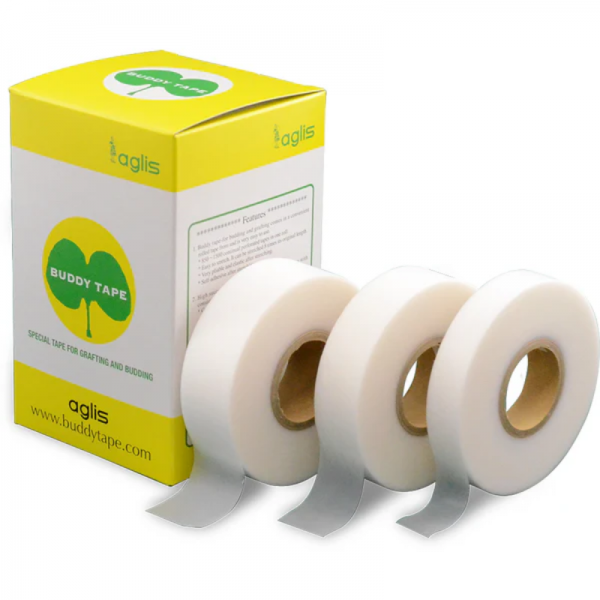
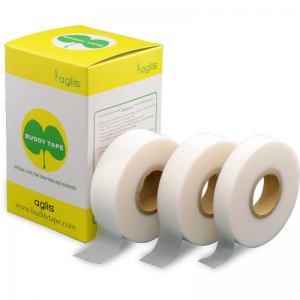
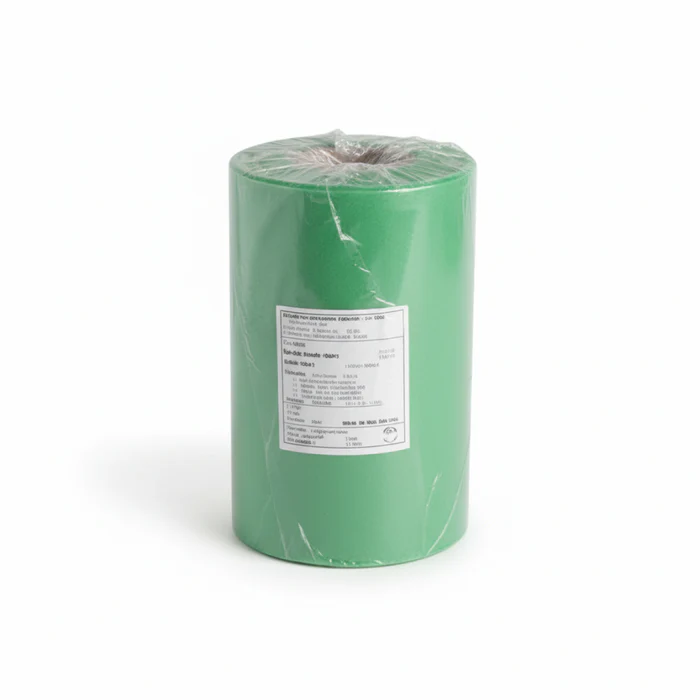
Buddy Tape rolls non-perforated

Delivery is calculated separately
Bulk Discounts Prices
Quantity Price
1 $92.46
Quantity

CAGT842
  • Description
  • Features
  • Enquiry
  • Specifications
  • Knowledge

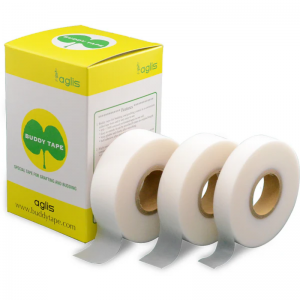
Buddy Tape 25mm x 60m – Non-Perforated (Made in Japan)

Delivery is calculated separately based on freight and local handling.

Achieve professional-grade propagation with Buddy Tape, the premier horticultural film for budding and grafting. This 25mm x 60m Non-Perforated roll offers maximum flexibility for growers who prefer to customise the length of each strip, making it ideal for unique grafting techniques or varying branch diameters that require specific coverage.

Superior Bioactive Engineering

Sourced from Japan, Buddy Tape is unlike any standard PVC or Parafilm. It is infused with a specialised wax that repels water while remaining breathable. With an incredible elasticity of up to 8x, the film creates an airtight, self-adhesive seal when stretched, protecting the delicate graft union from dehydration and pathogens while allowing the plant to "breathe" to prevent rot.

Continuous Protection: Buddy Tape is safe to wrap directly over the bud. Its unique structure allows the growing bud to naturally pierce through the film as it develops, and the tape will eventually biodegrade under sunlight, removing the need for labor-intensive manual removal.

Technical Specifications

Specification Details
Brand Buddy Tape (Aglis)
Roll Type Non-Perforated (Continuous Roll)
Dimensions 25 mm x 60 m
Stretches To Up to 800% of original length
Country of Origin Made in Japan
Properties Biodegradable, Self-Adhesive, Waterproof, Wax-infused
Main Features
  • Unique Bioactive Film: Provides a sterile, protective environment for high-value horticultural grafts.
  • Self-Adhesive Activation: Becomes tacky and bonds to itself only when stretched, ensuring a tight, clean wrap.
  • Wax Barrier: Repels external water while maintaining the precise internal moisture level required for successful callusing.
  • Japanese Precision: Manufactured to the highest global standards for professional nursery and orchard use.
  • :
  • :
  • :
  • :

What is Olive Tree Girdling & Cincturing?

INFORMATION SHEET - THE OLIVE CENTRE

What is Girdling & Cincturing in Olive Trees

Girdling is a readily used practice in citrus and stone fruit orchards where it is typically used as a technique to increase fruit size.

Biennial bearing can be a serious problem in olive trees which can result in heavy crop losses to producers.  Under non-irrigated conditions, yields can fall substantially or drop to zero making the production year uneconomical to harvest.  Girdling may be a practice if done under the right conditions and timing could increase the production of an olive tree.

What does Girdling or cincturing involve?

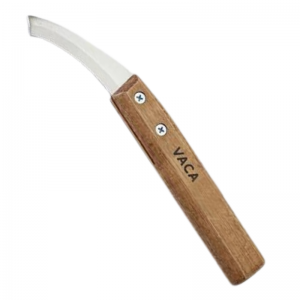
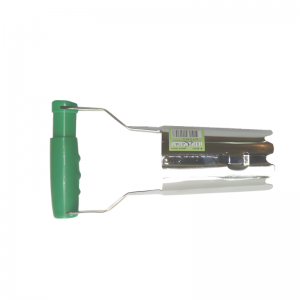
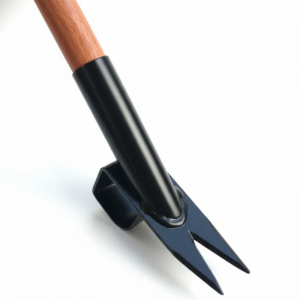
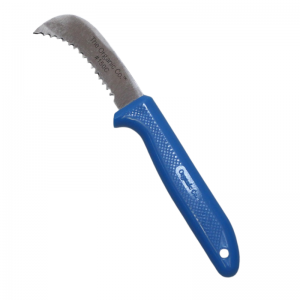
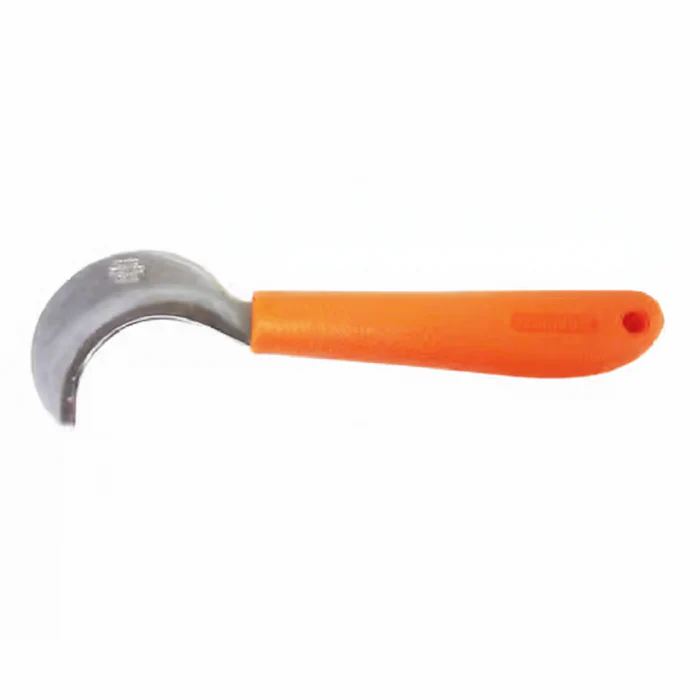
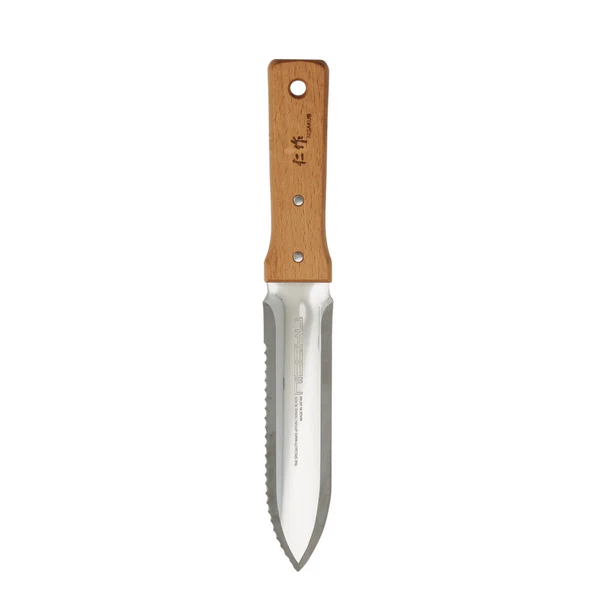
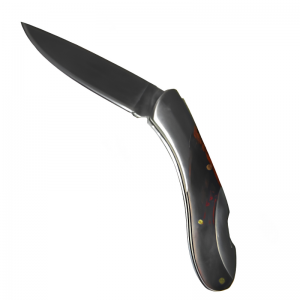
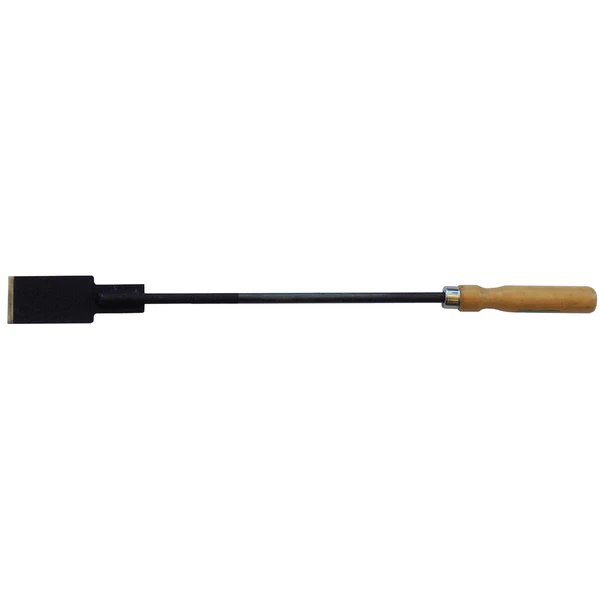
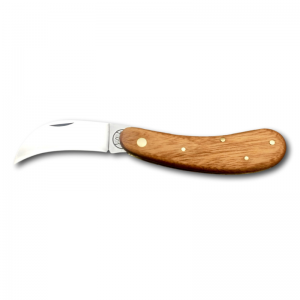
Girdling also known as cincturing which is a horticultural practice involving eliminating up to a 1.5cm strip of bark around the trunk to stop the translocation of photosynthates to the root system.  A girdling knife or cincturing tool is used to cut the bark of the olive tree.


Researchers in Israel*  found that 15mm scaffolds covered with CaCO3 mineral oil and wax or PVC cover were most effective in facilitating wound healing.  PVC treatment was more rapid in wound healing.   During the first prevailing year after girdling found a 40% in increase yield.  Another study from Spain~ that looked into optimal widths and timing found that removing a 15mm band of bark 30 days before full bloom increased the fruit weight from 3.9g in the ungirdled trial to 4.7g.

Wounds with untreated scaffolds in the Israel study saw a drop in yield.

The width of the scaffold and healing duration as well as the time of year in which the girdling was carried out all had bearing on an increase or decrease in production.  The Israel study found that girdling olive trees increased the yield in the season following treatment with later girdling causing an increase in fruit set only.

Several scaffolds were used in the studies from 30mm to 5mm where the 5mm girdles were reported to heal too quickly and had no effect on increased production.

It was also noted that trees that were about to produce a high yield did not respond to girdling and in some cases actually reduced the yield.  Long-term studies need to be conducted to ascertain if alternate scaffold girdling should be considered.

The studies were interesting because there is potential that girdling practiced correctly in an olive grove may have a positive outcome for increased yield output however, the width of the girdle, healing timing, and time of year need to be taken into account when considering employing this technique in a commercial grove and can also have a positive effect on production in the alternate bearing years.


* STUDY

Girdling olive trees, a partial solution to biennial bearing. I. Methods, timing, and direct tree response

*S. Lavee, A Hadkal, Y Ben Tal

Department ofOiei and Viticulture, ARO, Volcani Center, Bet Dagan, Israel

ABSTRACT

The effect of scaffold girdling on the productivity of olive trees was studied on four cultivars grown under intensive irrigated conditions. Girdling increased the yield when done in midwinter (December-February) and to a lesser extent in April. A girdling width of 10-15 mm covered with PVC tape was most effective and promoted rapid healing. Uncovered girdling wounds healed very slowly, with a resultant decline of the scaffold. Girdling increased both inflorescence formation and fruit set. With cv Manzanillo young scaffolds were more responsive than old ones. The responses of different scaffolds on the same tree to girdling were independent of each other. The degree of response of a scaffold to girdling depended on the potential yield of the scaffold in the year of treatment. No direct prevailing effect of the girdling on of the following year's yield was noted.  

Read the full study:  Girdling olive trees, a partial solution to biennial bearing. I. Methods, timing and direct tree response: Journal of Horticultural Science: Vol 58, No 2

~ STUDY
Olive tree girdling: optimum timing and width

López-Rivares, E. P. ;  Suárez-García, M. P.

Escuela Universitaria de Ingeniería Técnica Agrícola, Seville, Spain.

ABSTRACT

Six-year-old multi-trunk olive trees (cv. Manzanilla) growing under controlled irrigation in an 'off' year were girdled at monthly intervals from 15 Dec. to 15 Apr., removing 10 mm-wide rings of bark. In a separate trial, trees of the same cultivar growing under similar conditions were girdled by removing a 5-, 10- or 15-mm-wide ring of bark in Apr., i.e. a month before full bloom. Ungirdled trees served as controls. Girdling date had no significant effect on either flowering or fruit set. Removing a 15-mm-band of bark at 30 days before full bloom increased individual fruit weight from 3.9 g in the ungirdled control to 4.7 g.

Read the full study:  Olive tree girdling: optimum timing and widths.