My Account
Sign-in / Join

Sign-in

Hi My Account

Dashboard

Logout

Cart

My Shopping Cart

Subtotal
${{total.toFixed(2)}}
QUOTE

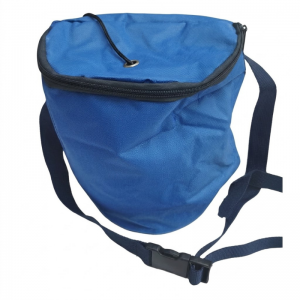
Coppins Large Apple Bucket 1.2 Bushel Capacity

Delivery charges apply
Bulk Discounts Prices
Quantity Price
1 $290.58
Quantity

DAGT987
  • Description
  • Features
  • Enquiry
  • Specifications
  • Knowledge
  • Blog

Coppins Large Apple Bucket – 1.2 Bushel Capacity

Delivery charges apply

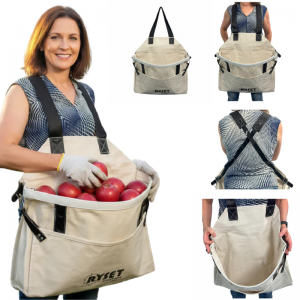
Heavy-duty professional picking bag designed to maximise comfort, fruit protection, and harvesting efficiency for apples and other high-value fruit.

Large 1.2 bushel apple picking bucket with padded lumbar harness and deep exit chute for professional harvesting.

The Coppins Large Apple Bucket is a premium picking bag engineered for professional fruit harvesting where comfort, durability, and fruit protection are critical. Designed with a contoured padded bucket and an advanced lumbar harness system, this bag transfers weight away from the shoulders and onto the lower back, significantly reducing fatigue during long harvesting sessions.

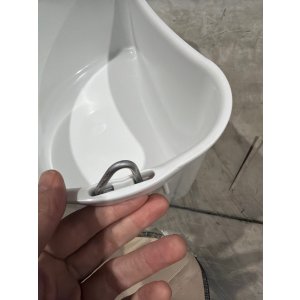
The bucket features a reinforced structure with hardened steel frames at the top and bottom, supported by a thick high-density foam inner shell to protect fruit from bruising. The interior is lined with tough waterproof polyester, ensuring durability and easy cleaning in demanding orchard conditions. A deep, fully lined exit chute secured with a rope and hardened steel hook allows smooth and controlled transfer of fruit into bins or crates.

Lightweight yet robust, the Coppins Large Apple Bucket is suitable for apples and other high-value fruit where gentle handling and operator comfort are essential.

Where this product is used

This picking bucket is used in orchards and commercial fruit farms for harvesting apples, kiwifruit, pears, and similar fruit. It is ideal for professional pickers who require a high-capacity bag with maximum comfort and fruit protection.
 

Coppins Large Apple Bucket – Technical Specifications

Specification Details
Product type Fruit picking bucket
Brand Coppins (Coppo)
Capacity 1.2 bushel
Construction Padded bucket with hardened steel frame
Inner protection High density foam inner shell
Lining material Waterproof polyester
Harness type Contoured padded lumbar harness
Exit system Deep exit chute with rope and hardened steel hook
Net weight 2.0 kg


Why choose this product

The Coppins Large Apple Bucket is designed to protect both the picker and the fruit. Its ergonomic lumbar harness reduces physical strain, while the reinforced padded bucket and deep chute minimise fruit damage. Lightweight construction combined with robust materials makes it ideal for intensive commercial harvesting.

Guidelines

Fit the padded harness securely and adjust to transfer weight onto the lower back. Pick fruit directly into the padded bucket. When full, release the exit chute using the steel hook and guide fruit gently into bins or crates. Inspect straps and chute regularly to maintain optimal performance.

Frequently Asked Questions

The bucket is engineered with a thick high-density foam inner shell and a padded structure that cushions fruit as it is collected. Hardened steel frames maintain shape while the soft interior lining minimises impact, helping protect apples and other delicate fruit from bruising during harvest.
Yes. While designed primarily for apples, the Coppins Large Apple Bucket is also suitable for harvesting pears, kiwifruit, and other similar high-value fruit that require gentle handling and controlled unloading during harvest.
After use, the bucket should be emptied and cleaned to remove dirt and fruit residue. Regular inspection of the harness, stitching, steel frames, and exit chute hardware is recommended to maintain optimal performance and safety throughout the harvesting season.
The deep, fully lined exit chute allows fruit to be released smoothly and in a controlled manner into bins or crates. Secured with a rope and hardened steel hook, it prevents sudden drops and reduces impact damage, which is especially important when handling high-value fruit for fresh market sales.


General main key features

• 1.2 bushel capacity for high-volume harvesting
• Padded contoured bucket for fruit protection
• Lumbar harness reduces shoulder strain
• Hardened steel frame for long-term durability
• Deep exit chute with steel hook for easy transfer

  • :
  • :
  • :
  • :
  • :

4 Factors In Grove Management To Focus On For Next Olive Harvest

The Grove Management Plan: Essential Areas to Focus On

A successful Grove Management Plan must cover these key areas:

Irrigation

"A grove without an effective irrigation system is unlikely to deliver consistent yields year after year. Many growers still underestimate the water needs of olive trees, and few actually monitor soil moisture levels. This is why so many groves have never achieved a commercial crop."  Marcelo Berlanda Specialist Olive Consultant

Water stress negatively affects flowering, fruit set, oil accumulation (oil production), fruit size (table olives), fruit quality, and overall tree health. However, many growers lack a proper system to monitor soil moisture or manage irrigation effectively. 

Marcelo recommends:

"Growers should inspect soil moisture weekly during spring and summer, and every two weeks in autumn and winter. Use a shovel to dig at least 400mm under the tree canopy to check moisture. If the soil is hard to dig, it’s too dry – even if the canopy shows no visible signs of stress." 

Advanced soil moisture monitoring tools can also provide reliable data on a digital display or computer dashboard. 

For optimal grove health, growers must consistently check soil moisture and prevent water stress.

Nutrition

As discussed previously, taking leaf samples is essential to assess your trees’ nutritional status. This information guides the creation of a fertiliser program, a critical component for boosting or maintaining yields.

Typically, no fertiliser is needed in winter, unless you’re addressing soil amendments. However, some groves have severe nutrient deficiencies requiring fertiliser even in winter. Where proper irrigation systems aren’t in place, growers must broadcast fertiliser before rain to allow rainfall to incorporate nutrients into the soil profile, an inefficient use of resources but often the only option.

When applying fertiliser in these conditions, target the area beneath the canopy and, if possible, cultivate the soil to improve incorporation and reduce product loss.

Olives need four essential nutrients: Nitrogen, Phosphorus, Potassium, and Calcium. Check product labels carefully. As a general guideline, aim for:

Pruning

Avoid pruning during the coldest part of winter and when it’s wet or foggy to reduce the risk of bacterial and fungal disease spread.

The main goals of pruning are to remove dead wood, reduce canopy size, restore tree balance, encourage healthy new growth, and increase fruit set in spring.

Tip: After pruning, apply a copper-based spray to protect wounds from infection by fungi and bacteria.

Pest and Disease Control

Pest & disease management is crucial for sustaining yield and tree health. Winter’s colder temperatures reduce insect activity, offering a prime time to tackle pest issues.

Set up a comprehensive Pest and Disease Monitoring Program. During winter, check marked trees (previously affected by pests or diseases) every two weeks; in spring, check weekly. Look under leaves and on new growth for signs like crawlers, yellow spots, black sooty mold, or anything unusual.

Proactive, weekly management is essential for a successful grove.

If you need further assistance, please contact us.


Enhancing Olive Harvesting with Advanced Mechanical Solutions

The study, which focused on the ‘Ortice’ and ‘Ortolana’ olive cultivars, found that this technology achieved a mechanical harvesting yield of approximately 97%, highlighting its potential to significantly enhance productivity and cost-effectiveness in modern olive farming. If you are looking for small-scale olive oil processing machines, olive oil processing machine prices, compact olive oil processing equipment for boutique groves, olive oil ex
Please log in to view the entire article

Mechanical Harvesting and the Role of Branch Inclination in Vibration Transmission - HUB

Trunk shakers apply forced vibration at the tree trunk, which propagates through the canopy and detaches ripe olives. However, the success of this process isn't solely dependent on the machine’s frequency or power. The geometry of the tree itself... particularly the inclination angle of its branches... plays a pivotal role in determining how efficiently that vibration moves through the canopy.....
Please log in to view the entire article

New Research Unlocks Olive Harvesting Efficiency For Better Fruit Removal - HUB

Mechanical trunk shakers have transformed olive harvesting in modern olive groves. A new study: Damping behavior of olive trees under trunk shaking (Ghonimy, Alharbi & Ibrahim, 2025) provides growers with the first detailed breakdown of how vibration energy moves through olive trees and the soil beneath them. The findings reveal how attachment height, trunk diameter, and the tree-soil interaction determine whether ...
Please log in to view the entire article

Factors affecting your olive harvest

For olive oil production, it is very important not to irrigate for the weeks leading up to harvest as the moisture content of the fruit can be too high, the optimum moisture content is 50%. Plump olives are sometimes full of water, not oil. The high water content makes the extraction of oil more difficult as the malaxing process is meant to rub and work the paste, collecting the tiny particles of oil together into globules that can be separated in the later stages. In fruit with very high water (moisture) content this does not happen as well and the paste slops around instead of kneading properly. In order to produce Extra Virgin Olive Oil (EVOO), it is necessary to use freshly-picked olives (i.e. no longer than 48 hours from picking to the processor). Another factor which is very important is the correct time of harvesting which should not be too early as this results in low oil yields. Immature fruit will give less oil. Even though the skin can be dark in colour the flesh on the inside of the fruit may still be classed as green. In Southern Queensland we have intense sunlight and therefore the skin tends to colour much faster than in the Southern states than the Mediterranean olive growing countries. Many growers actually allow up to 5% of the ripe fruit to drop to the ground and be wasted before harvesting the remaining fruit and processing it into oil. This ensures that the bulk of the fruit is fully ready for the extraction?process and the resultant oil yield will be greater.?
When do you harvest your olives?
The IOC (International Olive Council) Maturation index gives a guide as to the stages of ripening olives.

0=Olives the skin of which is a deep or dark green colour. 1=Olives the skin of which is a yellow or yellowish-green colour. 2=Olives the skin of which is a yellowish colour with reddish spots. 3=Olives the skin of which is a reddish or light violet colour. 4=Olives the skin of which is black and the flesh is still completely green. 5=Olives the skin of which is black and the flesh is a violet colour halfway through. 6=Olives the skin of which is black and the flesh is a violet colour almost right through to the pit or stone. 7=Olives the skin of which is black and the flesh is completely dark.

For Olive Oil Production, growers must decide whether to harvest for quality or quantity. Many Australian growers harvest early for quality and may harvest earlier than normal say somewhere around 3. If growers are after quantity then they may harvest late at say 5 - 6. For Table Olive Production, growers should pick when the olives are looking the nicest at the green or black stage. Methods of harvesting There are many different styles of harvesting. (Your trees must be pruned to suit the style of harvesting).

Different methods may include:

All methods depend on the fruit removal force required. Usually, the greener the olive the higher the fruit removal force.

Storing and Transporting your Olives

Make sure you have crates or bins that allow the fruit to breathe and will not cause damage to the fruit.