My Account
Sign-in / Join

Sign-in

Hi My Account

Dashboard

Logout

Cart

My Shopping Cart

Subtotal
${{total.toFixed(2)}}
QUOTE

Olive Catching Net – Australian Made Harvest Net

Delivery included Australia-wide
Sizes
Quantity

DA06
  • Description
  • Features
  • Enquiry
  • Specifications
  • Knowledge
  • Blog
Olive Catching Net – Australian Made Harvest Net

Delivery included Australia-wide

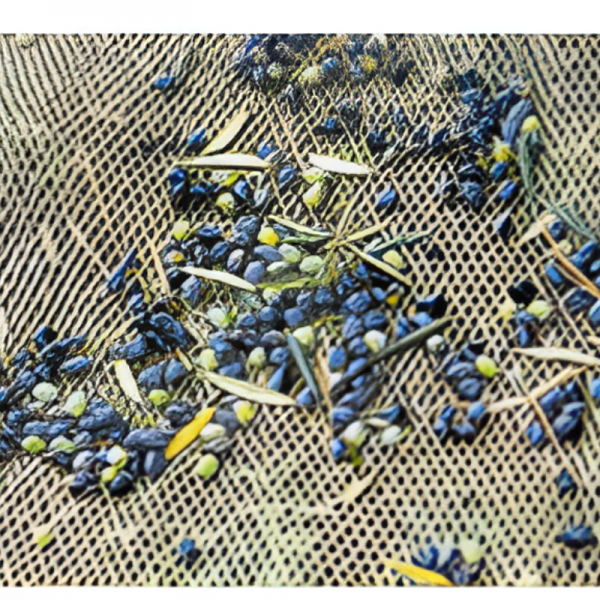
High-quality olive catching net designed for efficient, clean, and fast olive harvesting. 

Australian made olive catching net with UV-stabilised HDPE construction for professional and home olive harvesting.

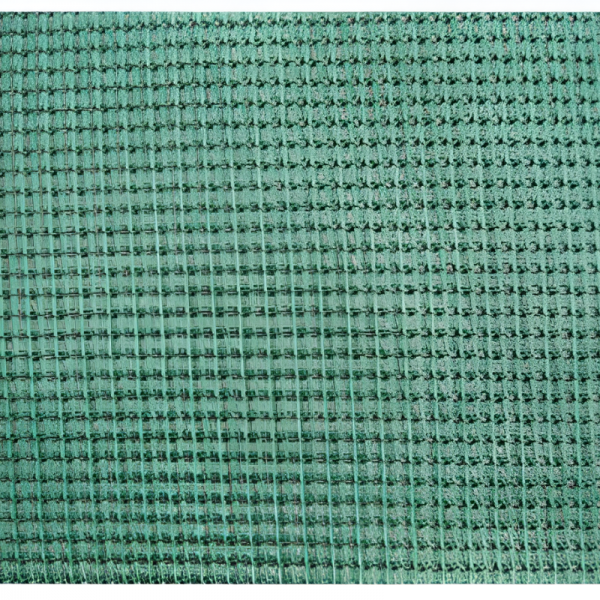
The Olive Catching Net is a purpose-built harvesting solution designed to make olive collection faster, cleaner, and more efficient. Manufactured in Australia using premium UV-stabilised knitted HDPE, this net offers excellent strength, durability, and long-term outdoor performance. The tightly knitted structure prevents olives from falling through while allowing debris to separate easily during harvest.

This new design allows the net to be laid on one or both sides of the tree, depending on whether one or two nets are used. When two nets are positioned on either side of the trunk, two operators can quickly assemble and reposition the nets, significantly reducing harvest time and labour effort. The reinforced ends are designed to accept a standard broom handle, making it easy to lift, drag, and move the net from tree to tree.

The material does not fray, resists UV degradation, and is backed by a 10-year manufacturer warranty, making it a long-term investment for olive growers of all scales.

Where this product is used

This olive catching net is used in olive groves during harvest to catch falling olives and prevent fruit from contacting the ground. It is suitable for hand harvesting, mechanical shakers, and small to medium-scale olive production.
 

Olive Catching Net – Technical Specifications

Specification Details
Product type Olive catching / harvest net
Manufacturing origin Australian made
Material UV-stabilised knitted HDPE
Regular  size not available
Regular plus size 8.0 m × 4.0 m
Edge design Reinforced ends suitable for broom handle insertion
UV resistance UV stabilised for long outdoor life
Warranty 10-year manufacturer warranty

Why choose this product

This olive catching net is specifically designed for olive harvesting conditions, offering durability, ease of handling, and long service life. The Australian-made construction ensures consistent quality, while the UV-stabilised HDPE material prevents fraying and degradation over time. Reinforced ends allow quick movement between trees, reducing labour and harvest time.

Guidelines

Lay one net on each side of the olive tree for optimal coverage. Position the nets around the trunk base before harvesting. After harvest, insert a broom handle into the reinforced ends to lift and move the net to the next tree. Shake or roll the net to collect olives for transfer.
 
Frequently Asked Questions

 
General main key features

• Australian made and exclusive to The Olive Centre
• UV-stabilised knitted HDPE for long service life
• Reinforced ends for broom handle installation
• Does not fray and resists outdoor degradation
• Suitable for one or two net harvesting systems
  • :
  • :
  • :
  • :
  • :

Olive Mechanical Harvesting, Pruning & Bottling Contractors

Olive Mechanical Harvesting, Pruning & Bottling Contractors

In the Australian Olive Industry

Pruning Services


  • Gallard Pruning Services John Gallard 0428 761 798 , john@gallardservices.com.au Servicing Hunter Valley and other areas upon request.
  • Mulching service Peter Birch - Thunderbolt's Olives 0428 669 157 , thunderboltsolives@bigpond.com Mulches wood up to 300mm diameter Servicing NSW areas

Botling Contractors

  • EV Olives Wenbo 203 Everton Road, Markwood VIC 3678 PH: 03 5727 0209, Email: wenbowwu@hotmail.com Service: Contract Bottling & Cask Filling
  • Fini Olives Jim Hollingworth 237 Orange Springs Road, Regan's Ford, Gin Gin WA 6503 PH: 08 9259 4131, Email: jimh@finiolives.com.au

Mechanical Harvesting Contractors

  • Costa - Mount Camel Mechanical Harvesting Contractors servicing around the Mount Camel area with New Generation Sicma B411 Plus call 0488 010 173
  • John Daniel - Tarlia Olive Estate Servicing NSW, QLD, SA, TAS, VIC & WA John Daniel resides in Lewiston on the outskirts of Adelaide, SA. Email: jtdaniel@adam.com.au
  • Peter Haslett - Haslett Harvesting PO Box 164 Paringa, SA 5340 mail@haslettharvesting.com.au 08 8595 8046  (AH) Servicing SA.
  • Puma Olive Harvesting Self propelled tractor mounted shaker.Capable of 1T/hr. Contact: Fran Goryan Ph: 0408 897 869  or 08 8823 3287 Servicing SA only.
  • Andrew Bucknell Ph: 02 6343 7101  or 0428 232 798 bucknell@westnet.com.au 6 years experience, Sicma F3 harvester Looking to expand into QLD and SA Click here to download information for Andrew Bucknell
  • Preston Valley Grove Sicma Speedy Harvester Contact Mick Ryan for more info Ph: 0419 907 701 , email:info@prestonvalleygrove.com.au
  • Barilla Olive Harvesting Lot 286 Stebonheath Rd, Munno Para Downs. S.A. 5015 Shaker Harvesting, grove layout is important, please book early. Servicing South Australia Contact: Steve Barilla Ph: 0411 402 405 , email:bariloil@tpg.com.au
  • National Olive Harvesters Pty. Ltd. 1 Nelson Road Lameroo S.A. 5302 Over-the-row Style Harvesting,Shaker Harvesting Servicing: ACT,NSW,QLD,SA,TAS,VIC & WA Contact: Ian Mead Ph:0885774062 or 0427879125 E-mail: iwmead@internode.on.net
  • EV Olives Wenbo Wu 203 Everton Road, Markwood VIC 3678 PH: 03 5727 0209 or 0408 519 955, Email: wenbowwu@hotmail.com Service: Contract harvesting New generation harvester, small or large jobs, bin hire, fruit transport  & processing

Please contact us if you would like to be listed?

Pruning & Staking Young Olive Trees for Mechanical Harvesting


PRUNING & STAKING YOUNG OLIVE TREES

FOR MECHANICAL HARVESTING

The information is supplied as a guide for during the first two years after planting olive trees between approximately 300mm (1 ft) and 1.5 metres (5 ft) in height. During this fast growth period the trees require specific pruning to maximise their growth, keep them in good health, and very importantly, prepare them for mechanical harvesting. Before pruning you should choose which style of harvesting you prefer and prune accordingly.

The briefness of this sheet cannot give all the answers and options but it does give a basic guide to pruning and staking during the first couple of years.

Whenever you are pruning a young olive tree there are four main points to keep in mind:

  1. Too much pruning at a young age will stunt the tree's growth.
  2. You are ultimately wanting to prune for mechanically harvesting the crop.
  3. A central leader trunk will assist growth in the early stages.
  4. Practice makes perfect!

Let's take a closer look at these points.


1. Olive trees are like human beings in many ways and in no way are they so similar as in the pruning. It's as simple as this:

A human can afford to lose an arm or even a leg and
still live reasonably well BUT if you lose both arms and both legs
at the same time, you're in trouble! - SO IS AN OLIVE TREE.

If your young tree is 900mm (3 ft) tall and has side branches growing all the way up its trunk DO NOT take them ALL off just because you've read that you need a clean straight trunk for 1.0 to 1.2 metres.

At first, only take off any that are growing below 300mm (1 ft) and then in several months time when the tree has grown considerably more on top, and has 'recovered' from the first pruning, you can take off any branches between 300mm and 600mm (1-2 ft). Repeat this process until finally after about two years, you have your clean straight trunk for 1.0 to 1.2 metres. Don't make the mistake of pruning 'too much too soon'. This can send the young tree into 'shock' and set it back by up to a full year. Always leave large amounts of leaf on the tree for photosynthesis to take place so that maximum root growth etc will occur.


2. Mechanical harvesting is the most efficient method of removing fruit from olive trees. Whereas oil olives have been the only mechanically harvested olives for many years, table fruit are now sometimes dropping into catching umbrellas in countries around the world, including Australia. Unless you have made a clear decision to hand harvest your fruit, to neglect pruning for future mechanical harvesting in the modern orchard may be a serious error from a long term economic viewpoint.

So what shape of tree do we need for mechanical harvesting? The most important requirement is a straight trunk for 1.0 to 1.2 metres (3'4"-4 ft) from the ground. This section of trunk must finally be free from all branches to allow the harvester's head to securely grip the trunk without any obstruction. This will allow the harvester to work more quickly and will also avoid damage to the tree.

Achieving this straight clean trunk occurs over about 18 months to two years. Initially, when the tree is only 300mm to 600mm (1-2 ft) tall you simply need to remove any branches which want to grow off the trunk below 300mm (1 ft) from the ground. Other branches above 300mm (1 ft) can be left to grow or, if they try to grow larger and faster than your main leader, they can have their tips removed to slow down their growth - thus allowing more nutrients to be focussed into the leader. This clearing will make it easier for weed spraying and will also allow the tree to focus all of its growth into the main 'leader' trunk and some higher lateral branches. At no stage should any growth touch the ground. In the early years, it is important to leave as much growth as possible on the tree because foliage promotes root growth which in turn promotes the production of more foliage.

Some trees will develop with a 'leader' (trunk) going straight up the centre with small side branches. Others will head straight for the sky as a single trunk with no side branches. Both cases are fine, but with single trunks you will need to nip off the growing tip at about 1.2-1.3m (48-50") to encourage side or lateral branches to grow at this place. It is these lateral branches that will form the main structure of your mature tree.

Mature olive trees need to be kept reasonably open in the centre to allow light penetration for better tree health and fruit production. This is best achieved through a vase shaped, sturdy growth habit which also facilitates mechanical harvesting. Your trees will probably have quite a number of lateral branches at about one metre or so from the ground when the tree is 18 months of age. Thoughtfully choose out four evenly spaced lateral branches. These need not all come from exactly the same height but should not be any lower than 800mm from the ground. As these will form the vase framework for your tree, if possible choose branches that are growing at least 30 degrees up from horizontal. This will give a vase rather than a flat plate shaped tree structure. Remove the other growth as outlined below.

If your main leader is damaged or slow growing for some reason then you may choose to allow a faster growing side branch to become the new leader. Simply remove the old leader from the stake and tie the new leader to it. (A bit like politics!)

When the tree is between 900mm and 1200mm (3-4 ft) tall, and if it has plenty of leafy branches towards its top, you can remove the branches which are growing from the trunk between 300mm and 600mm (1-2 ft) from the ground. You should now have a tree with a straight clean trunk to 600mm (2 ft) and a nice number of branches above 600mm (2 ft). If your tree is over 1200mm (4 ft) high then you can remove the tips of any branches that leave the trunk between 600mm and 900mm (2-3 ft). (Don't forget BODY TALK's advice - if there aren't many branches between 900mm and 1200mm (3-4 ft) then don't cut too heavily at this stage).

Several months after you have done the last step of pruning above, you can remove any of the final branches up to about one metre (3'4"). Your trunk is now clean to the desired height for machine harvesting and yet you still have about four evenly spaced solid branches at the top of the tree to keep root growth to a maximum. Depending on variety, land preparation and climate this whole pruning cycle from a 300mm (1 ft) tall tree to a solidly trunked tree which is branching well on top should take about eighteen months to two years.


STAKING YOUR TREE


The staking of young olive trees is very important. Stakes need to be strong enough to support the tree while the anchor roots are developing, and yet flexible enough to allow the tree to move in the wind. If the stake is too rigid or the tree tied too tightly to it, then the tree will be over protected and not feel the need to develop strong roots.

The most common size stake to use was the 1.5 metre (5 ft) high, 24-26mm thick. Thicker stakes are available for sandy soils: 1.8m (7ft) high, 25-28mm.

The bamboo stakes have some advantages over hardwood stakes as they have as they allow the tree to flex in the wind thereby encouraging the tree to develop a thick trunk and also to develop its anchor roots quickly. A tree rigidly tied to an unbending hardwood stake will not realise the need to develop its anchor roots strongly.

Sourcing Stakes - for further details and pricing for Stakes are available from The Olive Centre.

After about two years at which point the tree probably will no longer need staking. It is rare for a tree to need any support after it has outgrown such a stake.

Place the stake about 50mm (2") from the base of the tree and push it into the soil at least 300mm vertically until it feels quite stable. A better option is to use the stakes to mark your tree sites prior to planting and then simply plant the trees beside them. You can then tie both the young tree and its small nursery stake to the main stake with a tool such as the tapener described below. (There is no need to cut off the the tapes between the young tree and its nursery stake as they will break away naturally as the tree trunk thickens.)

After planting and staking the tree, the stake will prove to be a good solid anchor point to attach protective guards or netting to if you have severe animal problems and do not have a full netting fence around the boundary of your orchard.

Tying the Tree - From our experience with tying methods over many years, we have found that the tape tying tools available from The Olive Centre are an excellent investment. The taping tool is very fast and efficient and if you have a number of trees to tie, you will get the cost of your tool back very quickly in saved time. When you order your tool Full Staking Kits are available which include a packet of staples, a packet of spare cutter blades, and unless you have very thick trunks, the 26 metre rolls of tape will be what you'll use.

After testing many brands of tape, we recommend the high quality, green tape. As the tree trunk grows thicker it will be better able to support itself without so much need for the stake. As the trunk thickens, the tape will stretch and naturally tear out at the staple point so it will not strangle the tree as some ties do. For windy areas other heavy duty tree ties are available.


3. A central leader trunk will help to speed up your tree's growth during the early years. Because this trunk will be fast growing and always growing upwards in the centre of your tree, it will be drawing nutrients up through the tree to sustain its growth. As it draws these nutrients up the tree, the nutrients will be carried to lower branches and thereby increase their speed of growth as well. The central leader acts as a type of 'nutrient pump' within the tree. (If your tree decides to grow straight up without any lateral (side) branches, nip the growing tip out when it reaches about 1.2 - 1.3 metres (4 ft). This will force it to start lateral branching into your vase shape.)

What we have finally achieved is a young tree with approximately four main scaffold branches. The shape is commonly known as an Inverted Conical Vase.

As mentioned in the introduction, this is not a conclusive pruning guide. It only touches on the basics of pruning young trees with what are considered the most commercially viable methods.


4. Practice Makes Perfect! Olive trees have a mind of their own and as such they will sometimes fight against many of your efforts to prune them into shape. Don't give up. Perseverance wins the race. Remember that time is on your side. A tree that won't grow correctly this season can often be restaked and then pruned into shape next season.

Enhancing Olive Harvesting with Advanced Mechanical Solutions

The study, which focused on the ‘Ortice’ and ‘Ortolana’ olive cultivars, found that this technology achieved a mechanical harvesting yield of approximately 97%, highlighting its potential to significantly enhance productivity and cost-effectiveness in modern olive farming. If you are looking for small-scale olive oil processing machines, olive oil processing machine prices, compact olive oil processing equipment for boutique groves, olive oil ex
Please log in to view the entire article

The Critical Role of Branch Inclination in Trunk Shaker Performance

Olive orchards worldwide include traditional (density below 250 trees/ha) & more intensive (800 trees/ha) systems, with trunk shakers commonly used for mechanical harvesting in both. According to the International Olive Council (IOC) data from 2023, traditional orchards account for over 70% of global plantings, while intensive ones represent 25%. Variability in tree geometry, such as branch inclination, influences vibration propagation...
Please log in to view the entire article

New Research Unlocks Olive Harvesting Efficiency For Better Fruit Removal - HUB

Mechanical trunk shakers have transformed olive harvesting in modern olive groves. A new study: Damping behaviour of olive trees under trunk shaking (Ghonimy, Alharbi & Ibrahim, 2025) provides growers with the first detailed breakdown of how vibration energy moves through olive trees and the soil beneath them. The findings reveal how attachment height, trunk diameter, and the tree-soil interaction determine whether ...
Please log in to view the entire article

The Essential Equipment Guide to Harvesting Olives

Harvesting is one of the most critical and labour-intensive stages in olive production, traditionally consuming up to 80% of orchard costs. Today, growers are turning to modern solutions that combine efficiency with fruit quality. From powerful mechanical trunk shakers and self-propelled buggies, to versatile electric and pneumatic harvesters, and essential tools like nets, rakes, and trailers.
Please log in to view the entire article

Solar Parks vs Olive Groves: What’s Really Happening in Spain’s “Sea of Olives”

Spain’s push for solar energy is creating tensions in Andalusia as photovoltaic projects overlap with major olive-growing landscapes.
Please log in to view the entire article

Ensuring Olive Grove Security: Minimum Resource Thresholds for Secure Production Operation

A practical guide to minimum water, fuel, fertiliser and crop protection thresholds needed to maintain olive grove productivity and avoid yield losses.
Please log in to view the entire article

The 2026 Olive Harvest Has Begun in Australia

Australia’s 2026 olive harvest has begun, with early reports showing strong fruit size and the first varieties now arriving at processing facilities.
Please log in to view the entire article

Does Nitrogen and Potassium Really Increase Olive Oil Content

New research shows nitrogen and potassium increase olive oil yield by growing larger fruit, not by increasing oil concentration in the pulp.
Please log in to view the entire article

How to Prune for Mechanical Olive Shaker Harvesting?


Information has been provided by Barilla Contract Orchard Harvesting to provide insightful tips to achieving a successful and efficient olive harvest through pruning techniques to ensure an efficient olive harvest.

Why prune olive trees?

There are many reasons why you would want to incorporate a plan for pruning, here are a few reasons why;

  1. To provide sustainable crops
  2. To provide higher yields
  3. To provide high quality
  4. To decrease production costs

PRUNING TIPS:-

  • Achieving results from pruning are best seen in thinning where the canopy becomes more efficient.
  • Pruning branches are best recommended to done at a 90-degree angle to?minimise the exposure of peeling off bark or inviting dry out or infection into the tree.
  • When training the juvenile stage, always clean two-thirds from the base. ?Stake it at proper side of the tree to avoid weather growth and remove stake once the tree is well rooted with strength.
  • In training the tree towards a teenage growth using the Vase System, leave 3 or 4 branches spaced apart to allow the light in. Vase system is recommended for mechanical trunk shaking machines.
  • Always eliminate suckers and shoots in order to avoid heavier maintenance for following year/s.
  • When pruning unwanted branches to suit method of the harvester, do not remove primary branches that require the tree frame which also will provide the fruit.
  • The height of trees is based on tree spacing for vase framed mechanical harvesters, normal recommendation is 4 to 5 metres & width of row minimum 6 to 7 metres.
  • The height of the trunk using the vase system should be no less than 1 metre to 1.5 metres for mechanical harvesters that will grab the trunk with an umbrella catcher.
  • [caption id="attachment_651" align="alignright" width="300"] Image Source: Olive Press Magazine[/caption]

    Most importantly for vase framed trees that V up can also V down on a heavy crop if branches are not strong to carry the weight, this will cover visibility of trunk for harvesting contractor. Therefore it is important that higher trunk pruning is not only for the tree to produce but also it is pruned to allow a mechanical harvester to operate efficiently to save time loss.

  • OTHER TOOLS REQUIRED: ?You may also need Secateurs for manual pruning intervention (Hand, Electric or Pneumatic), a hand saw, Small Chainsaw, Safety Glasses, Gloves and a Hat!

Pruning strategy goals:

  • Better light interception
  • Higher Leaf to wood ratio
  • Easier management of the grove
  • Cheaper and more efficient harvesting operation

[caption id="attachment_653" align="alignright" width="300"] Image Source: Olive Press Magazine[/caption]

Naming terms:

  • Vigour: ?Vegetative Growth Rate
  • Capacity: ?Total Growth Coverage
  • Thinning: ?Pruning thin unwanted branches before they become larger and harder to prune.
  • Heading: ?Pruning large unwanted branches to suit frame style of tree.
More information: ?Barilla Olive Oil & Harvesting, Munno Para Downs, South Australia 5114. ?Mobile: ?0411 402 405, Email: ?

steve?at barillaoliveoil.com.au ?Website: ? www.barillaoliveoil.com.au??HACCP Accredited.

More information about: ? Pruning Tools?& Harvesting Tools

THE INFORMATION PROVIDED IS FROM OUR EXPERIENCES OF HARVESTING TREES, 
METHODS AND KNOWLEGE THAT HAS BEEN HANDED DOWN FROM THE BARILLA FAMILY. 
THERE WILL ALWAYS BE VARIABLES TO ANY OLIVE GROVE AND THESE NOTES MAY BECOME 
DIFFERENT TO LAYOUT OF GROVE, VARIETY OF OLIVES OR DIFFERENT TYPES OF HARVESTING 
METHODS. WE THEREFORE DO NOT ACCEPT ANY RESPONSIBLITY FOR THESE REASONS. THESE 
NOTES SHOULD BE VIEWED AS A GUIDE TOWARDS THE ADDITIONAL KNOWLEGE TO CONSIDER 
FOR YOUR OLIVE GROVE.