My Account
Sign-in / Join

Sign-in

Hi My Account

Dashboard

Logout

Cart

My Shopping Cart

Subtotal
${{total.toFixed(2)}}
QUOTE

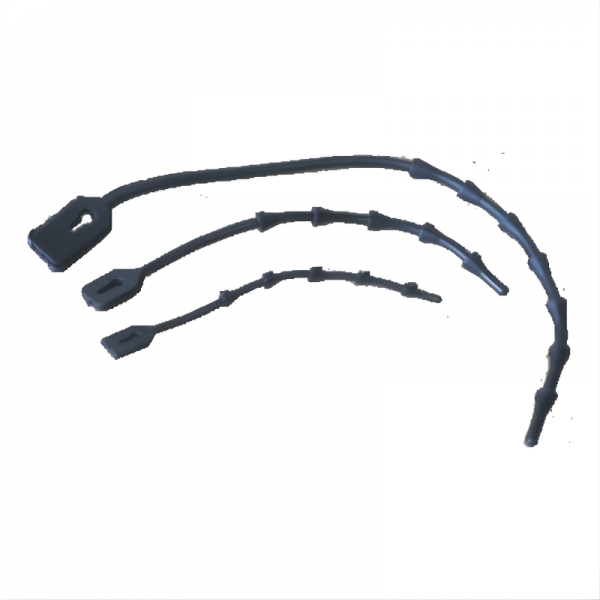
Adjustable Rubber Tree Tie (Easy-Tie)

Pricing includes delivery within Australia.
Sizes
Quantity

EA06A
  • Description
  • Features
  • Enquiry
  • Specifications
  • Knowledge
  • Blog

Adjustable Rubber Tree Tie (Easy-Tie)

Pricing includes delivery within Australia.

Reusable, UV-stabilised rubber tree ties designed to securely support trees while allowing natural trunk movement and growth.

Adjustable rubber tree ties for staking young and established trees, offering flexible support, wind protection, and long service life.

The Adjustable Rubber Tree Tie, also known as Easy-Tie, is a professional-grade solution for securing trees to stakes without causing damage to the trunk. Manufactured in Australia from fully UV-stabilised synthetic rubber, these ties are soft, flexible, and designed to stretch as the tree grows, reducing the risk of abrasion, restriction, or failure during strong winds.

Unlike rigid ties or wire, the Easy-Tie rubber tree tie absorbs movement and shock, helping prevent trees from being torn from stakes during storms. The adjustable slot system allows the tie to be tightened, loosened, released, and reused as required, making it a cost-effective and long-lasting choice for orchards, vineyards, landscaping, and revegetation projects.

Where this product is used

These rubber tree ties are used in orchards, vineyards, landscaping projects, nurseries, and revegetation works to secure young, tall, or wind-exposed trees. They are suitable for use with timber or metal stakes and are ideal for situations where trunk protection and flexibility are critical.

adjustable tree tie figure 8 method
 

Adjustable Rubber Tree Tie – Technical Specifications

Specification Details
Product type Adjustable rubber tree tie
Material UV-stabilised synthetic rubber
Design feature Reusable slot fastening system
Flexibility Soft, stretchable to allow trunk expansion
Large size 310 mm length, 4 mm diameter, 100 per pack
Medium size 170 mm length, 3 mm diameter, 250 per pack
Small size 120 mm length, 2.5 mm diameter, 500 per pack
Expected service life Approximately 3–5 years
Manufacturing origin Australia


Why choose this product

These rubber tree ties provide superior protection compared to rigid ties by reducing chafing and allowing natural movement as trees establish. Their durability, reusability, and long lifespan make them a cost-effective choice for both professional and home applications. Australian manufacture ensures consistent quality and performance in local conditions.

Guidelines

Secure the tree to the stake using a figure-8 method to prevent rubbing against the stake. Loop the tie around the tree and stake, pass the end through the slot, and tighten as required. As the tree grows, adjust or reposition the tie to maintain correct support without restricting trunk expansion.
General main key features

• Soft, flexible rubber reduces trunk damage
• Adjustable and reusable fastening system
• UV-stabilised for long outdoor service life
• Allows natural movement and trunk expansion
• Designed and manufactured in Australia
  • :
  • :
  • :
  • :
  • :
  • :

What is Olive Tree Girdling & Cincturing?

INFORMATION SHEET - THE OLIVE CENTRE

What is Girdling & Cincturing in Olive Trees

Girdling is a readily used practice in citrus and stone fruit orchards where it is typically used as a technique to increase fruit size.

Biennial bearing can be a serious problem in olive trees which can result in heavy crop losses to producers.  Under non-irrigated conditions, yields can fall substantially or drop to zero making the production year uneconomical to harvest.  Girdling may be a practice if done under the right conditions and timing could increase the production of an olive tree.

What does Girdling or cincturing involve?

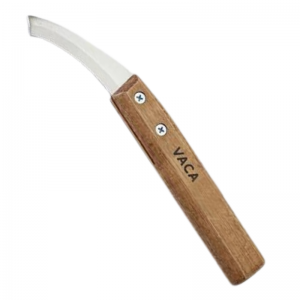
Girdling also known as cincturing which is a horticultural practice involving eliminating up to a 1.5cm strip of bark around the trunk to stop the translocation of photosynthates to the root system.  A girdling knife or cincturing tool is used to cut the bark of the olive tree.


Researchers in Israel*  found that 15mm scaffolds covered with CaCO3 mineral oil and wax or PVC cover were most effective in facilitating wound healing.  PVC treatment was more rapid in wound healing.   During the first prevailing year after girdling found a 40% in increase yield.  Another study from Spain~ that looked into optimal widths and timing found that removing a 15mm band of bark 30 days before full bloom increased the fruit weight from 3.9g in the ungirdled trial to 4.7g.

Wounds with untreated scaffolds in the Israel study saw a drop in yield.

The width of the scaffold and healing duration as well as the time of year in which the girdling was carried out all had bearing on an increase or decrease in production.  The Israel study found that girdling olive trees increased the yield in the season following treatment with later girdling causing an increase in fruit set only.

Several scaffolds were used in the studies from 30mm to 5mm where the 5mm girdles were reported to heal too quickly and had no effect on increased production.

It was also noted that trees that were about to produce a high yield did not respond to girdling and in some cases actually reduced the yield.  Long-term studies need to be conducted to ascertain if alternate scaffold girdling should be considered.

The studies were interesting because there is potential that girdling practiced correctly in an olive grove may have a positive outcome for increased yield output however, the width of the girdle, healing timing, and time of year need to be taken into account when considering employing this technique in a commercial grove and can also have a positive effect on production in the alternate bearing years.


* STUDY

Girdling olive trees, a partial solution to biennial bearing. I. Methods, timing, and direct tree response

*S. Lavee, A Hadkal, Y Ben Tal

Department ofOiei and Viticulture, ARO, Volcani Center, Bet Dagan, Israel

ABSTRACT

The effect of scaffold girdling on the productivity of olive trees was studied on four cultivars grown under intensive irrigated conditions. Girdling increased the yield when done in midwinter (December-February) and to a lesser extent in April. A girdling width of 10-15 mm covered with PVC tape was most effective and promoted rapid healing. Uncovered girdling wounds healed very slowly, with a resultant decline of the scaffold. Girdling increased both inflorescence formation and fruit set. With cv Manzanillo young scaffolds were more responsive than old ones. The responses of different scaffolds on the same tree to girdling were independent of each other. The degree of response of a scaffold to girdling depended on the potential yield of the scaffold in the year of treatment. No direct prevailing effect of the girdling on of the following year's yield was noted.  

Read the full study:  Girdling olive trees, a partial solution to biennial bearing. I. Methods, timing and direct tree response: Journal of Horticultural Science: Vol 58, No 2

~ STUDY

Olive tree girdling: optimum timing and width

López-Rivares, E. P. ;  Suárez-García, M. P.

Escuela Universitaria de Ingeniería Técnica Agrícola, Seville, Spain.

ABSTRACT

Six-year-old multi-trunk olive trees (cv. Manzanilla) growing under controlled irrigation in an 'off' year were girdled at monthly intervals from 15 Dec. to 15 Apr., removing 10 mm-wide rings of bark. In a separate trial, trees of the same cultivar growing under similar conditions were girdled by removing a 5-, 10- or 15-mm-wide ring of bark in Apr., i.e. a month before full bloom. Ungirdled trees served as controls. Girdling date had no significant effect on either flowering or fruit set. Removing a 15-mm-band of bark at 30 days before full bloom increased individual fruit weight from 3.9 g in the ungirdled control to 4.7 g.

Read the full study:  Olive tree girdling: optimum timing and widths.

The Critical Role of Branch Inclination in Trunk Shaker Performance

Olive orchards worldwide include traditional (density below 250 trees/ha) & more intensive (800 trees/ha) systems, with trunk shakers commonly used for mechanical harvesting in both. According to the International Olive Council (IOC) data from 2023, traditional orchards account for over 70% of global plantings, while intensive ones represent 25%. Variability in tree geometry, such as branch inclination, influences vibration propagation...
Please log in to view the entire article

Mechanical Harvesting and the Role of Branch Inclination in Vibration Transmission - HUB

Trunk shakers apply forced vibration at the tree trunk, which propagates through the canopy and detaches ripe olives. However, the success of this process isn't solely dependent on the machine’s frequency or power. The geometry of the tree itself... particularly the inclination angle of its branches... plays a pivotal role in determining how efficiently that vibration moves through the canopy.....
Please log in to view the entire article

New Research Unlocks Olive Harvesting Efficiency For Better Fruit Removal - HUB

Mechanical trunk shakers have transformed olive harvesting in modern olive groves. A new study: Damping behaviour of olive trees under trunk shaking (Ghonimy, Alharbi & Ibrahim, 2025) provides growers with the first detailed breakdown of how vibration energy moves through olive trees and the soil beneath them. The findings reveal how attachment height, trunk diameter, and the tree-soil interaction determine whether ...
Please log in to view the entire article

So You Want to Plant an Olive Grove?

Healthy olive groves need the right balance of soil care, water, and pruning. While olives are hardy, they can suffer from pests like black scale or lace bug, and diseases such as anthracnose. With good monitoring and sustainable practices, most issues can be managed before they become serious problems.
Please log in to view the entire article

The Essential Equipment Guide to Harvesting Olives

Harvesting is one of the most critical and labour-intensive stages in olive production, traditionally consuming up to 80% of orchard costs. Today, growers are turning to modern solutions that combine efficiency with fruit quality. From powerful mechanical trunk shakers and self-propelled buggies, to versatile electric and pneumatic harvesters, and essential tools like nets, rakes, and trailers.
Please log in to view the entire article

Ensuring Olive Grove Security: Minimum Resource Thresholds for Secure Production Operation

A practical guide to minimum water, fuel, fertiliser and crop protection thresholds needed to maintain olive grove productivity and avoid yield losses.
Please log in to view the entire article

Help, I have Black marks on the trunks on my olive trees, what do I do?

What is the problem?

Hi Amanda,

Please help, we are based in the Hunter Valley and it appears that where moisture runs through the tree is where the problem is ?(see pictures). ?It doesn't look like sooty mould but we had scale and olive lace bug issues. ?The trees are in urgent need of care. ?What is the black on the trunks and what do I do? ?P NSW

[gallery type="slideshow" columns="4" size="full" ids="172,171,170,169"]

So, what is going on and how do I fix this??

I have spoken with plant pathologist, Dr Len Tesoriero from DPI NSW and he has the following suggestion:

"There appears to be dead wood running up the stem on one side. This is probably from a wood rotting fungus (Botryosphaeria or even one of the basidiomycetes) although the damage looks to be quite old and it may no longer be active. Again if it's possible I'd cut the limb off and use copper or lime sulphur on the wound. If the conclusion is that the fungus is no longer active - the tree can sometimes partition infected wood and the fungus may die out - or if it is on the main trunk and it would be difficult to excise then leave it or just treat it with copper or ?lime sulphur"

See more about Pest & Disease

See more about Plant Pathology services