My Account
Sign-in / Join

Sign-in

Hi My Account

Dashboard

Logout

Cart

My Shopping Cart

Subtotal
${{total.toFixed(2)}}
QUOTE

Auto Rewind Wall Mounted Hose Reel – 20m

Delivery calculated separately at checkout.
Bulk Discounts Prices
Quantity Price
1 $143.18
Quantity

BAGWA6000
  • Description
  • Features
  • Enquiry
  • Specifications
  • Knowledge

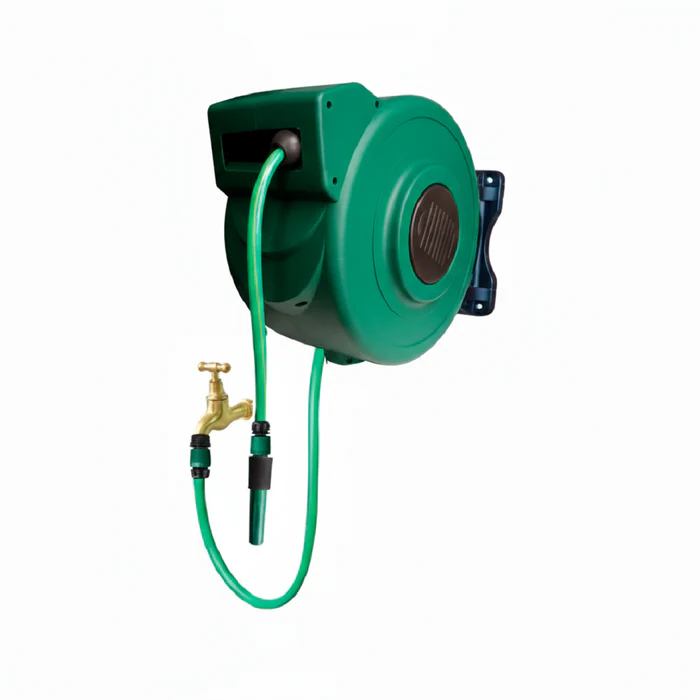
Auto Rewind Wall Mounted Hose Reel – 20m

Delivery calculated separately at checkout.

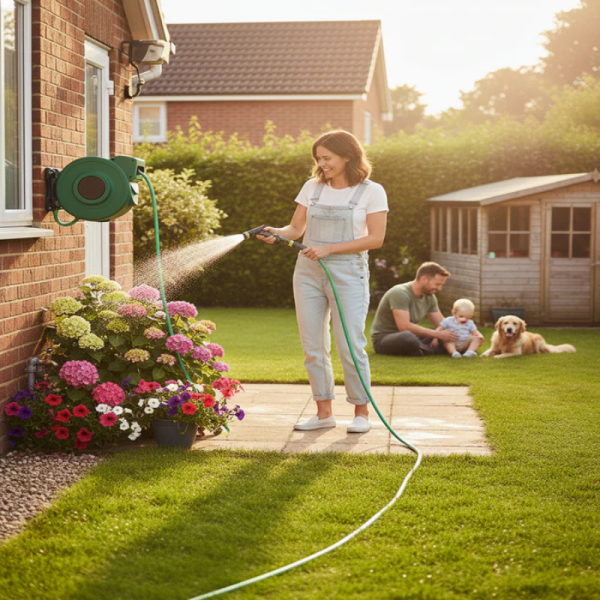
Wall-mounted retractable hose reel designed for clean, efficient and tangle-free garden watering.

The Auto Rewind Wall Mounted Hose Reel is a complete watering solution designed to keep your outdoor space organised while providing convenient access to water when needed.

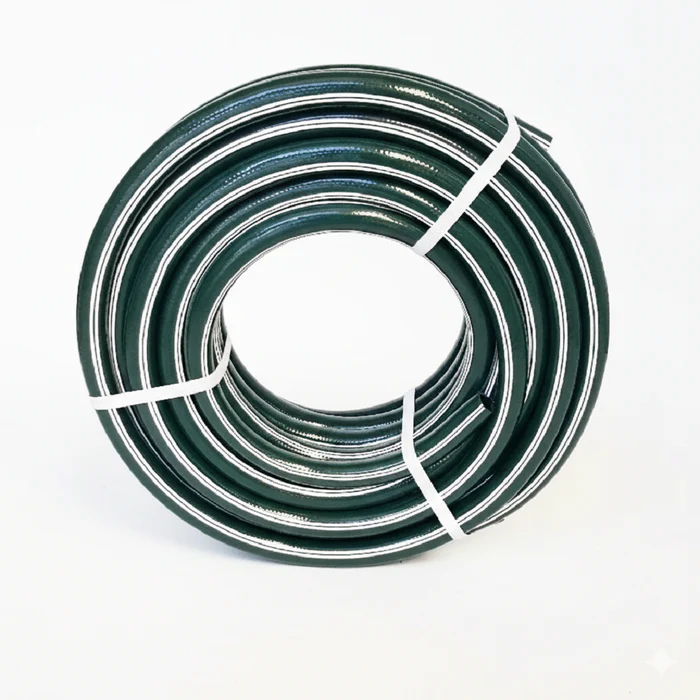
This unit includes a 20 metre hose along with all required fittings, a nozzle and a 1.5 metre inlet hose for easy connection to your tap. The wall-mounted design ensures a permanent and tidy installation.

The advanced self-layering retractable system automatically rewinds the hose neatly into the casing, preventing tangles and ensuring smooth operation every time.

Main Features

  • 20 metre hose for extended reach
  • Auto rewind system for effortless hose storage
  • Self-layering mechanism prevents tangles
  • Locking ratchet allows hose to stay at desired length
  • Wall-mounted bracket with screws included
  • 1.5 metre inlet hose for tap connection
  • Includes hose fittings and spray nozzle
  • Maintenance window for cleaning and inspection

Technical Specifications

Specification Details
Brand RYSET
Product Type Wall mounted hose reel
Hose Length 20 metres
Hose Diameter 12 mm
Inlet Hose Length 1.5 metres
Mounting Wall bracket with screws included
Mechanism Auto rewind with locking ratchet
System Self-layering retractable hose
Additional Features Maintenance window for cleaning

Applications

  • Watering lawns and garden beds
  • Outdoor cleaning and washing
  • Car washing
  • Permanent outdoor tap installations
FAQ

 
Main Features

• 20 metre retractable hose for extended garden reach

• Automatic rewind system eliminates manual winding

• Self-layering mechanism prevents tangles and jams

• Locking ratchet holds hose at desired length

• Wall-mounted design saves space and keeps garden tidy

• Complete kit with fittings, nozzle and mounting bracket

• Includes 1.5 metre inlet hose for tap connection

• Maintenance window for easy inspection and cleaning
  • :
  • :
  • :
  • :
  • :
  • :
  • :
  • :
  • :

Flushing your Irrigation System - Mains, Submains & Laterals

Flushing constitutes an important maintenance routine. In micro-irrigation systems provisions must be made to flush mains, submains and lateral lines to remove settled sediments.
Please log in to view the entire article

4 Factors In Grove Management To Focus On For Next Olive Harvest

The Grove Management Plan: Essential Areas to Focus On

A successful Grove Management Plan must cover these key areas:

Irrigation

"A grove without an effective irrigation system is unlikely to deliver consistent yields year after year. Many growers still underestimate the water needs of olive trees, and few actually monitor soil moisture levels. This is why so many groves have never achieved a commercial crop."  Marcelo Berlanda Specialist Olive Consultant

Water stress negatively affects flowering, fruit set, oil accumulation (oil production), fruit size (table olives), fruit quality, and overall tree health. However, many growers lack a proper system to monitor soil moisture or manage irrigation effectively. 

Marcelo recommends:

"Growers should inspect soil moisture weekly during spring and summer, and every two weeks in autumn and winter. Use a shovel to dig at least 400mm under the tree canopy to check moisture. If the soil is hard to dig, it’s too dry – even if the canopy shows no visible signs of stress." 

Advanced soil moisture monitoring tools can also provide reliable data on a digital display or computer dashboard. 

For optimal grove health, growers must consistently check soil moisture and prevent water stress.

Nutrition

As discussed previously, taking leaf samples is essential to assess your trees’ nutritional status. This information guides the creation of a fertiliser program, a critical component for boosting or maintaining yields.

Typically, no fertiliser is needed in winter, unless you’re addressing soil amendments. However, some groves have severe nutrient deficiencies requiring fertiliser even in winter. Where proper irrigation systems aren’t in place, growers must broadcast fertiliser before rain to allow rainfall to incorporate nutrients into the soil profile, an inefficient use of resources but often the only option.

When applying fertiliser in these conditions, target the area beneath the canopy and, if possible, cultivate the soil to improve incorporation and reduce product loss.

Olives need four essential nutrients: Nitrogen, Phosphorus, Potassium, and Calcium. Check product labels carefully. As a general guideline, aim for:

Pruning

Avoid pruning during the coldest part of winter and when it’s wet or foggy to reduce the risk of bacterial and fungal disease spread.

The main goals of pruning are to remove dead wood, reduce canopy size, restore tree balance, encourage healthy new growth, and increase fruit set in spring.

Tip: After pruning, apply a copper-based spray to protect wounds from infection by fungi and bacteria.

Pest and Disease Control

Pest & disease management is crucial for sustaining yield and tree health. Winter’s colder temperatures reduce insect activity, offering a prime time to tackle pest issues.

Set up a comprehensive Pest and Disease Monitoring Program. During winter, check-marked trees (previously affected by pests or diseases) every two weeks; in spring, check weekly. Look under leaves and on new growth for signs like crawlers, yellow spots, black sooty mould, or anything unusual.

Proactive, weekly management is essential for a successful grove.

If you need further assistance, please contact us.


Optimising Olive Grove Layout

When establishing an olive grove, one of the most critical decisions you will make is the layout of your trees. The arrangement you choose will influence tree health, productivity, and long-term management efficiency. This guide will walk you through key considerations, including aspect, tree spacing, irrigation, harvesting methods, drainage, pruning, and marking out your olive grove.
Please log in to view the entire article

Optimised Irrigation in Olive Orchards – Dr. Giulia Marino

Optimised irrigation is critical for balancing olive tree water stress, yield and oil quality. This article outlines key principles of water management in olives, including evapotranspiration, crop coefficients and irrigation scheduling.
Please log in to view the entire article

Water Requirements for Olive Trees Per ha/tree

Water Requirements for Olive Trees: Per Hectare and Per Tree When planning irrigation for olive groves, it’s essential to understand the minimum water requirements to support healthy growth and fruit production. Here's a breakdown based on 250 olive trees per hectare and a minimum water requirement of 3 megalitres (ML) per hectare per year.
Please log in to view the entire article

Moisture Monitoring: A Key to Sustainable Olive Irrigation and Quality

Moisture monitoring helps olive growers save water, reduce costs, and boost oil quality by ensuring trees get the right amount of irrigation at critical growth stages.
Please log in to view the entire article

Minimum Irrigation Water Requirements for Olive Groves

When planning irrigation for olive groves, it is important to understand the minimum water requirements needed to support healthy tree growth and fruit production.
Please log in to view the entire article

Toro Waterbird Sprinklers Discontinued: What It Means for Olive Growers

Toro has discontinued its Waterbird irrigation sprinklers, prompting olive growers to reassess under-tree irrigation systems and consider modern alternatives including micro-sprinklers and drip irrigation. What are the alternatives?
Please log in to view the entire article

Temporary Water Trading for Olive Growers Across Australia

A practical national guide to temporary water trading for olive growers, explaining allocation transfers, state-by-state differences, compliance requirements and how OliHUB can support secure matching and approvals.
Please log in to view the entire article

Ensuring Olive Grove Security: Minimum Resource Thresholds for Secure Production Operation

A practical guide to minimum water, fuel, fertiliser and crop protection thresholds needed to maintain olive grove productivity and avoid yield losses.
Please log in to view the entire article