My Shopping Cart
| Bulk Discounts Prices | |
| Quantity | Price |
| 1 | $6.15 |
Delivery is not included and is calculated separately based on location.
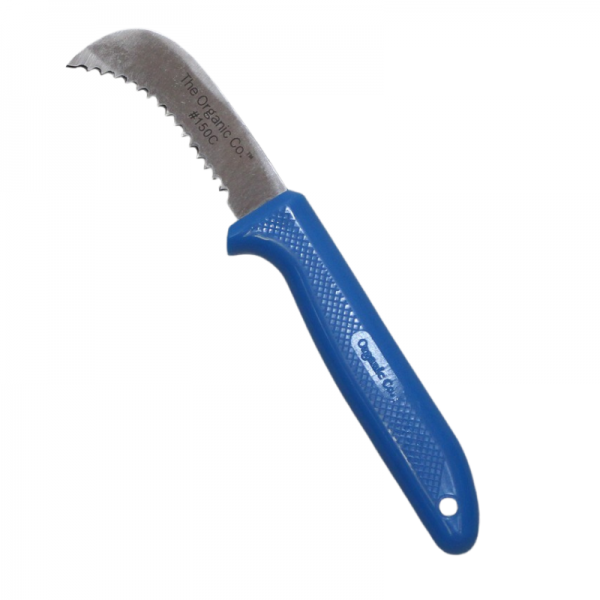
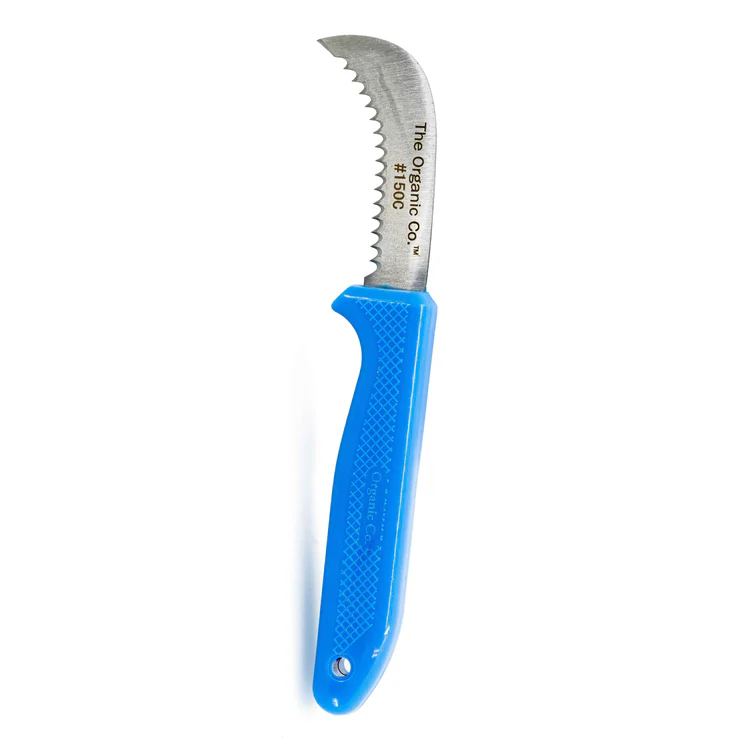
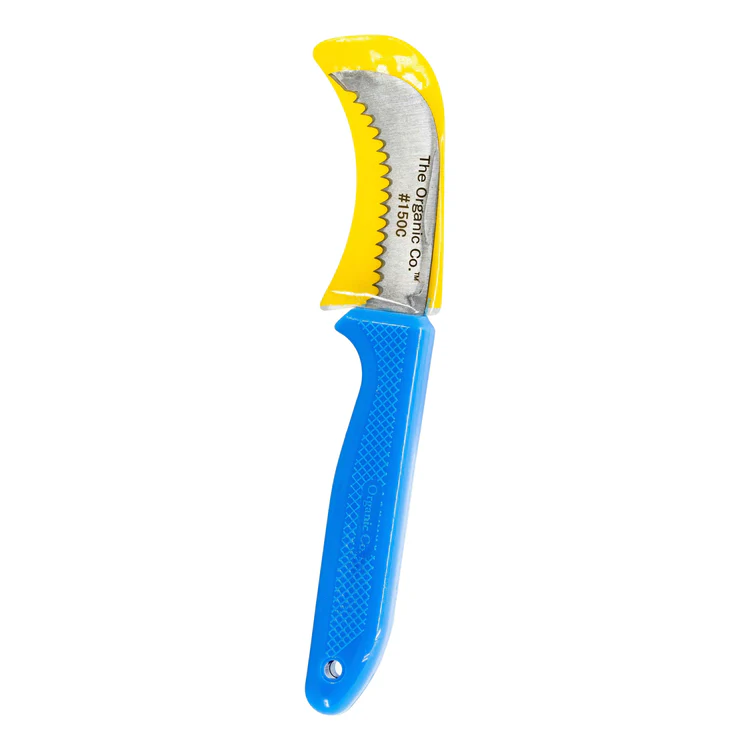
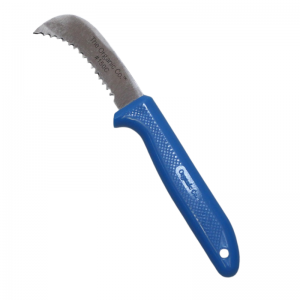
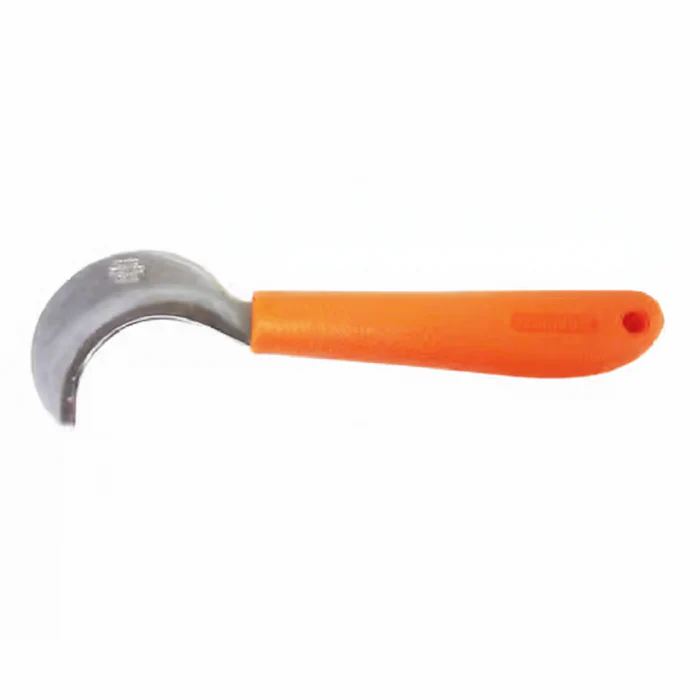
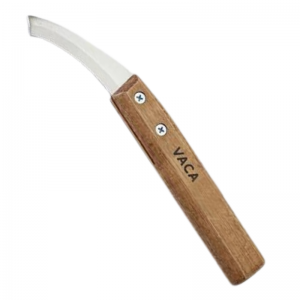
The Curved Grape Picking Knife is a specialized vineyard tool designed for precision and speed during harvest. Featuring a 75mm (3-inch) serrated stainless steel blade, this knife provides the control necessary for delicate tasks such as harvesting grape bunches, while remaining sturdy enough for general vineyard maintenance and utility work.
The high-quality stainless steel blade is engineered to retain its edge and resist corrosion even after seasons of exposure to grape sugars and outdoor elements. Its compact yet robust design is complemented by an ergonomic plastic handle, which offers a comfortable, slip-resistant grip—essential for maintaining safety and accuracy during repetitive harvesting motions.
Multi-Functional Utility: While optimized for harvesting, this knife is a versatile asset in the field. Its serrated edge makes quick work of light pruning, slicing through tough stems, and opening agricultural packaging, making it a reliable daily companion for vineyard managers and workers.
| Specification | Details |
|---|---|
| Blade Length | 75 mm (3 inches) |
| Blade Type | Serrated, Curved Stainless Steel |
| Handle Material | Ergonomic Slip-Resistant Plastic |
| Primary Use | Grape Harvesting and Light Pruning |
| Durability | Corrosion-Resistant and Daily Agricultural Grade |
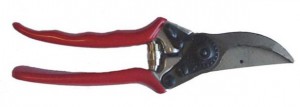
Bypass or Parrot-beak secateurs: as the name suggests the blade bypasses the counter blade to make a cut. (i.e. the action is similar to scissors). ?One blade is convex and the other concave. The main reason you would use the bypass to cut smaller branches and dense foliage as the blades are thinner and allow easier manoeuvrability e.g. with vines or roses.
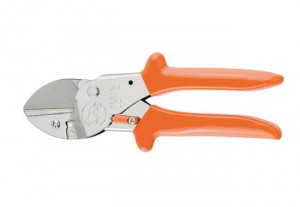
Anvil secateurs: Have an upper blade which pushes down to an anvil counter blade (i.e. they close to a flat surface). The blade is bigger than the Bypass and the action tends to slice rather than squash the branch. Anvil secateurs will give a clean cut. Anvil is used for softer wooded trees and plants like Cherries, Pear and Olives.
Double-Blade secateurs: Have two identical blades if you compare to the anvil or bypass type? These secateurs make a cut by slicing the branch from two sides of the stem. Since you are cutting equally from both sides you tend to finish the cut in the middle of the stem where a lip is present. The reason for the lip at the end of the stem is to create angles each side and ensure that no water can settle on the cut to help the wound heal without the added risk of infection.
When you use secateurs on a regular basis you need to take into account the clunk/jarring factor to reduce the impact for RSI (Repetitive Strain Injury) purposes of each of these models:
The clunk or jar factor is what you feel at the end of a cut. A bypass secateurs gives the biggest clunk and you find these types of secateurs are not the choice of Arborists. Whereas Double-blade type secateurs have some jarring and the Anvil has no jarring at all and is usually the choice for Arborists.
What else to look for when choosing the right secateurs?
Everyone has a different sized-hands and secateurs are made in a facade of different sizes and shapes. Feel the secateurs in your hands open and close them like you are making a cut and feel if your hand can extend the reach of the handles when open. ?Rolling handles may be an option or not. The rolling handle model are usually more expensive and may not be better for the fit of your hand.
Everyone has a different sized-hands and secateurs are made in a facade of different sizes and shapes. ?Feel the secateurs in your hands open and close them like you are making a cut and feel if your hand can extend the reach of the handles when open. ?Rolling handles may be an option or not. The rolling handle model are usually more expensive and may not be better for the fit of your hand.
Here are some other facts about secateurs:
The next time you look for secateurs, take into consideration the application and frequency of use. ?Choose what is comfortable and practical for your application!
More about:
I've been working in the horticultural equipment industry and it is amazing a number of times you see the wrong tools being used for the job. ?It ends up that a grower may not be comfortable using the equipment and not get the efficiency from the tool. ?Today we are going to look at Pruning Saws. ?Of course, we have a range of Pruning Saws and you will notice that some have a straight blade and some have a curved blade. ?Why do they make them because one is better than the other? ?... no...
Let's look at the reasons why you would use one over the other
Straight blades are designed to have a reach between say your hips and around your head height. ?When you place the blade into the tree you will notice that the action of your arm is also forward to back and feels quite comfortable when you do this action within the range of the tree.
Curved blades, however, are designed for work where to you need to reach up into the tree or below the waist. ?If you prune material between the range of straight blades??(i.e. ?hip to head height region) then you tend to automatically sway or curve the saw to meet the curvature action of the blade.
So there you have it! ?We recommend if you have a grove then you need two types of saws on hand; one straight and one curved.
HANDY TIP: ?Remember most of the saws available today are in fact what I call 'Pull saws' which means they make their cut on the pulling action of the blade. ?You shouldn't push or force the blade forward when pruning as this does nothing and makes the work much harder.
See our range of Pruning Saws
https://www.youtube.com/watch?v=Aw07LJ0DOI0