My Account
Sign-in / Join

Sign-in

Hi My Account

Dashboard

Logout

Cart

My Shopping Cart

Subtotal
${{total.toFixed(2)}}
QUOTE

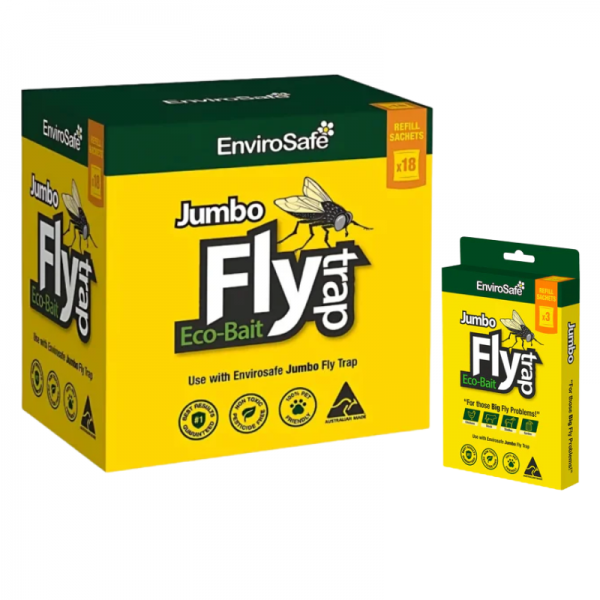
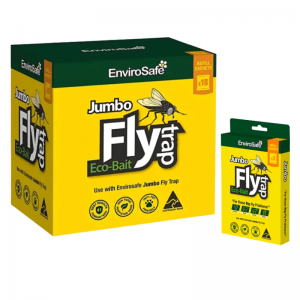
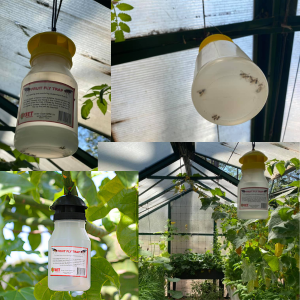
EnviroSafe Jumbo Fly Trap Eco-Bait

Non-Toxic Fly Attractant
Bulk Discounts Prices
Quantity Price
1 $14.92
Quantity

EA340726
  • Description
  • Features
  • Enquiry
  • Specifications
  • Documents
  • Knowledge
EnviroSafe Jumbo Fly Trap Eco-Bait – Non-Toxic Fly Attractant

Powerful food-grade bait refills for reusable EnviroSafe Jumbo Fly Traps.

The EnviroSafe Jumbo Fly Trap Eco-Bait Refills are a safe, effective, and economical way to maintain fly control using the EnviroSafe Jumbo Fly Trap system.
Made from non-toxic, food-grade ingredients, this attractant targets a wide range of fly species for superior outdoor protection.
Each sachet mixes easily with water to create a potent, long-lasting bait that draws flies into the trap and keeps your environment free of pests — without harmful chemicals or pesticides.
Ideal for farms, outdoor kitchens, gardens, and commercial areas where fly activity is a problem.

Uses – For Outdoor Fly Control

Designed for use in EnviroSafe Jumbo Fly Traps, this eco-bait formula helps reduce fly populations in outdoor environments.
Perfect for use around livestock areas, compost bins, outdoor dining, and food handling spaces.
Safe for use near people and pets when used as directed, offering a natural, pesticide-free approach to fly management.

Technical Specifications

 
Specification Details
Product Name EnviroSafe Jumbo Fly Trap Eco-Bait Refills
Manufacturer / Supplier TradeWare (UMCOS Newcombe Pty Ltd), Regency Park, SA, Australia
Composition Non-hazardous ingredients (100%):contentReference[oaicite:1]{index=1}
Form Powder
Colour Green/Brown
Odour Slight natural odour
Water Solubility Soluble
Flammability Non-flammable
Application Outdoor fly control (use with EnviroSafe Jumbo Fly Trap)
Available Pack Sizes 3 Baits / Pack, 18 Baits / Value Pack
Weight 0.4 kg (approx.)
Volume 2.4 L when mixed with water
Country of Manufacture Australia
Safety Classification Not classified as hazardous or dangerous goods

Directions for Use
  • Remove the colour card from inside the trap.
  • Empty one EnviroSafe Fly Attractant Refill sachet into the fly trap.
  • Add water (preferably warm) and swirl gently to mix.
  • Hang the trap 1.5–2 m above ground, in a sunny area protected from strong winds.
  • Replace bait every 2–3 weeks or when trap becomes full.
Compatibility
  • Use exclusively with the EnviroSafe Jumbo Fly Trap.
  • Compatible with all EnviroSafe branded outdoor fly trap systems.
  • Not recommended for indoor use.
Why Choose This Product

The EnviroSafe Eco-Bait Refill is the ideal choice for environmentally conscious users seeking effective fly control without pesticides.
Its powerful protein-based attractant formula ensures lasting performance while remaining completely safe for humans, pets, and wildlife.

Frequently Asked Questions

 
Key Features
  • Non-Toxic Formula: Made from food-grade proteins, natural sugars, and yeasts.
  • Safe Around Family & Pets: Contains no pesticides or harmful chemicals.
  • Highly Attractive to Flies: Irresistible scent lures a wide range of fly species.
  • Cost-Effective Refills: Simple to use and compatible with reusable traps.
  • Australian Made: Trusted quality backed by TradeWare (UMCOS Newcombe Pty Ltd).
  • Eco-Conscious: 100% biodegradable bait with no environmental risk.
  • :
  • :
  • :
  • :
  • :
  • :
File Title File Description Type Section
Pestrol-Australia-Envirosafe-Jumbo-Fly-Trap-Attractant-Refill-Value-Pack-18-Pieces-SDS.pdf EnviroSafe Jumbo Fly Trap Eco-Bait Safety Data Sheet Diagrams Document

Queensland Fruit Fly and Olives: A Secondary Pest with Strategic Implications

PESTS & DISEASES

Queensland Fruit Fly and Olives: A Secondary Pest with Strategic Implications for Australian Growers


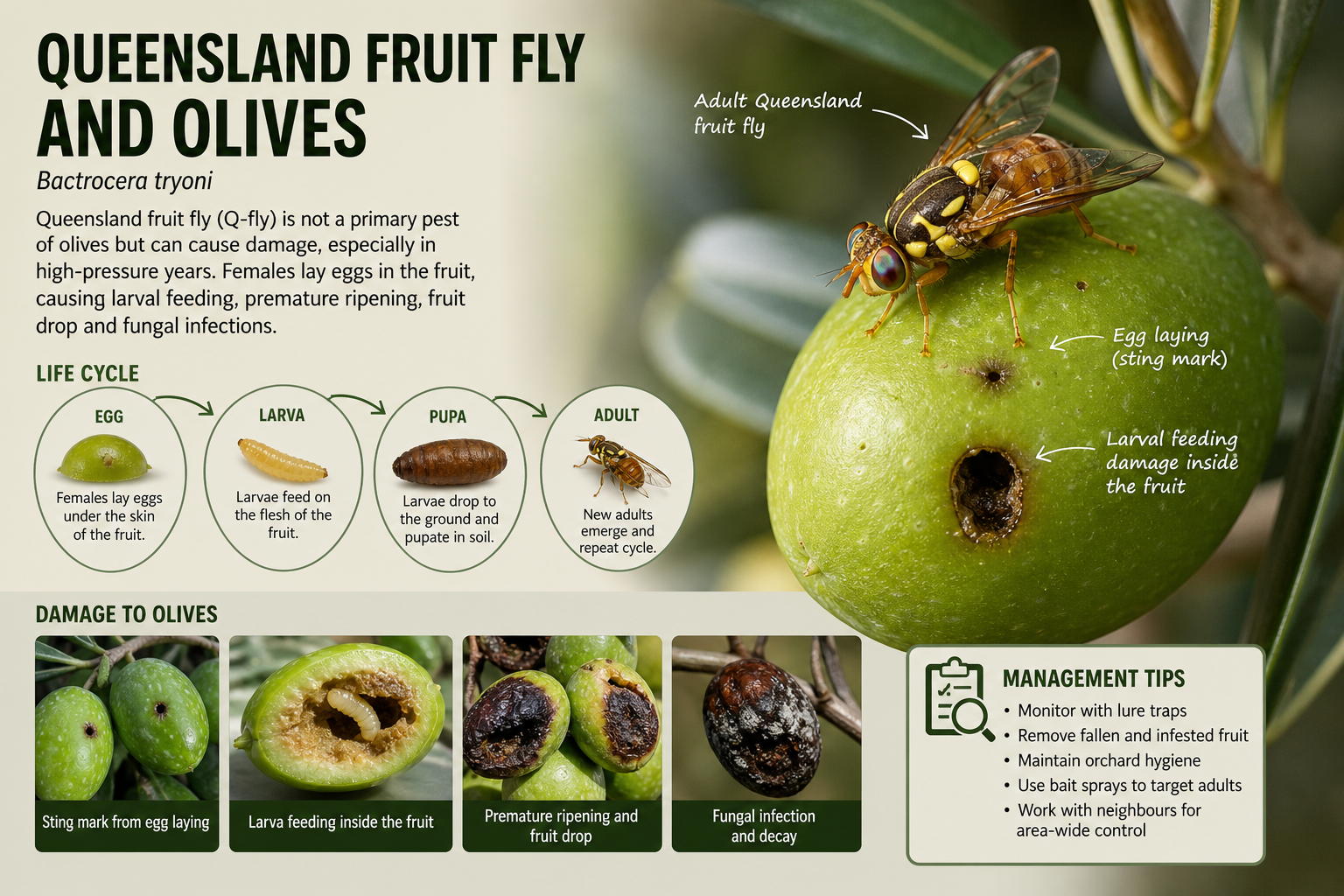
Queensland fruit fly (Bactrocera tryoni), commonly known as Q-fly, is Australia’s most economically significant horticultural pest. Its widespread impact on the stone fruit, citrus, and vegetable industries is well documented. However, its interactions with olives are less widely understood and often underestimated.

For olive growers, Q-fly occupies a grey zone i.e. it is not a primary pest, yet it can cause issues in olives. Under the right conditions, it can shift from a background risk to a notable issue affecting both production and fruit quality. This article explores the current scientific understanding of Q-fly in olive systems and outlines practical implications for commercial growers.
A Highly Adaptable Pest


Q-fly is a native Australian species with an exceptionally broad host range, attacking more than 200 fruit and vegetable species. Its success stems from high adaptability and it thrives across varied climatic zones, readily shifts between host crops, and persists in mixed agricultural and peri-urban environments.

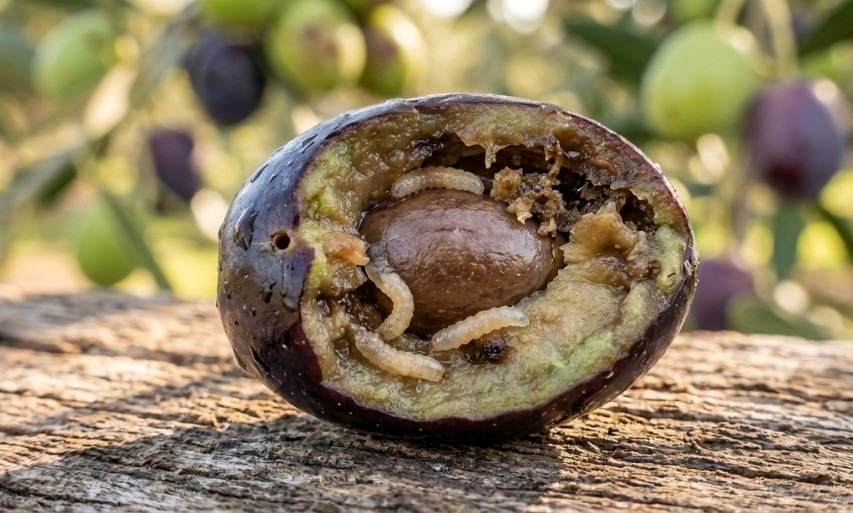
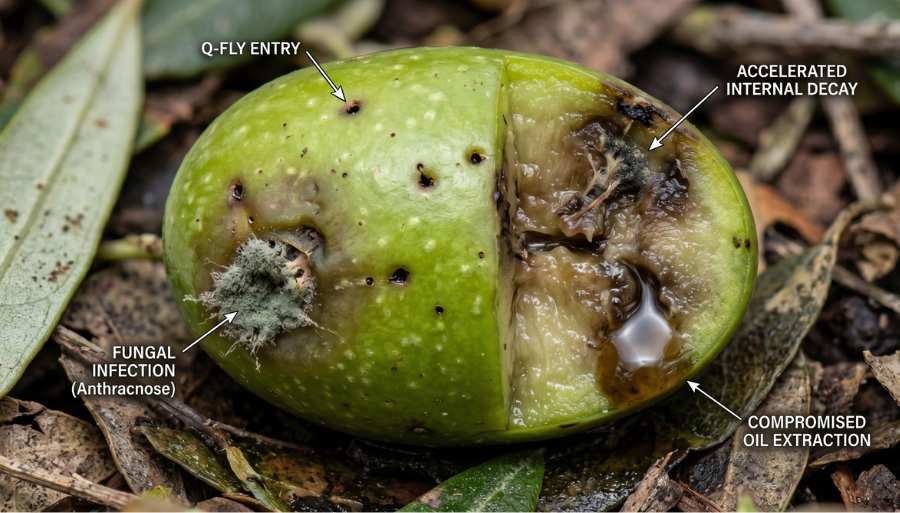
Female flies lay eggs directly into fruit, where larvae feed on the pulp. This internal feeding leads to fruit breakdown, premature drop, and entry points for secondary fungal pathogens. Population build-up is strongly driven by temperature, humidity, and host availability, with rapid increases occurring during warm, wet conditions.


Where Do Olives Fit?

Olives (Olea europaea) are generally considered a minor or occasional host for Queensland fruit fly. However, this label can be misleading.

Australian research and field observations show that:


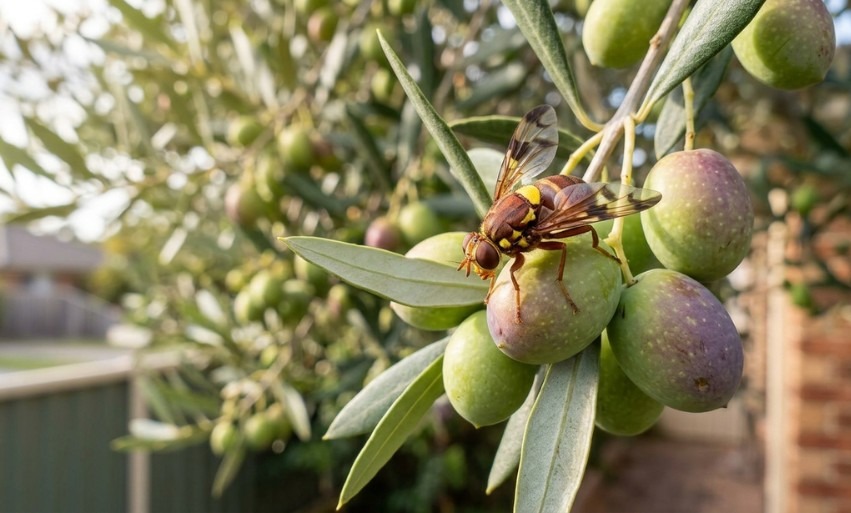
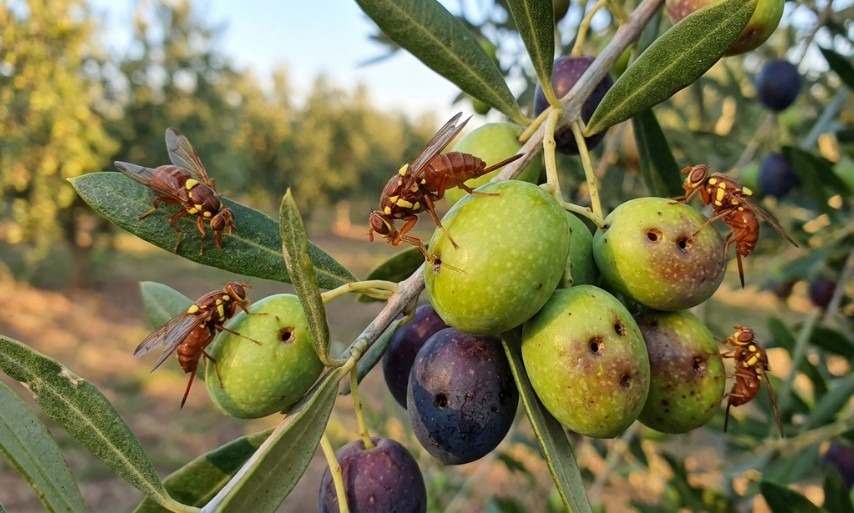
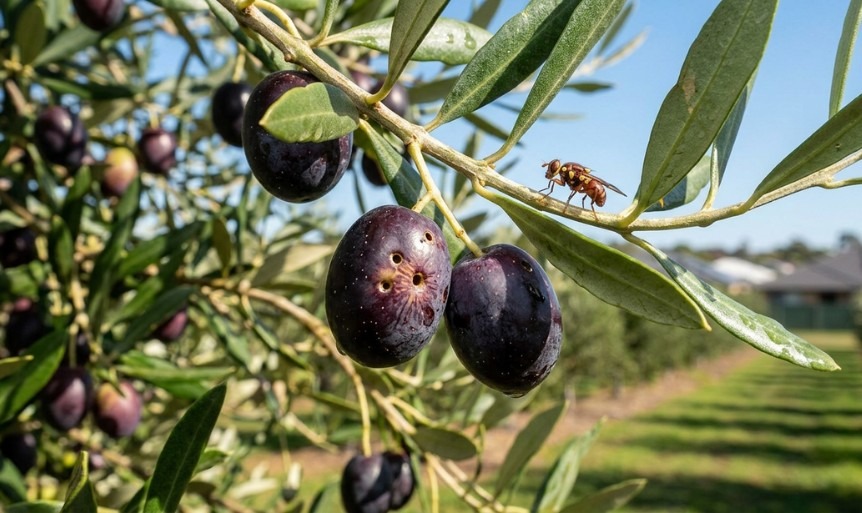
Q-fly females can and do oviposit in olive fruit.


Larval development can occur when conditions are favourable.


Damage tends to be sporadic but can become locally significant.


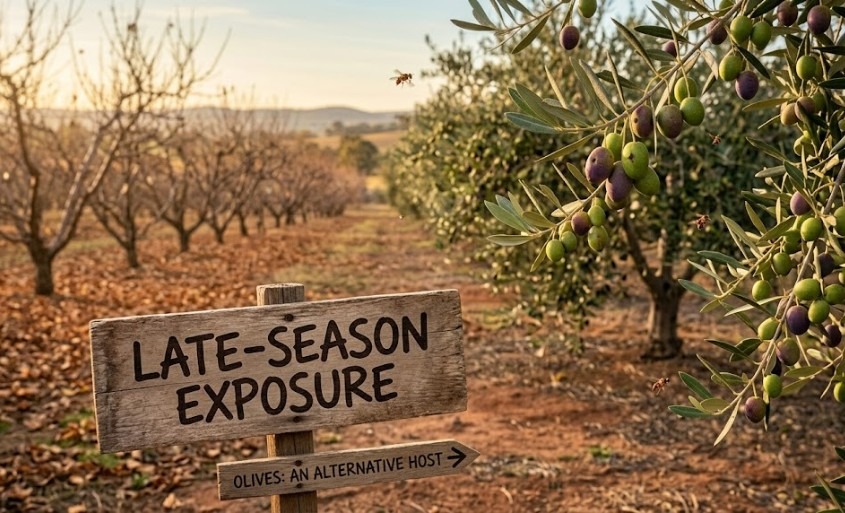
Importantly, olives often serve as a late-season host. When preferred summer fruits are no longer available, olive groves can help sustain fruit fly populations into autumn, integrating them into the wider ecological landscape supporting Q-fly.

When Risk Increases

For most olive growers, Q-fly is not a constant threat, but risk escalates under certain conditions:


Late-Season Exposure


Olives frequently remain on trees after stone fruit and other summer crops have finished. Residual fly populations may then target olives as an alternative host.


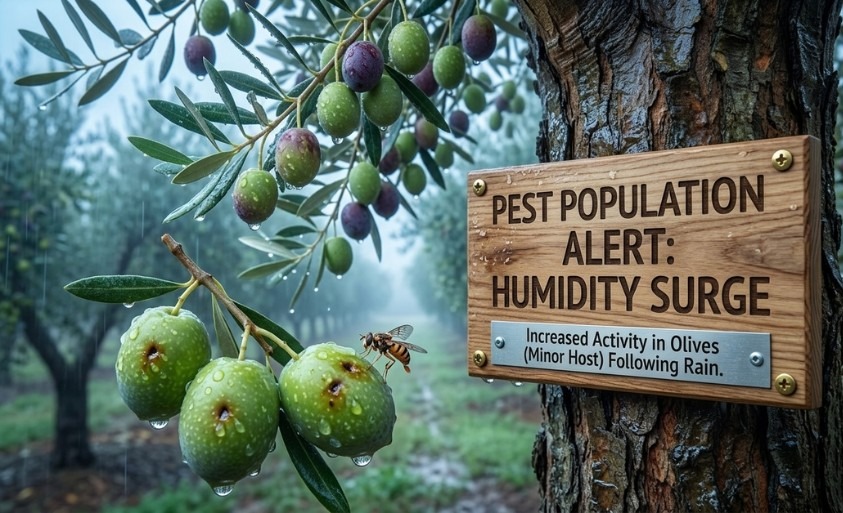
High Population Pressure

Seasons with above-average rainfall and humidity can trigger significant Q-fly surges, increasing attacks on less-preferred hosts like olives.


Variety and Fruit Size

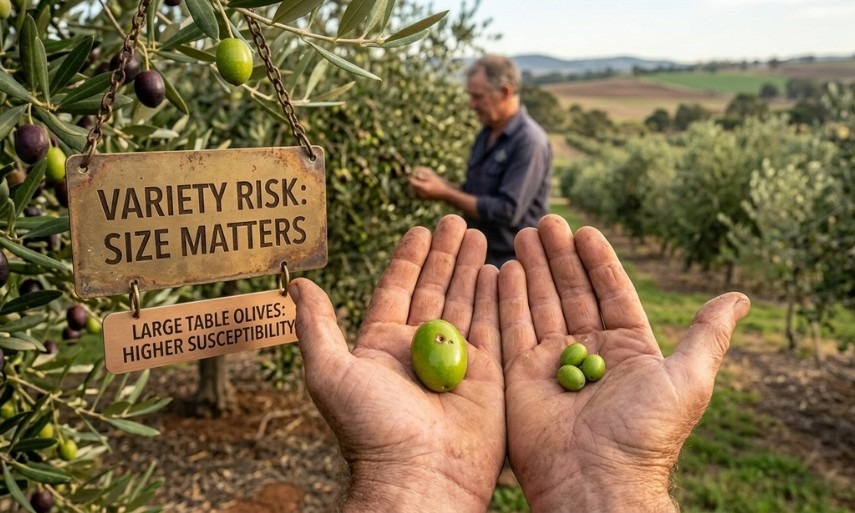
Larger-fruited table olive varieties tend to be more susceptible than smaller oil cultivars, likely due to greater suitability for oviposition.


Regional Context

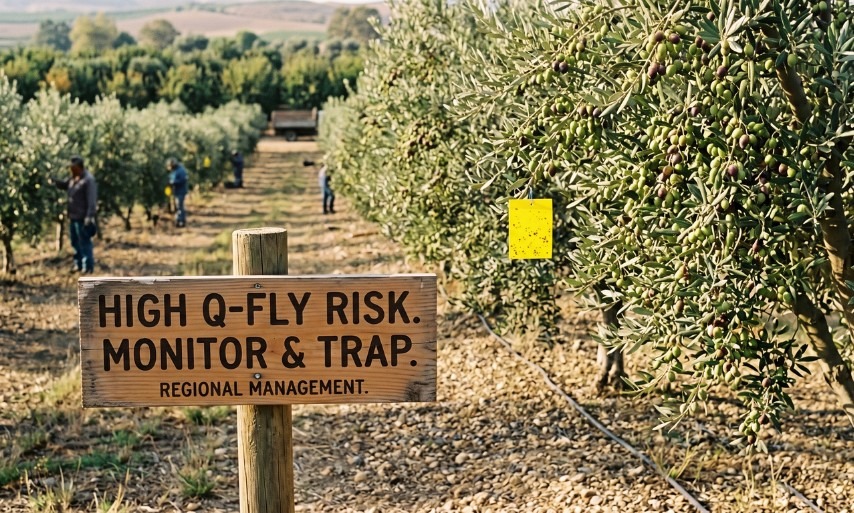
Groves located near stone fruit orchards, citrus blocks, or unmanaged backyard hosts face substantially higher pressure. Because Q-fly is highly mobile, isolated on-farm management has limited impact.


The Real Issue: Quality, Not Just Yield

Direct yield losses from Q-fly in olives are usually modest. The more serious consequences relate to fruit quality.


Physical Damage

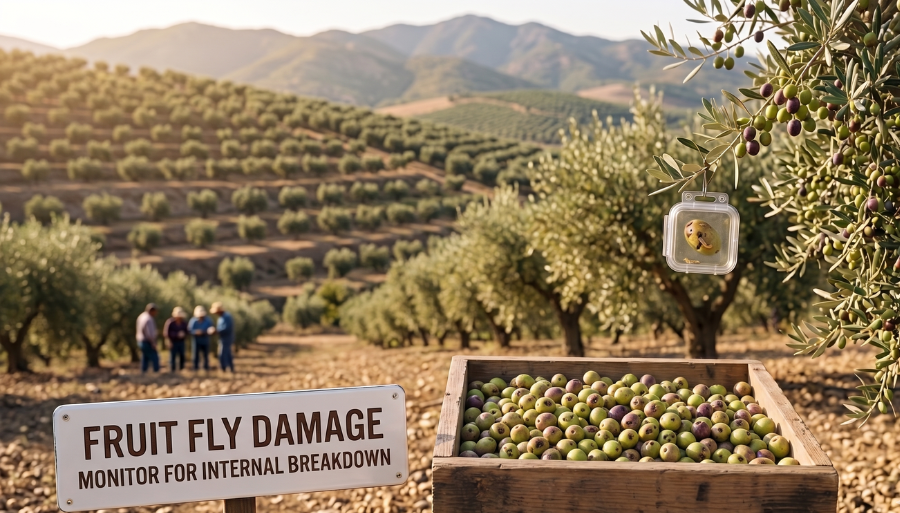
Egg-laying punctures (“stings”) and larval feeding cause premature softening, fruit drop, and internal breakdown.


Disease Interaction

Q-fly entry wounds create ideal infection sites for fungal pathogens such as anthracnose. This can accelerate fruit decay, increase rot incidence, and compromise outcomes during oil extraction.


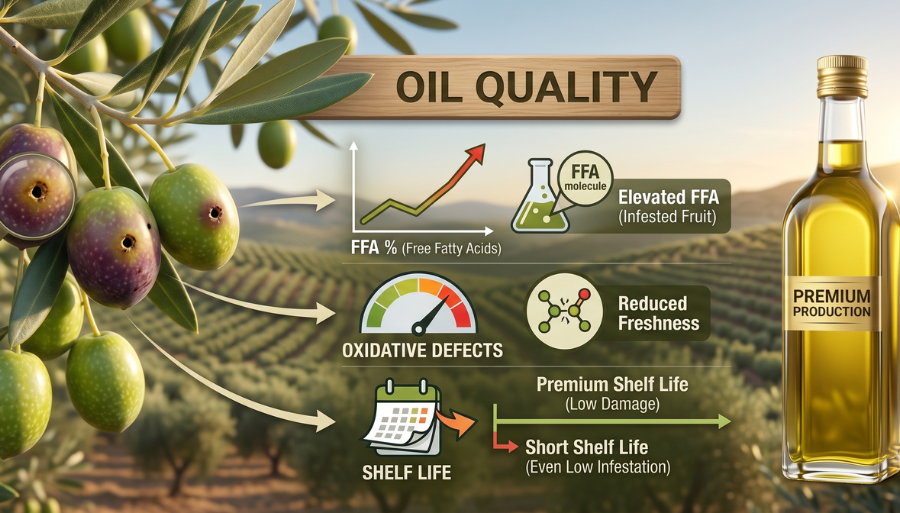
Oil Quality

Infested fruit can elevate free fatty acids (FFA), introduce oxidative defects, and shorten shelf life. Even low levels of damaged fruit can affect overall oil quality in premium production systems.


Biosecurity and Market Access

Beyond on-farm impacts, Q-fly is a regulated biosecurity pest. Its presence can trigger:


  • Movement restrictions between regions
  • Mandatory treatment or certification requirements
  • Limitations on interstate or export market access
For growers supplying premium or distant markets, proactive Q-fly management is essential for regulatory compliance and supply chain reliability.

Management in Olive Systems

Q-fly is opportunistic, management in olives should be integrated, cost-effective, and scaled to actual risk.


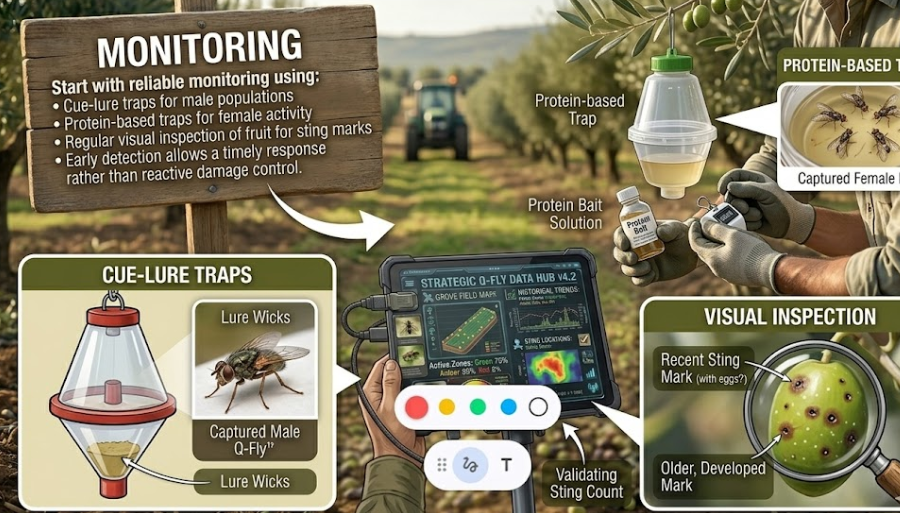
Monitoring

Start with reliable monitoring using:

  • Cue-lure traps for male populations
  • Protein-based traps for female activity
  • Regular visual inspection of fruit for sting marks
Early detection allows a timely response rather than reactive damage control.

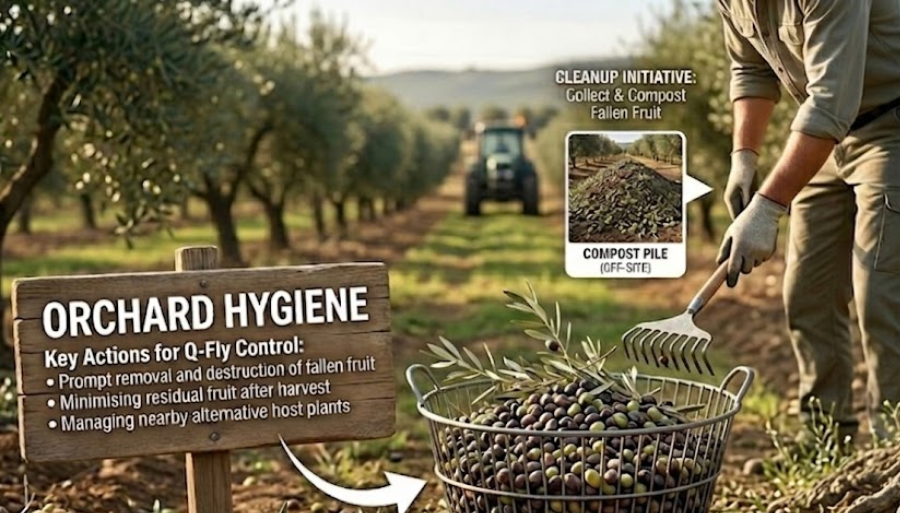
Orchard Hygiene

Sanitation remains one of the most effective tools:

  • Prompt removal and destruction of fallen fruit
  • Minimising residual fruit after harvest
  • Managing nearby alternative host plants where practical
These steps reduce breeding sites and limit population carry-over.

Baiting and Control

Protein bait sprays targeting female flies are a proven option, especially in higher-risk areas. Their efficacy increases markedly when applied as part of coordinated area-wide programs rather than isolated efforts.


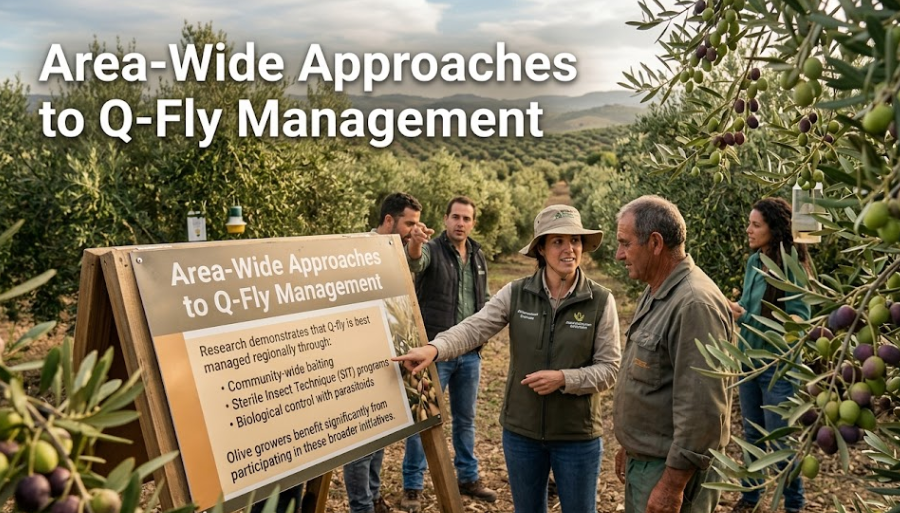
Area-Wide Approaches

Research demonstrates that Q-fly is best managed regionally through:

  • Community-wide baiting
  • Sterile Insect Technique (SIT) programs
  • Biological control with parasitoids

Olive growers benefit significantly from participating in these broader initiatives.


Looking Ahead With A Changing Risk Profile

Climate variability is likely to reshape Q-fly dynamics. Warmer temperatures and shifting rainfall patterns may extend the fly’s active season, improve overwintering survival, and increase pressure in regions previously considered lower risk. Combined with expanding horticultural plantings that provide continuous host availability, Q-fly is expected to remain a persistent secondary consideration for the Australian olive industry.

Final Perspective

Queensland fruit fly is not the primary pest challenge for olive growers, but it is a highly adaptable opportunist within the same production environment. In most seasons, it remains in the background; in challenging seasons, it can contribute to quality downgrades, disease pressure, and market complications.

The recommended approach is not alarm, but informed awareness: monitor early, manage regionally, and recognise that olive groves form part of the broader fruit fly ecosystem rather than existing outside it.