Sulphur & Silica Barrier Spray | The Olive Centre – Ultimate Protection for Fungal & Pest Defence
Advanced sulphur and silica barrier formulation enhanced with Australian essential oils.
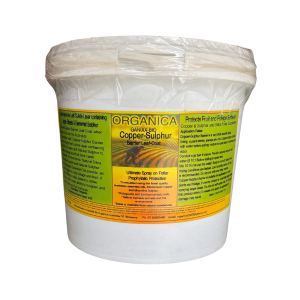
Sulphur & Silica Barrier Spray by Organica Australia is a premium protective formulation designed to provide ultimate sulphur and silica-based protection against fungal infections and pest pressures.
This unique barrier product combines micronised elemental sulphur with soluble silica and Australian essential oils, forming a breathable micro-latex film that shields plant foliage from disease pathogens while allowing natural air and nutrient exchange.
Made in Queensland and fully biologically and environmentally safe, this product supports both disease prevention and plant resilience. The combination of sulphur and silica strengthens the plant’s immune system and structural integrity, promoting healthier growth in all horticultural and agricultural crops.
Uses
Sulphur & Silica Barrier Spray is used as a preventative foliar protectant for crops prone to fungal infections such as powdery mildew, rust, and black spot. It can be applied on fruit trees, vegetables, vines, and ornamental plants, forming a protective barrier against airborne pathogens without restricting gas exchange. The silica component reinforces plant cell walls, helping plants resist stress and environmental challenges, while the elemental sulphur acts as a natural fungicide. This product is ideal for organic and sustainable farming systems where environmental safety and long-term crop health are priorities.
How It Works
Sulphur & Silica Barrier Spray works by creating a thin, flexible protective coating on plant foliage. The micro-fine latex barrier prevents fungal spores and bacteria from adhering to or penetrating the leaf surface. Embedded within this layer, micronised sulphur particles provide a powerful antifungal effect, disrupting pathogen metabolism and preventing spore germination. Soluble silica contributes by strengthening the epidermal layer of leaves and stems, improving structural resistance and natural defence. Unlike conventional coatings, this film allows plants to “breathe” — enabling photosynthesis, transpiration, and foliar nutrient uptake to continue normally.
Application Guidelines
Shake well before use. Dilute with clean water at a general rate of 1 part Sulphur & Silica Barrier Spray to 50–100 parts water, depending on the intensity of pressure and crop type. Apply using standard foliar spray equipment, ensuring complete coverage of both upper and lower leaf surfaces. Reapply every 10–14 days during periods of high disease risk or after heavy rainfall. The product can be applied as part of a regular nutrient or protective program and is compatible with most biological inputs. Avoid mixing with strong acids, alkaline materials, or synthetic surfactants.
Technical Specifications
| Specification |
Details |
| Active Ingredients |
Micronised Elemental Sulphur, Soluble Silica, Australian Essential Oils |
| Formulation Type |
Micro-fine natural latex suspension |
| Function |
Barrier film forming protectant against fungal and bacterial infection |
| Mode of Action |
Forms physical barrier; antifungal and cell-strengthening properties |
| pH Range |
Neutral to slightly acidic |
| Country of Manufacture |
Australia (Queensland) |
| Manufacturer |
Organica Australia Pty Ltd |
Organica Product Packaging & Weight Specifications
| Container Type |
Dimensions (cm / m) |
Weight Range |
Notes |
| 20 Litre Drum |
23 × 30 × 40 cm |
23–27 kg (varies by product) |
Standard size for smaller quantities of Organica liquid formulations. |
| 20 Litre Bucket |
30 × 30 × 40 cm |
23–27 kg (varies by product) |
Used for Organica paste, suspension, or heavy nutrient blends requiring a wider base. |
| 200 Litre Drum |
1.2 × 1.2 × 1.2 m |
240–300 kg |
Commonly used for bulk product supply to farms and distributors. |
| 1000 Litre IBC |
1.2 × 1.2 × 1.2 m |
1.2–1.6 tonnes |
Ideal for large-scale agricultural applications and long-term storage of Organica liquid nutrients. |
*All weights are approximate and may vary depending on the Organica product composition and density.
Environmental & Safety Information
The Sulphur & Silica Barrier Spray is biodegradable, non-toxic, and safe for beneficial insects and pollinators. It contains no harmful solvents or synthetic fungicides and poses minimal environmental impact. The latex component is plant-based and fully breaks down naturally after exposure. The formulation is guaranteed not to settle out in the container and can be applied through most standard spray systems without clogging. As with all foliar applications, protective gloves and eyewear are recommended during use.
Why Choose Sulphur & Silica Barrier Spray
This product provides a complete solution for growers seeking organic, preventive disease protection while supporting plant vitality. Unlike synthetic fungicides, it works as a prophylactic layer, stopping infection before it begins. The combined benefits of elemental sulphur, soluble silica, and essential oils make it one of the most effective and environmentally friendly plant protection tools available. Designed and produced in Queensland, it is a trusted product for growers who prioritise sustainability, soil health, and consistent results under Australian conditions.
Frequently Asked Questions