My Shopping Cart
| Bulk Discounts Prices | |
| Quantity | Price |
| 1 | $16.88 |
The Animal-Away Plus is an advanced outdoor pest deterrent that combines PIR motion detection, ultrasonic and sonic sound emission, and a flashing LED strobe to chase away unwelcome animals safely and humanely. Designed to protect gardens, lawns, flower beds, ponds, and outdoor areas, it covers up to 85 square meters with a wide detection angle of 70° at a range of 12 meters.
Using a Passive Infrared (PIR) sensor, the unit detects animal movement and activates ultrasonic/sonic waves and flashing strobes to startle and repel pests. The frequency shifts between 18,000–24,000 Hz, preventing animals from becoming accustomed to the sound. With weather-resistant construction and flexible power options, the Animal-Away Plus is a low-maintenance solution for long-term animal control.
| Specification | Value |
|---|---|
| Dimensions | 110 x 100 x 95 mm |
| Weight | 255 g |
| Power Supply | 2x 9V batteries or 240V AC adaptor (12V DC output) |
| Standby Current | 0.16mA |
| Frequency Range | 18,000–24,000 Hz (variable) |
| Detection Coverage | 12 m range, 70° fan shape (approx. 85 sqm) |
| LED Strobe Life | Up to 100,000 hours |
This motion-activated repeller provides an effective, humane, and maintenance-free solution to keep animals away from sensitive areas. Unlike chemical repellents or traps, it poses no harm to animals or humans. With its ultrasonic/sonic emission, flashing strobe, and wide coverage, the Animal-Away Plus is trusted for both residential and commercial applications where unwanted animals are a problem.
Q: How does the Animal-Away Plus use ultrasonic and strobe technology to repel animals?
The unit combines PIR motion detection with ultrasonic and sonic sound frequencies, along with a flashing LED strobe. When an animal enters the detection zone, the sensor triggers high-frequency sound waves (18,000–24,000 Hz) that are uncomfortable for animals but inaudible to most humans. Simultaneously, the LED strobe flashes to startle pests and enhance deterrence. This multi-sensory approach makes the device more effective than sound-only or light-only repellents, as animals are less likely to adapt over time.
Key advantages include:
The result is a reliable solution to protect gardens, lawns, and property from unwanted animals without causing harm.
| File | Title | File Description | Type | Section |
|---|---|---|---|---|
| LS-987F.pdf | Animal-Away Plus Brochure LS-987F | Combines PIR, Ultrasonic, Sonic, and Flashing Strobe to repel animals safely. | Catalogue | Document |
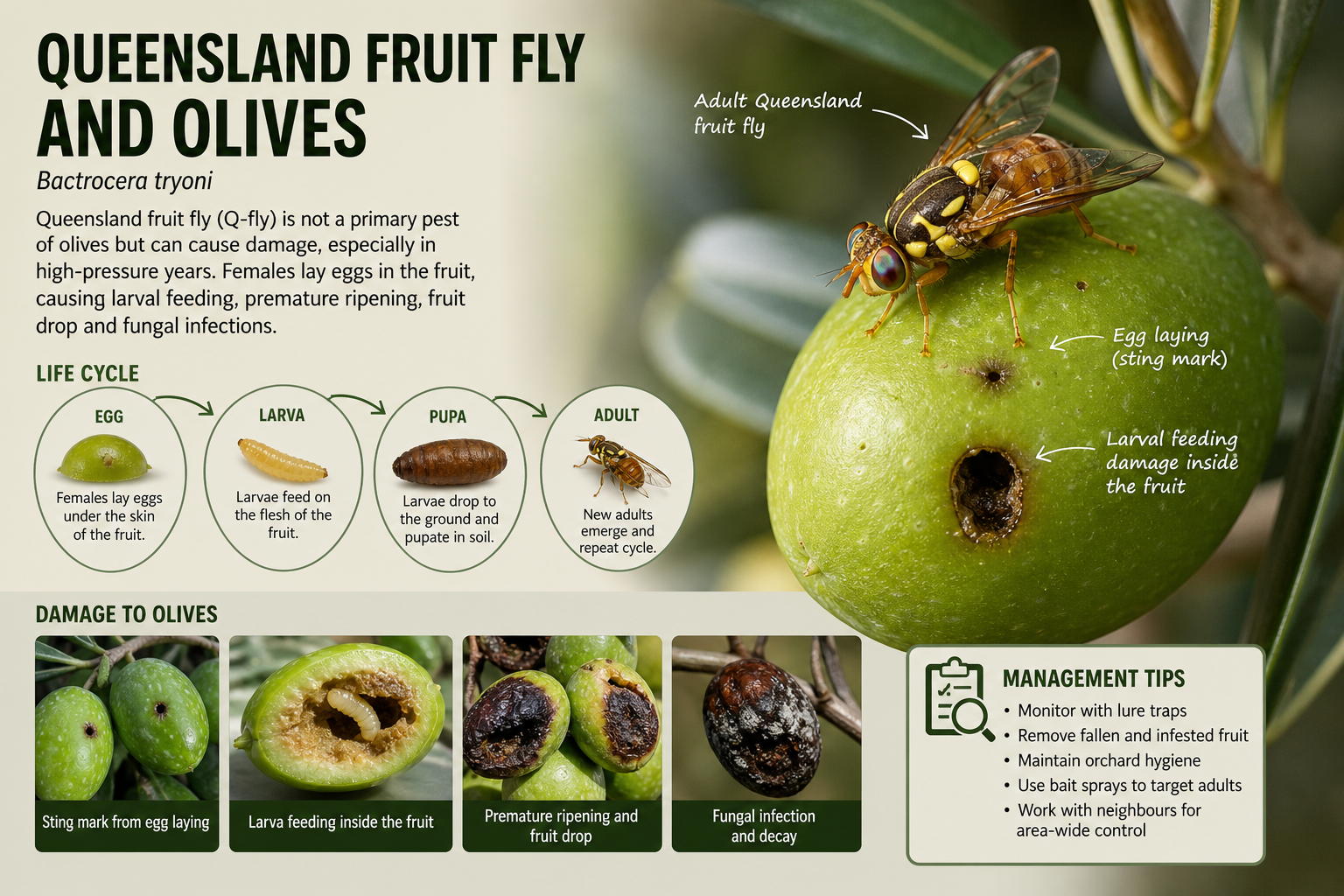
Queensland fruit fly (Bactrocera tryoni), commonly known as Q-fly, is Australia’s most economically significant horticultural pest. Its widespread impact on the stone fruit, citrus, and vegetable industries is well documented. However, its interactions with olives are less widely understood and often underestimated.
For olive growers, Q-fly occupies a grey zone i.e. it is not a primary pest, yet it can cause issues in olives. Under the right conditions, it can shift from a background risk to a notable issue affecting both production and fruit quality. This article explores the current scientific understanding of Q-fly in olive systems and outlines practical implications for commercial growers.
Q-fly is a native Australian species with an exceptionally broad host range, attacking more than 200 fruit and vegetable species. Its success stems from high adaptability and it thrives across varied climatic zones, readily shifts between host crops, and persists in mixed agricultural and peri-urban environments.
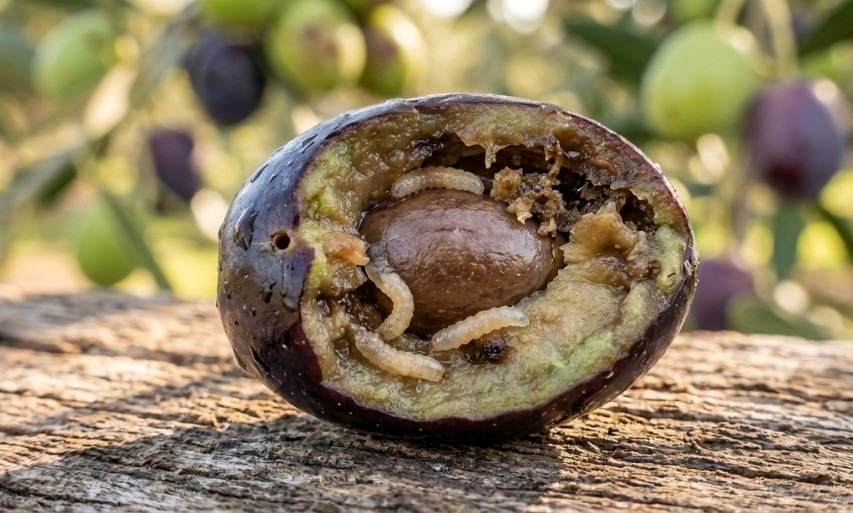
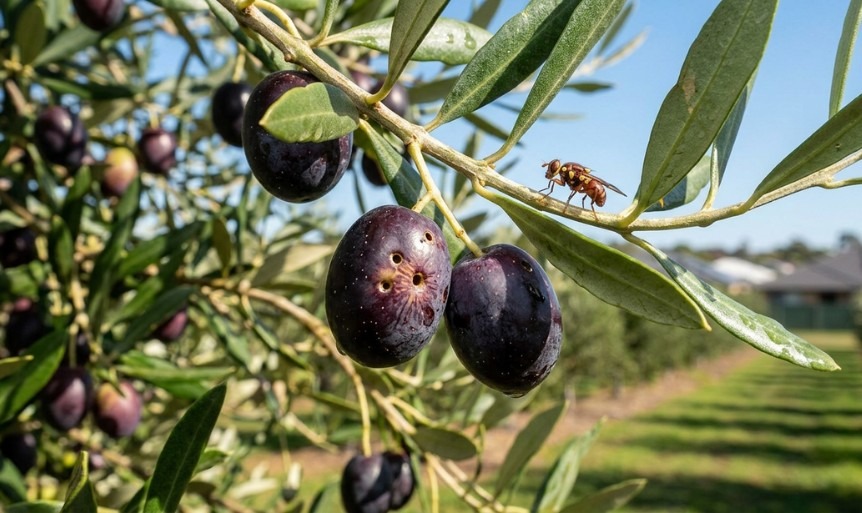
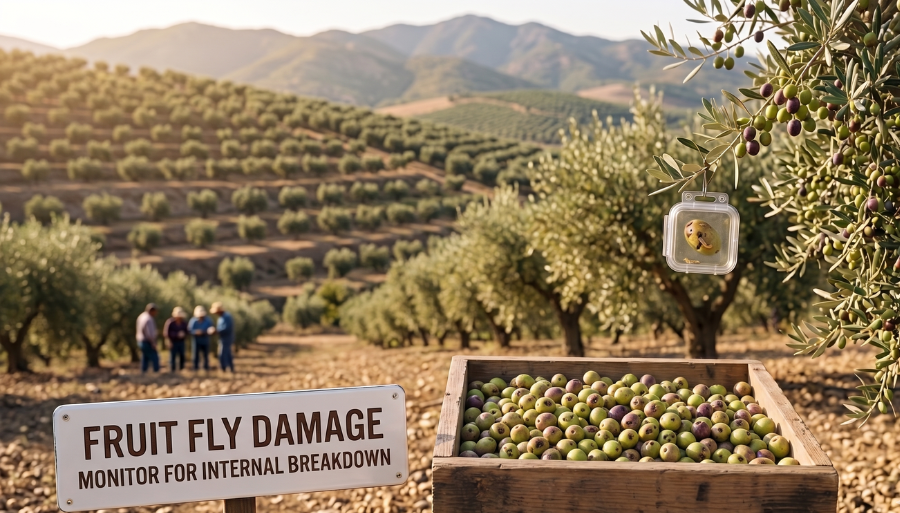
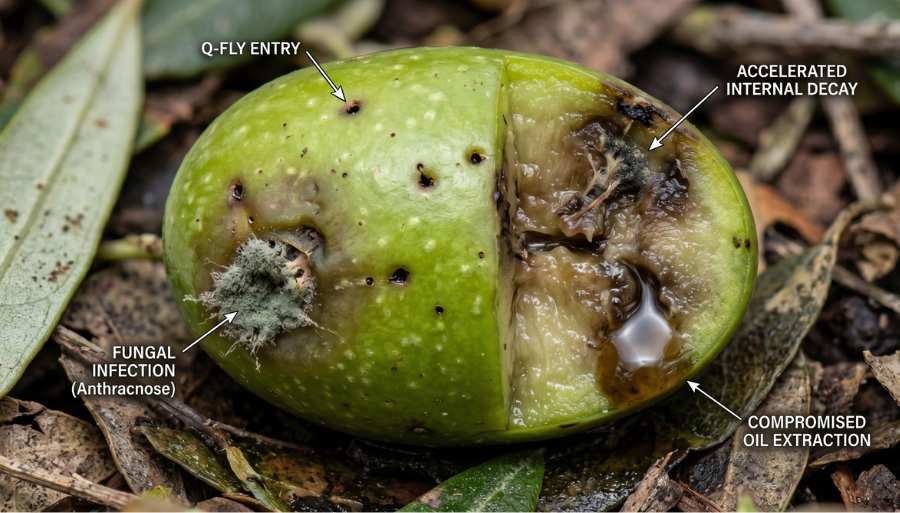
Female flies lay eggs directly into fruit, where larvae feed on the pulp. This internal feeding leads to fruit breakdown, premature drop, and entry points for secondary fungal pathogens. Population build-up is strongly driven by temperature, humidity, and host availability, with rapid increases occurring during warm, wet conditions.
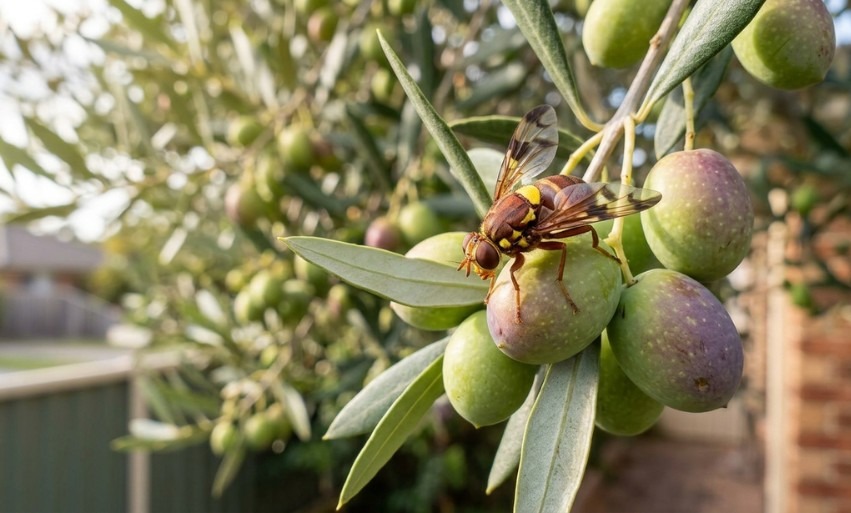
Olives (Olea europaea) are generally considered a minor or occasional host for Queensland fruit fly. However, this label can be misleading.
Australian research and field observations show that:
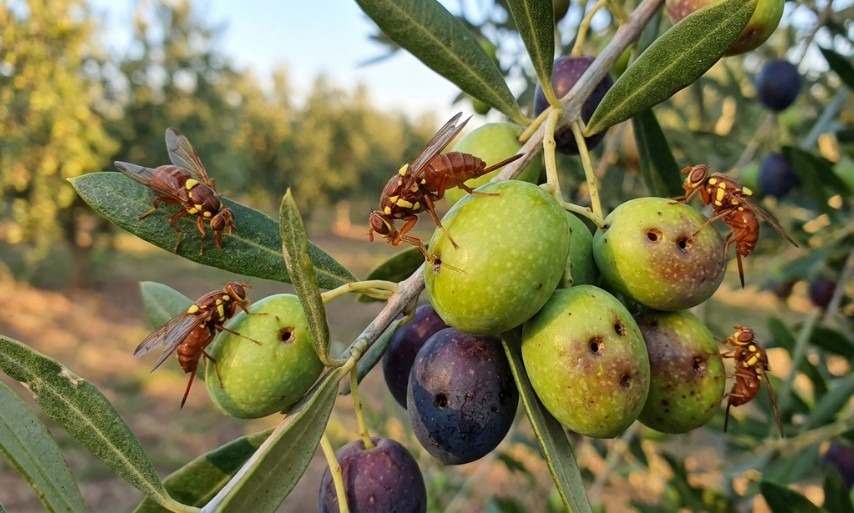
Q-fly females can and do oviposit in olive fruit.
Larval development can occur when conditions are favourable.
Damage tends to be sporadic but can become locally significant.
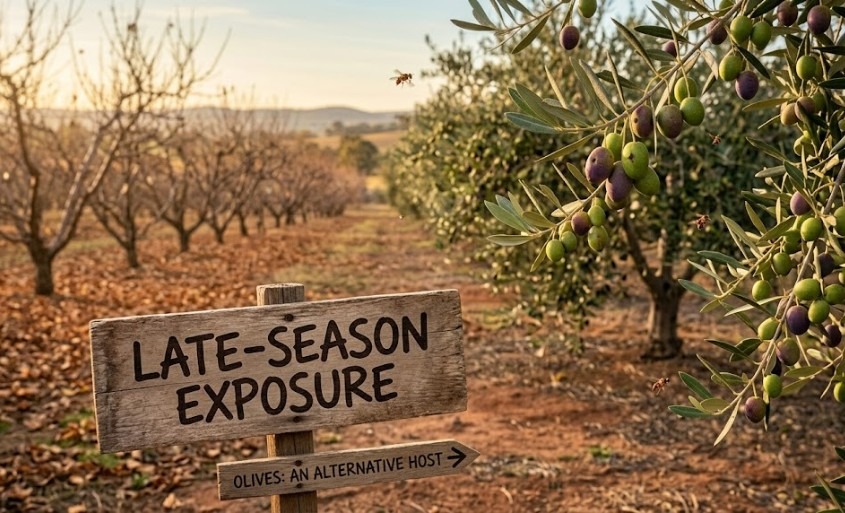
Importantly, olives often serve as a late-season host. When preferred summer fruits are no longer available, olive groves can help sustain fruit fly populations into autumn, integrating them into the wider ecological landscape supporting Q-fly.
For most olive growers, Q-fly is not a constant threat, but risk escalates under certain conditions:
Olives frequently remain on trees after stone fruit and other summer crops have finished. Residual fly populations may then target olives as an alternative host.
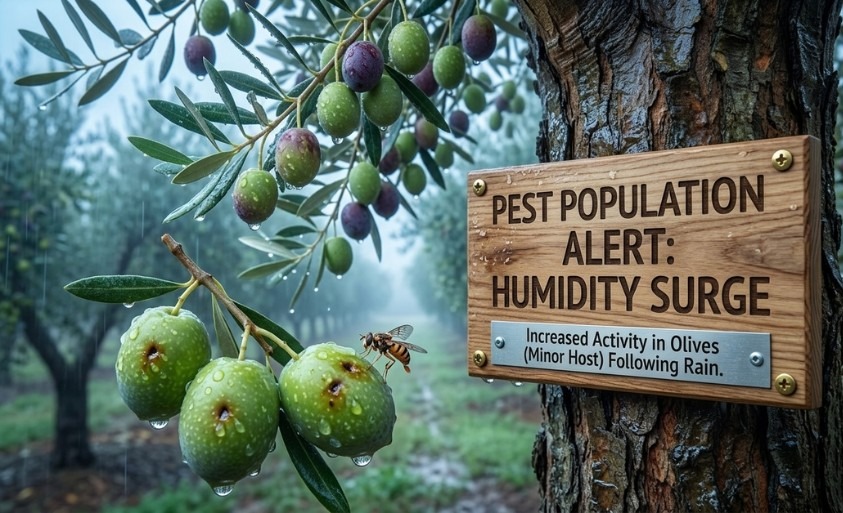
Seasons with above-average rainfall and humidity can trigger significant Q-fly surges, increasing attacks on less-preferred hosts like olives.
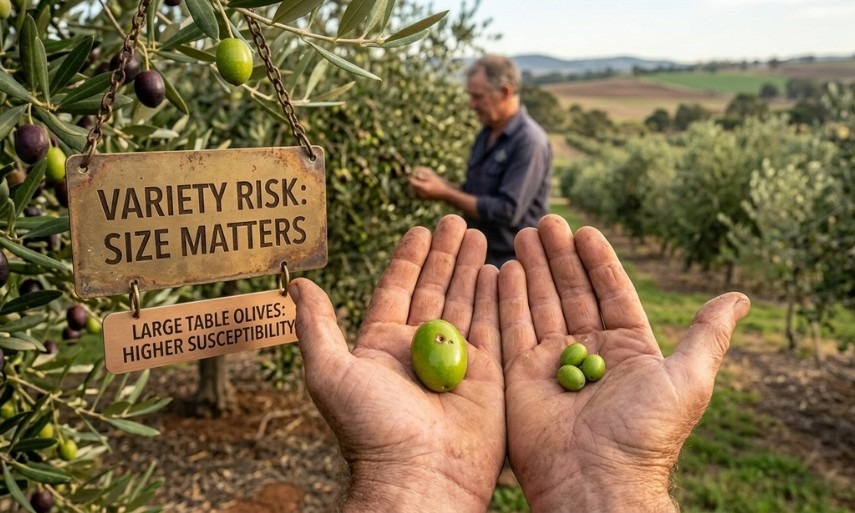
Larger-fruited table olive varieties tend to be more susceptible than smaller oil cultivars, likely due to greater suitability for oviposition.
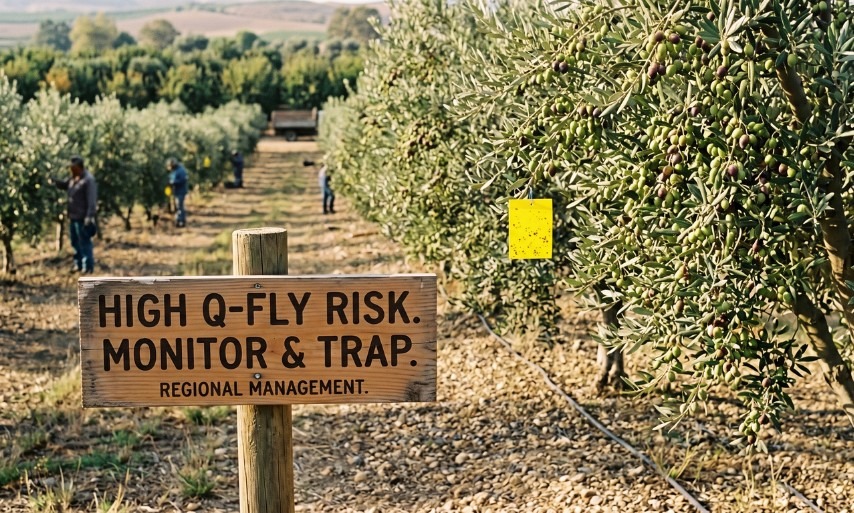
Groves located near stone fruit orchards, citrus blocks, or unmanaged backyard hosts face substantially higher pressure. Because Q-fly is highly mobile, isolated on-farm management has limited impact.
Direct yield losses from Q-fly in olives are usually modest. The more serious consequences relate to fruit quality.
Egg-laying punctures (“stings”) and larval feeding cause premature softening, fruit drop, and internal breakdown.
Q-fly entry wounds create ideal infection sites for fungal pathogens such as anthracnose. This can accelerate fruit decay, increase rot incidence, and compromise outcomes during oil extraction.
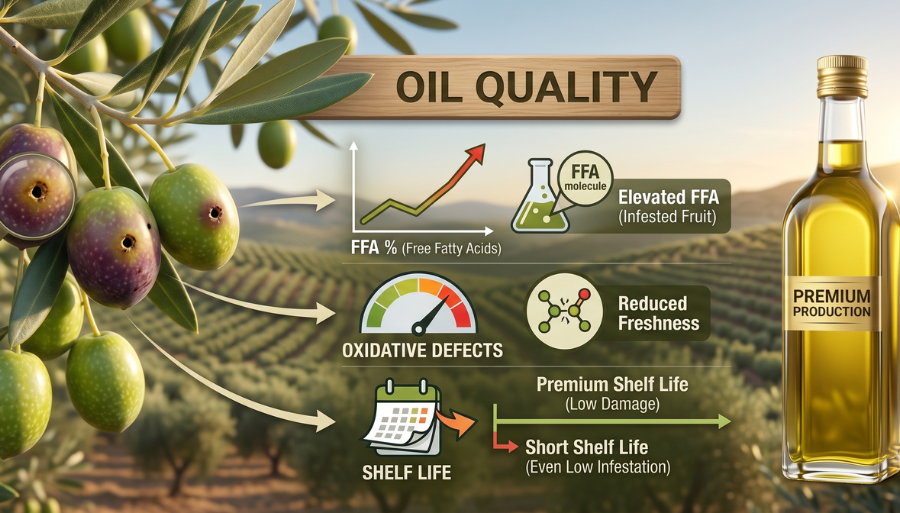
Infested fruit can elevate free fatty acids (FFA), introduce oxidative defects, and shorten shelf life. Even low levels of damaged fruit can affect overall oil quality in premium production systems.
Q-fly is opportunistic, management in olives should be integrated, cost-effective, and scaled to actual risk.
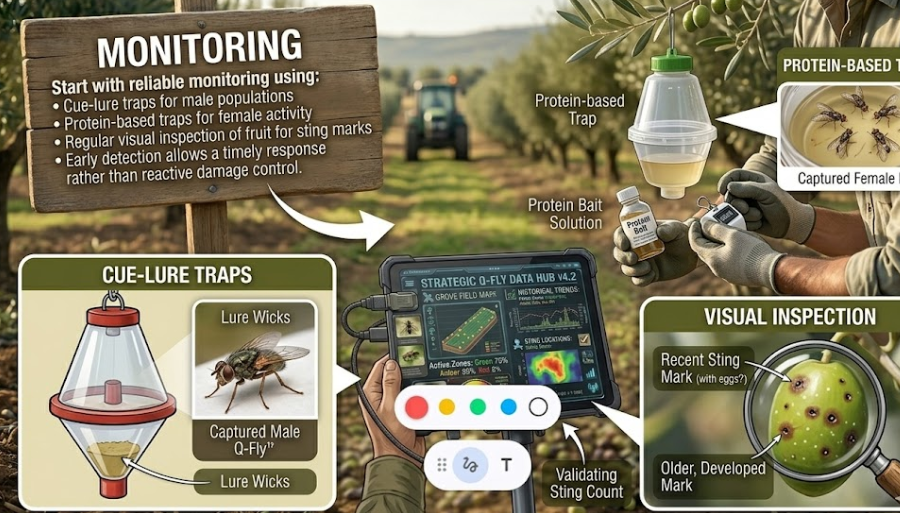
Monitoring
Start with reliable monitoring using:
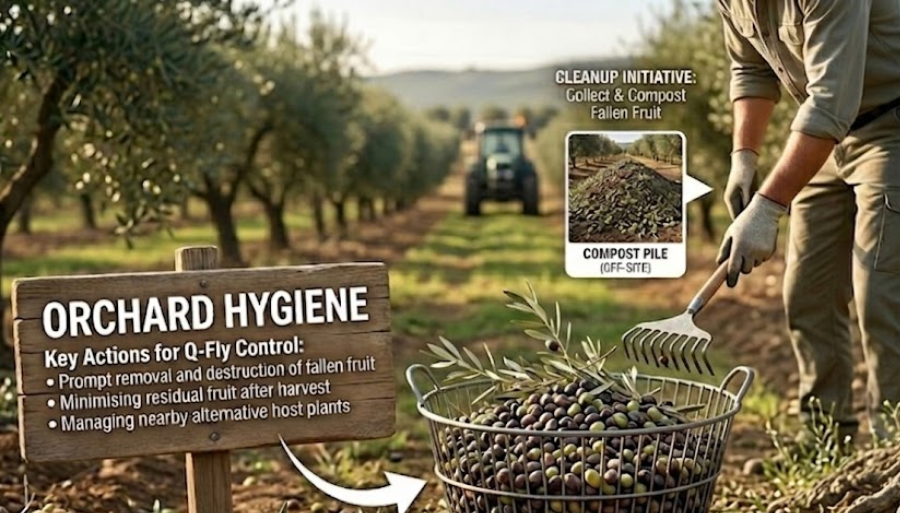
Sanitation remains one of the most effective tools:
Protein bait sprays targeting female flies are a proven option, especially in higher-risk areas. Their efficacy increases markedly when applied as part of coordinated area-wide programs rather than isolated efforts.
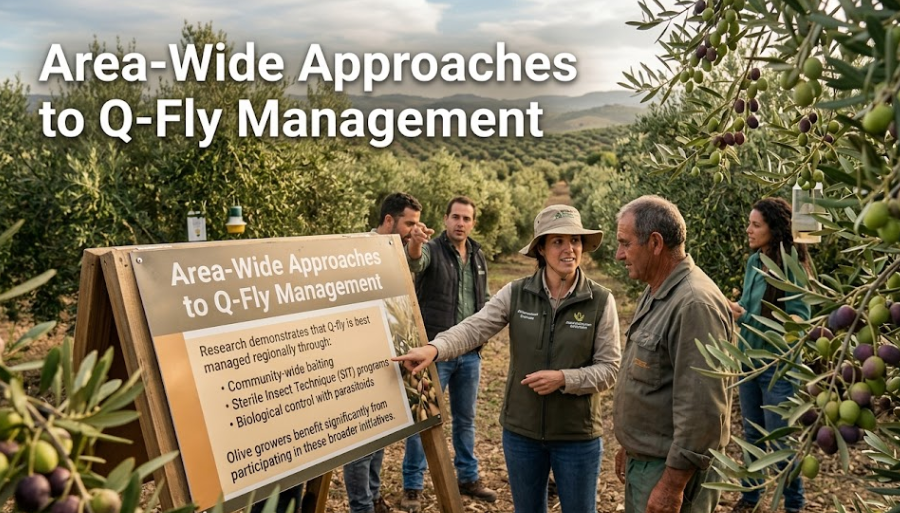
Area-Wide Approaches
Research demonstrates that Q-fly is best managed regionally through:
Olive growers benefit significantly from participating in these broader initiatives.
Climate variability is likely to reshape Q-fly dynamics. Warmer temperatures and shifting rainfall patterns may extend the fly’s active season, improve overwintering survival, and increase pressure in regions previously considered lower risk. Combined with expanding horticultural plantings that provide continuous host availability, Q-fly is expected to remain a persistent secondary consideration for the Australian olive industry.
Queensland fruit fly is not the primary pest challenge for olive growers, but it is a highly adaptable opportunist within the same production environment. In most seasons, it remains in the background; in challenging seasons, it can contribute to quality downgrades, disease pressure, and market complications.
The recommended approach is not alarm, but informed awareness: monitor early, manage regionally, and recognise that olive groves form part of the broader fruit fly ecosystem rather than existing outside it.