My Shopping Cart
| Container Type | Dimensions (cm / m) | Weight Range | Notes |
|---|---|---|---|
| 20 Litre Drum | 23 × 30 × 40 cm | 23–27 kg (varies by product) | Standard size for smaller quantities of Organica liquid formulations. |
| 20 Litre Bucket | 30 × 30 × 40 cm | 23–27 kg (varies by product) | Used for Organica paste, suspension, or heavy nutrient blends requiring a wider base. |
| 200 Litre Drum | 1.2 × 1.2 × 1.2 m | 240–300 kg | Commonly used for bulk product supply to farms and distributors. |
| 1000 Litre IBC | 1.2 × 1.2 × 1.2 m | 1.2–1.6 tonnes | Ideal for large-scale agricultural applications and long-term storage of Organica liquid nutrients. |
*All weights are approximate and may vary depending on the Organica product composition and density.
| File | Title | File Description | Type | Section |
|---|---|---|---|---|
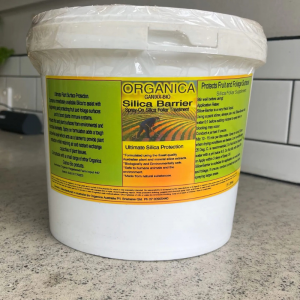
| MSDS-Ganixx-bio-Silica-Barrier.pdf | Organica Bio Silica Barrier | Material Safety Data Sheet | Specifications | Document |
A successful Grove Management Plan must cover these key areas:
"A grove without an effective irrigation system is unlikely to deliver consistent yields year after year. Many growers still underestimate the water needs of olive trees, and few actually monitor soil moisture levels. This is why so many groves have never achieved a commercial crop." Marcelo Berlanda Specialist Olive Consultant
Water stress negatively affects flowering, fruit set, oil accumulation (oil production), fruit size (table olives), fruit quality, and overall tree health. However, many growers lack a proper system to monitor soil moisture or manage irrigation effectively.
Marcelo recommends:
"Growers should inspect soil moisture weekly during spring and summer, and every two weeks in autumn and winter. Use a shovel to dig at least 400mm under the tree canopy to check moisture. If the soil is hard to dig, it’s too dry – even if the canopy shows no visible signs of stress."
Advanced soil moisture monitoring tools can also provide reliable data on a digital display or computer dashboard.
For optimal grove health, growers must consistently check soil moisture and prevent water stress.
As discussed previously, taking leaf samples is essential to assess your trees’ nutritional status. This information guides the creation of a fertiliser program, a critical component for boosting or maintaining yields.
Typically, no fertiliser is needed in winter, unless you’re addressing soil amendments. However, some groves have severe nutrient deficiencies requiring fertiliser even in winter. Where proper irrigation systems aren’t in place, growers must broadcast fertiliser before rain to allow rainfall to incorporate nutrients into the soil profile, an inefficient use of resources but often the only option.
When applying fertiliser in these conditions, target the area beneath the canopy and, if possible, cultivate the soil to improve incorporation and reduce product loss.
Olives need four essential nutrients: Nitrogen, Phosphorus, Potassium, and Calcium. Check product labels carefully. As a general guideline, aim for:
Avoid pruning during the coldest part of winter and when it’s wet or foggy to reduce the risk of bacterial and fungal disease spread.
The main goals of pruning are to remove dead wood, reduce canopy size, restore tree balance, encourage healthy new growth, and increase fruit set in spring.
Tip: After pruning, apply a copper-based spray to protect wounds from infection by fungi and bacteria.
Pest & disease management is crucial for sustaining yield and tree health. Winter’s colder temperatures reduce insect activity, offering a prime time to tackle pest issues.
Set up a comprehensive Pest and Disease Monitoring Program. During winter, check marked trees (previously affected by pests or diseases) every two weeks; in spring, check weekly. Look under leaves and on new growth for signs like crawlers, yellow spots, black sooty mold, or anything unusual.
Proactive, weekly management is essential for a successful grove.
If you need further assistance, please contact us.
INDUSTRY UPDATE: AUSTRALIAN OLIVE GROWERS 2023 SEASON
“Earlier in the season, the industry was anticipating an excellent harvest,” Mr Valmorbida said. “However, persistent cold weather and rainfall during May and June, particularly across south-east Australia, have taken their toll.”
Although the Australian olive harvest is not officially recorded each year, the AOOA estimates that the 2023 season will produce between 18 and 19 million litres of olive oil from roughly 110,000 to 120,000 tonnes of olives.
This compares with last year’s output of 14–15 million litres and the record-breaking 2021 crop, which yielded 20–22 million litres of oil.
Mr Valmorbida explained that these fluctuations reflect the biennial cycle of olive production. “This is what we call an ‘on’ year for olives. While we were expecting an excellent yield earlier in the year, harvest results always depend heavily on weather conditions, and this season has been quite mixed for many growers.”
“The oil yield per tonne is noticeably lower than average due to the cooler growing period,” he added, “but the quality of the oil remains excellent because the fruit had more time to ripen gradually.”
Around the world, olive oil prices have reached record highs in Spain, Italy, and Greece, driven by a severe global shortage of olive oil. Hot temperatures, minimal rainfall during key stages of the growing season, and extended drought conditions across southern Spain have drastically reduced European output. In addition, the ongoing conflict in Ukraine has disrupted the production of vegetable and seed oils, increasing global demand for olive oil as an alternative.
In Australia, growers are currently achieving $6–$7 per litre for larger commercial volumes of olive oil, with even higher prices for export batches, premium small-lot oils, and organic extra virgin olive oil.
“With this global shortage, some of the larger Australian producers are in a strong position to export olive oil to Europe and receive competitive returns,” Mr Valmorbida said.
“While that’s encouraging news for the Australian olive oil industry, globally the sector is under pressure,” he continued. “There’s currently a 35–40 percent shortfall in available products, combined with escalating packaging costs, especially for glass and tin materials.”
“These factors, along with rising labour and energy expenses, are leading to higher retail prices for consumers,” he noted.
Mr Valmorbida concluded with a reminder to consumers: “It’s important to remember there’s no product quite like olive oil—its distinctive flavour, health benefits, and culinary versatility make it irreplaceable.”
#oliveharvest2024 #harvest2024
The Australian Olive Oil Association (AOOA) is a not-for-profit, independent organisation dedicated to promoting the quality, integrity, and fair trade of olive oil in Australia. Membership is open to olive oil producers, distributors, industry stakeholders, and related organisations.
Since 1993, AOOA has been a signatory to the International Olive Council (IOC) global quality control program. Each year, the Association coordinates independent laboratory testing of leading olive oil brands to ensure compliance with IOC standards.
In addition, the AOOA Certified Quality Seal Program upholds even stricter quality criteria, allowing AOOA-member products to distinguish themselves in both domestic and international markets.
For more information:
Jan Jacklin, General Manager, Australian Olive Oil Association gm@aooa.com.au www.aooa.com.au
Photo credit: Julia, olive grove – Kyneton Olives” by avlxyz is licensed under CC BY-SA 2.0. To view a copy of this license, visit: https://creativecommons.org/licenses/by-sa/2.0/?ref=openverse

Introduction
Managing a professional olive production enterprise requires a holistic operational system that covers every aspect of grove management – from seasonal field practices to financial tracking and technology integration. This report outlines a comprehensive system designed for professional olive producers in Australia (with relevance internationally), detailing best-practice management structures, cost tracking methods, data monitoring and decision-support tools, forecasting techniques, and ready-to-use workflows and templates. By implementing a structured approach with clear planning, recordkeeping, and modern tech integration, olive growers can improve productivity, sustainability, and profitability. The following sections break down the components of this system with practical guidelines and examples.
Effective olive grove management is multi-faceted, involving year-round planning and execution of tasks. It is helpful to organise these tasks by season and category, ensuring nothing is overlooked throughout the year. Table 1 provides an overview of key seasonal activities in an Australian context (southern hemisphere), which can be adjusted for other regions (the timing of seasons will differ in the northern hemisphere ). Each activity should be supported by detailed record-keeping and adherence to best practices for orchard maintenance, irrigation, nutrition, pest control, pruning, and harvest.
Proactive seasonal planning is vital. By mapping out activities month-by-month, growers can ensure each critical task is done at the right time. Many producers use a yearly task calendar or planner to schedule operations. For example, the Australian Olive Association’s Yearly Orchard Planner outlines monthly tasks ranging from machinery servicing in the off-season to timely fertiliser applications and harvest prep. Such a planner ensures cross-over tasks (e.g. tractor maintenance benefiting both grove and other farm enterprises) are efficiently scheduled. It’s important to adjust the calendar to local climate patterns and whether the grove is in the southern or northern hemisphere. Regular planning meetings (e.g. before each season change) can help assign responsibilities and resources for upcoming tasks.
Accurate record keeping underpins all aspects of the operational system. Every activity – from spray applications to harvest yields – should be logged. This not only aids internal decision-making but also is often required for compliance (e.g. chemical use records) or quality assurance programs (such as the OliveCare® code of best practice ). Key records to maintain include:
General orchard maintenance activities ensure the grove’s long-term health and accessibility. These include ground cover management, upkeep of equipment, and maintaining the orchard environment:
Efficient water management is crucial for olive production, especially in Australia’s climate, where seasonal droughts are common. Olives are relatively drought-tolerant, but strategic irrigation greatly improves yield and oil quality in most Australian growing regions. Key components of irrigation management include:
Overall, irrigation in an olive operational system should be proactive and precision-focused. Given water scarcity concerns, Australian producers in particular benefit from these efficient practices – a fact evidenced by large groves like Boundary Bend investing heavily in irrigation technology research to “use less water but retain optimum productivity”. Well-managed irrigation not only saves water and energy, but also directly contributes to consistent yields and oil quality.
Proper fertilisation of olive trees ensures they have the nutrients needed for vegetative growth, fruiting, and recovering after harvest. The nutrition program should be based on soil and leaf analysis plus the grove’s yield goals. Key points include:
Pest and disease management in olives should follow an Integrated Pest and Disease Management (IPDM) approach. This means using a combination of monitoring, cultural practices, biological controls, and chemical controls when needed. Key elements for a professional group include:
Pruning is a cornerstone of olive grove management, directly influencing yield, tree health, and harvest efficiency. A well-structured pruning program in a professional system includes:
Harvest is the culmination of the season and requires careful logistical planning to execute efficiently and preserve fruit quality. A comprehensive operational system addresses harvest in several ways:
By detailing harvest logistics in the operational system, a grower ensures that this critical period is handled smoothly. It’s often said that in olives, “90% of the quality is influenced by what happens on the farm” – timely harvest and proper handling are a big part of that. Thus, the comprehensive plan treats harvest not as a rushed event but as a well-orchestrated project each year.
Understanding and controlling the cost of production is essential for a sustainable olive business. This part of the system involves setting up templates and tools to track all costs, from orchard inputs to labour and equipment, and calculating metrics like cost per hectare and cost per tonne of olives (or per litre of oil). A professional approach includes:
| Cost Category | Example Items | Cost (AUD/ha) | Share of Total (%) |
|---|---|---|---|
| Labour – Harvest | Picking crew wages or harvester contract, supervision, and fuel | $1,200 | 35% (highest single cost) |
| Irrigation | Water purchase, pumping energy (diesel/electric), irrigation maintenance parts | $600 | 18% |
| Fertilisation | Fertilisers (N, P, K), soil amendments, and application labour | $550 | 16% |
| Pruning | Labour or contract pruning, tool maintenance, brush mulching | $450 | 13% (varies by manual vs mechanical) |
| Pest & Disease Control | Pesticides, fungicides, traps, application labour (spraying) | $300 | 9% |
| Other Labour (non-harvest) | Irrigation management, mowing, and general supervision (portion of manager wages) | $200 | 6% |
| Machinery & Fuel | Tractor fuel, maintenance, depreciation (portion allocated) | $150 | 4% |
| Miscellaneous | Monitoring tech, insurance, admin, etc. | $100 | 3% |
| * Total (per hectare per year) | $3,550 | 100% | |
Table Note: The above breakdown is illustrative. Actual costs will differ by grove and system (e.g. superintensive groves might have higher harvest costs due to machinery leases but lower per-unit labour, etc.). The IOC study figures in the table (italicised) are from a traditional system example and show the relative importance of harvest, irrigation, and fertiliser inputs. Tracking your own costs allows you to refine these numbers for your operation.
Modern olive farming can greatly benefit from data-driven decision support, using sensors and information technology (the realm of IoT – Internet of Things and smart farming). Integrating such systems into daily operations turns raw data (weather, soil moisture, pest counts, etc.) into actionable insights. In this comprehensive system, the following integrations are recommended:
To run a sustainable olive operation, one must not only react to the present conditions but also anticipate the future. Forecasting tools help in predicting yields, planning resources and finances, and strategising for the long term. This section details how to incorporate forecasting into the operational system:
In the operational system, it’s wise to formalise yield forecasting. For instance, schedule a “yield forecast review” meeting mid-season (maybe 6–8 weeks post flowering) to discuss all available info (fruit set, tree health, etc.) and come to a forecast. Update it again just before harvest with more solid numbers (e.g. from sample picking an olive bin from a tree or small plot and weighing). Document these forecasts and later compare them to actual yield to improve your methods over time.
Forecasting is not only about yield – it’s equally about financials. A robust operational system will include:
By treating budgeting and financial forecasting as an integral part of the operational system (rather than an afterthought at tax time), professional growers ensure that agronomic decisions are grounded in financial reality. It also impresses stakeholders (banks, investors) when the business can show proactive financial planning.
Beyond the annual scale, a comprehensive system should guide strategic planning over the long term:
To translate all the above components into day-to-day action, the system should provide clear workflows and ready-to-use templates. These resources ensure consistency, save time, and serve as training tools for staff. Below are some of the key templates and checklists recommended, along with their purpose:
In the resources library of industry organisations, many of these templates are available. The Australian Olive Association, for instance, provides resources like the Yearly Orchard Planner, an IPDM manual, and other guides which include checklists and record sheets (often accessible to members). International bodies like the IOC or FAO have Good Agricultural Practices manuals that contain sample record forms. The key is to adopt and customise these to your farm’s needs, then consistently use them.
By having structured workflows and templates, the operation runs in a systematised way rather than relying on memory or ad hoc decisions. This reduces risk (e.g. missing a spray or forgetting to service something) and improves training – new staff can quickly learn the ropes by following established formats. Moreover, in the event a manager is away, the existence of clear checklists and templates means the team can continue to function with minimal disruption, since the “recipe” for tasks is documented.
To support the comprehensive system described, certain technologies and software tools are highly beneficial. Below, we provide recommendations for tools that are either commercially available or emanate from credible research institutions, ensuring they are reliable and suitable for professional use. These cover farm management platforms, specialised olive cultivation tools, and general agtech solutions:
In conclusion, a comprehensive operational system for professional olive producers weaves together agronomic best practices, detailed record-keeping, cost management, and technology integration and planning into one coherent framework. By implementing a structured management calendar, maintaining meticulous records of both activities and expenses, and leveraging modern sensors and software, growers can achieve a high level of control and insight into their operations. This system is designed to be holistic – covering the soil beneath the trees to the finances underpinning the enterprise – and adaptive, allowing for localisation (Australian conditions in this context, but with practices applicable globally) and continuous improvement as new knowledge or tools emerge.
Crucially, the system emphasises that planning and monitoring are as important as doing. Seasonal checklists and annual planners ensure proactive management rather than reactive firefighting. Cost templates and forecasting tools ensure that production is not just good in the grove but also economically sustainable. Meanwhile, data from IoT sensors and decision support models enable precision farming – applying the right intervention at the right time and place, which is both cost-effective and environmentally responsible.
Implementing this comprehensive system may require an initial investment in time (to set up templates, train staff) and capital (for technology or new equipment), but the returns are seen in higher yields, better quality, lower wastage of inputs, and improved ability to cope with challenges (be it a pest outbreak or a drought year). As demonstrated by progressive growers and supported by research, the integration of traditional olive cultivation wisdom with cutting-edge agtech forms the blueprint for the future of olive production.
By following the structured approach outlined in this report, professional olive producers in Australia – and those in similar olive-growing regions worldwide – can enhance the productivity and sustainability of their groves. They will be well-equipped to produce olive oil and table olives of the highest quality, with an operation that is efficient, resilient, and ready to capitalise on innovations and market opportunities. The ultimate goal of this system is to ensure that every aspect of the olive orchard, from bud to bottle, is managed with excellence and foresight – securing both the profitability of the enterprise and the legacy of the grove for years to come.
Sources: