My Shopping Cart
| Specification | Value |
|---|---|
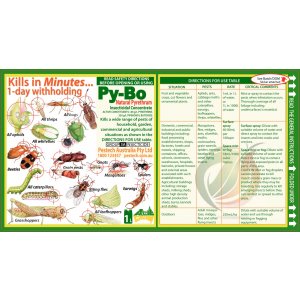
| Active Ingredient | 80 g/L Natural Pyrethrum |
| Insecticide Group | Group 3A (Natural Pyrethroids) |
| Mode of Action | Contact insecticide – disrupts insect nerve function |
| Formulation | Botanical concentrate, solvent-free |
| Mixing Ratio | 1 mL per L of water |
| Withholding Period | 1 day |
| Re-entry Interval | Once spray mist has cleared |
| Compatibility | Compatible with most surfactants; avoid strong alkaline products |
| Country of Manufacture | Australia |
| Manufacturer | Pestech Pty Ltd |
| File | Title | File Description | Type | Section |
|---|---|---|---|---|
| Py-Bo_Natural_Pyrethrum_Insecticidal_Concentrate.pdf | Py-Bo Natural Pyrethrum Insecticidal Concentrate | Safety Data Sheet | Specifications | Document |
INFORMATION SHEET - PEST & DISEASES
Occasionally a sap-sucking insect known as Brown or Black Olive Scale will be seen on olive trees. It is rarely a problem if the trees are in good health. We usually only spray our mature trees for scale every two to three years and only then if they need it. However, certain areas of Australia are more prone to the scale.
If your olive tree has black spots on branches or an infestation of black scale, it's crucial to act quickly. Scale on olive trees, including black olive scale, appears as dark bumps that weaken growth. For black scale treatment, use a proven treatment, introduce beneficial insects, and prune for better air circulation. If you're wondering how to get rid of black scale on an olive tree, early detection and prompt action are key to protecting your grove.
The adult females are very easy to recognise on the olive tree stems. They are dome shaped, dark brown to black in colour, and about the size of a match head.
The tiny eggs laid under the female, look like piles of very fine sand. Mainly during the summer, these eggs hatch into tiny, six-legged, cream coloured ‘crawlers’. The crawlers move up the stems and usually settle along the veins of young leaves. At this stage they don’t have the impervious shell of the adult and can usually be killed with one or two applications of white oil about two weeks apart. White oil should be used only as directed on the label by the manufacturers (and by your agricultural department) and never during the hot part of the day. It puts an oil film over the young ‘crawler’ and suffocates it. If applied in the hot part of the day it also stops the leaves from breathing properly and can be detrimental to the tree. The White oil application will also tend to rid the tree of ‘sooty mould’ as discussed soon.
If the crawlers are allowed to live, they will moult after about one month and then migrate to the young stems and twigs of the tree. Here they will mature and lay more eggs and their protective brown shells will be impervious to white oil. Squash the scale between your fingers to see if it is alive. If it is alive, then your fingers will be wet from the juices squeezed out. If it is dead then your fingers will be dry and dusty.
Bad infestations of live mature scale may need spraying with an insecticide such as Supracide. (Important: See note regarding “Treatment”) In Greece, Supracide is the main spray used for most olive problems. Once again, check with your local agricultural chemical supplier and the product label, for directions.
Probably the damage done by the scale itself to the tough olive tree is negligible compared with what happens next.
As the scale feeds, the ‘manure’ they excrete is a sweet, sticky, ‘honeydew’. This excreted sticky liquid can finally cover the leaves of the entire tree. A fungus known as sooty mould feeds on this food and multiplies until the entire tree may be covered with the black sooty mould. This is where the real problem lies.
The leaves are coated with the black deposit, so the sun’s light can’t penetrate the leaves properly. Therefore photosynthesis can’t take place efficiently. Therefore, ‘root producing’ food is not manufactured in the leaf. Therefore roots don’t develop properly. Therefore the poor root system can’t collect enough food and water from the soil to send up to produce more leaves, which in turn will produce more root. Once the vicious cycle begins, a stunted and unhealthy tree with poor crops is the result.
To make the problem worse, sweet ‘honeydew’ on the leaves also attracts large numbers of ants. It appears that as the ants constantly move over the scale, they frighten away the small wasp parasites which in normal cases would keep the scale under control.
Adult scale on the underside of olive leaves
Overturned scale with orange crawlers showing.
An olive branch covered in sooty mould.
Closeup of sooty mould on olive leaf.
The good news is that healthy olive trees don’t get the scale, sooty mould, and ant infestation to any great extent. More good news is that heavily infested trees are easily fixed.
Normally, one thorough spraying of the entire tree and soil below with a systemic insecticide will be adequate. Nevertheless, to be sure, a second spray about two weeks later may be worthwhile.
Now, if there is no more live scale, there is no more eating, therefore no more ‘honeydew’ excreta, therefore no more sooty mould and ants. Over a period of time the dead sooty mould deposit will peel off the leaves from exposure to the rain, wind and sun. The green leaf surface will be exposed and growth will continue as normal. Treat the tree to an occasional feeding of Seagold fertilizer/mulch and foliar application and some water and watch its health come back.
Black scale adult females are about 0.20 inch (about the size of a match head) in diameter. They are dark brown or black with a prominent H-shaped ridge on the back. Young scales are yellow to orange crawlers and are found on leaves and twigs of the tree. Often, a hand lens is needed to detect the crawlers. Black scale usually has one generation per year in interior valley olive growing districts. In cooler, coastal regions multiple generations occur. Black scale prefers dense unpruned portions of trees. Open, airy trees rarely support populations of black scale.
Young black scale excretes a sticky, shiny honeydew on leaves of infested trees. At first, affected trees and leaves glisten and then become sooty and black in appearance as sooty mould fungus grows on the honeydew. Infestations reduce vigour and productivity of the tree. Continued feeding causes defoliation that reduces the bloom in the following year. Olive pickers are reluctant to pick olive fruits covered with honeydew and sooty mould.
Pruning to provide open, airy trees discourages black scale infestation and is preferred to chemical treatment.
A number of parasites attack the black scale, the most common are Metaphycus helvolus, Metaphycus bartletti, and Scutellista cyanea. These parasites, combined with proper pruning, provide sufficient control in northern and coastal orchards. In other regions, biological control is often ineffective because the black scale’s development pattern hampers parasite establishment.
Cultural and biological control and oil sprays. Organic pyrethrum sprays like Pyganic ( Pybo is no longer organically certified).
If infestations are resulting in honeydew, treat the crawlers. In interior valleys, delay treatment until hatching is complete and crawlers have left protection of the old female body. Once crawlers have completely emerged, a treatment can effectively be made in summer, fall or winter provided the scales have not developed into the rubber stage (later second instar, which are dark, mottled grey, and leathery, with a clear H-shaped ridge on the back).
Due to the chemical nature of the treatments, Please check with your agricultural chemical supplier as to the suitability, application and safety precautions of your chosen scale treatment for olives. Some growers have used Summer or Petroleum Oil and Supracide. Californian olive growers use Oil Emulsions, Diazinon 50WP, Methidathion and Carbaryl. The use of chemicals reduces the microbial population in your soil and can inhibit the uptake of certain nutrients to your trees. Harmful residues of chemicals can also build up in your soil structure.
A new product Admiral has become available which acts as an insect growth regulator rather than a kill-on-contact pesticide, it has been quite effective and like any treatment of scale; timing is essential. Ants can be controlled with an Ant Bait suitable for Horticultural use. We suggest Distance Plus Ant Bait.
“Olives – Pest Management Guidelines” (UCPMG Publication 8, 1994). These guidelines cover the major olive problems found in Australia and California and are available for free from their website http://www.ipm.ucdavis.edu/PMG/selectnewpest.olives.html . (The information comes from California so all references to places, seasons, months and treatments are Californian). If you have any questions, please contact The Olive Centre, PH: 07 4696 9845, Email: sales@theolivecentre.com.au
PEST & DISEASES - OLIVE
The Olive Lace Bug (Froggattia olivinia) has become an increasingly significant concern for olive producers. These sap-seeking insects primarily feed on the undersides of olive leaves, causing distinct yellow mottling on the leaf surface. If left unmanaged, affected leaves typically turn brown, leading to premature leaf drop. Severe infestations can result in substantial loss of tree vitality, defoliation, and notably reduced fruit yields.
Native to New South Wales and Southern Queensland, the Olive Lace Bug has been recorded across other Australian states as well. New infestations can occur frequently throughout the growing season, with the pest capable of producing three to four generations annually.
Proactively identifying and managing these pests is crucial to safeguarding your groves and maintaining consistent productivity. Our detailed article provides valuable insights and practical strategies for effectively controlling and preventing Olive Lace Bug infestations.
#OliveLaceBug #OliveGroves #PestManagement #OliveIndustry #Agribusiness #OliveProduction #CropProtection #IntegratedPestManagement #OliveGrowers #SustainableFarming #AustralianOlives #AgricultureNews #OliveFarming #Horticulture #FarmManagement
PEST & DISEASES - OLIVE GROWING
The Olive Lace Bug (Froggattia olivina) is an Australian native sap-sucking insect posing a significant threat to olive groves. It specifically targets olive trees (Olea europaea), potentially reducing yields and causing tree death if left unmanaged. Olive lace bug infestation is considered a serious threat to the olive industry in Queensland, New South Wales, Victoria and across Australia.
Olive Lace Bug (Froggattia olivina) infestation on the underside of an olive leaf, showing multiple life stages
nymphs, adults, and characteristic black excrement spots.
Adults: Approximately 2-3 mm long, adults are flat, mottled dark brown and cream, featuring large, black-tipped antennae, lace-like transparent wings marked with dark patterns, and red eyes.
Juveniles (Nymphs): Undergo five moults (instars). Early instars are wingless and vary from light cream or greenish-yellow to pinkish-orange. Later instars are green to greyish-black and very spiky, with wing buds developing.
Later-stage nymphs & transition to adults
Nymphs (early instars)
Adult Olive Lace Bug
Female Olive Lace Bugs insert eggs into the tissue on the undersides of leaves, usually along the midribs. Eggs hatch into nymphs, which pass through five moults before reaching adulthood. Olive Lace Bug overwinters as eggs, with hatching typically occurring in early spring (September to October). Adults may also overwinter in protected locations on trees. Depending on climate conditions, there may be one to four generations per year, with a lifecycle ranging from 12-23 days in warm weather to up to 7 weeks in cooler conditions.
Originally native to New South Wales and southern Queensland, olive lace bugs have spread throughout Australia, excluding the Northern Territory. The movement of olive plants and industry activities has facilitated this spread. Juvenile bugs, relatively immobile, cluster on leaf undersides and are easily spread through planting materials, workers, and tools. Adults disperse via short flights or wind
|
Advanced feeding damage, chlorotic mottling, and leaf discolouration |
Severe lace bug damage, chlorosis with necrotic spotting |
Advanced feeding damage, chlorotic mottling and leaf discolouration |
|
|
|
|
Heavy infestations significantly affect tree vigour, delaying flowering and fruiting, reducing yields for up to two seasons, and potentially causing young tree death. Mature trees can also be severely affected, with death observed in extreme cases.
Known hosts include native mock olive (Notelaea longifolia) and cultivated olives (Olea europaea).
By proactively managing olive lace bug, you safeguard the health and productivity of your olive groves, ensuring sustained profitability.
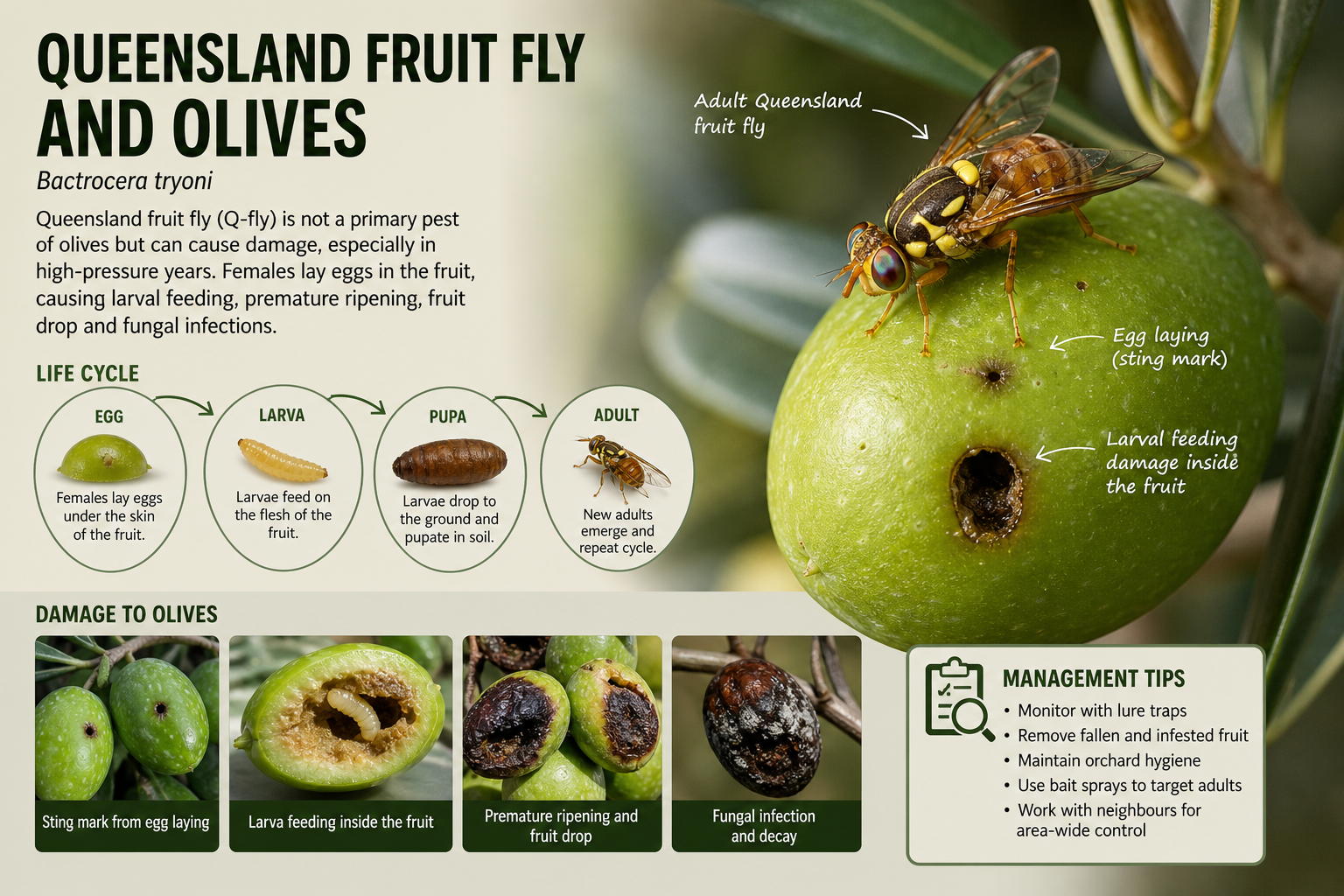
Queensland fruit fly (Bactrocera tryoni), commonly known as Q-fly, is Australia’s most economically significant horticultural pest. Its widespread impact on the stone fruit, citrus, and vegetable industries is well documented. However, its interactions with olives are less widely understood and often underestimated.
For olive growers, Q-fly occupies a grey zone i.e. it is not a primary pest, yet it can cause issues in olives. Under the right conditions, it can shift from a background risk to a notable issue affecting both production and fruit quality. This article explores the current scientific understanding of Q-fly in olive systems and outlines practical implications for commercial growers.
Q-fly is a native Australian species with an exceptionally broad host range, attacking more than 200 fruit and vegetable species. Its success stems from high adaptability and it thrives across varied climatic zones, readily shifts between host crops, and persists in mixed agricultural and peri-urban environments.
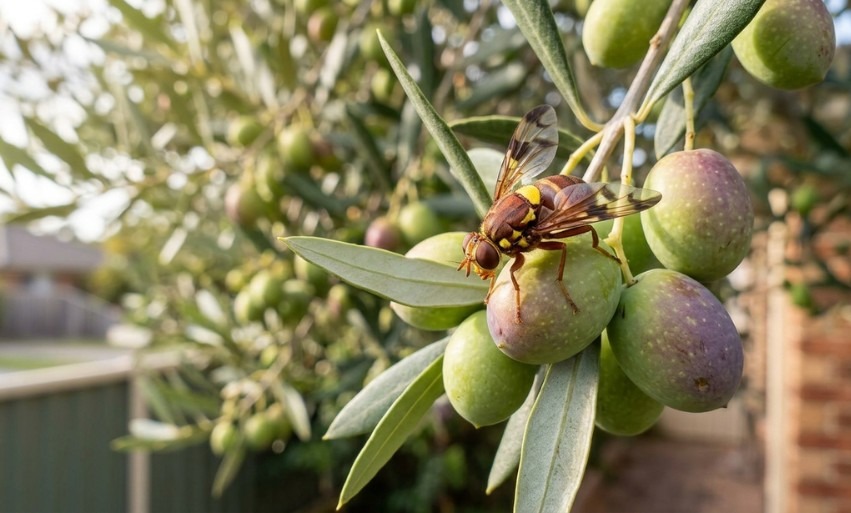
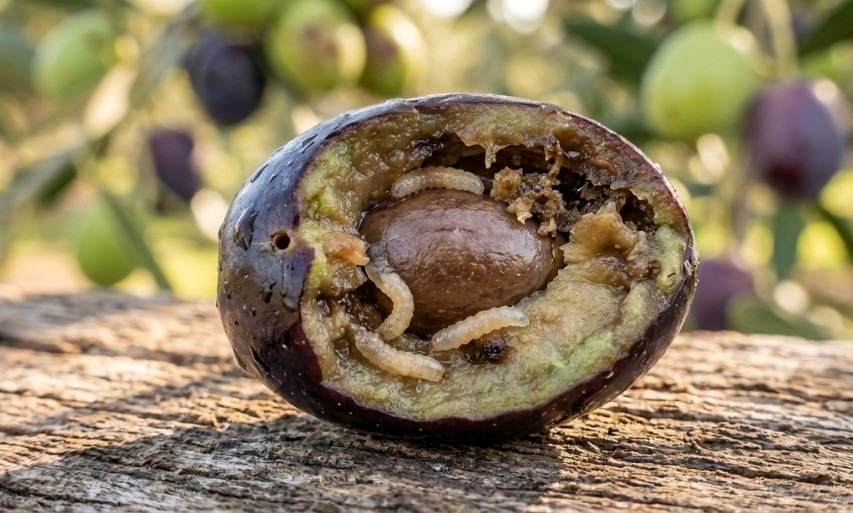
Female flies lay eggs directly into fruit, where larvae feed on the pulp. This internal feeding leads to fruit breakdown, premature drop, and entry points for secondary fungal pathogens. Population build-up is strongly driven by temperature, humidity, and host availability, with rapid increases occurring during warm, wet conditions.
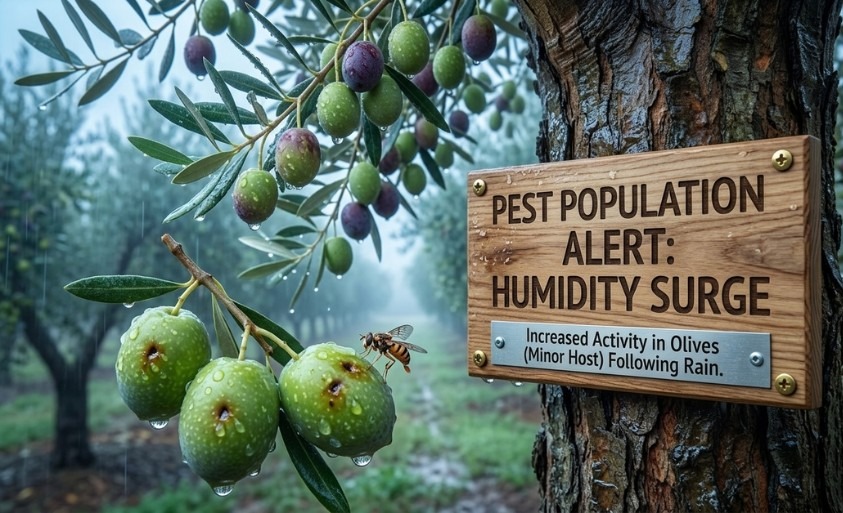
Olives (Olea europaea) are generally considered a minor or occasional host for Queensland fruit fly. However, this label can be misleading.
Australian research and field observations show that:
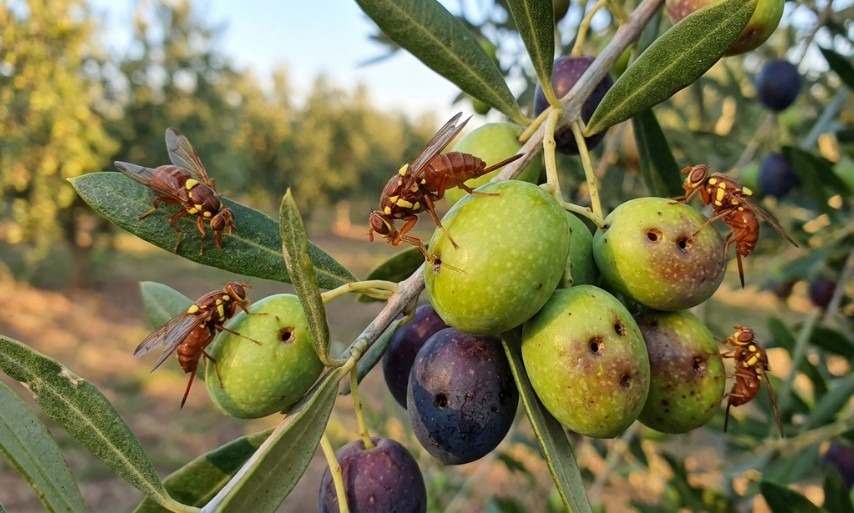
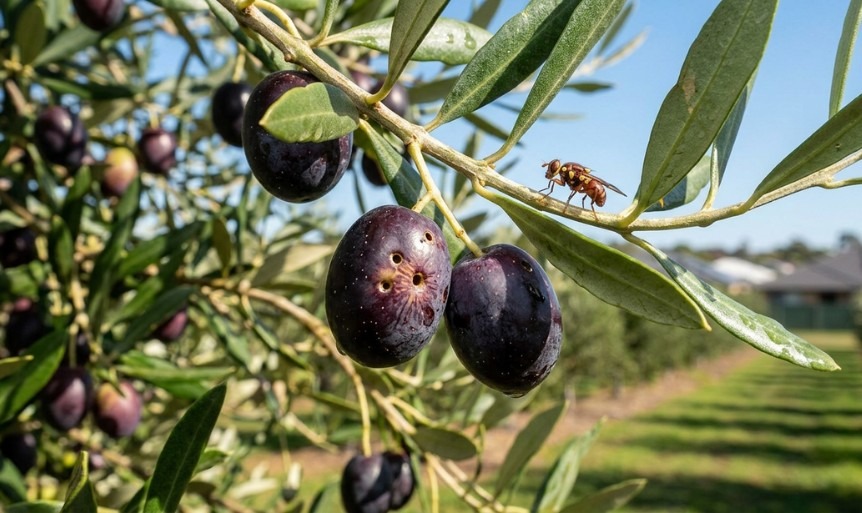
Q-fly females can and do oviposit in olive fruit.
Larval development can occur when conditions are favourable.
Damage tends to be sporadic but can become locally significant.
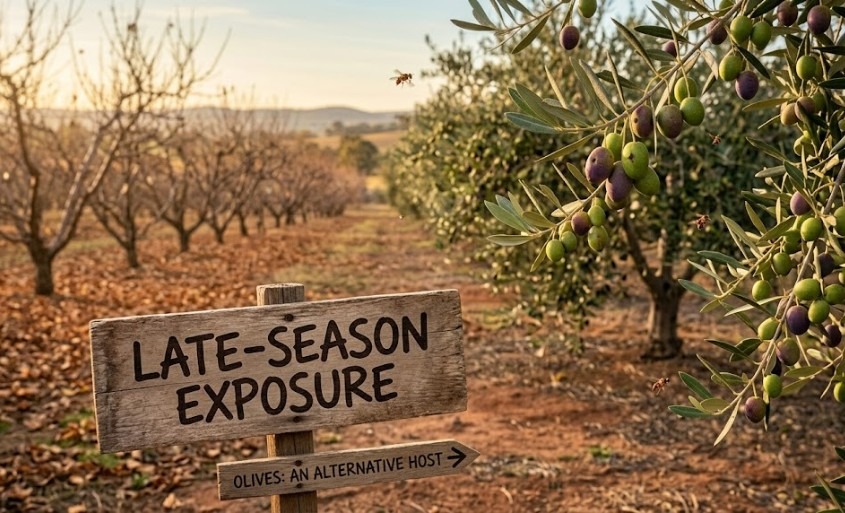
Importantly, olives often serve as a late-season host. When preferred summer fruits are no longer available, olive groves can help sustain fruit fly populations into autumn, integrating them into the wider ecological landscape supporting Q-fly.
For most olive growers, Q-fly is not a constant threat, but risk escalates under certain conditions:
Olives frequently remain on trees after stone fruit and other summer crops have finished. Residual fly populations may then target olives as an alternative host.
Seasons with above-average rainfall and humidity can trigger significant Q-fly surges, increasing attacks on less-preferred hosts like olives.
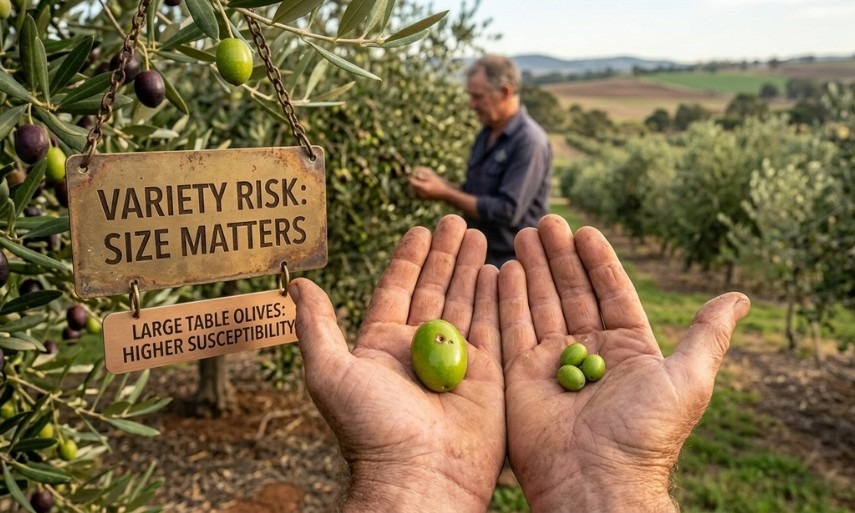
Larger-fruited table olive varieties tend to be more susceptible than smaller oil cultivars, likely due to greater suitability for oviposition.
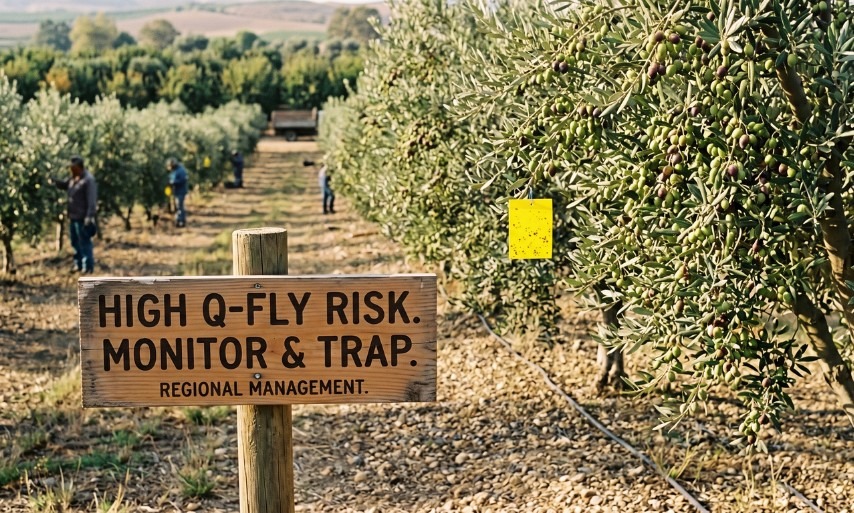
Groves located near stone fruit orchards, citrus blocks, or unmanaged backyard hosts face substantially higher pressure. Because Q-fly is highly mobile, isolated on-farm management has limited impact.
Direct yield losses from Q-fly in olives are usually modest. The more serious consequences relate to fruit quality.
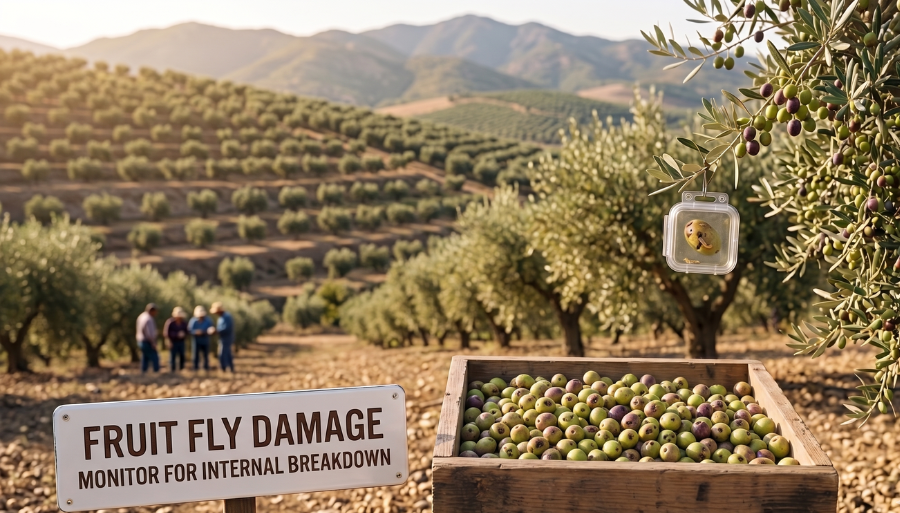
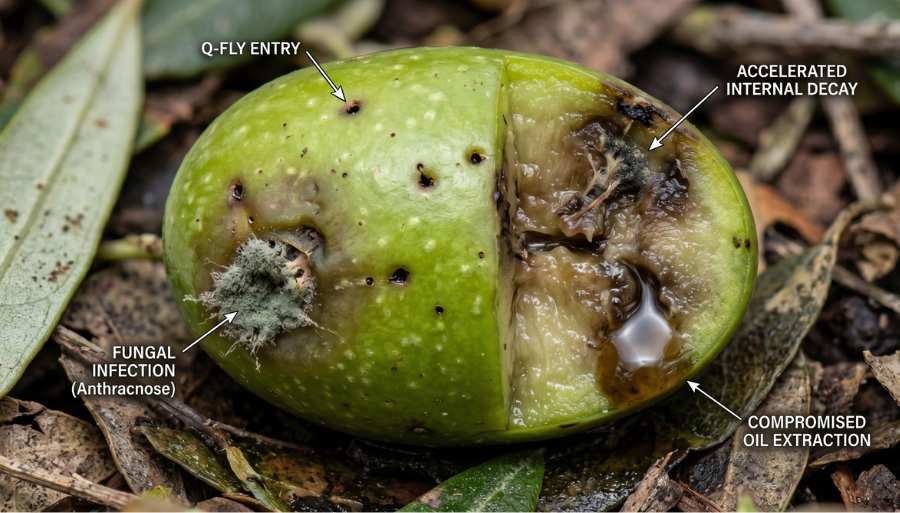
Egg-laying punctures (“stings”) and larval feeding cause premature softening, fruit drop, and internal breakdown.
Q-fly entry wounds create ideal infection sites for fungal pathogens such as anthracnose. This can accelerate fruit decay, increase rot incidence, and compromise outcomes during oil extraction.
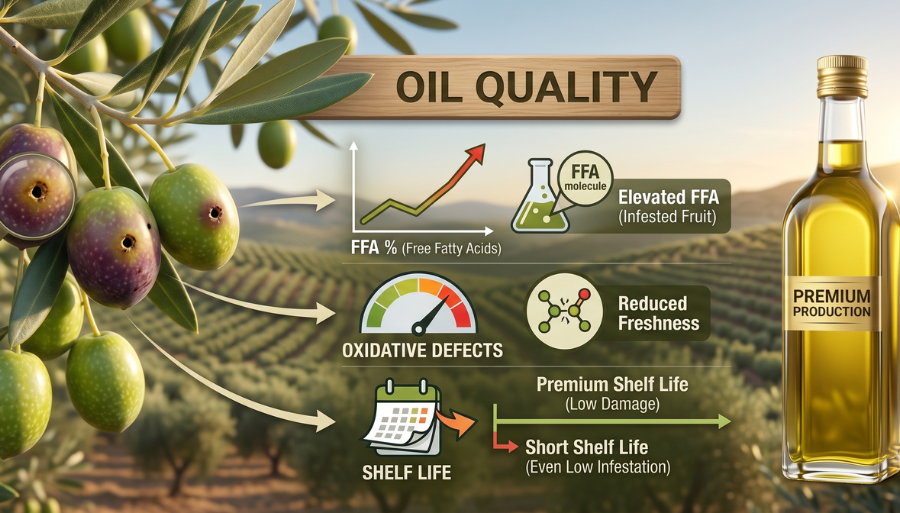
Infested fruit can elevate free fatty acids (FFA), introduce oxidative defects, and shorten shelf life. Even low levels of damaged fruit can affect overall oil quality in premium production systems.
Q-fly is opportunistic, management in olives should be integrated, cost-effective, and scaled to actual risk.
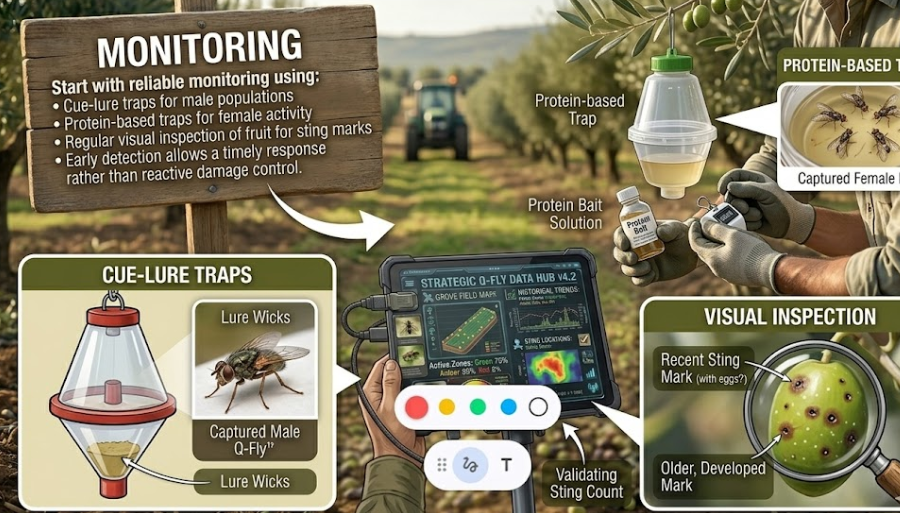
Monitoring
Start with reliable monitoring using:
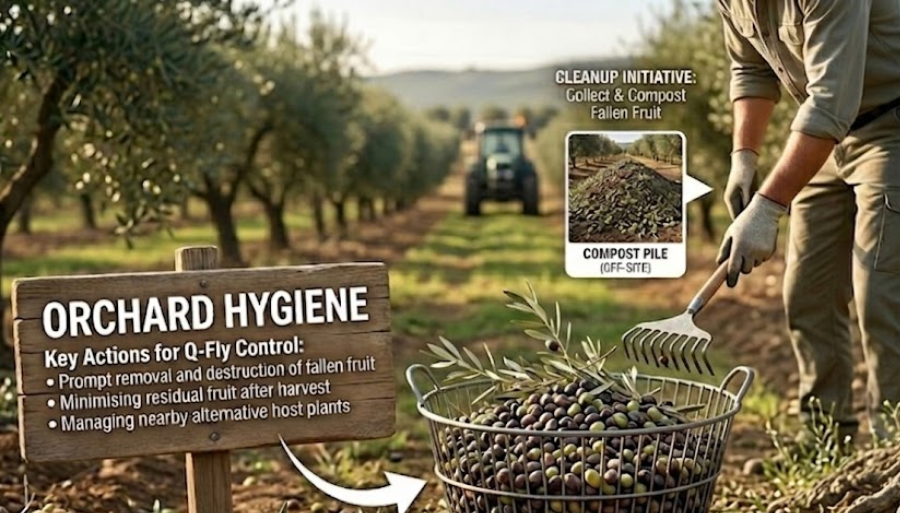
Sanitation remains one of the most effective tools:
Protein bait sprays targeting female flies are a proven option, especially in higher-risk areas. Their efficacy increases markedly when applied as part of coordinated area-wide programs rather than isolated efforts.
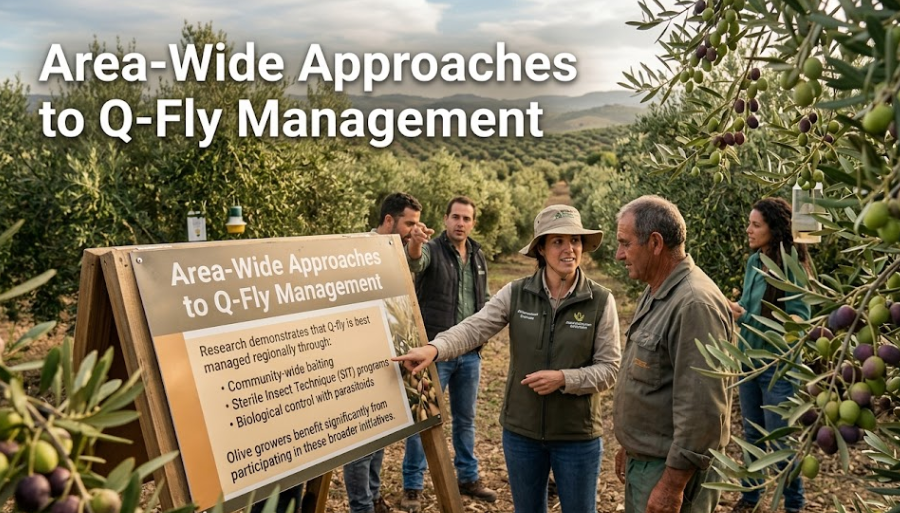
Area-Wide Approaches
Research demonstrates that Q-fly is best managed regionally through:
Olive growers benefit significantly from participating in these broader initiatives.
Climate variability is likely to reshape Q-fly dynamics. Warmer temperatures and shifting rainfall patterns may extend the fly’s active season, improve overwintering survival, and increase pressure in regions previously considered lower risk. Combined with expanding horticultural plantings that provide continuous host availability, Q-fly is expected to remain a persistent secondary consideration for the Australian olive industry.
Queensland fruit fly is not the primary pest challenge for olive growers, but it is a highly adaptable opportunist within the same production environment. In most seasons, it remains in the background; in challenging seasons, it can contribute to quality downgrades, disease pressure, and market complications.
The recommended approach is not alarm, but informed awareness: monitor early, manage regionally, and recognise that olive groves form part of the broader fruit fly ecosystem rather than existing outside it.