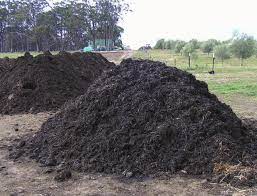
Currently around 3.2 million tonnes of olive oil is produced annually in the world (Statistica.com) leading to the generation of large amounts of olive oil production waste. Spain is the largest producer of olive oil in the world accounting for 69% of total global production.
In the early 1980’s the introduction of three-phase production was considered a new era in olive oil processing technologies and considered as a newer, cleaner, and more..
Western flower thrips is the most widely distributed thrips species, occurring throughout all olive-growing districts in California. It has a wide host range, feeding on grasses, field and forage crops, vegetables, and fruit crops.
The fungal disease Armillaria is responsible for the "white rot" root disease.The Armillaria fungus damages the root system.The fungus survives in the soil until the infected root breaks down. Characteristic white fan-shaped mycelial mats can be seen growing on the wood when the rotting bark is peeled back. Freshly infected roots have a strong mushroom smell. The wood of infected roots is rotted by the fungus, becoming either white and powdery ..
Moresil olive harvesters are expanding harvesting options for producers in Australia and New Zealand, offering adaptable mechanical solutions that improve efficiency, reduce labour dependence and support modern orchard systems.
Anthracnose is one of the most destructive olive diseases in Australia, capable of devastating crops and oil quality. This guide outlines how to identify early symptoms, understand the infection cycle, and apply proven prevention strategies to protect yield and grove health.
Why are you starting a grove? Is it for business, lifestyle or a combination? What is your plan? i.e. What do you want to achieve?
Verticillium wilt is a soil-borne fungus disease caused by the organism known as Verticillium dahliae. Verticillium wilt can kill trees and is difficult or impossible to control and is considered a serious disease in olive trees.
A simple rule for troubleshooting bearing temperatures: No more than 180°F (82°C) on the housing. The bearing outer ring can be up to 20°F (11°C) hotter than the housing.
During a summer long past, the casual inspection of a Kalamata tree in a home garden suggested a shortage of water at the roots of the tree. The shorter than normal distance between one set of buds and the next on the young twigs, showed that for some reason the tree growth had been slow.
The tree showed a poor fruit set which still pointed to a shortage of water, at least in the winter when the trees internal preparation for spring flowering...