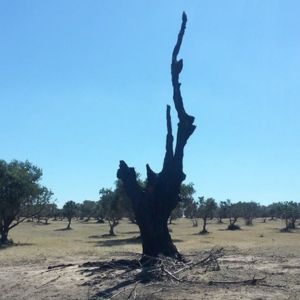
A practical recovery guide for Australian olive growers outlining how to assess bushfire damage, support tree recovery, manage soil health and restore productivity following fire events in olive groves.

My Shopping Cart
A practical recovery guide for Australian olive growers outlining how to assess bushfire damage, support tree recovery, manage soil health and restore productivity following fire events in olive groves.
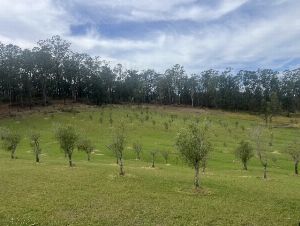
A new grove owner near Taree, NSW, faces challenges reviving a mature olive grove on heavy clay soil in a high-rainfall region. Here’s a practical guide to restoring soil health, drainage, nutrition, and yield. The grove was abandoned and in need of rejuvenation. See what steps can be considered to bring an olive grove back.

This article explores the unique hormonal controls behind olive fruit ripening. Unlike climacteric fruits that rely on ethylene, olives are primarily guided by abscisic acid (ABA), jasmonates (JA), and auxins. It explains how these hormones regulate color change, oil accumulation, and fruit drop, while highlighting ethylene’s limited but practical role in harvest management. Designed for growers and agronomists, it translates physiology ins

Olive trees often swing between heavy and light crops. This article explains why biennial bearing happens and how growers can manage it for steadier harvests.
The olive tree (Olea europaea L.) is a small, evergreen tree in the Oleaceae family and is native to the Mediterranean region. It has been cultivated for millennia and holds deep historical and cultural significance. In fact, olives are among the oldest fruit trees domesticated by humans, first cultivated around 6,000–8,000 years ago in the Eastern Mediterranean. From there, olive cultivation spread throughout the Mediterranean Basin....

The Australian olive oil industry has experienced rapid growth over the past three decades, evolving into a significant agricultural sector. With rising domestic demand, a strong export presence, and a reputation for high-quality extra virgin olive oil (EVOO), understanding the distribution of olive trees across the country provides essential insight into production capacity and regional specialisations.

Herbicides are a crucial tool in modern agriculture, but recent research highlights an unintended consequence that olive producers must consider—potential harm to pollination. A study by Dummer et al. (2025) has identified that common herbicides, including glyphosate and 2,4-D, significantly impair olive pollen germination, raising serious concerns about their impact on fruit set and overall yield.

When establishing an olive grove, one of the most critical decisions you will make is the layout of your trees. The arrangement you choose will influence tree health, productivity, and long-term management efficiency. This guide will walk you through key considerations, including aspect, tree spacing, irrigation, harvesting methods, drainage, pruning, and marking out your olive grove.

Why are you starting a grove? Is it for business, lifestyle or a combination? What is your plan? i.e. What do you want to achieve?

As discussed previously, taking leaf samples is essential to assess your trees’ nutritional status. This information guides the creation of a fertiliser program, a critical component for boosting or maintaining yields. Typically, no fertiliser is needed in winter, unless you’re addressing soil amendments. However, some groves have severe nutrient deficiencies requiring fertiliser even in winter. Where proper irrigation systems aren’t in place...