Mechanical tree shakers are the backbone of modern olive and nut harvesting, delivering the high-frequency vibrations needed to detach fruit efficiently. But the same forces that maximise yield also put extreme stress on the machine itself. Without a structured preventive-maintenance program, vibration can quickly loosen fasteners, wear through hydraulic hoses, rub down electrical insulation, and accelerate pump and bearing failure.
The International Olive Council (IOC) has recently updated its trade standard, which sets the world’s benchmark for olive oil quality. These standards are what laboratories and authorities use to decide if an oil is “extra virgin”, “virgin” or “lampante” and whether it can be sold in export markets.
In June 2025, the European Union formally supported a series of major testing changes at the 121st IOC Council of Members meeting. These changes ..
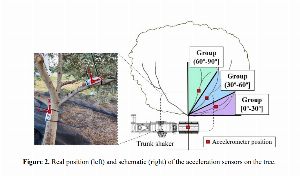
Olive orchards worldwide include traditional (density below 250 trees/ha) & more intensive (800 trees/ha) systems, with trunk shakers commonly used for mechanical harvesting in both. According to the International Olive Council (IOC) data from 2023, traditional orchards account for over 70% of global plantings, while intensive ones represent 25%. Variability in tree geometry, such as branch inclination, influences vibration propagation...
Despite its modest scale in global olive oil production, Australia continues to play an increasingly strategic role in the global supply chain... thanks to its quality-driven focus and growing domestic appetite for premium extra virgin olive oil.
As air frying technology gains popularity for its ability to produce crispy, flavorful food with less oil, the choice of frying oil becomes critical - not just for taste, but for health and oil stability. A recent peer-reviewed study published in European Food Research and Technology compared the performance of four commonly used oils - ghee, sunflower oil, sesame oil, and virgin olive oil - under both conventional and air frying conditions.
At harvest time, it’s easy to get swept up in the rush of processing your olives, but remember... the care you take during harvest and processing will show up in your final product. Lab tests provide a window into the quality and authenticity of your olive oil, helping you meet quality standards and identify areas for improvement.
In March 2025, Hort Innovation released the updated Strategic Agrichemical Review Process (SARP) for the Australian olive industry, a comprehensive review designed to ensure sustainable, effective, and trade-compliant pest management for olive growers nationwide.
While leaves are the primary sites of photosynthesis in plants, bark photosynthesis, also known as corticular photosynthesis, plays a significant role in the carbon economy of woody plants, including olive trees (Olea europaea). This process involves the fixation of carbon dioxide (CO₂) by the green tissues in the bark, contributing to the tree's overall photosynthetic capacity, especially under stress conditions.
Producing a truly memorable extra-virgin olive oil is only half the story; the other half is placing it in front of the right judges, at the right time, to earn the medals and credibility that open doors to retailers, chefs, export and domestic buyers. Yet with more than two dozen serious competitions now dotting the calendar... from local shows and boutique regional awards to global flagship competitions like NYIOOC and the IOC’s Mario Solinas.