My Account
Sign-in / Join

Sign-in

Hi My Account

Dashboard

Logout

Cart

My Shopping Cart

Subtotal
${{total.toFixed(2)}}
QUOTE

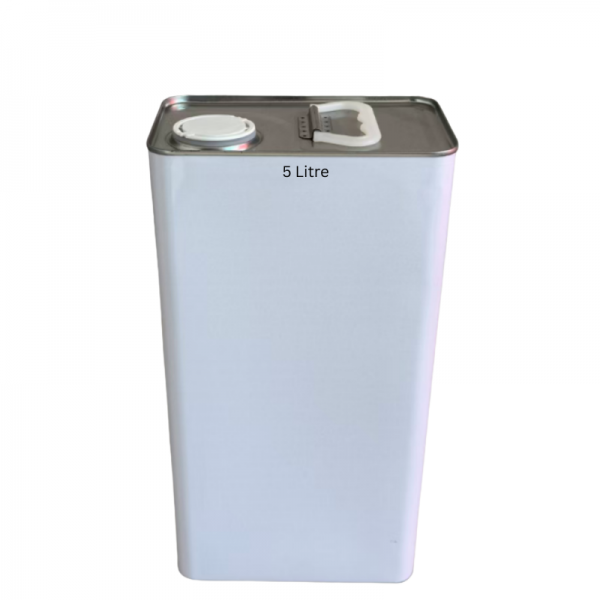
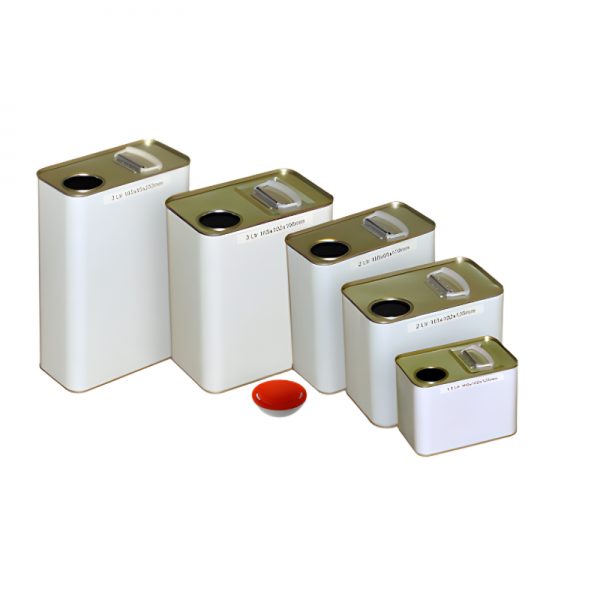
White Rectangular Olive Oil Tins - Double EPON 500ML, 2L, 3L, 4L & 5L

Delivery will be calculated at checkout separately
Volume
Quantity

NA0-WRE
  • Description
  • Features
  • Enquiry
  • Specifications
  • Documents
  • Knowledge
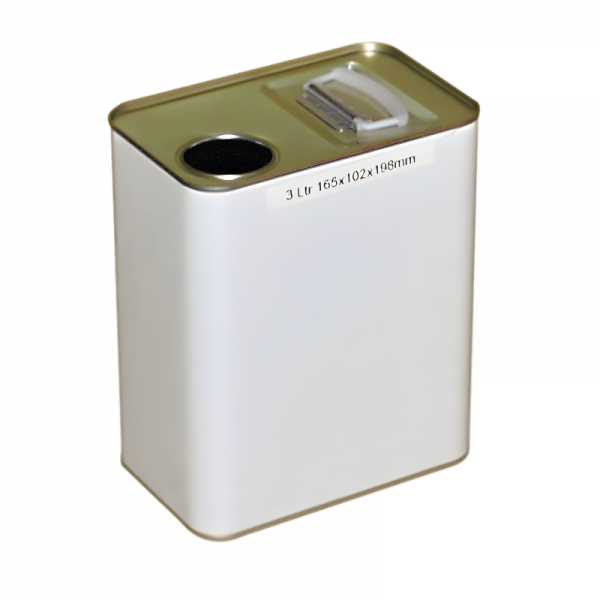
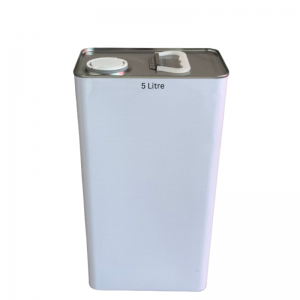
White Rectangular Olive Oil Tins – Double EPON Lined (500ML, 2L, 3L, 4L & 5L)

Delivery will be calculated at checkout separately​

The White Rectangular Olive Oil Tins are designed for professional packaging and long-term storage of extra virgin olive oil and other edible oils. Manufactured from food-grade tinplate, each tin is internally coated with a Double EPON epoxy phenolic lacquer, providing a secure barrier that preserves oil quality and prevents metallic contact.


Available in 500ML, 2L, 3L, 4L, and 5L sizes, these tins offer a lightproof, durable, and space-efficient container ideal for retail sales, farmgate packaging, and export distribution. Their smooth white finish presents a clean surface ready for custom labels or branding, ensuring both performance and professional presentation.

Uses

These tins are suitable for:
  • Packaging and storage of extra virgin olive oil and edible oils.
  • Retail, export, and farmgate presentation requiring lightproof, food-safe containers.
  • Producers seeking a long-lasting alternative to plastic or unlined metal packaging.
The rectangular design makes them ideal for stacking, shipping, and shelf display, ensuring product integrity from bottling to end-user purchase.

Features
  • Material: Food-grade tinplate with internal Double EPON coating
  • Lining: Dual-layer epoxy phenolic lacquer for anti-oxidation protection
  • Shape: Rectangular with rounded edges
  • Colour: Gloss white exterior with matching white top
  • Available Sizes: 500ML, 2L, 3L, 4L, and 5L
  • Closure Type: DIN or screw-top fitting (varies by model)
  • Light Resistance: Opaque body prevents UV degradation
  • Finish: Smooth gloss surface suitable for branding and label application
  • Food Safety: Certified for direct oil contact
  • Packaging: Supplied empty, individually or in bulk cartons
  • Delivery: Freight applies; protective packaging during transport
Compatible with:
  • Standard DIN and screw-top fittings for tin closures
  • Commercial and semi-automatic capping systems used in oil bottling and filling operations
  • Custom label and printing applications for branded retail presentation
These tins are also part of The Olive Centre’s complete packaging system, compatible with blank metal caps, pourers, and other olive oil packaging components.

Why Choose This Product

The White Rectangular Olive Oil Tins provide superior protection, professional presentation, and long-term reliability for oil producers. Their Double EPON internal lacquer prevents oxidation and flavour contamination, ensuring the oil maintains its purity, aroma, and colour.

The durable rectangular body design maximises efficiency during storage and transport, while the glossy white exterior is perfect for label adhesion and branding. Ideal for boutique producers and commercial packers alike, these tins deliver both functionality and premium appearance, making them a preferred choice in Australia’s olive oil industry.

ABOUT CAN MANUFACTURING

The Olive Centre is a leading general line can manufacturer and tinplate printer serving producers across all states of Australia.

We provide a comprehensive range of cans, drums, and pails, from 250ml to 20 litres, suitable for food grade applications with a specialty in olive oil packaging.

Our diverse customer base includes industries such as food and agriculture.

Frequently Asked Questions:


Key Features:
  • Available in 2L, 3L, 4L, and 5L sizes
  • White rectangular design for efficient storage and display
  • Double EPON internal lacquer for food-safe protection
  • Prevents oxidation and metallic contamination
  • Suitable for extra virgin olive oil and other edible oils
  • Light-resistant and airtight to preserve freshness
  • Gloss white exterior ideal for branding and labelling
  • Durable, reusable, and recyclable material
  • Packaged in Pallet
  • Pallet sizes may vary
  • :
  • :
  • :
  • :
File Title File Description Type Section
2L_Can_Template.pdf 2L Rectangular Can Printing Template Diagrams Document
4L_Can_Template.pdf 4L Rectangular Can Printing Template Diagrams Document
3L_Print_Layout_1.pdf 3L Can Template - Printing Specifications Document
Can_Print_Template_1L_Regtangular_-306X178_1.pdf 1L Can Print Template - Rectangular Specifications Document
500mL_Rectangular_Can_TEMPLATE.pdf White Rectangular Olive Oil Tins Document White Rectangular Olive Oil Tins Document Diagrams Document

Australian Olive Oil Market in 2025 a Small Producer with Global Force

Despite its modest scale in global olive oil production, Australia continues to play an increasingly strategic role in the global supply chain... thanks to its quality-driven focus and growing domestic appetite for premium extra virgin olive oil.
Please log in to view the entire article

Comparing Olive Oil Packaging Options: Plastic, Glass, Metal, Bag-in-Box and Bag-on-Valve

MARKET INSIGHT: EVOO PACKAGING OPTIONS

Comparing Olive Oil Packaging Options: Plastic, Glass, Metal, Bag-in-Box and Bag-on-Valve

Extra virgin olive oil (EVOO) is extremely sensitive to light, oxygen, heat and metal contact. Packaging, therefore, plays a direct role in how long an olive oil remains “extra virgin.” Major reviews from UC Davis emphasise that optimal packaging must reduce light exposure, oxygen ingress, and headspace, while also ensuring cool storage. At the same time, producers—especially small to medium Australian growers—must consider costs, machinery requirements, recyclability, consumer preferences, and minimum order quantities (MOQ). Below is the most complete and updated comparison of all common packaging formats.

1. Plastic Bottles (PET)

Quality & Shelf Life

PET offers convenience and low cost but has moderate oxygen permeability and allows light penetration, which accelerates oxidation. A 2023 study showed PET-stored EVOO experienced higher acidity, peroxide values, UV oxidation indices and sensory degradation over 12 months—especially at elevated temperatures.

Chemical Safety

Migration of PET oligomers and antimony into oil is within regulatory limits, but increases under heat.

Sustainability

rPET has a lower carbon footprint than glass, but Australian recycling for PET varies by region.

Practicality

  • Cheapest and compatible with basic filling lines.
  • Lightweight and non-breakable.
  • Perceived as lower-quality for premium EVOO.
Best for: High-turnover oils sold quickly and stored cool.

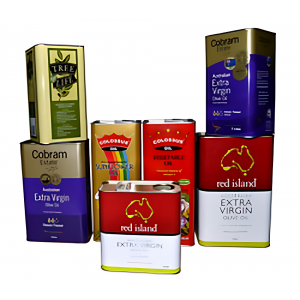
2. Metal Cans (Tinplate or Aluminium with Food-Grade Lining)

Quality & Shelf Life

Metal cans provide total light protection and excellent oxygen barrier characteristics. UC Davis stresses that lined cans effectively prevent metal migration and protect quality.

Compared with BIB, cans may show slightly faster oxidation when half-empty, but still protect oil well if stored cool. A 24-month study found both cans and BIB maintained EVOO within legal quality limits.

Consumer & Practical Benefits

  • Easily filled by weight, needing no specialised equipment.
  • Compatible with pull-up pourers that provide tamper evidence and reduce leakage.
  • High consumer trust-no plastic contact with oil.
  • Stackable and ideal for 3–20 L formats.

Sustainability

Steel and aluminium have high recycling rates in Australia.

Many producers prefer cans because Australian consumers are increasingly concerned about soft plastics, especially given the collapse of local soft-plastic recycling schemes (e.g., REDcycle).

Best for: Bulk, foodservice, premium oils, export, and producers who want reliability without specialised equipment.

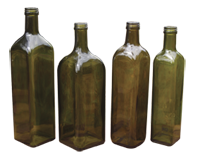
3. Coloured Glass Bottles (Green / Amber)

Quality & Shelf Life

Glass is chemically inert. Coloured glass offers some UV and visible light protection—amber performs better than green - but clear glass accelerates photo-oxidation significantly.

Coloured glass slows degradation but still allows some light through, so shelf lighting and storage conditions matter.

Practicality

  • Easy to fill.
  • Caps can be hand-applied, or producers can install a screw-cap capping machine that forms the thread consistently, reducing leakage.
  • Widely accepted for retail and gifting.

Sustainability

Highly recyclable, but heavy to transport. Bottle breakage is an inconvenience for producers.

Best for: Premium retail oils with attention to storage conditions.

4. Clear Glass Bottles

Research shows clear glass provides almost no light protection, leading to rapid losses in phenolics and faster oxidation.

UC Davis warns that clear glass should be avoided unless heavily covered by labels or cartons.

Best for: Fast-moving products or promotional oils kept strictly in the dark.

5. Bag-in-Box (BIB)

Quality & Shelf Life

Bag-in-box offers some of the best oxygen protection because the collapsing bag limits headspace oxygen, and the cardboard blocks light. Numerous studies, including 12- to 24-month trials, confirm superior preservation of phenolics, freshness, and sensory properties compared with bottles and cans.

Limitations for Australian Producers

  • Requires costly specialised filling equipment (nitrogen flushing, precise tap sealing).
  • High minimum order quantities for bags and taps.
  • Soft plastics inside bags are not recyclable in most of Australia, causing consumer concern.

Consumer Perception

Plastic contact and disposal concerns hinder adoption, despite technical superiority.

Best for: Large producers with dedicated filling lines, subscription models, or export markets where BIB is accepted.

6. Bag-on-Valve (BOV) / Aerosol Pouch Systems

BOV packaging uses a hermetically sealed internal pouch separated from an external propellant. The oil never contacts the propellant; instead, it is dispensed by pressure.

Quality & Shelf Life

  • Zero oxygen contact once sealed.
  • Excellent light protection when used with opaque or metallic cans.
  • Very low risk of oxidation compared with conventional bottles.
While formal olive oil-specific studies are limited, aerosol and BOV literature show extremely low oxygen ingress, making it ideal for sensitive oils.

Practical Benefits for Producers

  • The Olive Centre can supply BOV systems, but minimum order quantities apply, increasing upfront cost.
  • Allows controlled spray application, excellent for cooking oils, finishing oils, and portion control.
  • Protects oil quality even after repeated use, unlike bottles that suck in air after each pour.

Consumer & Market Benefits

  • Hygienic, non-drip, clean application.
  • Perceived as modern and premium.

Limitations

  • More expensive per unit than bottles or cans.
  • Cannot be easily refilled or recycled as a single stream; consumers must dispose of the metal can + internal pouch.

Best for: High-end culinary oils, premium lines, foodservice, and producers wanting differentiation without investing in BIB equipment.


Compact comparison showing light and oxygen protection levels across packaging types.

Packaging Type Light Protection Oxygen Protection Machinery Required Recyclability (Australia) Cost Consumer Acceptance Best Use Case
Cans (lined)
★★★★★
★★★★☆
Easy High Medium High Bulk, premium, foodservice
Bag-in-Box
★★★★★
★★★★★
Specialised Low (soft plastics) High (at scale) Medium–Low Long shelf life, export
Coloured Glass
★★★☆☆
★★★★★
Easy High Higher Very High Retail premium
Clear Glass
★☆☆☆☆
★★★★★
Easy High Higher High Fast turnover only
PET Plastic
★☆☆☆☆
★★☆☆☆
Easy Moderate Low Medium Value lines, short shelf life
Bag-on-Valve (BOV)
★★★★★
★★★★★
Moderate Low–Moderate Higher Medium–High Premium spray oils             

Practical Recommendations for Australian Producers

  1. For maximum quality + minimal investmentMetal cans are the best balance: easy to fill by weight, compatible with tamper-evident pull-up pourers, highly recyclable, and very protective.
  2. For premium bottled products → Use dark (preferably amber) glass, avoid clear glass unless fully shrouded, and invest in a thread-forming capping machine to prevent leaks.
  3. For innovation and high-end marketsBag-on-valve is an excellent oxygen-free system, ideal for dressings, premium oils, and portion control—MOQ applies, but no major filling-line overhaul is required.
  4. For long shelf-life and exportBag-in-box remains technically superior but is limited by consumer plastics concerns, poor soft-plastic recycling, and specialised filler cost.
  5. For low-cost, high-turnover lines → PET can work if cool, dark storage is guaranteed. Not suitable for long-term premium EVOO.

Conclusion

Selecting the most suitable packaging for extra virgin olive oil hinges on finding the right balance between quality preservation, consumer expectations, and production practicality. Among all options, lined metal cans stand out as one of the most reliable and efficient choices: they are easy to fill by weight, offer excellent protection from light and oxygen, avoid consumer concerns around plastics, and are highly recyclable in Australia. Coloured glass bottles remain the strongest retail performer, pairing good product protection with strong shelf appeal and flexible filling options - from hand-applied caps to automated capping machines that minimise leakage risks. Clear glass should only be used for fast-moving products due to its poor light protection. 

 While innovative systems like bag-on-valve offer outstanding oxygen exclusion and controlled dispensing, their higher cost and MOQ requirements mean they are best suited for premium or specialised product lines. PET plastic bottles can work for value-oriented, short-shelf-life oils kept in cool, dark environments, but they are not ideal for long-term storage or premium markets. 

Overall, Australian producers benefit most by matching each packaging format to the oil’s intended shelf life, sales channel, and brand positioning. Thoughtful packaging selection not only safeguards quality but also streamlines production and aligns with evolving consumer and environmental expectations.

References

  • UC Davis Olive Centre (2014). Packaging Influences on Olive Oil Quality: A Review of the Literature. University of California, Davis. (Comprehensive review of light, oxygen, metals, and packaging materials.)
  • Pinto, M., Soares, C., Silva, A. S. et al. (2023). “Degradation and Migration in Olive Oil Packaged in Polyethylene Terephthalate under Thermal Treatment and Storage Conditions.” Applied Sciences, 14(17), 7507. (Examines chemical migration and quality loss in PET bottles.)
  • Iqdiam, B., Hasan, M., Agouillal, F. et al. (2022). “Influence of Headspace Oxygen on Quality and Shelf Life of Extra Virgin Olive Oil During Storage.” Foods, 11(10), 1484. (Shows how oxygen exposure accelerates oxidation in packaged EVOO.)
  • De Leonardis, A., Lopez, F., Macciola, V. (2021). “Effects of Bag-in-Box Packaging on Long-Term Shelf Life of Extra Virgin Olive Oil.” European Food Research and Technology, 247, 839–850. (24-month comparison study of BIB vs metal cans.)
  • Abuhabib, M. M., Serri, N. A., Aljamal, A. et al. (2025). “Evaluation of Packaging Effects on the Phenolic Profile and Sensory Characteristics of Extra Virgin Olive Oil During Storage.” Foods, 14(14), 2532. (Shows BOV/BIB-type barrier systems outperform conventional packaging.)
  • De Feo, G., Malvano, C., Sica, C. et al. (2023). “Comparative Life Cycle Assessment of Glass Bottle and 100% Recycled PET Bottle for Extra-Virgin Olive Oil.” Sustainability, 15(4), 3665. (Shows rPET has a lower carbon footprint than glass.)
  • Lolis, A., Katsouli, M., Kotsiou, K. et al. (2019). “Effect of Bag-in-Box Packaging on Quality Characteristics of Extra Virgin Olive Oil Stored Under Household and Abuse Temperature Conditions.” Food Packaging and Shelf Life, 21, 100368. (Demonstrates the protective effect of high-barrier films.).
  • Esposto, S., Taticchi, A., Urbani, S. et al. (2022). “Effect of Light Exposure and Packaging Conditions on the Quality and Shelf Life of Virgin Olive Oil.” Journal of the Science of Food and Agriculture, 102(10), 4304–4313. (Quantifies degradation rates in clear vs coloured containers.)
  • FSANZ (Food Standards Australia New Zealand) (2020). Food Packaging and Migration Guidelines. (Authoritative reference for food-contact material safety, including PET and metal linings.)

Capturing The Australian Consumer Online And Leveraging Digital Trends

This article explores how Australian consumers search for, discuss, and purchase olive oil online. It highlights evolving preferences for extra virgin and organic oils, growing sustainability expectations, and the rising role of social media in shaping consumer behaviour.
Please log in to view the entire article

Understanding Phthalates in Olive Oil: Risks, Regulations, and Best Practices

A comprehensive guide to phthalate contamination in olive oil, explaining health risks, international regulations, export implications, testing methods, and best practices for producers.
Please log in to view the entire article

Opportunities for Australian EVOO Exports to India

India’s olive oil market is small but rapidly growing, with rising health awareness, premiumisation and tariff reductions under the Australia-India ECTA creating new opportunities for Australian extra virgin olive oil exporters.
Please log in to view the entire article

Food Ministers Move to Consider Mandatory Health Star Rating System in 12 Months

Food Ministers have asked FSANZ to develop a proposal to mandate the Health Star Rating system in Australia and New Zealand, potentially reshaping front-of-pack labelling requirements across the food sector.
Please log in to view the entire article

Northstar Sees a Potential Upside Breakout in Olive Oil Prices

A long-term technical analysis suggests olive oil prices may be entering a new structural uptrend following a multi-decade resistance breakout and bullish retest.
Please log in to view the entire article

Solar Parks vs Olive Groves: What’s Really Happening in Spain’s “Sea of Olives”

Spain’s push for solar energy is creating tensions in Andalusia as photovoltaic projects overlap with major olive-growing landscapes.
Please log in to view the entire article

New Research Highlights the Health Value of Olive Oil Polyphenols

New clinical research shows olive oil polyphenols may improve metabolic health markers linked to cardiovascular disease and metabolic syndrome.
Please log in to view the entire article

New Grocery Supply Rules Start April 2026: What Olive Growers Need to Know

New mandatory grocery supply rules start applying from 1 April 2026, bringing stronger contract, pricing and dispute protections for olive growers supplying major supermarkets.
Please log in to view the entire article

Seed Oils vs Extra Virgin Olive Oil: What the Science Says

An evidence-based comparison shows extra virgin olive oil is more stable, less processed and richer in beneficial compounds than most seed oils.
Please log in to view the entire article

U.S. Olive Oil Market Faces Policy Crossroads as Standards, Tariffs and Trust Take Centre

U.S. Olive Oil Market Faces Policy Crossroads as Standards, Tariffs and Trust Take Centre Stage
Please log in to view the entire article

"Get Drizzling" 2026 - A National Marketing Campaign For Olive Oil

Get Drizzling 2026: The Chef’s Secret to Extraordinary Dishes The Australian Olive Oil Association’s 2026 Get Drizzling campaign returns this Autumn. Discover how a simple drizzle of olive oil transforms flavor and texture with insights from top chefs like Khanh Ong and Darren Robertson. Master the finishing touch that turns everyday meals into restaurant-quality masterpieces.
Please log in to view the entire article