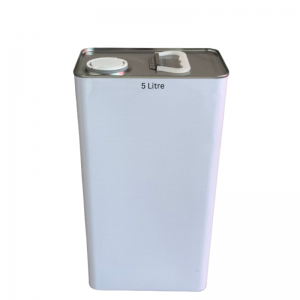
Round Metal Can with Flip Top Cap 1L, 750mL, 500mL & 250mL
Delivery will be calculated separately
Please Contact for Pricing
NA0-WRF
Description
Features
Enquiry
Specifications
Documents
Knowledge
Blog
Round Metal Olive Oil Cans with Integrated Flip-Top Cap
Delivery calculated separately based on freight and pallet quantity.
Premium packaging meets functional design with our Round Metal Cans, specifically engineered for the safe storage and convenient dispensing of olive oil and gourmet liquids. Crafted from high-quality, food-grade tinplate, these cans provide a professional presentation for retail and commercial oil production.
Superior Preservation & Pouring
Each can features an integrated flip-top cap with a built-in pouring spout, designed for a smooth, drip-free experience and easy resealing. The fully opaque body protects your oil from light exposure—the primary cause of oxidation—ensuring that the freshness, aroma, and nutritional value of your product remain intact from the warehouse to the consumer's kitchen.
Food Safety Guaranteed: All cans are internally coated with a specialised EPON-type food-safe lacquer. This protective barrier prevents any direct contact between the oil and the metal, preserving the purity and flavour profile of your gourmet condiments.
Technical Specifications
Specification
Details
Material
Food-grade Tinplate (Made in Europe)
Internal Coating
EPON-type Food-safe Lacquer
Closure Type
Snap-fit Flip-top Metal Cap (Integrated Spout)
Available Sizes
250mL, 500mL, 750mL, and 1L
Finish
Gloss Silver or White Exterior
Size Guide & Dimensions
250 mL
Ø72 mm × 125 mm Height
500 mL
Ø85 mm × 145 mm Height
750 mL
Ø99 mm × 205 mm Height
1 L
Ø73 mm × 275 mm Height
Frequently Asked Questions:
Main Features
European Manufacture: Produced to high standards of quality and consistency in Europe.
Snap-Fit Closure: Ensures a secure, leak-proof seal once the cap is engaged.
Versatile Use: Suitable for olive oil, infused oils, vinegars, and other liquid food products.
Eco-Friendly: Tinplate is 100% recyclable, offering a sustainable packaging alternative to plastic.
750mL Round Can Print Template - Flip Top Cap Cans
Diagrams
Document
The Role of Reliability in Labeling Machines
RELIABLE LABELLING MACHINES FOR ACCURATE, HIGH-EFFICIENCY PACKAGING
The Role of Reliability in Labeling Machines
Reliable labelling systems are essential for consistent product identification, accurate label placement, and packaging efficiency. Selecting the correct machine requires matching the equipment to the specific characteristics of each container. Bottles, vials, and jars vary in wall shape, surface regularity, height, and diameter, making equipment compatibility a critical engineering decision. To achieve reliable performance, all packaging variations should be assessed by a specialist experienced in labelling and packaging equipment.
PC: Great Engineering
Core Principles of Effective Labeling
The labelling process consists of several controlled mechanical and adhesive-transfer stages. Each stage must operate precisely to ensure consistent results
Label Feed- The label is drawn from the roll and routed through the machine using rollers or tension-controlled guides.
Label Pickup- Pickup may be achieved via:
suction cups
compressed air
buffer pads
rollers
secondary adhesive systems
Label Application- The adhesive side is applied to the container using full-surface, vertical, or horizontal pads, supported by roller pressure for uniform bonding.
Compression and Securing- Once positioned, the label is secured using:
buffer pads
compressed air
belts
brushes
Container Motion Path- Containers may travel:
linearly, or
via rotary systems for high-speed applications.
Industrial labelling machines can exceed 50,000 bottles per hour.
Categories of Labelling Machines
Semi-Automatic Labelling Machines
Semi-automatic systems require manual placement of each container before the labelling cycle is triggered using:
a turn handle
a push button
a foot pedal
Suitable for small to mid-scale operations requiring flexibility and short changeover times. Models:
Supports single labels, full wrap-around, and front/back application
High-Capacity Semi-Automatic Systems
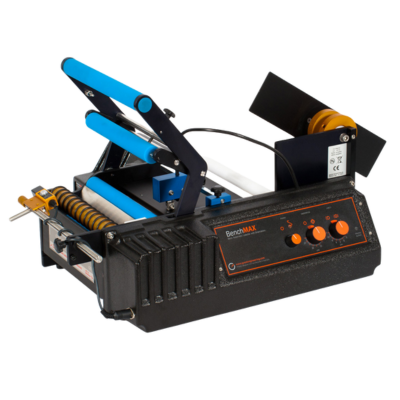
The Benchmax supports the widest range of product sizes and offers high application speeds suitable for industrial output. It applies transparent or clear labels with high precision.
Fully Automatic Labelling Machines
Fully automatic systems integrate into production lines following filling and capping. Conveyors transfer containers across each station.
Automated lines may include:
depalletisers
filling modules
capping heads
labelling stations
automated packing systems
The Polaris Line demonstrates a complete automated workflow from filling through to finished bottles.
Common Types of Labeling Machines Used in Production
Labeling machines generally come in two formats: semi-automatic and fully automatic. Semi-automatic labeling machines require manual placement of each bottle or container before the labeling cycle begins, and the operation is typically triggered by a turn handle, button, or foot pedal.
Fully automatic labeling machines are integrated directly into the production line, usually following the filling and capping stages. These systems rely on conveyors to move packaging through each section of the process. Containers may be fed in automatically by a depalletizer and packed at the exit point by machine, though these steps can also be performed manually depending on the overall line configuration and equipment capabilities.
Benchmate: An Entry-Level Semi-Automatic Labeling Solution
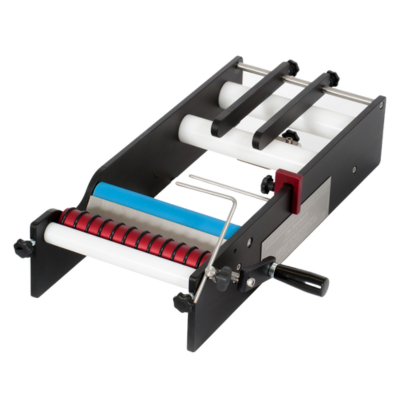
Manufactured in Australia, the Benchmate delivers excellent performance in the entry-level category. This manually operated label applicator is driven by a simple turn handle.
Semi-Automatic Labeling Machine for Mid-Level Production
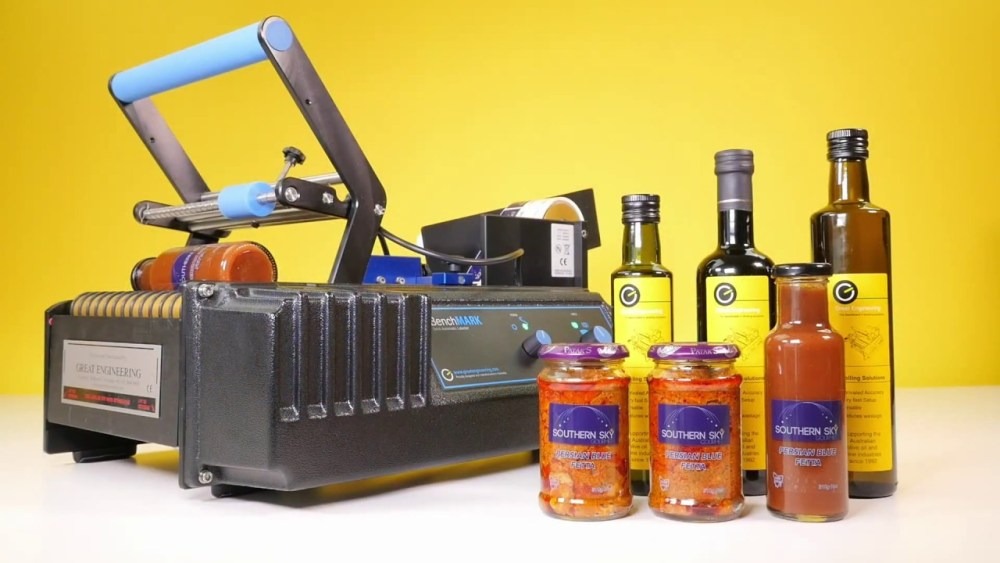
The Benchmark, also manufactured in Australia, is the next level up from the Benchmate and can apply single, full wrap-around, or front-and-back labels with ease.
High-Capacity Semi-Automatic Labeling Machine
The Benchmax handles the widest range of product sizes and delivers exceptional speed, making it ideal for high-output industrial applications. It’s user-friendly and supports precise application of transparent or clear labels.
Observe the foot-pedal system in use.
Fully Automated Labeling Systems
Watch the full Polaris Line showcase, demonstrating filling, capping, and labeling from start to finish.
View the entire workflow of filling, capping, and labeling.
Common Labeling Issues
Over the years, I’ve encountered a wide range of labelling problems and have helped many producers fine-tune their equipment, as correct setup and label tension are absolutely critical. Some of the most common labelling issues arise because:
Tearing often happens when the wrong label material is used during production. In some cases, poor machine calibration can prevent labels from applying smoothly, causing them to drag across the container and tear.
Peeling often happens when moisture is present or when the adhesive has aged or isn’t the right type for the application.
Curling typically appears when the adhesive releases from the container, which is more common in colder environments, such as refrigeration. It can also stem from die strikes created during the label-cutting process. These die-cutting issues tend to be more noticeable on automated production lines.
Die strikes can occur during the label manufacturing stage, and it is the label supplier’s responsibility to ensure their equipment is calibrated and operating correctly to prevent them.
Wrinkling and folds develop when a label is applied incorrectly to the bottle or container. Manufacturing inconsistencies in the container’s sidewall can also prevent the label from adhering smoothly. Proper label tension is essential as well—if the tensioner is worn or malfunctioning, it can lead to wrinkling, folding, or the formation of ridges during application.
Bubbles typically appear when the container or bottle has surface inconsistencies, preventing the label from adhering evenly across the wall.
Clear labels won’t apply properly when the sensor is unable to detect the gap between each label.
Correct setup of the labelling machine is essential. Below, you can see the BenchMax being adjusted for operation:
Importance of Expert System Configuration
Correct configuration of equipment, such as the BenchMARK and BenchMAX systems, requires:
precision tension control
accurate sensor calibration
pressure pad adjustment
roller alignment
verification of material compatibility
These steps ensure repeatability and reliable performance.
Summary and Technical Recommendations
PC Great Engineering
Work with an experienced labelling specialist during selection and commissioning.
Confirm compatibility between the machine design and all container dimensions and materials
Perform routine calibration and mechanical inspections.
Ensure appropriate label material selection to avoid common application issues.
A label is a critical component of product presentation and an extension of brand identity. Reliable equipment ensures consistent quality, operational efficiency, and long-term cost stability.
If you require guidance in selecting labelling equipment, you can contact The Olive Centre on 07 4696 9845 or email sales@theolivecentre.com.au. Having details about your bottles or containers, as well as your label sizes and shapes, will help us assist you more effectively.
Overview of Great Engineering
Australian-made, Great Engineering labellers offer a suite of features that position them among the best in the industry. These pressure-sensitive labelling machines represent a new generation of “on-demand” equipment designed for cylindrical containers. They’re ideal for sectors such as food and beverage, pharmaceuticals, cosmetics, wine, essential oils, edible oils, brewing, contract packaging, health foods, and preserves — providing consistent product identification and strong shelf presence for any round container. With a global reputation for reliability and performance, their machines are now exported to 55 countries and are recognised for their innovative engineering and high manufacturing quality.
Polaris Automazioni has been active in the bottling sector since the 1960s, operating from its facility in Reggio nell’Emilia, Italy. Over time, the company has become highly specialised in developing and manufacturing automatic filling systems for unique and specialty bottles, a product line that has achieved strong success in markets worldwide.
The company now offers an extensive range of machines featuring advanced technology, high production efficiency, and patented engineering, enabling them to meet a wide variety of industry needs. Today, the Polaris team continues to uphold the technical heritage established by its founder, driving further growth through a blend of expertise, innovation, and forward-looking design.
Extra virgin olive oil (EVOO) is extremely sensitive to light, oxygen, heat and metal contact. Packaging, therefore, plays a direct role in how long an olive oil remains “extra virgin.” Major reviews from UC Davis emphasise that optimal packaging must reduce light exposure, oxygen ingress, and headspace, while also ensuring cool storage. At the same time, producers—especially small to medium Australian growers—must consider costs, machinery requirements, recyclability, consumer preferences, and minimum order quantities (MOQ). Below is the most complete and updated comparison of all common packaging formats.
1. Plastic Bottles (PET)
Quality & Shelf Life
PET offers convenience and low cost but has moderate oxygen permeability and allows light penetration, which accelerates oxidation. A 2023 study showed PET-stored EVOO experienced higher acidity, peroxide values, UV oxidation indices and sensory degradation over 12 months—especially at elevated temperatures.
Chemical Safety
Migration of PET oligomers and antimony into oil is within regulatory limits, but increases under heat.
Sustainability
rPET has a lower carbon footprint than glass, but Australian recycling for PET varies by region.
Practicality
Cheapest and compatible with basic filling lines.
Lightweight and non-breakable.
Perceived as lower-quality for premium EVOO.
Best for: High-turnover oils sold quickly and stored cool.
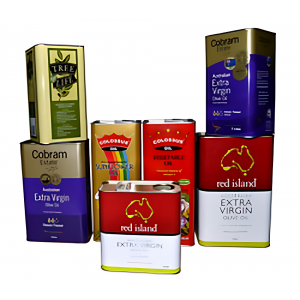
2. Metal Cans (Tinplate or Aluminium with Food-Grade Lining)
Quality & Shelf Life
Metal cans provide total light protection and excellent oxygen barrier characteristics. UC Davis stresses that lined cans effectively prevent metal migration and protect quality.
Compared with BIB, cans may show slightly faster oxidation when half-empty, but still protect oil well if stored cool. A 24-month study found both cans and BIB maintained EVOO within legal quality limits.
Consumer & Practical Benefits
Easily filled by weight, needing no specialised equipment.
Compatible with pull-up pourers that provide tamper evidence and reduce leakage.
High consumer trust-no plastic contact with oil.
Stackable and ideal for 3–20 L formats.
Sustainability
Steel and aluminium have high recycling rates in Australia.
Many producers prefer cans because Australian consumers are increasingly concerned about soft plastics, especially given the collapse of local soft-plastic recycling schemes (e.g., REDcycle).
Best for: Bulk, foodservice, premium oils, export, and producers who want reliability without specialised equipment.
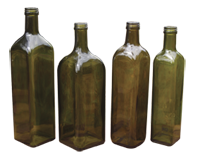
3. Coloured Glass Bottles (Green / Amber)
Quality & Shelf Life
Glass is chemically inert. Coloured glass offers some UV and visible light protection—amber performs better than green - but clear glass accelerates photo-oxidation significantly.
Coloured glass slows degradation but still allows some light through, so shelf lighting and storage conditions matter.
Practicality
Easy to fill.
Caps can be hand-applied, or producers can install a screw-cap capping machine that forms the thread consistently, reducing leakage.
Widely accepted for retail and gifting.
Sustainability
Highly recyclable, but heavy to transport. Bottle breakage is an inconvenience for producers.
Best for: Premium retail oils with attention to storage conditions.
4. Clear Glass Bottles
Research shows clear glass provides almost no light protection, leading to rapid losses in phenolics and faster oxidation.
UC Davis warns that clear glass should be avoided unless heavily covered by labels or cartons.
Best for: Fast-moving products or promotional oils kept strictly in the dark.
5. Bag-in-Box (BIB)
Quality & Shelf Life
Bag-in-box offers some of the best oxygen protection because the collapsing bag limits headspace oxygen, and the cardboard blocks light. Numerous studies, including 12- to 24-month trials, confirm superior preservation of phenolics, freshness, and sensory properties compared with bottles and cans.
Limitations for Australian Producers
Requires costly specialised filling equipment (nitrogen flushing, precise tap sealing).
High minimum order quantities for bags and taps.
Soft plastics inside bags are not recyclable in most of Australia, causing consumer concern.
Consumer Perception
Plastic contact and disposal concerns hinder adoption, despite technical superiority.
Best for: Large producers with dedicated filling lines, subscription models, or export markets where BIB is accepted.
6. Bag-on-Valve (BOV) / Aerosol Pouch Systems
BOV packaging uses a hermetically sealed internal pouch separated from an external propellant. The oil never contacts the propellant; instead, it is dispensed by pressure.
Quality & Shelf Life
Zero oxygen contact once sealed.
Excellent light protection when used with opaque or metallic cans.
Very low risk of oxidation compared with conventional bottles.
While formal olive oil-specific studies are limited, aerosol and BOV literature show extremely low oxygen ingress, making it ideal for sensitive oils.
Practical Benefits for Producers
The Olive Centre can supply BOV systems, but minimum order quantities apply, increasing upfront cost.
Allows controlled spray application, excellent for cooking oils, finishing oils, and portion control.
Protects oil quality even after repeated use, unlike bottles that suck in air after each pour.
Consumer & Market Benefits
Hygienic, non-drip, clean application.
Perceived as modern and premium.
Limitations
More expensive per unit than bottles or cans.
Cannot be easily refilled or recycled as a single stream; consumers must dispose of the metal can + internal pouch.
Best for: High-end culinary oils, premium lines, foodservice, and producers wanting differentiation without investing in BIB equipment.
Compact comparison showing light and oxygen protection levels across packaging types.
Packaging Type
Light Protection
Oxygen Protection
Machinery Required
Recyclability (Australia)
Cost
Consumer Acceptance
Best Use Case
Cans (lined)
★★★★★
★★★★☆
Easy
High
Medium
High
Bulk, premium, foodservice
Bag-in-Box
★★★★★
★★★★★
Specialised
Low (soft plastics)
High (at scale)
Medium–Low
Long shelf life, export
Coloured Glass
★★★☆☆
★★★★★
Easy
High
Higher
Very High
Retail premium
Clear Glass
★☆☆☆☆
★★★★★
Easy
High
Higher
High
Fast turnover only
PET Plastic
★☆☆☆☆
★★☆☆☆
Easy
Moderate
Low
Medium
Value lines, short shelf life
Bag-on-Valve (BOV)
★★★★★
★★★★★
Moderate
Low–Moderate
Higher
Medium–High
Premium spray oils
Practical Recommendations for Australian Producers
For maximum quality + minimal investment → Metal cans are the best balance: easy to fill by weight, compatible with tamper-evident pull-up pourers, highly recyclable, and very protective.
For premium bottled products → Use dark (preferably amber) glass, avoid clear glass unless fully shrouded, and invest in a thread-forming capping machine to prevent leaks.
For innovation and high-end markets → Bag-on-valve is an excellent oxygen-free system, ideal for dressings, premium oils, and portion control—MOQ applies, but no major filling-line overhaul is required.
For long shelf-life and export → Bag-in-box remains technically superior but is limited by consumer plastics concerns, poor soft-plastic recycling, and specialised filler cost.
For low-cost, high-turnover lines → PET can work if cool, dark storage is guaranteed. Not suitable for long-term premium EVOO.
Conclusion
Selecting the most suitable packaging for extra virgin olive oil hinges on finding the right balance between quality preservation, consumer expectations, and production practicality. Among all options, lined metal cans stand out as one of the most reliable and efficient choices: they are easy to fill by weight, offer excellent protection from light and oxygen, avoid consumer concerns around plastics, and are highly recyclable in Australia. Coloured glass bottles remain the strongest retail performer, pairing good product protection with strong shelf appeal and flexible filling options - from hand-applied caps to automated capping machines that minimise leakage risks. Clear glass should only be used for fast-moving products due to its poor light protection.
While innovative systems like bag-on-valve offer outstanding oxygen exclusion and controlled dispensing, their higher cost and MOQ requirements mean they are best suited for premium or specialised product lines. PET plastic bottles can work for value-oriented, short-shelf-life oils kept in cool, dark environments, but they are not ideal for long-term storage or premium markets.
Overall, Australian producers benefit most by matching each packaging format to the oil’s intended shelf life, sales channel, and brand positioning. Thoughtful packaging selection not only safeguards quality but also streamlines production and aligns with evolving consumer and environmental expectations.
References
UC Davis Olive Centre (2014). Packaging Influences on Olive Oil Quality: A Review of the Literature. University of California, Davis. (Comprehensive review of light, oxygen, metals, and packaging materials.)
Pinto, M., Soares, C., Silva, A. S. et al. (2023). “Degradation and Migration in Olive Oil Packaged in Polyethylene Terephthalate under Thermal Treatment and Storage Conditions.” Applied Sciences, 14(17), 7507. (Examines chemical migration and quality loss in PET bottles.)
Iqdiam, B., Hasan, M., Agouillal, F. et al. (2022). “Influence of Headspace Oxygen on Quality and Shelf Life of Extra Virgin Olive Oil During Storage.” Foods, 11(10), 1484. (Shows how oxygen exposure accelerates oxidation in packaged EVOO.)
De Leonardis, A., Lopez, F., Macciola, V. (2021). “Effects of Bag-in-Box Packaging on Long-Term Shelf Life of Extra Virgin Olive Oil.” European Food Research and Technology, 247, 839–850. (24-month comparison study of BIB vs metal cans.)
Abuhabib, M. M., Serri, N. A., Aljamal, A. et al. (2025). “Evaluation of Packaging Effects on the Phenolic Profile and Sensory Characteristics of Extra Virgin Olive Oil During Storage.” Foods, 14(14), 2532. (Shows BOV/BIB-type barrier systems outperform conventional packaging.)
De Feo, G., Malvano, C., Sica, C. et al. (2023). “Comparative Life Cycle Assessment of Glass Bottle and 100% Recycled PET Bottle for Extra-Virgin Olive Oil.” Sustainability, 15(4), 3665. (Shows rPET has a lower carbon footprint than glass.)
Lolis, A., Katsouli, M., Kotsiou, K. et al. (2019). “Effect of Bag-in-Box Packaging on Quality Characteristics of Extra Virgin Olive Oil Stored Under Household and Abuse Temperature Conditions.” Food Packaging and Shelf Life, 21, 100368. (Demonstrates the protective effect of high-barrier films.).
Esposto, S., Taticchi, A., Urbani, S. et al. (2022). “Effect of Light Exposure and Packaging Conditions on the Quality and Shelf Life of Virgin Olive Oil.” Journal of the Science of Food and Agriculture, 102(10), 4304–4313. (Quantifies degradation rates in clear vs coloured containers.)
FSANZ (Food Standards Australia New Zealand) (2020). Food Packaging and Migration Guidelines. (Authoritative reference for food-contact material safety, including PET and metal linings.)
Capturing The Australian Consumer Online And Leveraging Digital Trends
This article explores how Australian consumers search for, discuss, and purchase olive oil online. It highlights evolving preferences for extra virgin and organic oils, growing sustainability expectations, and the rising role of social media in shaping consumer behaviour.
Please log in to view the entire article
Advisory Notice: Tax Changes on Glass Packaging and Impacts on Olive Oil Producers
An advisory update outlining recent Chinese export tax changes affecting glass bottles and jars, and what the removal of VAT rebates means for olive oil packaging costs and supply chains.
Please log in to view the entire article
ANNOUNCEMENT: Warehouse in Sydney for growing needs in Olive Packaging
Over the past 12 months, The Olive Centre has a signed a new partnership agreement with a warehouse in Sydney to offer packaging supplies for predominantly glass bottles and cans.
"We explored a new warehouse as a potential option because we wanted to achieve better freight rates, overall competitively priced packaging through better efficiencies and improved delivery times for Producers.? We believe we have been able to deliver all these key objectives through improved efficiencies from delivery of packaging directly from the Manufacturer to the Producer.? The Olive Centre now also owns some of the moulds to the new packaging on offer.? ?We started the packaging revolution to attempt to overhaul pricing in the sector for anyone supplying the Olive Industry quite some years ago and since that time we have seen the general cost of packaging reduce across the board.? ?This is a great step in the right direction to reduce Growers costs to deliver an even more competitively priced packaging.? We would like to thank producers for their continued support and we have seen a tremendous growth in packaging demand over this time."? Amanda Bailey, CEO The Olive Centre
Shipments of packaging are directed through the warehouse which greatly reduces freight costs and delivery times.
The Olive Centre is also able to deliver directly into Perth and it is foreseen shipments in the near future could be sent directly to Melbourne and Adelaide under new arrangements being explored now.
If you have a need for packaging into the future, please contact The Olive Centre to ensure we can have the stock when you need it.
Does oxygen in the headspace of the packaging container influence Olive Oil quality?
28/11/19: Extra Virgin Olive Oil is the oil obtained from fresh olive fruit in perfect condition picked at optimal maturation with the utmost care and attention to the mechanical extraction processing to achieve the oil.? Olive Oil is the only vegetable oil that can be consumed directly in its raw state and contains important healthful nutritional properties.
Extra Virgin Olive Oil carries a unique profile of healthful properties and warrants special care and attention to the packaging and storage to uphold the nutrition, flavour and colour attributes of the product.
The 4 enemies which create a deterioration of olive oil are Heat, Air, Light & Time (HALT) and thus reducing these elements can greatly prolong the shelf-life of Extra Virgin Olive Oil.? Although no one has control over time but heat, air and light are at the centre of attention.? ?Evaluating the exposure to light, temperature, oxygen headspace, natural antioxidant or phenol content and oxygen dissolved in extra virgin olive oil during the bottling process all affects the deterioration rate and shelf-life during storage.
Researchers at the University of Florida aimed to assess factors to reduce or control the O2 headspace concentration in the package and the influence on quality, shelf-life and favourable sensory characteristics of Extra Virgin Olive Oil.? Due to the gap in information concerning the optimum package headspace O2 concentration during storage, additional research was needed to highlight the potential benefits of reduced oxygen headspace packaging of Extra Virgin Olive Oil.
The study looked at:
Headspace volumes at 50 mL after placing the oil in jars in dark and clear glass containers.
Four different oxygen concentrations were applied to the oil samples 21% oxygen (control/ normal atmosphere pressure); and 10% oxygen; 5% oxygen; and 2% oxygen (at atmosphere pressure).
Researchers noted "Low headspace oxygen concentration is important for maintaining quality and shelf-life of Extra Virgin Olive Oil and the findings at 2% and 5% headspace oxygen, in clear or dark glass containers, at 10 ?C protects chemical indices beyond 12 months and total polyphenols were protected beyond 6 months as was chlorophyll in dark bottles and colour parameters were protected beyond 9 months"
In another study, it was suggested that the above findings could be extended even further with the use of modified atmosphere packaging.
Modified atmosphere packaging (MAP) is the removal and/or replacement of the atmosphere surrounding the product within packaging.??In passive MAP, package atmospheres are left to change dynamically based upon gas consumption/production by packaged products and permeation characteristics of packaging.? ?Active MAP uses systems to remove and/or replace atmospheres prior to sealing packages.? Vacuum and/or gas flush systems are examples of active MAP systems.
It was also found that low oxygen MAP offers an opportunity to improve the shelf life of extra virgin olive oil.
Furthermore, the control of the storage environment (i.e. light and temperature) likely increase the efficiency of MAP on EVOO quality and shelf-life.
Overall, low oxygen MAP technology appears viable for enhancing the shelf-life of EVOO during storage. Understanding how MAP technology influences EVOO quality and shelf-life will ultimately assist processors in improving the storage conditions for EVOO. Combining MAP technology and other factors such as packaging type, package headspace volume, and storage temperature are also likely to present potential advantages for EVOO storage.
This research is interesting because it highlights possibly overlooked or under-appreciated factors that can influence quality parameters within the extra virgin olive oil.? Enabling to decrease the factors contributing to quality decline can have a beneficial effect for an extended time for the sale of the product.? It is also noted that no matter the type of packaging if temperatures are elevated during storage of the product in the container or at the retailer, will greatly contribute to a reduction in shelf life.
_____________________________________________
Influence of Headspace Oxygen on Quality and Shelf Life of Extra Virgin Olive Oil During Storage
Abstract
This study evaluated the impact of low O2 headspace in clear and dark containers at different storage temperatures (10 ?C and 28 ?C) on the quality and shelf life of extra virgin olive oil (EVOO). Bottle headspace was controlled at four different O2 concentrations 2, 5, 10, and 21%. Quality parameters were determined after 3, 6, 9, and 12 months storage: free fatty acids, peroxide value, absorption coefficients K270 and K230, total polyphenols, chlorophyll content, oxidative stability index, and color. Results show low headspace oxygen levels of 2 and 5%, significantly increased EVOO shelf life stored in dark and clear bottles at 10 ?C. While the improvement in EVOO shelf-life was less when stored at 28 ?C. No significant differences occurred between EVOO samples packaged at 10 and 21% headspace O2 concentrations in clear bottles stored at 28 ?C while significant differences were observed with 2 and 5% headspace O2 concentrations. These results suggest that it is important to minimize headspace oxygen in packages of extra virgin olive oil.
Is Smart Packaging for Extra Virgin Olive Oil Widely Accepted by Consumers?
6/12/19: Extra Virgin Olive Oil is a staple in the Mediterranean diet and plays an important role in international food commerce. However, olive oil is an ancient food and is probably the most studied oil and owns its right to the accolade in daily health and wellbeing. However, in order to secure the healthful properties provenance and the sustainability practices are noted by consumers and can form part of the processes or the story in obtaining the oil.
Since the wave of fake oils and low quality messages have rippled through to consumers to beware of fraud has now lead to a wave of other types of vegetable oils claiming 'be as healthy as olive oil' and consumer buying habits have backed this up. The average household in Australia buys $25 per year of Olive Oil.
True traceability brings with it the ability to follow the movement of a product through the differing phases of harvesting, production, processing and distribution. However, backward traceability is the process to allow a back trace of its processes with the critical steps. So what tools can be used to identify the origin and guarantee traceability and transparency of a product to give consumers confidence to buy your product?
In a recent study published in Foods Journal 2019, researchers from Italy aims to investigate the economic sustainability and the consumers preference with three proposed technological systems to support traceability.
The study looked at various labels that provide innovative electronic traceability & transparency:
NFC (near field communication) - Label placed underneath the external label and activated via a smartphone antenna to read traceability information.
DAB (tamper-proof device for bottles) - Tamper-proof device composed of a bottle cap, containing a RFID (radio frequency identification) adhesive label, which externally covers the traditional one.
QR-B (quick response blockchain) - QR code tag on the external label and protected by a 'scratch and win' system to allow the consumer to obtain the reward implemented with blockchains.
Researchers noted "EVOO represents the one of the excellence's of Italian products; it is a basic ingredient of the Mediterranean diet; for this reason, it must be protected from fraud and sophistication that could damage ?made in Italy? and have repercussions both for producers and consumers. This study showed some interesting and surprising outcomes.? First of all, the unexpectedly high willingness to pay (+17.8%) by Italian consumers for the implementation of traceability information on EVOO mediated by smart technologies.? Among the three proposed technologies for traceability, consumers greatly prefer the QR-B system, despite the different advantages linkable to the other systems.".
The researchers also noted that results show that 94% of the consumer respondents are interested in the implementation of such technologies, and among them 45% chose QR-code protected by a?scratch-and-win? system with a blockchain info tracing-platform (QR-B).? Although blockchains are not yet very widespread in EVOO traceability, their use may be an excellent solution to ensure reliability, transparency, and security, especially for those commodities susceptible to fraud such as EVOO to preserve its integrity.?
Blockchain is making its way into the bigger retailers like Walmart and it will not be long before Australia starts to see this trend.
It was also found in the survey, that the age composition revealed different spending behavior patterns. The respondents less than 35 years old (19.9% of the respondents) were less available to pay additional costs for the implementation of information regarding traceability.
This research is interesting because it highlights different ways of moving with the age of technology and enhancing messages to customers in terms of authenticity, sustainability and transparency. The costs to implement a change of packaging can have further impact so changes should be investigated thoroughly to ensure it is worth the move and whether such changes will be popular with consumers. However, making a simple QR code may be a step in the right direction to telling your provenance story with the various messages of sustainability, in-grove practices production techniques, distribution and care instructions for the product.
_____________________________________________
Are the Innovative Electronic Labels for Extra Virgin Olive Oil Sustainable, Traceable, and Accepted by Consumers?
Abstract
Traceability is the ability to follow the displacement of food through its entire chain. Extra virgin olive oil (EVOO) represents Italian excellence, with consumers? increased awareness for traceability. The aim of this work is to propose and analyze the economic sustainability and consumers? preference of three technological systems supporting traceability: Near Field Communication (NFC) based; tamper-proof device plus Radio Frequency Identification (RFID) and app; QR code tag plus ?scratch and win? system and blockchain. An anonymous questionnaire to Italian consumers (n = 1120) was made to acquire consumers? acceptability of the systems and estimating their willingness to pay additional premium prices for these. An economic analysis estimated and compared the technology costs at different production levels. Results show that 94% of the consumer respondents are interested in the implementation of such technologies, and among them 45% chose QR-code protected by a ?scratch-and-win? system with a blockchain infotracing-platform (QR-B). The consumers interested are willing to pay a mean premium price of 17.8% and economic analysis reported evidenced an incidence always lower than mid-/high-production levels. The success of the QR-B could be ascribed to different aspects: the cutting-edge fashion trend of blockchain in the food sector, the use of incentives, the easy-to-use QR-code, and the gamification strategy
1 Consiglio per la ricerca in agricoltura e l?analisi dell?economia agraria (CREA) - Centro di ricerca Ingegneria e Trasformazioni agroalimentari, Via della Pascolare 16, 00015 Monterotondo (Rome), Italy
2 Istituto Nazionale di Statistica (ISTAT) - Direzione centrale per le statistiche sociali e il censimento della popolazione (DCSS) - Servizio registro della popolazione, statistiche demografiche e condizioni di vita (SSA), Viale Liegi 13, 00198 Rome, Italy
3 Maticom S.r.l.-Via Carlo Spinola 5, 00154 Rome, Italy * Author to whom correspondence should be addressed.
Due to the high demands on stock levels during COVID19 and throughout the harvest season, The Olive Centre has expanded its operations and opened a new Melbourne Warehouse at the Airport to stock various items.? At the moment we are holding packaging supplies & processing aids.
The benefits of this warehouse brings further efficiency to your operation by reducing timing & costs of delivery.? We also are able to arrange collection of goods if you prefer.?
We are now shipping containers directly to Melbourne to ensure ample stocks are accessible.
If you are needing processing aids, packaging, pruning, harvesting equipment we can despatch via our various carrier options to you Ex Melbourne, or if suitable we can arrange for you to collect.? Our team is available to answer your questions and can be contacted on 07 4696 9845 or via email sales@theolivecentre.com.au
Warehouse Locations:? Smithfield, NSW - Melbourne Airport, VIC - Regency Park, SA
About The Olive Centre
The Olive Centre specialises in supplying Equipment & machinery for the needs of olive growers in Australia and other major Olive Producing Countries.
As the one-stop-shop, our product range comprises of equipment that is proven and tested with olives. You can be assured all the hard work has been done to determine our product range through over 17 years of testing products in grove situations.
The Olive Centre is not just about equipment & machinery supply but is here to backup growers & producers through technical advice and many free services that are relied upon.
Advisory Notice: Tax Changes on Glass Packaging and Impacts on Olive Oil Producers
An advisory update outlining recent Chinese export tax changes affecting glass bottles and jars, and what the removal of VAT rebates means for olive oil packaging costs and supply chains.