
The Olive Lace Bug (Froggattia olivina) is an Australian native sap-sucking insect posing significant threats to olive groves. READ MORE

My Shopping Cart
The Olive Lace Bug (Froggattia olivina) is an Australian native sap-sucking insect posing significant threats to olive groves. READ MORE

When establishing an olive grove, one of the most critical decisions you will make is the layout of your trees. The arrangement you choose will influence tree health, productivity, and long-term management efficiency. This guide will walk you through key considerations, including aspect, tree spacing, irrigation, harvesting methods, drainage, pruning, and marking out your olive grove.
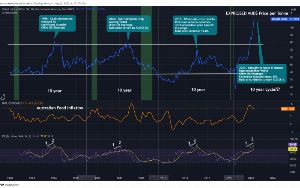
The global olive oil market has entered unprecedented territory. In 2023, Spain’s severe drought has crippled the world’s largest producer, driving olive oil prices to record highs and reshaping global supply chains. As European consumers face steep costs, Australian producers are experiencing strong demand and record export returns. This article examines the climatic and economic forces behind this crisis.

The F3020 Electrocoup weighs less and is more compact which offers improved efficiency and faster-cutting speed, making the new generation F3020 a total advancement in features.

Here is a recommendation to help guide you through some trial information to help you ascertain the correct application rates for trial.

What is a DOP Closure and how do you apply it to an Olive Oil glass bottle? Once the olive oil has been filled into the bottle you can see the video on how to apply.
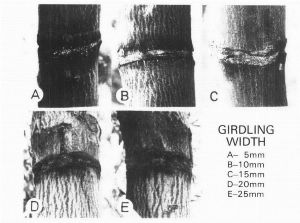
Girdling (or cincturing) involves removing a narrow strip of bark around the trunk or scaffold of an olive tree to interrupt the flow of carbohydrates to the roots — thereby redirecting energy toward fruit development. When applied correctly, early trials in Israel and Spain reported up to a 40% yield increase and larger fruit size (from 3.9 g to 4.7 g) the following harvest cycle. But the technique carries risks: timing, girdle width, wound heal

Occasionally a sap-sucking insect known as Brown or Black Olive Scale will be seen on olive trees. It is rarely a problem if the trees are in good health. We usually only spray our mature trees for scale every two to three years and only then if they need it. However, certain areas of Australia are more prone to the scale.

About Psyllids: Psyllids, also known as jumping plant lice or lerp insects, are sap-sucking insects related to whiteflies, aphids and scale insects. In Australia, there are hundreds of species of psyllid, most of which are of not of any economic significance. Most psyllid species are host specific and live and feed only on a group of closely related plants or a single tree species), including the psyllids which feed on eucalypts.
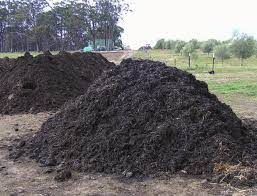
Currently around 3.2 million tonnes of olive oil is produced annually in the world (Statistica.com) leading to the generation of large amounts of olive oil production waste. Spain is the largest producer of olive oil in the world accounting for 69% of total global production. In the early 1980’s the introduction of three-phase production was considered a new era in olive oil processing technologies and considered as a newer, cleaner, and more..