My Shopping Cart
The ability of Viscozyme® L to liberate bound materials and degrade non starch polysaccharides can be used to improve starch availability in fermentation and generally reduce viscosity and hence improve yields. The extraction of material from plant tissues and the processing of fruit and vegetable material (e.g. roots, plants, seeds, recovery of various press processing residues, aso.) can be improved by pretreating the plant material with Viscozyme® L either before conventional processing or as part of an enzyme-based extraction process.
The ability of Viscozyme® L to function at low temperature will reduce the energy needed for extraction and the thermal degradation of the required material. In addition, the absence of significant levels of amylase and lipase activity in Viscozyme® L means that the major components of plant material will not be affected during the extraction process.
Viscozyme® L is a multi-enzyme complex with a strong pectolytic activity and a wide range of carbohydrases, including arabanase, cellulase, beta- glucanase, hemicellulase, and xylanase.
The enzyme also has activity against the branched pectin-like substances found in fruits and vegetables. Viscozyme® L is produced from a selected strain of Aspergillus aculeatus.
Benefits
The main benefits of using Viscozyme® L in vegetable and fruit processing are:
Improved extraction of valuable and healthy components: Enzymes are used in the breakdown of cell walls to facilitate and increase the extraction of valuable and healthy components from organic plant components, such as color, anthocyanins, tannins, antioxidants, lycopene, or carotene, under mild processing conditions.
Improved processing performance: The absence of significant levels of amylase and lipase in Viscozyme® L means that the healthy components of organic plant material will not be affected during the extraction process
Cost savings: The ability of Viscozyme® L to function at low temperature will reduce the energy needed in the extraction process
Less pomace: The superior extraction performance with Viscozyme® L leads to a reduced amount of pomace from fruit and vegetable mashes, for example olive cake.
Disposing of pomace is often costly and problematic. The reduction in pomace is therefore a substantial benefit
More Information:
| File | Title | File Description | Type | Section |
|---|---|---|---|---|
| Kosher_Grain_and_Oil_2025.pdf | Kosher Certificate - Novozymes | Specifications | Document | |
| Halal_Grain__Oils_2025.pdf | HALAL certificate Grains and Oils - Novozymes | Specifications | Document | |
| Viscozyme_L_-_FSSC_22000.pdf | Novozyme Food Safety Certification | Specifications | Document | |
| Pectinex_Ultra_Olio_-_ISO_9001.pdf | Novozymes ISO 9001 | Specifications | Document | |
| Pectinex_Ultra_Olio_-_ISO_14001.pdf | Novozymes ISO 14001 | Specifications | Document | |
| Viscozyme_L-GMO_Status_short.pdf | GM Statement Viscozyme | Specifications | Document | |
| Viscozyme_L_-_SDS_-_GB_-_AU.pdf | Viscozyme SDS | Brochures | Document | |
| Viscozyme_L_-_GBE_-_PDS.pdf | Viscozyme PDS | Brochures | Document | |
| Enzymes_Olive_Oil_Technical_Presentation.pdf | Enzymes Olive Oil Technical Presentation | Brochures | Document | |
| Olive_Oil_Extraction_Application_Sheet.pdf | Enzymes Olive Oil Extraction Application Sheet | Brochures | Document | |
| Viscozyme_L_-_Non-animal_vegan_TSE-BSE.pdf | Viscozyme - Vegan Statement | Brochures | Document | |
| Kosher_Food__Beverage_2025.pdf | Kosher Food & Beverage 2025 Novozyme | Specifications | Document | |
| Halal_Food__Beverages_2025.pdf | Halal Certificate Food and Beverage 2025 | Specifications | Document | |
| RIRDC-11-091-Evaluation-of-Processing-Aids-Canamasas-REPORT_FINAL.pdf | Evaluation of Processing Aids for Olive Oil Extraction and Quality Improvement - RIRDC | This RIRDC report by Pablo Canamasas and Leandro Ravetti examines the use of traditional and new processing aids - such as talc, enzymes, salt, and calcium carbonate - to enhance olive oil extraction efficiency and maintain oil quality. The study provides | Specifications | Document |
OLIVE OIL PROCESSING
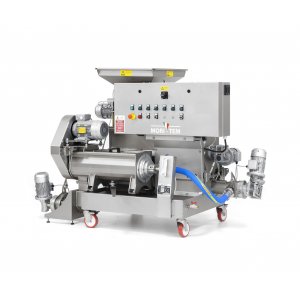
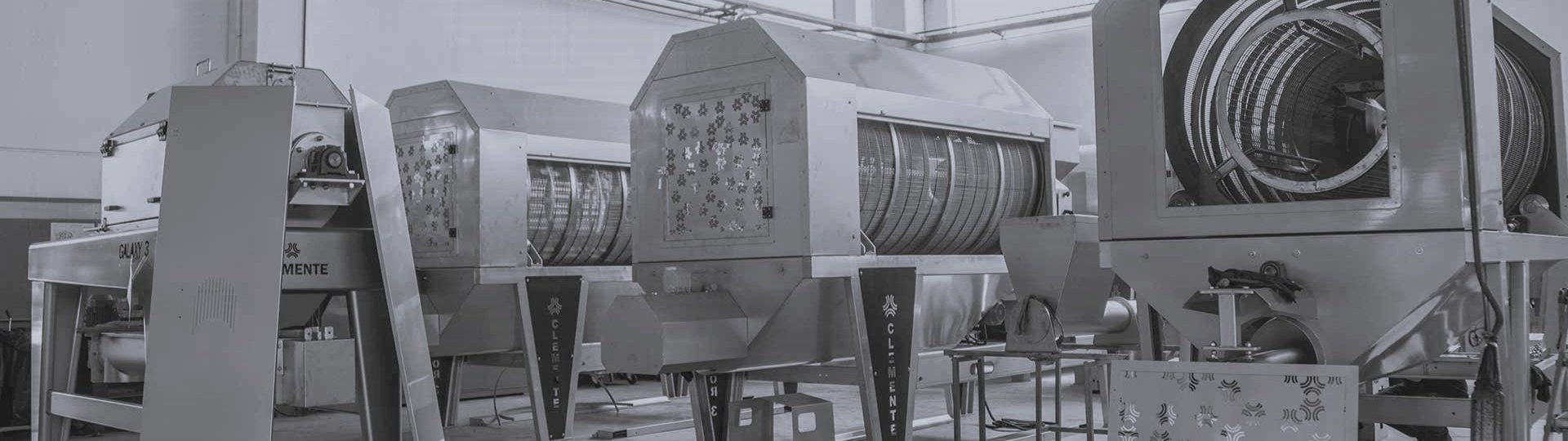
For businesses and serious growers considering olive oil extraction, the idea of owning a machine for under $10,000 may seem like an attractive entry point. However, achieving high-quality olive oil requires advanced extraction technology that meets food-grade standards. The extraction process is highly technical, demanding specialised equipment to maintain oil integrity and efficiency. This guide will help you understand the essential components of olive oil processing, the investment required, and the best options for entering the market.
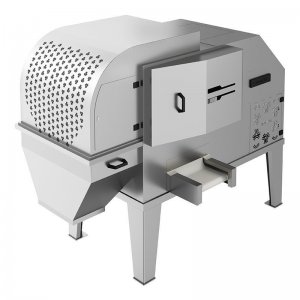
Many low-cost machines marketed for oil extraction—often priced around $2,000—are screw presses designed for seed and nut oils. These do not meet the requirements for proper olive oil extraction. Producing premium extra virgin olive oil requires specialised machinery that includes:
Without these advanced components, it is impossible to produce high-quality olive oil that meets commercial standards.
Each of these stages demands industrial-grade technology, making low-cost extraction machines impractical for producing high-quality olive oil.
For those serious about maintaining full control over their production, the Frantoino Olive Oil Press is an excellent entry-level option. With a processing capacity of up to 50kg per hour, it delivers professional-quality results in a compact and efficient design. Owning your own machine ensures complete flexibility and control over your olive oil production.
f you’re looking for a cost-effective alternative, buying a used machine can provide savings while still allowing you to own your equipment. Though used machines can be harder to source, platforms such as Olive Machinery list available second-hand units.
For those not ready to invest in machinery, a local processing facility provides access to high-grade extraction equipment without the capital investment. To find a processor near you, use The Olive Centre’s Processor Map.
Producing high-quality olive oil requires investment in the right equipment and processes. Whether you choose to own a professional machine like the Frantoino, explore second-hand options, or utilise a local processing service, there are solutions to suit different business needs. For those prioritising full control and flexibility, investing in specialized extraction equipment is the best path forward. However, used equipment and local processors provide accessible alternatives for those looking to test the market before committing to a larger investment.
OLIVE OIL PROCESSING AIDS - COADJUVANTS
Research about enzyme application in olive oil extraction processing can be effective in obtaining higher yields, faster oil & water separation, leading to smoother operation of machinery, less residual oil in the pomace and improved oil clarity.
Pectinase enzymes are used extensively around the world in the fruit juice and wine industries and increasingly in the olive oil industry.
Pectinase enzymes are produced by submerged or surface fermentation from microorganisms under highly controlled conditions. There are relatively few primary producers (manufacturers) of pectinase enzymes in the world.
Manufacturers vs Suppliers of Enzymes.
There are suppliers to the industry who do not manufacture enzymes but buy them in concentrates (i.e. a high-activity enzyme), then dilute and formulate a finished product. Dosage recommendations for these cheaper products often do not correlate with achieving sufficient enzyme activity in the process to give maximum oil yield.
What should you expect to see by using Enzymes in olive oil processing?
During April 2018 at a Processing Workshop in Drysdale Victoria, I noted an interesting response from the Owner of the property, Manzanillo Grove during the processing trial that took place with over 35 producers from all over the country who had said “I have never seen Enzymes interact this way before… there is oil everywhere. Another observation is the paste was also performing much more quickly and there is an incredible increase in the amount of extra oil. We are impressed with the results of the processing demonstration today.” Jacques Kint, Manzanillo Grove.
Observations: Paste not as fluid, took longer to release oil, not as much oil pooling.
Observations: More oil pooling, better fluidity of paste, quicker oil release.
There is a response rate between enzyme dose and oil yield. A low strength enzyme can result in minimal improvement in yield and inferior performance if dosed at the same rate as a high strength product. To give the same performance, low-activity enzymes need to be dosed at much higher rates.
Even though the price seems competitive on the surface you may actually see yourself paying considerably more in comparison… you can waste your money by using cheap, low-strength enzymes!
Producing high-quality extra virgin olive oil depends not only on fruit quality and processing technology, but also on the strategic use of processing aids - materials added during malaxation or paste handling that facilitate oil release. Although they modify the processing conditions, all approved processing aids share two essential characteristics: they do not remain in the final oil, and they do not negatively affect oil quality.
This article summarises the main categories of processing aids used in olive oil extraction, how they work, and when they offer the greatest benefit.
Processing aids help overcome difficulties such as:
The major classes of processing aids used in olive milling are:
How They Work
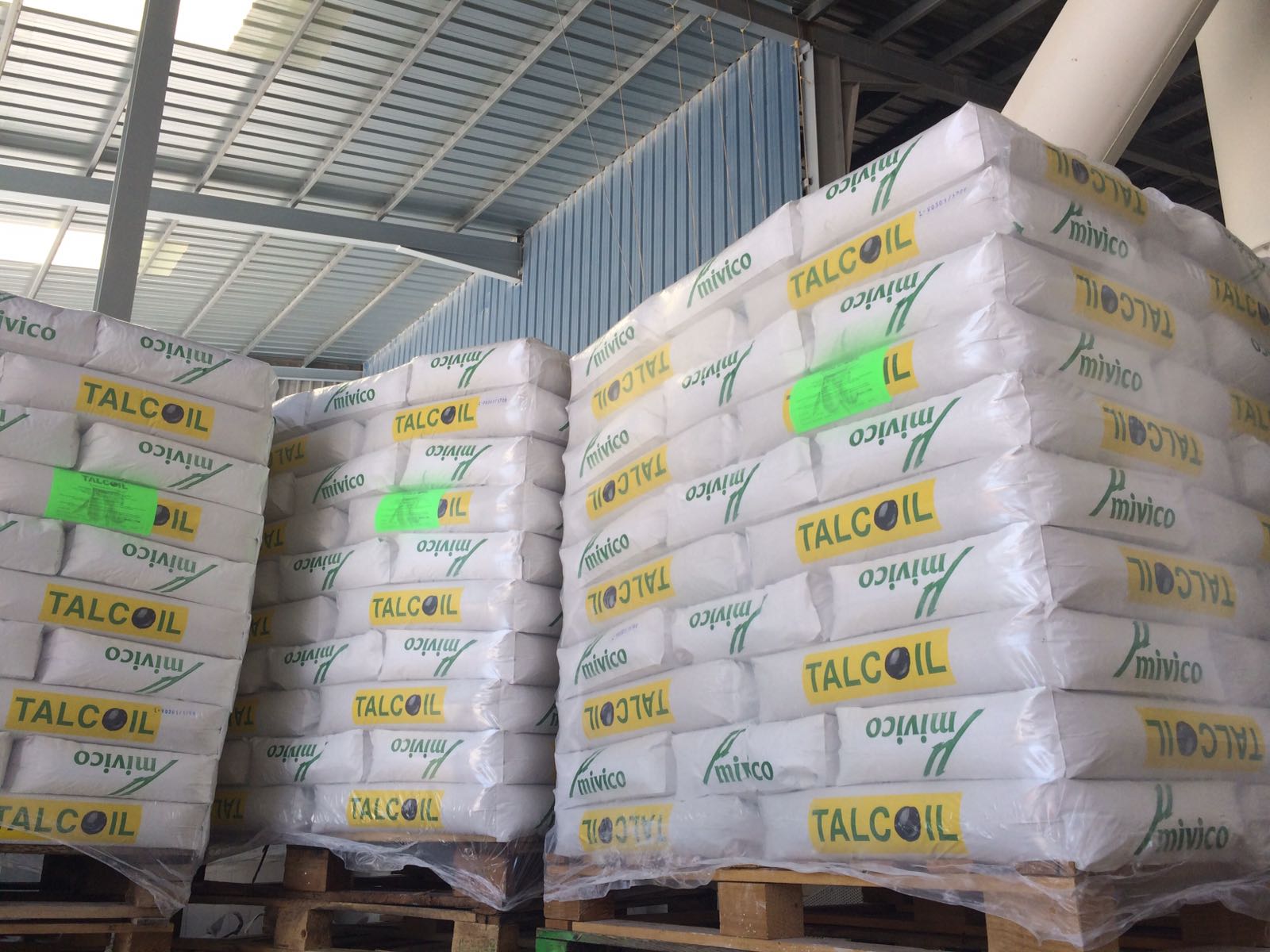
Talc is a natural hydrated magnesium silicate with a laminar sheet-like structure. When added to olive paste, it:
Research presented in the file shows talc:
Total Pectins
Table 3. Effect of talc addition on pectin fractions and total pectin content of olive paste after malaxation
| 0 | 0.25 | 0.5 | 1 | |
|---|---|---|---|---|
| WSP (mg/100 g AIS) | 434 ± 59a* | 293 ± 39b | 244 ± 51b | 261 ± 26b |
| CSP (mg/100 g AIS) | 359 ± 35a | 236 ± 11b | 220 ± 7b | 354 ± 4a |
| NSP (mg/100 g AIS) | 483 ± 61ab | 387 ± 55b | 348 ± 23b | 590 ± 62a |
| TP (mg/100 g AIS) | 1275 ± 83a | 915 ± 76b | 812 ± 76b | 1206 ± 88a |
Graphs demonstrate substantial extractability improvements across varieties such as Arbequina, Barnea, and Manzanillo when talc or microtalc is added.
Talc trial in Manzanillo fruit with 61.1% moisture and 3.1 M.I.
A detailed trial in Manzanillo fruit (61% moisture) shows extraction efficiency rising from 74.36% (no talc) to 89.15% at 2.0% talc.
When to Use Talc
Suggested when:
Mechanism
1–3%, added during malaxation.
Mechanism and Use
A natural calcite mineral with very fine particle size (d50 = 2.8 µm). Its mode of action is similar to talc - promoting aggregation via adsorption.
Benefits
However, CaCO₃ may:
| Salt (NaCl) | Calcium Carbonate |
|---|---|
|
|
|
|
|
|
|
|
|
|
|
|
|
|
|
|
Table 4. Comparative effects of Salt (NaCl) and Calcium Carbonate on olive paste extractability, stability, and quality.
Citric acid acts both as a processing aid and a quality modifier:
Mechanism
Documented Effects
Research data shows:
Application
Role in Extraction
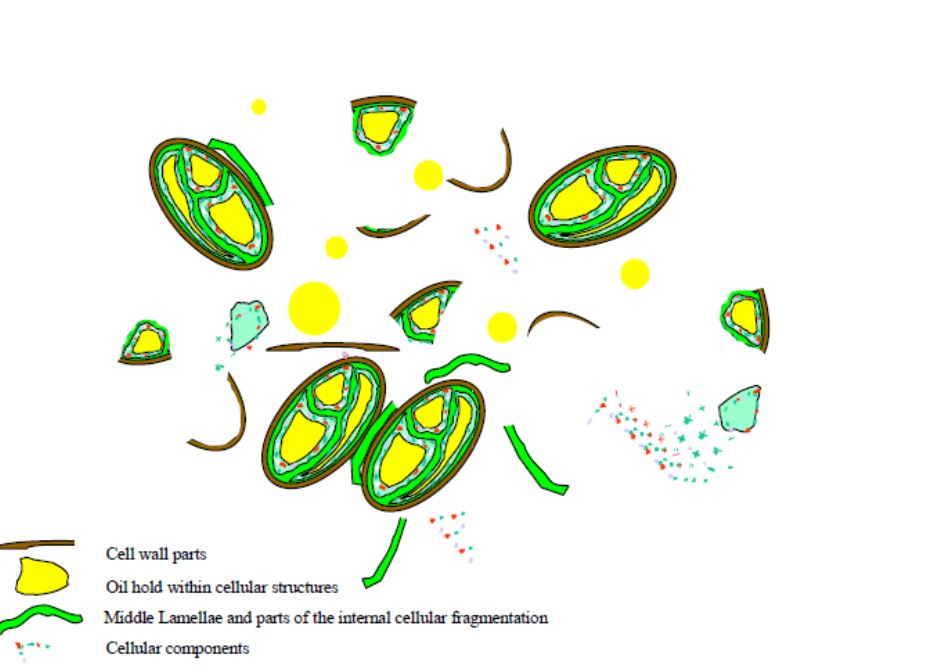
Enzymes (typically pectinases and cellulases from Aspergillus spp.) break down:

This releases oil trapped within cell structures more efficiently.
Key Benefits

Changes in Texture, Total Pectins (TP), and Pectin Esterification Degree in Fruits During Ripening of Olives
| Ripeness Stage | Harvest Date | Texture (N/100 g of fruits) | TP (mg GA/100 g dry wt) | Degree of Esterification (%) |
|---|---|---|---|---|
| Ripe-green | 11/30/98 | 3889.6 ± 155.3 | 1678.6 ± 72.2 | 63.30 |
| Ripe-green | 12/7/98 | 3023.5 ± 140.7 | 1464.3 ± 60.0 | 65.34 |
| Small reddish spots | 12/14/98 | 2537.2 ± 108.8 | 882.4 ± 41.5 | 44.12 |
| Turning color | 12/21/98 | 2428.4 ± 112.4 | 852.9 ± 38.4 | 42.42 |
| Turning color | 12/28/98 | 2394.7 ± 98.2 | 823.5 ± 41.1 | 40.88 |
| Purple | 1/4/99 | 2253.6 ± 112.9 | 789.5 ± 31.3 | 27.39 |
| Purple | 1/11/99 | 2260.5 ± 90.4 | 763.2 ± 32.2 | 27.59 |
| Black-1 | 1/18/99 | 2119.7 ± 97.9 | 680.5 ± 36.0 | 23.39 |
| Black-2 | 1/25/99 | 1358.3 ± 57.8 | 580.8 ± 25.0 | 24.21 |
| Ripe-black | 1/29/99 | 1027.6 ± 52.5 | 510.6 ± 21.4 | 12.03 |
*Black-1: fruits with black surface and white pulp; Black-2: fruits with black surface and purple pulp; GA: galacturonic acid.
Dosage
A combined approach often yields the best results.
Advantages
Talc and Microtalc
Processing aids are an essential - yet often underused - tool for olive oil producers aiming to optimize extraction efficiency, improve oil yield, and adapt to seasonal and varietal challenges. When applied correctly:
Esterification is a natural chemical reaction where free fatty acids (FFA) combine with alcohols, typically glycerol, to form esters. This process reduces the measurable acidity of the oil. While esterification can occur in the olive paste during milling, it is usually a minor contributor to quality changes compared with factors such as fruit condition, malaxation parameters, and extraction efficiency.

This diagram outlines the continuous olive oil extraction line: olives are crushed, malaxed, separated, clarified, and routed for bottling, while husk and wastewater are channelled to waste management systems.
Processing aids act physically or chemically on the olive paste. Some enhance enzyme activity, others alter pH or moisture, and a few influence esterification indirectly. Below is a breakdown of the main aids used by professional olive processors and how each relates to esterification.
Calcium carbonate is the processing aid most associated with apparent esterification effects.
Influence on esterification
Salt acts primarily on the physical structure of the paste rather than the oil chemistry.
Influence on esterification
Talc is inert and valued for its physical functionality.
Influence on esterification
Commercial enzyme blends can influence chemistry indirectly.
Influence on esterification
These clay minerals are used more for paste modification or clarification.
Influence on esterification
| Processing Aid | Impact on Esterification | Notes |
|---|---|---|
| Calcium Carbonate | Moderate … via pH shift | Can lower measured FFA but may affect flavour and oxidation |
| Salt (NaCl) | None | Improvements come from better separation, not chemical change |
| Talc | None | Purely physical aid for difficult pastes |
| Enzymes | Minor, indirect | Mostly physical… chemical breakdown of cell walls |
| Kaolin | None | Improves rheology only |
| Bentonite | None | Used for clarification rather than extraction |
Professional olive mills benefit from:
Esterification occurs when free fatty acids (FFA) in olives or olive paste react with natural alcohols—most commonly glycerol—to form esters. While this is a natural chemical reaction found in many biological systems, it usually plays only a small role during standard olive oil extraction. However, under certain processing or fruit-quality conditions, esterification can become more noticeable and can affect how acidity is interpreted during quality assessment.
Understanding when and why esterification occurs is important for mill operators, as it can influence extraction decisions, processing aid use, and the accuracy of acidity readings that determine Extra Virgin classification.
Esterification is not inherently harmful, but it becomes more noticeable when fruit quality is compromised or when additives alter the paste’s pH and reaction environment. This means that an oil’s reduced measurable acidity may not always reflect true quality improvement.
1. Higher Paste Temperatures
4. Extended Contact Time
5. Enzymatic Activity
When esterification occurs under the conditions described above, it can lower the measured FFA without actually improving the oil’s true chemical quality. This can mislead producers into thinking their processing steps or additives improved the oil, when in reality the acidity reduction was simply a chemical conversion—not a restoration of fruit integrity.
Producers who understand these mechanisms can:
In simple terms: Esterification becomes noticeable when the olive paste is warm, slightly alkaline, contains damaged fruit components, or sits too long before separation. Managing these factors helps prevent misleading acidity readings and supports genuine quality improvements.
CONSUMER EDUCATION
Extra Virgin Olive Oil (EVOO) is often hailed as a “liquid gold” in kitchens around the world – a term famously used by the ancient Greek poet Homer. For Australians, EVOO is more than just an ingredient; it’s a heart-healthy cooking staple and a link to centuries of Mediterranean tradition. This guide will explain exactly what EVOO is and how it differs from other olive oils, how it’s produced (from grove to bottle), its science-backed health benefits, and the many ways you can use it – both in your cooking and beyond. Along the way, we’ll share some interesting facts that highlight why this oil has been prized since antiquity. Let’s dive in!
By contrast, other grades of olive oil are lower in quality or more processed:
In summary, EVOO stands apart from other olive oils because it’s unrefined, of top sensory quality, and packed with natural compounds. If you drizzle a good EVOO on a salad or taste it on a spoon, you’ll notice a bright, complex flavour – something you won’t get from the flat, one-note taste of refined “olive oil” blends.
EVOO’s journey from tree to bottle is a fascinating combination of ancient tradition and modern food science. It all starts in the olive groves. Olives destined for high-quality EVOO are often hand-picked or gently shaken off trees (modern farms may use mechanical harvesters that vibrate the trunks or use catching frames). The timing of harvest is crucial: early in the season, when olives are green to purplish, they yield less oil, but it’s very rich in flavour and antioxidants; later harvest (ripe black olives) yields more oil but with mellower taste. Many premium Australian producers, much like those in the Mediterranean, opt for early harvest to maximise quality.
Once picked, speed is key – olives are quickly transported to the mill, because freshly harvested olives start to oxidise and ferment if they sit too long. Ideally, olives are pressed within 24 hours of harvest to prevent quality loss. At the mill, the olives are washed to remove leaves and dust, then crushed (pits and all) by either traditional stone mills or modern steel crushers. This creates an olive paste, which is then gently malaxed (slowly churned) for 20–45 minutes. Malaxation allows tiny oil droplets to coalesce, but it’s done under strict temperature control – this is where the term “cold-pressed” or “cold extraction” comes in. To qualify as cold-pressed, no heat above 27 °C is applied during extraction. Keeping the paste cool preserves aromatic compounds and nutrients; higher temperatures could extract a bit more oil, but at the cost of flavour and antioxidants. Australian and European producers alike adhere to this, as heat can reduce EVOO’s polyphenols and vitamin E (and increase oxidation)

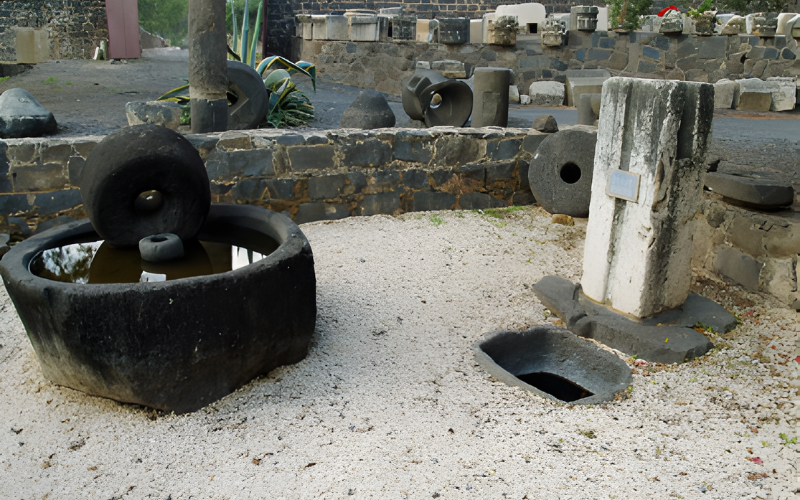
A Roman-era olive oil press in Capernaum, Israel. Ancient presses used large millstones to crush olives, and the oil was separated by gravity. Today, modern cold-pressing uses centrifuge extractors, but the goal remains the same – to physically squeeze oil from olives without chemicals or high heat, preserving quality. (photograph of a Roman-era olive mill in Capernaum)
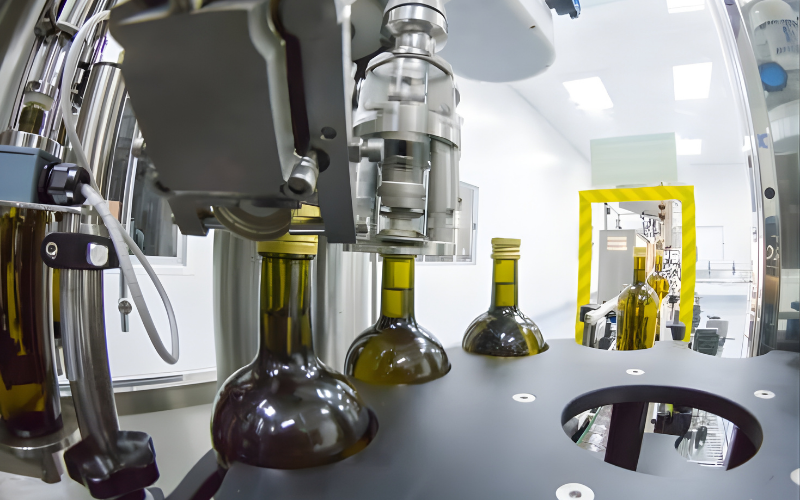
After malaxation, the paste is pressed or, more commonly, centrifuged. Modern mills use a decanter centrifuge, which rapidly spins the olive paste to separate oil from water and olive solids. The result is fresh olive oil (plus some vegetable water). The oil may then be filtered or simply left to settle so that tiny particles and moisture drop out over time. Some artisan oils are unfiltered, yielding a cloudy appearance, but most commercial EVOOs are filtered for clarity and stability. Finally, the oil is stored in stainless steel tanks (ideally with minimal air exposure) and later bottled.
Throughout production, maintaining quality is paramount. At no point are solvents or refining used – EVOO is purely a natural juice. This careful process explains why EVOO is more expensive than generic cooking oil: it takes a lot of olives and care to produce. In fact, it typically takes around 4 to 6 kilograms of olives to cold-extract just 1 litre of EVOO (for some early harvest oils, even more). That represents roughly 8000–10,000 individual olives in each litre of premium oil! Such figures help us appreciate the effort and agricultural value inside each bottle of EVOO.
Australian EVOO note: Australia may be far from the Mediterranean, but it has a burgeoning olive oil industry of its own. Olives were first brought to Australia in the 1800s, and the industry remained small until a boom in the late 20th century. The Australian olive industry is over 150 years old, but it has expanded rapidly across all mainland states in recent decades. Today, Australia produces high-quality EVOOs, particularly in regions with Mediterranean-like climates (such as parts of South Australia, Victoria, and Western Australia). Aussie EVOOs often win awards for their robust flavours and purity, thanks to modern farming and milling techniques. So when you shop, know that some EVOO on the shelf – in addition to imports from Italy, Spain, Greece, etc. – is grown and pressed right here in Australia.
Extra Virgin Olive Oil isn’t just a tasty fat – it’s exceptionally good for you. Its health benefits are backed by a wealth of scientific research and have even been recognised by international health authorities. Here are some of the top evidence-based benefits:
Lastly, remember that EVOO is a fat and thus calorie-dense, so use it in place of other fats rather than simply adding on (to balance overall energy intake). But as fats go, EVOO is about the best you can choose for your health. It’s no surprise the Australian Dietary Guidelines and Heart Foundation include olive oil as a core part of a healthy eating pattern, encouraging people to swap butter and animal fats for olive or other plant oils. EVOO isn’t a miracle cure-all, but it is a potent, natural contributor to wellness – and a delicious one at that!
One of the beauties of EVOO is its culinary versatility. You can use it raw, you can cook with it, you can even bake with it. Here are some popular ways to integrate EVOO into your daily diet, along with tips particularly suited for Australian kitchens:
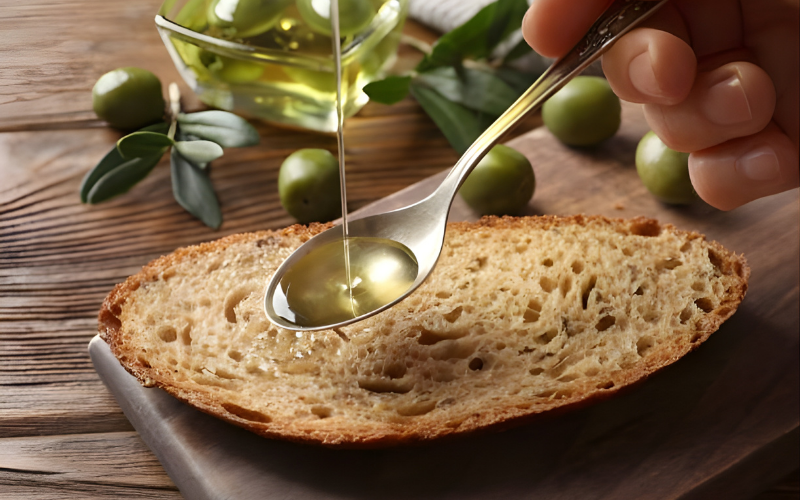
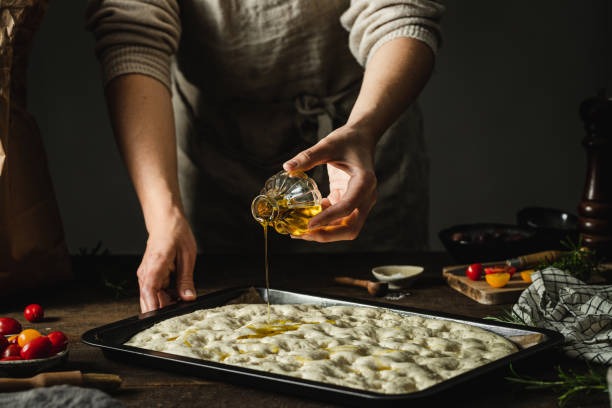
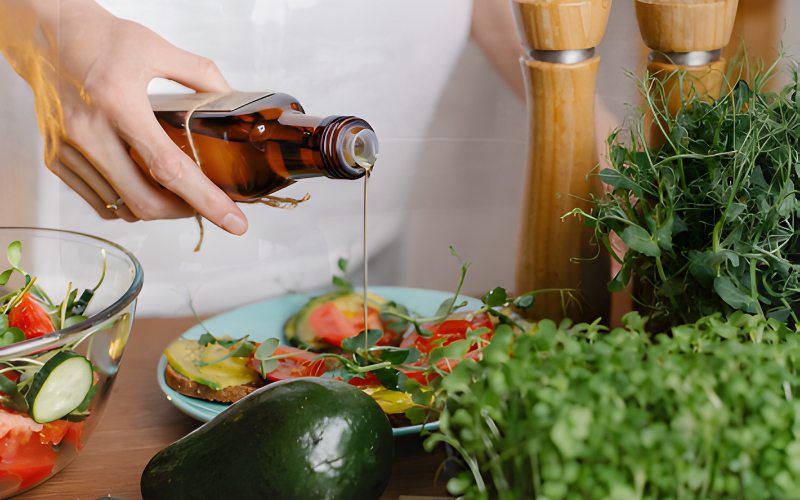
Drizzling extra virgin olive oil over a salad of avocado, tomato, and greens. Incorporating EVOO into daily meals can be as simple as using it to dress salads, dip bread, or finish cooked dishes – adding both flavor and healthy fats to the Australian diet.
Quick recipe ideas:
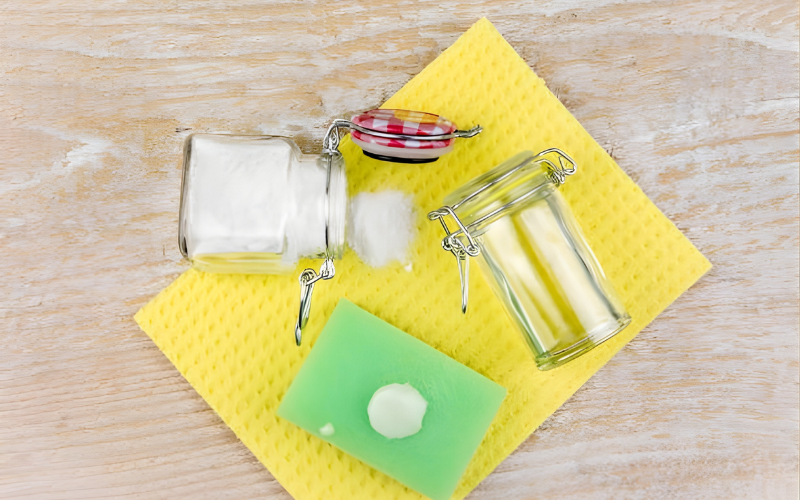
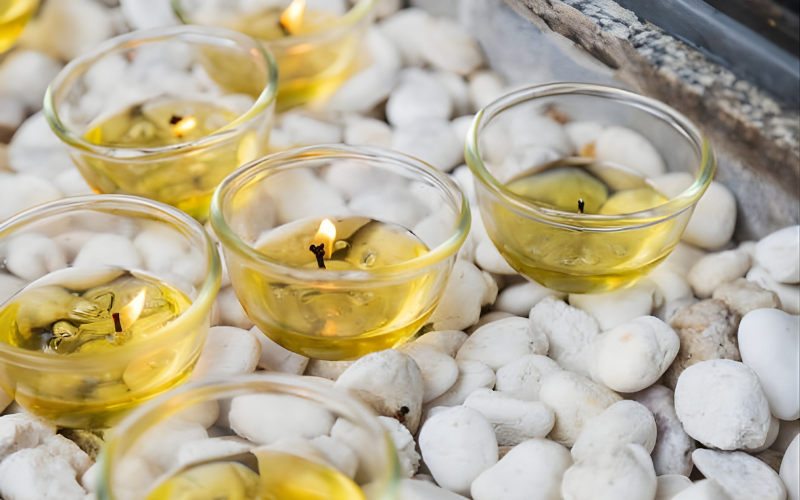
Olive oil’s usefulness goes far beyond food. Throughout history, olive oil has been used in daily life in myriad ways – and many of these uses are still relevant or just plain handy today. Here are some nonculinary applications of olive oil:
As you can see, a bottle of olive oil in the cupboard can double as a mini home remedy kit! One caveat: for non-food uses, you don’t necessarily need to use your finest extra virgin oil – a basic grade or older bottle that you don’t want to cook with can find a second life polishing your coffee table or deep-conditioning your hair. Food-grade olive oil for beauty and home use means you’re avoiding the petrochemicals found in some commercial products, which is a win for those with sensitive skin or who prefer eco-friendly options.
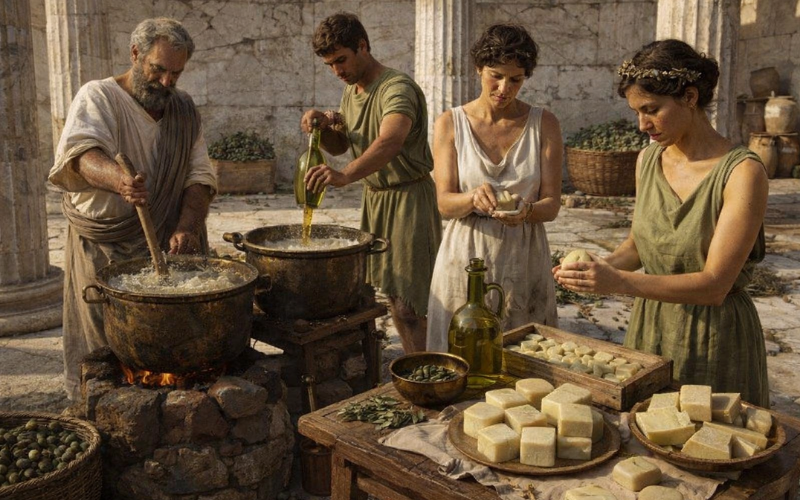
To round out our EVOO guide, here are some fun facts and bits of trivia that make olive oil even more fascinating:
Extra Virgin Olive Oil is truly a kitchen all-star – it elevates our food and supports our health. We’ve learned that EVOO differs from lesser olive oils in quality and production, coming straight from fresh olives without chemicals or refining. We’ve seen how it’s made, preserving its sensory and nutritional treasures. Science shows that incorporating EVOO into your diet can benefit your heart, reduce inflammation, and even help you enjoy your veggies more (because they taste better with a good drizzle!). And beyond cooking, olive oil proves its worth in our beauty routines and households.
For Australian consumers, the message is embrace EVOO: use it in your salad dressings, swap it for butter when you can, try it in new recipes – both traditional Mediterranean dishes and local Aussie favourites. With Australian olive oil production on the rise, you might even explore home-grown EVOOs, which can be world-class. Remember to store it well, use it generously but mindfully, and appreciate the story behind it – from ancient olive groves to your dinner table.
In summary, Extra Virgin Olive Oil is more than an ingredient; it’s a lifestyle choice towards better eating and living. So go ahead – enjoy that splash of liquid gold in your meals every day, and taste the difference it makes!
References (selected):