My Shopping Cart
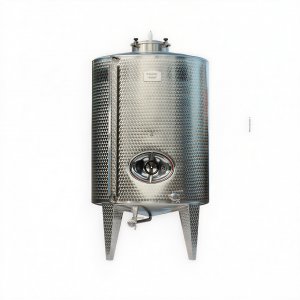
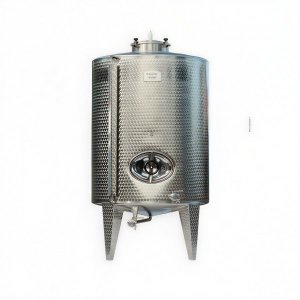
Technical Specifications
| Specification | Value |
|---|---|
| Capacity | 5,000 Litres |
| Construction | AISI 304 Stainless Steel |
| Design | Fixed Conical Bottom |
| Valves | Hygienic Butterfly Racking & Discharge |
| Access | Top Manhole & Front Door |
| Support | Welded Stainless Steel Legs |
| Additional Features | Nitrogen Nipple, Sight Gauge (Optional) |
*All specifications based on standard Sansone configuration.
Available Size
| Capacity (L) | Height (mm) | Base (mm) | Opening (mm) | Total Height (mm) |
|---|---|---|---|---|
| 1,000 | 1,500 | 950 | 950 | 2,300 |
| 1,500 | 1,500 | 1,100 | 1,100 | 2,600 |
| 2,000 | 1,500 | 1,270 | 1,270 | 2,300 |
| 2,500 | 2,000 | 1,270 | 1,270 | 2,800 |
| 3,000 | 2,000 | 1,430 | 1,430 | 2,800 |
| 5,000 | 2,500 | 1,600 | 1,600 | 3,400 |
*All measurements are approximate and may vary slightly.
MARKET INSIGHT: GLOBAL OLIVE OIL ECONOMY 2023
Introduction
The global olive oil industry in 2023 has entered uncharted territory, experiencing an extraordinary surge in olive oil prices driven by a combination of climatic and economic forces. At the centre of this crisis lies Spain’s devastating drought, which has crippled the world’s largest olive oil producer. This severe shortage has led to a dramatic contraction in olive oil supply, triggering price escalation and a corresponding decline in consumer demand. The ripple effects are being felt worldwide, reshaping the balance between producers and consumers alike. Meanwhile, Australian olive oil producers find themselves in a rare position of advantage, benefitting from unprecedented market highs. This article explores the causes, consequences, historical trends, and economic signals surrounding this remarkable global olive oil price spike.
The ongoing drought across Spain stands as the principal factor behind the current olive oil price surge. As one of the largest olive oil-producing nations globally, Spain’s drastically reduced harvest - caused by months of extreme heat and minimal rainfall - has sharply curtailed olive oil availability in both European and international markets. This has intensified supply shortages, compelling consumers to pay more for what has long been a staple Mediterranean product. The interplay of limited supply and escalating demand has magnified price volatility, reinforcing the classic supply-and-demand imbalance now driving global markets.
Incredible to see the olive groves of Jaen, Spain. This one province produces around a fifth of the *entire* global supply of olive oil
— Secunder Kermani (@SecKermani) August 31, 2023
But a combination of drought & extreme heat has left many trees badly weakened... This years harvest looks set to be the worst in living memory pic.twitter.com/QYs41eXCwC
As prices have risen steeply, the shortage of olive oil has led to a noticeable decline in consumption, particularly in Spain, where demand has reportedly dropped by around 35%. Consumers are now scaling back their purchases, finding olive oil increasingly unaffordable compared to other cooking oils. The once-steady household consumption patterns are shifting as people seek alternatives or modify their cooking habits. This contraction in domestic demand not only highlights the growing accessibility gap for consumers but also underscores the broader economic strain caused by high inflation and food price increases.
Amid the turmoil, Australian olive oil producers are experiencing a windfall. Thanks to limited global supply, Australian growers are commanding record prices exceeding AUD $8 per litre, marking the highest levels ever recorded in the nation’s olive oil industry. This lucrative period presents a rare opportunity for Australian exporters, with demand from Europe - including Spain itself - now turning toward Australian supplies. For producers Down Under, this unique reversal of roles underscores how regional climate resilience and diversified production can translate into significant financial gains when global shortages arise.
The olive oil market’s volatility is not a new phenomenon. Previous spikes occurred in 1996, 2006, and 2015, each triggered by weather-related supply constraints. Yet, the 2023 price explosion stands out as the most dramatic in recorded history -over 40% higher than any previous price peak, and roughly double the magnitude of earlier surges. This extreme escalation reflects not just climatic hardship but a clear pricing bubble forming within the market, echoing the cyclical nature of commodity pricing.
The olive oil sector has long followed cyclical pricing patterns, typically alternating between low and high price phases roughly every decade. The current surge aligns almost perfectly with the predicted start of another 10-year cycle, occurring just three years into its anticipated timeline. Furthermore, a notable correlation has been identified between the Australian Food Inflation Index and the Global Olive Oil Price Index as reported by the International Monetary Fund (IMF). This connection illustrates the deep interdependence between food commodity pricing and global economic conditions.
While the IMF’s benchmark prices are denominated in USD, for the purposes of this analysis they have been converted to AUD to track the trend relative to Australian markets. These benchmark indicators -based on the world’s largest olive oil exporters -serve as a reliable gauge of overall market direction, confirming how global shortages and inflationary pressures move in tandem.
Global olive oil prices show a recurring 10-year cycle, driven by droughts, crop shortages, and rising production costs
From a technical analysis perspective, the Relative Strength Indicator (RSI) is often used to measure price momentum and potential overextension in markets. On recent olive oil price charts, the RSI (represented in purple) indicates that prices have once again entered overbought territory - a level seen during previous speculative phases. Historically, such readings have preceded market corrections or reversals, suggesting that the current surge may not be sustainable in the long term.
Analysts caution that as the European olive harvest begins in September and October 2023, an influx of new oil supplies could help ease prices, though the timing and extent of this correction remain uncertain. Until then, speculative trading and limited inventory continue to support inflated market values.
The record-breaking olive oil prices of 2023, primarily triggered by Spain’s drought-induced production collapse, mark a turning point for the global olive oil economy. With consumer demand declining under the pressure of soaring prices and Australian producers thriving amid the scarcity, the industry is experiencing a dramatic rebalancing. Historical precedents, cyclical trends, and market indicators all point toward a complex, transitional period defined by volatility and uncertainty.
As the world’s producers, traders, and consumers adapt to these new market dynamics, one truth remains clear: olive oil - celebrated for its taste, health benefits, and cultural significance - continues to be at the mercy of both climate change and economic cycles. Stakeholders across the value chain must remain alert, flexible, and forward-thinking as the olive oil market navigates this extraordinary phase of transformation.
Other Sources
OLIVE OIL STORAGE

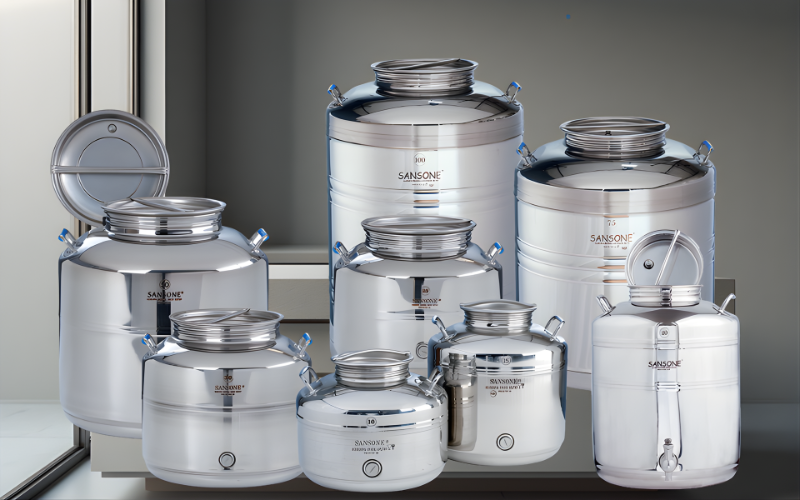
The Sansone Welded Fusti Tanks represent one of the most trusted stainless steel container designs in the food industry. Manufactured in Italy by Sansone, these tanks are built according to the highest international standards for the preservation of food-grade liquids such as olive oil, wine, honey, and food-grade liquids.
Each unit is produced using 18/10 AISI 304 stainless steel and is NSF certified, ensuring unmatched reliability, purity, and corrosion resistance. Their seamless welded construction guarantees easy cleaning and prevents the accumulation of organic matter or bacterial colonies - a crucial feature for industries where hygiene is paramount.
Built with head-to-head welding technology, the Sansone welded drums are designed to achieve maximum cleanliness and strength. This advanced welding method eliminates internal joints, making the surface completely smooth, which allows for easy sanitation and total prevention of bacterial growth.
These tanks are ideal for food processing, laboratory, and industrial applications that require hygiene compliant liquid handling. The seamless welded design also upholds that no residues or flavour transfer occur, maintaining the quality of your stored product.
Each model undergoes strict testing to meet the most rigorous quality standards and is part of Sansone’s commitment to producing long-lasting stainless steel containers that meet professional and domestic needs alike.
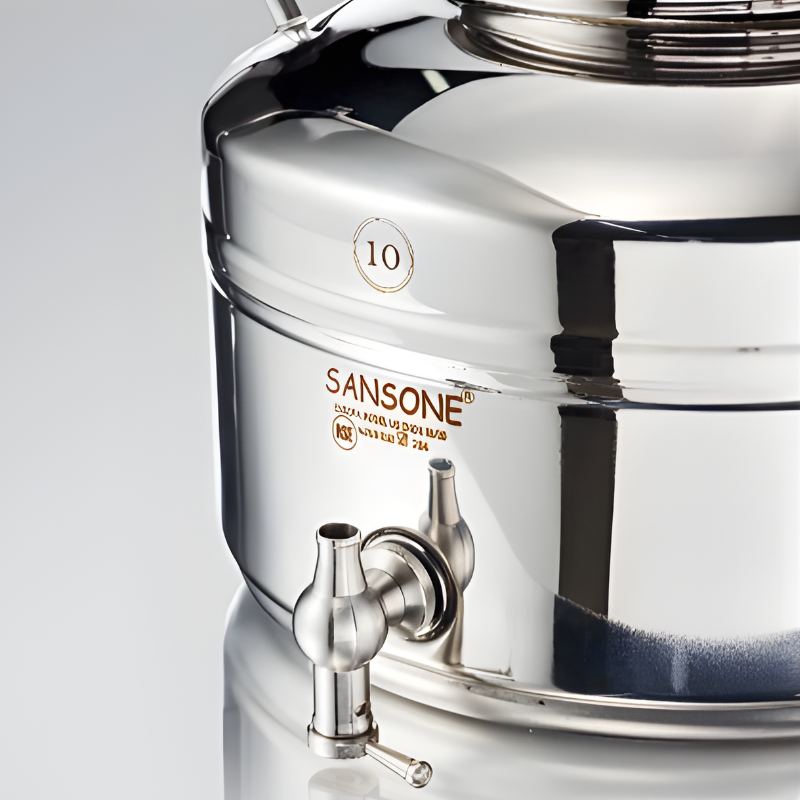
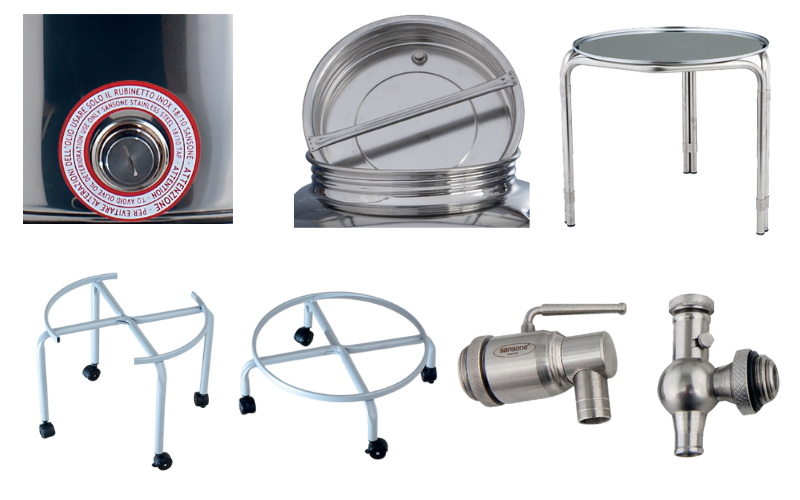
All models are equipped with a welded stainless-steel setup for a ½-inch tap, allowing safe and precise liquid dispensing. Each drum can also be paired with optional stainless steel or laminated stands, available in tall and short models or even with wheels for mobility.
Sansone provides several high-quality accessories to enhance functionality and handling convenience:
Each Sansone welded fusti is produced under ISO 9001:2000 certified quality control systems to ensure consistent performance and reliability. The use of premium-grade 18/10 stainless steel guarantees long life, even under demanding industrial use.
Whether used in olive oil production by producers, wineries, or laboratories, these tanks provide the peace of mind that comes from Italian-made precision engineering, smooth cleaning surfaces, and safe, airtight liquid containment.
For olive oil producers, the Sansone Europa welded tanks provide the ideal environment for oil preservation, protecting against oxidation and contamination while maintaining taste and freshness. The tanks’ sleek finish and robust structure also make them suitable for front-of-house or retail presentation, where hygiene and visual quality are essential.
From boutique olive oil farms to food manufacturers, these stainless steel fusti tanks represent a long-term investment in quality, safety, and professionalism.
If you’re ready to elevate your storage and preservation standards with Sansone stainless steel welded tanks, explore the full range at
https://theolivecentre.com/shop/stainless-steel-tanks-2l-to-99l
As Australia’s leading distributor for Sansone products, The Olive Centre provides expert advice, local support, and fast delivery — helping you choose the perfect stainless steel fusti to suit your needs
Extra virgin olive oil (EVOO) is extremely sensitive to light, oxygen, heat and metal contact. Packaging, therefore, plays a direct role in how long an olive oil remains “extra virgin.” Major reviews from UC Davis emphasise that optimal packaging must reduce light exposure, oxygen ingress, and headspace, while also ensuring cool storage. At the same time, producers—especially small to medium Australian growers—must consider costs, machinery requirements, recyclability, consumer preferences, and minimum order quantities (MOQ). Below is the most complete and updated comparison of all common packaging formats.
PET offers convenience and low cost but has moderate oxygen permeability and allows light penetration, which accelerates oxidation. A 2023 study showed PET-stored EVOO experienced higher acidity, peroxide values, UV oxidation indices and sensory degradation over 12 months—especially at elevated temperatures.
Migration of PET oligomers and antimony into oil is within regulatory limits, but increases under heat.
rPET has a lower carbon footprint than glass, but Australian recycling for PET varies by region.
Metal cans provide total light protection and excellent oxygen barrier characteristics. UC Davis stresses that lined cans effectively prevent metal migration and protect quality.
Compared with BIB, cans may show slightly faster oxidation when half-empty, but still protect oil well if stored cool. A 24-month study found both cans and BIB maintained EVOO within legal quality limits.
Steel and aluminium have high recycling rates in Australia.
Many producers prefer cans because Australian consumers are increasingly concerned about soft plastics, especially given the collapse of local soft-plastic recycling schemes (e.g., REDcycle).
Best for: Bulk, foodservice, premium oils, export, and producers who want reliability without specialised equipment.
Glass is chemically inert. Coloured glass offers some UV and visible light protection—amber performs better than green - but clear glass accelerates photo-oxidation significantly.
Coloured glass slows degradation but still allows some light through, so shelf lighting and storage conditions matter.
Highly recyclable, but heavy to transport. Bottle breakage is an inconvenience for producers.
Best for: Premium retail oils with attention to storage conditions.
Research shows clear glass provides almost no light protection, leading to rapid losses in phenolics and faster oxidation.
UC Davis warns that clear glass should be avoided unless heavily covered by labels or cartons.
Best for: Fast-moving products or promotional oils kept strictly in the dark.
Bag-in-box offers some of the best oxygen protection because the collapsing bag limits headspace oxygen, and the cardboard blocks light. Numerous studies, including 12- to 24-month trials, confirm superior preservation of phenolics, freshness, and sensory properties compared with bottles and cans.
Plastic contact and disposal concerns hinder adoption, despite technical superiority.
Best for: Large producers with dedicated filling lines, subscription models, or export markets where BIB is accepted.
BOV packaging uses a hermetically sealed internal pouch separated from an external propellant. The oil never contacts the propellant; instead, it is dispensed by pressure.
Best for: High-end culinary oils, premium lines, foodservice, and producers wanting differentiation without investing in BIB equipment.
| Packaging Type | Light Protection | Oxygen Protection | Machinery Required | Recyclability (Australia) | Cost | Consumer Acceptance | Best Use Case |
|---|---|---|---|---|---|---|---|
| Cans (lined) |
★★★★★
|
★★★★☆
|
Easy | High | Medium | High | Bulk, premium, foodservice |
| Bag-in-Box |
★★★★★
|
★★★★★
|
Specialised | Low (soft plastics) | High (at scale) | Medium–Low | Long shelf life, export |
| Coloured Glass |
★★★☆☆
|
★★★★★
|
Easy | High | Higher | Very High | Retail premium |
| Clear Glass |
★☆☆☆☆
|
★★★★★
|
Easy | High | Higher | High | Fast turnover only |
| PET Plastic |
★☆☆☆☆
|
★★☆☆☆
|
Easy | Moderate | Low | Medium | Value lines, short shelf life |
| Bag-on-Valve (BOV) |
★★★★★
|
★★★★★
|
Moderate | Low–Moderate | Higher | Medium–High | Premium spray oils |
Selecting the most suitable packaging for extra virgin olive oil hinges on finding the right balance between quality preservation, consumer expectations, and production practicality. Among all options, lined metal cans stand out as one of the most reliable and efficient choices: they are easy to fill by weight, offer excellent protection from light and oxygen, avoid consumer concerns around plastics, and are highly recyclable in Australia. Coloured glass bottles remain the strongest retail performer, pairing good product protection with strong shelf appeal and flexible filling options - from hand-applied caps to automated capping machines that minimise leakage risks. Clear glass should only be used for fast-moving products due to its poor light protection.
While innovative systems like bag-on-valve offer outstanding oxygen exclusion and controlled dispensing, their higher cost and MOQ requirements mean they are best suited for premium or specialised product lines. PET plastic bottles can work for value-oriented, short-shelf-life oils kept in cool, dark environments, but they are not ideal for long-term storage or premium markets.
Overall, Australian producers benefit most by matching each packaging format to the oil’s intended shelf life, sales channel, and brand positioning. Thoughtful packaging selection not only safeguards quality but also streamlines production and aligns with evolving consumer and environmental expectations.
References
When it comes to oil storage you need to consider the impacts on quality in relation to the proposed storage to be used.
This article is about some of the latest research as funded by RIRDC to determine the best storage for your oil.
Remember just because a manufacturer states the container(s) are food-grade doesn't necessarily means they are safe to use for olive oil. ?(All the containers used in this study were regarded as "Food Grade").
Here is a excerpt from the article:
For example, sometimes growers produce oil with very high quality initially, which quickly deteriorates due to the conditions under which it is stored,? he said.
The olive oil can deteriorate so much that it can no longer be classified as extra virgin olive oil, at a huge expense to the growers.
The changes in oil quality described in this report will encourage producers, as well as others in the supply chain of olive oil, to consider the facilities used to store olive oil in order to maintain the high-quality olive oil Australia is increasingly renowned for producing.
Read the article here....?Storing olive oil - Local News - News - General - Town and Country Magazine.