My Account
Sign-in / Join

Sign-in

Hi My Account

Dashboard

Logout

Cart

My Shopping Cart

Subtotal
${{total.toFixed(2)}}
QUOTE

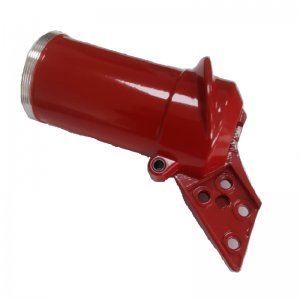
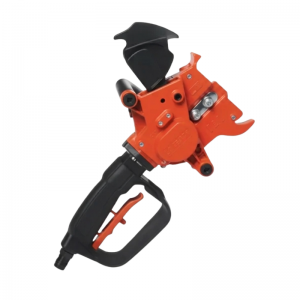
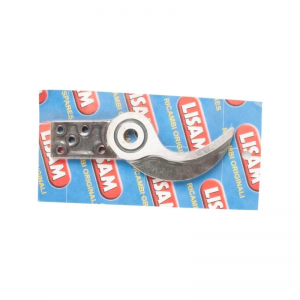
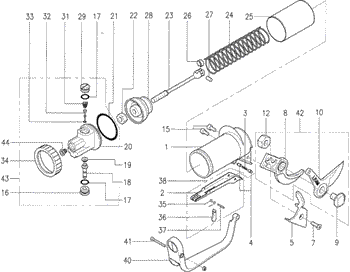
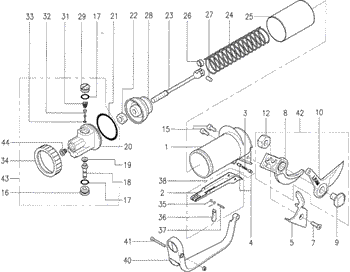
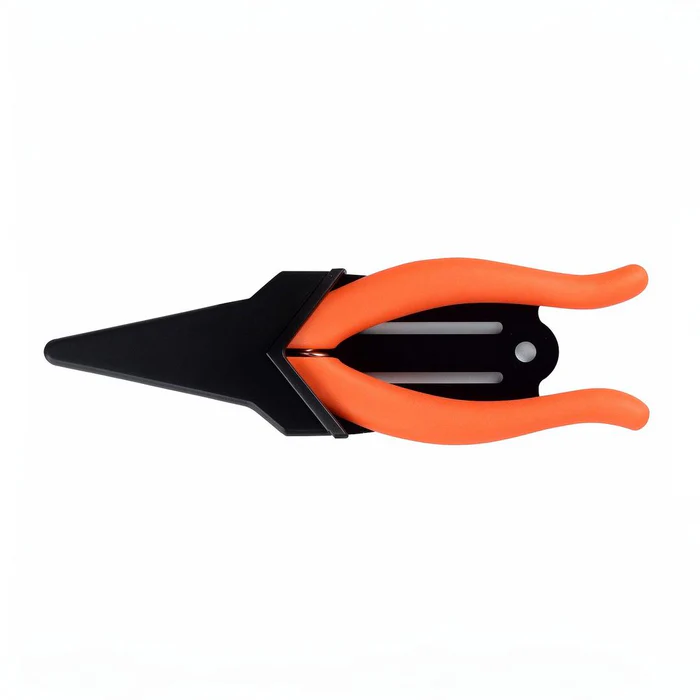
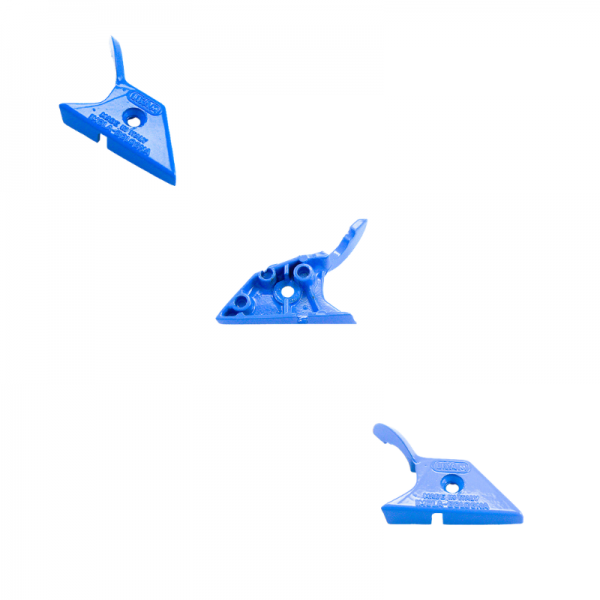
Lisam Shear Blade Cover A1251 | Spare Parts for Vigna & SLY

Delivery calculated separately
Bulk Discounts Prices
Quantity Price
1 $14.57
Quantity

RAGSL105/V
  • Description
  • Features
  • Enquiry
  • Specifications
  • Knowledge
  • Blog

Lisam Blade Cover Spare Part – Pneumatic Vigna Blu Shears (A1251)

Delivery is calculated separately based on freight and local handling.

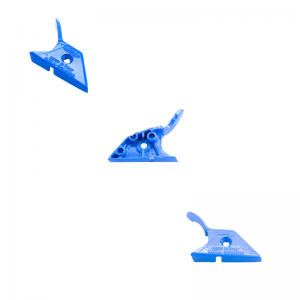
Maintain the safety and performance of your pruning equipment with this genuine Lisam Spare Part Blade Cover. Specifically designed for the Pneumatic Vigna Blu Shears Mod. 4/WIN, this durable blue protective housing ensures the internal mechanisms and blades are shielded during operation.

Genuine Italian Engineering

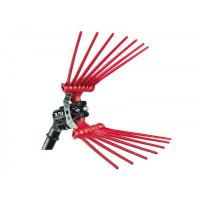
Proudly Made in Italy (Imola-Bologna), this component is built to the exact specifications required for professional vineyard and orchard maintenance. In addition to the Vigna Blu model, this blade cover is also compatible with the Red Orchard Shears Model SLY, making it a versatile essential for your spare parts kit.

Part Verification: Please ensure you are ordering the correct item by cross-referencing Item Code: A1251. Genuine Lisam parts guarantee a perfect fit and extended tool longevity compared to generic alternatives.

Technical Specifications

Specification Details
Brand Lisam
Item Code A1251
Primary Compatibility Pneumatic Vigna Blu Shears Mod. 4/WIN
Secondary Compatibility Red Orchard Shears Model SLY
Country of Origin Italy (Imola-Bologna)
Material High-strength, durable polymer/alloy
Colour Blue
Main Features
  • Lisam Branding: Features embossed "LISAM" logo and "Made in Italy" stamp for authenticity verification.
  • Distinctive Finish: Easy to identify for the Vigna Blu series tools.
  • Genuine Spare Part: Direct replacement part using Item Code A1251.
  • Dual-Model Utility: One spare part services two popular pneumatic shear models (Vigna Blu and SLY).
  • :
  • :
  • :
  • :

Olive Mechanical Harvesting, Pruning & Bottling Contractors

Olive Mechanical Harvesting, Pruning & Bottling Contractors

In the Australian Olive Industry

Pruning Services


  • Gallard Pruning Services John Gallard 0428 761 798 , john@gallardservices.com.au Servicing Hunter Valley and other areas upon request.
  • Mulching service Peter Birch - Thunderbolt's Olives 0428 669 157 , thunderboltsolives@bigpond.com Mulches wood up to 300mm diameter Servicing NSW areas

Botling Contractors

  • EV Olives Wenbo 203 Everton Road, Markwood VIC 3678 PH: 03 5727 0209, Email: wenbowwu@hotmail.com Service: Contract Bottling & Cask Filling
  • Fini Olives Jim Hollingworth 237 Orange Springs Road, Regan's Ford, Gin Gin WA 6503 PH: 08 9259 4131, Email: jimh@finiolives.com.au

Mechanical Harvesting Contractors

  • Costa - Mount Camel Mechanical Harvesting Contractors servicing around the Mount Camel area with New Generation Sicma B411 Plus call 0488 010 173
  • John Daniel - Tarlia Olive Estate Servicing NSW, QLD, SA, TAS, VIC & WA John Daniel resides in Lewiston on the outskirts of Adelaide, SA. Email: jtdaniel@adam.com.au
  • Peter Haslett - Haslett Harvesting PO Box 164 Paringa, SA 5340 mail@haslettharvesting.com.au 08 8595 8046  (AH) Servicing SA.
  • Puma Olive Harvesting Self propelled tractor mounted shaker.Capable of 1T/hr. Contact: Fran Goryan Ph: 0408 897 869  or 08 8823 3287 Servicing SA only.
  • Andrew Bucknell Ph: 02 6343 7101  or 0428 232 798 bucknell@westnet.com.au 6 years experience, Sicma F3 harvester Looking to expand into QLD and SA Click here to download information for Andrew Bucknell
  • Preston Valley Grove Sicma Speedy Harvester Contact Mick Ryan for more info Ph: 0419 907 701 , email:info@prestonvalleygrove.com.au
  • Barilla Olive Harvesting Lot 286 Stebonheath Rd, Munno Para Downs. S.A. 5015 Shaker Harvesting, grove layout is important, please book early. Servicing South Australia Contact: Steve Barilla Ph: 0411 402 405 , email:bariloil@tpg.com.au
  • National Olive Harvesters Pty. Ltd. 1 Nelson Road Lameroo S.A. 5302 Over-the-row Style Harvesting,Shaker Harvesting Servicing: ACT,NSW,QLD,SA,TAS,VIC & WA Contact: Ian Mead Ph:0885774062 or 0427879125 E-mail: iwmead@internode.on.net
  • EV Olives Wenbo Wu 203 Everton Road, Markwood VIC 3678 PH: 03 5727 0209 or 0408 519 955, Email: wenbowwu@hotmail.com Service: Contract harvesting New generation harvester, small or large jobs, bin hire, fruit transport  & processing

Please contact us if you would like to be listed?

Pruning & Staking Young Olive Trees for Mechanical Harvesting


PRUNING & STAKING YOUNG OLIVE TREES

FOR MECHANICAL HARVESTING

The information is supplied as a guide for during the first two years after planting olive trees between approximately 300mm (1 ft) and 1.5 metres (5 ft) in height. During this fast growth period the trees require specific pruning to maximise their growth, keep them in good health, and very importantly, prepare them for mechanical harvesting. Before pruning you should choose which style of harvesting you prefer and prune accordingly.

The briefness of this sheet cannot give all the answers and options but it does give a basic guide to pruning and staking during the first couple of years.

Whenever you are pruning a young olive tree there are four main points to keep in mind:

  1. Too much pruning at a young age will stunt the tree's growth.
  2. You are ultimately wanting to prune for mechanically harvesting the crop.
  3. A central leader trunk will assist growth in the early stages.
  4. Practice makes perfect!

Let's take a closer look at these points.


1. Olive trees are like human beings in many ways and in no way are they so similar as in the pruning. It's as simple as this:

A human can afford to lose an arm or even a leg and
still live reasonably well BUT if you lose both arms and both legs
at the same time, you're in trouble! - SO IS AN OLIVE TREE.

If your young tree is 900mm (3 ft) tall and has side branches growing all the way up its trunk DO NOT take them ALL off just because you've read that you need a clean straight trunk for 1.0 to 1.2 metres.

At first, only take off any that are growing below 300mm (1 ft) and then in several months time when the tree has grown considerably more on top, and has 'recovered' from the first pruning, you can take off any branches between 300mm and 600mm (1-2 ft). Repeat this process until finally after about two years, you have your clean straight trunk for 1.0 to 1.2 metres. Don't make the mistake of pruning 'too much too soon'. This can send the young tree into 'shock' and set it back by up to a full year. Always leave large amounts of leaf on the tree for photosynthesis to take place so that maximum root growth etc will occur.


2. Mechanical harvesting is the most efficient method of removing fruit from olive trees. Whereas oil olives have been the only mechanically harvested olives for many years, table fruit are now sometimes dropping into catching umbrellas in countries around the world, including Australia. Unless you have made a clear decision to hand harvest your fruit, to neglect pruning for future mechanical harvesting in the modern orchard may be a serious error from a long term economic viewpoint.

So what shape of tree do we need for mechanical harvesting? The most important requirement is a straight trunk for 1.0 to 1.2 metres (3'4"-4 ft) from the ground. This section of trunk must finally be free from all branches to allow the harvester's head to securely grip the trunk without any obstruction. This will allow the harvester to work more quickly and will also avoid damage to the tree.

Achieving this straight clean trunk occurs over about 18 months to two years. Initially, when the tree is only 300mm to 600mm (1-2 ft) tall you simply need to remove any branches which want to grow off the trunk below 300mm (1 ft) from the ground. Other branches above 300mm (1 ft) can be left to grow or, if they try to grow larger and faster than your main leader, they can have their tips removed to slow down their growth - thus allowing more nutrients to be focussed into the leader. This clearing will make it easier for weed spraying and will also allow the tree to focus all of its growth into the main 'leader' trunk and some higher lateral branches. At no stage should any growth touch the ground. In the early years, it is important to leave as much growth as possible on the tree because foliage promotes root growth which in turn promotes the production of more foliage.

Some trees will develop with a 'leader' (trunk) going straight up the centre with small side branches. Others will head straight for the sky as a single trunk with no side branches. Both cases are fine, but with single trunks you will need to nip off the growing tip at about 1.2-1.3m (48-50") to encourage side or lateral branches to grow at this place. It is these lateral branches that will form the main structure of your mature tree.

Mature olive trees need to be kept reasonably open in the centre to allow light penetration for better tree health and fruit production. This is best achieved through a vase shaped, sturdy growth habit which also facilitates mechanical harvesting. Your trees will probably have quite a number of lateral branches at about one metre or so from the ground when the tree is 18 months of age. Thoughtfully choose out four evenly spaced lateral branches. These need not all come from exactly the same height but should not be any lower than 800mm from the ground. As these will form the vase framework for your tree, if possible choose branches that are growing at least 30 degrees up from horizontal. This will give a vase rather than a flat plate shaped tree structure. Remove the other growth as outlined below.

If your main leader is damaged or slow growing for some reason then you may choose to allow a faster growing side branch to become the new leader. Simply remove the old leader from the stake and tie the new leader to it. (A bit like politics!)

When the tree is between 900mm and 1200mm (3-4 ft) tall, and if it has plenty of leafy branches towards its top, you can remove the branches which are growing from the trunk between 300mm and 600mm (1-2 ft) from the ground. You should now have a tree with a straight clean trunk to 600mm (2 ft) and a nice number of branches above 600mm (2 ft). If your tree is over 1200mm (4 ft) high then you can remove the tips of any branches that leave the trunk between 600mm and 900mm (2-3 ft). (Don't forget BODY TALK's advice - if there aren't many branches between 900mm and 1200mm (3-4 ft) then don't cut too heavily at this stage).

Several months after you have done the last step of pruning above, you can remove any of the final branches up to about one metre (3'4"). Your trunk is now clean to the desired height for machine harvesting and yet you still have about four evenly spaced solid branches at the top of the tree to keep root growth to a maximum. Depending on variety, land preparation and climate this whole pruning cycle from a 300mm (1 ft) tall tree to a solidly trunked tree which is branching well on top should take about eighteen months to two years.


STAKING YOUR TREE


The staking of young olive trees is very important. Stakes need to be strong enough to support the tree while the anchor roots are developing, and yet flexible enough to allow the tree to move in the wind. If the stake is too rigid or the tree tied too tightly to it, then the tree will be over protected and not feel the need to develop strong roots.

The most common size stake to use was the 1.5 metre (5 ft) high, 24-26mm thick. Thicker stakes are available for sandy soils: 1.8m (7ft) high, 25-28mm.

The bamboo stakes have some advantages over hardwood stakes as they have as they allow the tree to flex in the wind thereby encouraging the tree to develop a thick trunk and also to develop its anchor roots quickly. A tree rigidly tied to an unbending hardwood stake will not realise the need to develop its anchor roots strongly.

Sourcing Stakes - for further details and pricing for Stakes are available from The Olive Centre.

After about two years at which point the tree probably will no longer need staking. It is rare for a tree to need any support after it has outgrown such a stake.

Place the stake about 50mm (2") from the base of the tree and push it into the soil at least 300mm vertically until it feels quite stable. A better option is to use the stakes to mark your tree sites prior to planting and then simply plant the trees beside them. You can then tie both the young tree and its small nursery stake to the main stake with a tool such as the tapener described below. (There is no need to cut off the the tapes between the young tree and its nursery stake as they will break away naturally as the tree trunk thickens.)

After planting and staking the tree, the stake will prove to be a good solid anchor point to attach protective guards or netting to if you have severe animal problems and do not have a full netting fence around the boundary of your orchard.

Tying the Tree - From our experience with tying methods over many years, we have found that the tape tying tools available from The Olive Centre are an excellent investment. The taping tool is very fast and efficient and if you have a number of trees to tie, you will get the cost of your tool back very quickly in saved time. When you order your tool Full Staking Kits are available which include a packet of staples, a packet of spare cutter blades, and unless you have very thick trunks, the 26 metre rolls of tape will be what you'll use.

After testing many brands of tape, we recommend the high quality, green tape. As the tree trunk grows thicker it will be better able to support itself without so much need for the stake. As the trunk thickens, the tape will stretch and naturally tear out at the staple point so it will not strangle the tree as some ties do. For windy areas other heavy duty tree ties are available.


3. A central leader trunk will help to speed up your tree's growth during the early years. Because this trunk will be fast growing and always growing upwards in the centre of your tree, it will be drawing nutrients up through the tree to sustain its growth. As it draws these nutrients up the tree, the nutrients will be carried to lower branches and thereby increase their speed of growth as well. The central leader acts as a type of 'nutrient pump' within the tree. (If your tree decides to grow straight up without any lateral (side) branches, nip the growing tip out when it reaches about 1.2 - 1.3 metres (4 ft). This will force it to start lateral branching into your vase shape.)

What we have finally achieved is a young tree with approximately four main scaffold branches. The shape is commonly known as an Inverted Conical Vase.

As mentioned in the introduction, this is not a conclusive pruning guide. It only touches on the basics of pruning young trees with what are considered the most commercially viable methods.


4. Practice Makes Perfect! Olive trees have a mind of their own and as such they will sometimes fight against many of your efforts to prune them into shape. Don't give up. Perseverance wins the race. Remember that time is on your side. A tree that won't grow correctly this season can often be restaked and then pruned into shape next season.

Objectives of Pruning by Marcelo Berlanda

OBJECTIVES OF PRUNING


Train and Shape Olive trees, Maintain or Increase Production and Improve Harvest Efficiency

by Marcelo Berlanda

Marcelo High Density II.jpg

Training helps giving the tree the optimal shape to allow for efficient harvest as well as achieving early crops.

Once the trees have reached their optimum canopy volume for the environmental conditions of the area, it is likely that the yields could start declining. This is due to the fact that the inner part of the canopy does not receive sufficient sunlight, which causes defoliation, resulting in a low Leaf to Wood Ratio.

If the tree grows above its optimum size, it creates serious issues for the harvester machines. The tree becomes too high and too wide for the machines, it has thick branches that can cause damage on the picking heads and also reduces the removal efficiency of the machine as well as slows down the harvesting speed.

It is a fact that to produce fruit, Olive trees need to grow and produce new branches each year; therefore the trees need to grow every year. It is here where pruning becomes a very useful management tool.

Pruning helps increasing Fruit Size, Oil Yield, Light Interception and Leaf to Wood Ratio, it promotes new growth, and reduces water and fertiliser requirements.


see the full article at:

1- Tree Training

Objectives: Achieve early start of production with higher yields, increased number of production years, higher fruit quality, prepare the trees for the type of harvester that is going to be used on the grove.

Training takes place during the first 3 years of the tree life.

During the first year minimum pruning is required (provided the trees come with a suitable shape from the nursery), lower and vigorous branches competing with the leader should be removed. The aim is to encourage a straight vertical trunk with horizontal branches coming out. Water shoots must be removed to stop competition for water and nutrients.

On the second and third year the aim is to remove lower branches below 600-700-800-1000mm (must be done gradually).

“Always keep in mind that if we prune too hard is because either we came too late or because we do not know what to do”.

There must be a balance between what is taken out and what is left on. If we remove too much canopy, we have a negative effect on the tree, because we are removing photosynthetic area setting the tree back for a while until it starts growing again.

Light pruning is a process by which we only take a small amount of foliage (a couple of small branches), therefore we are not affecting tree balance. That is why it can be done from August until the end of May.

Heavier pruning in this process we take a large amounts of foliage therefore we are promoting a stronger reaction from the tree, this makes it susceptible to frost damage. That is why we should be delaying it until the end of September unless the weather is warmer. If that is the case we could start at the beginning of September.

Tree training not only involves light and heavy pruning but also tree tying and skirting.

2- Production

This type of pruning is performed on mature trees once they have reached full size. It has the aim of balancing the tree to obtain uniform and constant production every year.

As we all know when trees are young there is a larger number of non productive branches and that is because those branches are actively growing, but once they have reached their potential, they stop growing and start producing fruits, after a while those branches are exhausted and they stop producing, therefore they should be removed, to encourage new growth and renew the tree.


If bloom is light, pruning can be confined to non-productive parts of the tree, preserving as much bloom and potential crop as possible. In years of heavy bloom, pruning can be more severe without excessive crop removal.

Time of pruning: bud break until early December.

3- After Harvest (Cleaning)

The aim is to clean up the large broken branches that are left after the harvesters have gone through the grove. We could avoid it by spraying the trees with copper after harvest and wait until spring to take the damaged wood out.


Mechanical Harvesting, Pruning & Bottling Contractors

View Industry Contracting Services in a full screen map

PRUNING SERVICES

Gallard Pruning Services

John Gallard

0428 761 798

, john@gallardservices.com.au
Servicing Hunter Valley and other areas upon request.

Mulching service
Peter Birch - Thunderbolt's Olives

0428 669 157

, thunderboltsolives@bigpond.com
Mulches wood up to 300mm diameter
Servicing NSW areas

BOTTLING CONTRACTORS

Olive Oil Packaging Service

Kent Hallett
PO Box 114,Riverton SA 5412
PH:

(08) 8847 2255

, FAX:

(08) 8847 2676


EV Olives

Eberhard Kunze
203 Everton Road, Markwood VIC 3678
PH:

03 5727 0209

, Email: ekunze@netc.net.au
Service: Contract Bottling & Cask Filling

Fini Olives
Jim Hollingworth
237 Orange Springs Road, Regan's Ford, Gin Gin WA 6503
PH:

08 9259 4131

, Email: jimh@finiolives.com.au

FRUIT TESTING SERVICES

Groverite Australia

Email: racquel@pukaraestate.com.au

MECHANICAL HARVESTING CONTRACTORS

John Daniel - Tarlia Olive Estate

Servicing NSW, QLD, SA, TAS, VIC & WA
John Daniel resides in Lewiston on the outskirts of Adelaide, SA.
Email: jtdaniel@adam.com.au

Olympus Olive Contractors & Transport
Tige & Joy Boyd, RSD L260 Lockwood Vic 3539
olympusolives@impulse.net.au
PH:

03 5435 3644

Mob:

0429 056 437

Fax:

03 5435 3704

Servicing QLD, NSW & VIC

Peter Haslett - Haslett Harvesting
PO Box 164 Paringa, SA 5340
mail@haslettharvesting.com.au

08 8595 8046

(AH)
Servicing SA.

Ashville Contracting Pty Ltd
P.O. Box 828 Merbein Victoria 3505
Contact; Ashley Munro
Ph:

0428840235

or

03 50253305

Fax

03 50253305

Email ashville@ncable.com.au

Puma Olive Harvesting
Self propelled tractor mounted shaker.Capable of 1T/hr.
Contact: Fran Goryan
Ph:

0408 897 869

or

08 8823 3287

Servicing SA only.

Andrew Bucknell
Ph:

02 6343 7101

or

0428 232 798

bucknell@westnet.com.au
6 years experience, Sicma F3 harvester
Looking to expand into QLD and SA
Click here to download information for Andrew Bucknell

La Barre Olives
An average of 40 - 60 trees / Hour
Sicma Harvester, Operator has 5 years full time experience
Please contact La Barre Olives for more info
Ph:

02 6344 3170

denanteuil@bigpond.com

Preston Valley Grove
Sicma Speedy Harvester
Contact Mick Ryan for more info
Ph:

0419 907 701

, email:info@prestonvalleygrove.com.au

Barilla Olive Harvesting
Lot 286 Stebonheath Rd, Munno Para Downs. S.A. 5015
Shaker Harvesting, grove layout is important, please book early.
Servicing South Australia
Contact: Steve Barilla
Ph:

0411 402 405

, email:bariloil@tpg.com.au

National Olive Harvesters Pty. Ltd.
1 Nelson Road Lameroo S.A. 5302
Over-the-row Style Harvesting,Shaker Harvesting
Servicing: ACT,NSW,QLD,SA,TAS,VIC & WA
Contact: Ian Mead
Ph:

0885774062

or

0427879125

E-mail: iwmead@internode.on.net

EV Olives
Eberhard Kunze
203 Everton Road, Markwood VIC 3678
PH:

03 5727 0209

or

0408 519 955

, Email: ekunze@netc.net.au
Service: Contract harvesting
New generation harvester, small or large jobs, bin hire, fruit transport
& processing

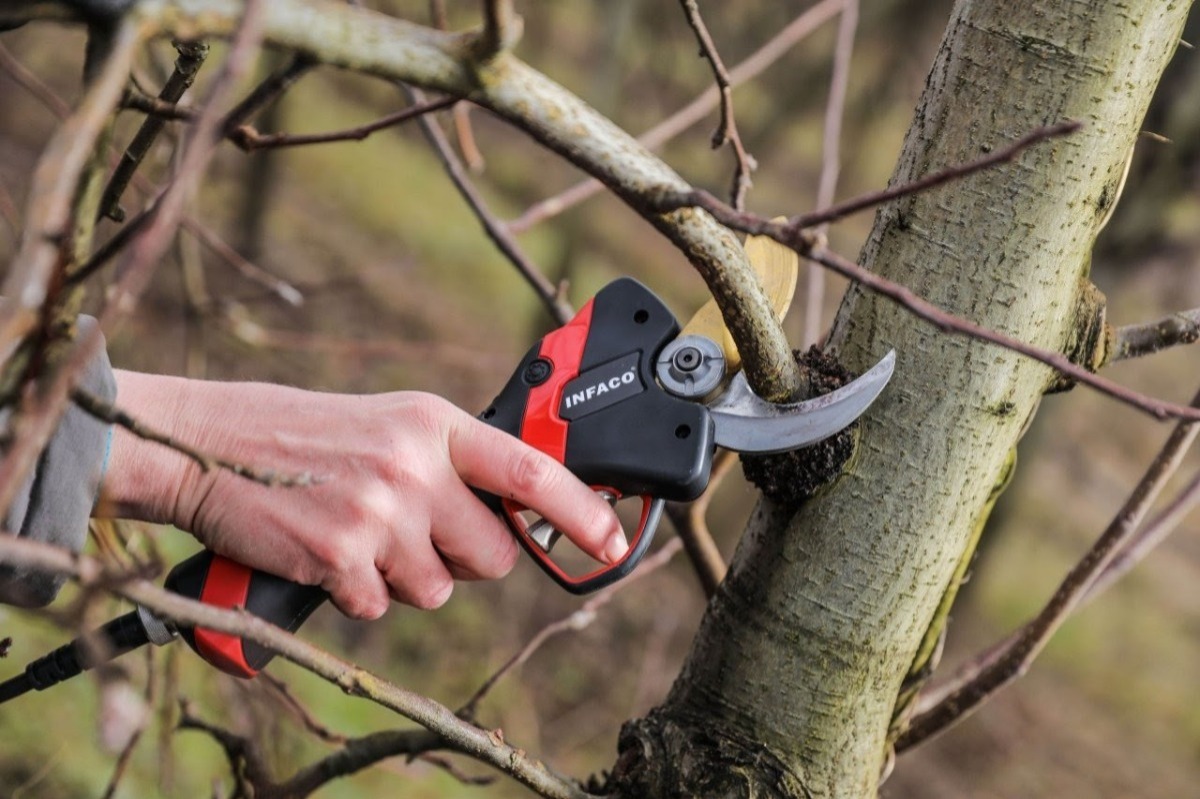
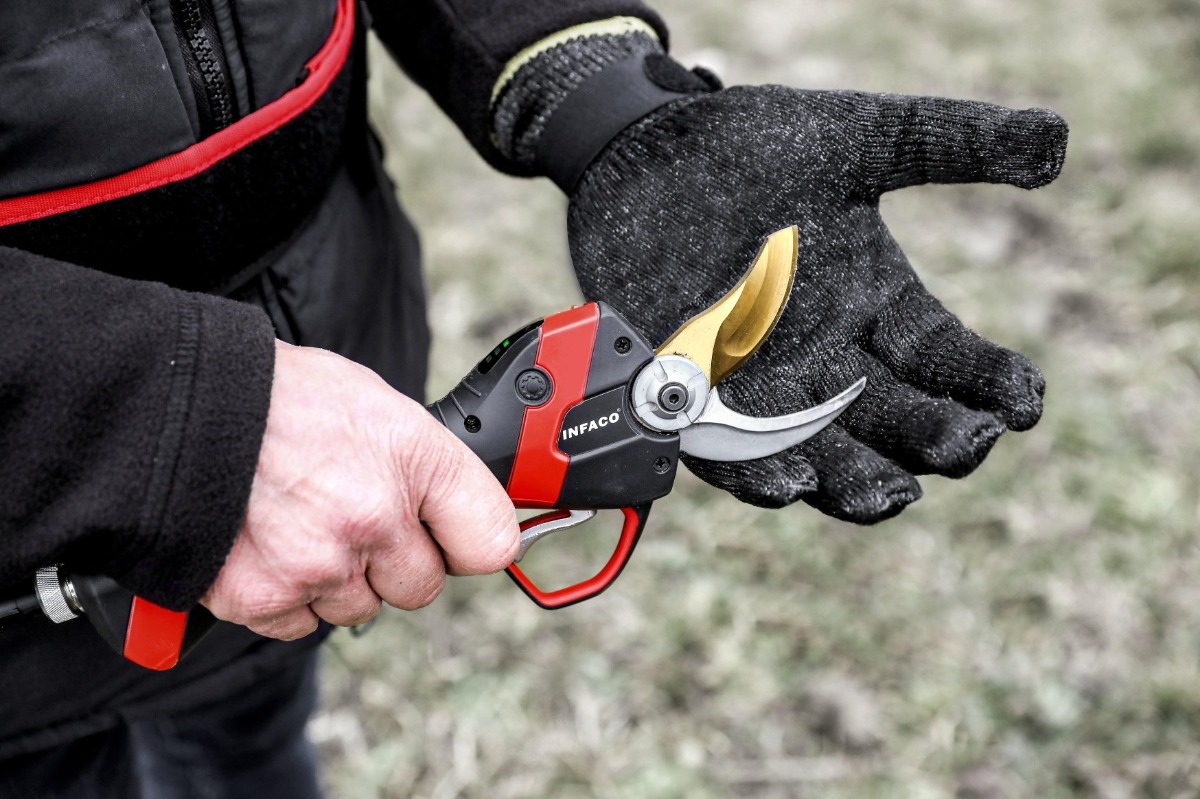
Introducing the latest advancement in Electric Pruning Technology... the F3020

Introducing the F3020 Electrocoup Electric Pruner - 36V & 48V models

PRODUCT INNOVATION


The F3020 Electrocoup Electric Pruner

INFACO is proud to present the latest, most technologically advanced electric shears on the market. 

The Electrocoup F3020 offers a technologically advanced secateur packed with a multitude of features.  

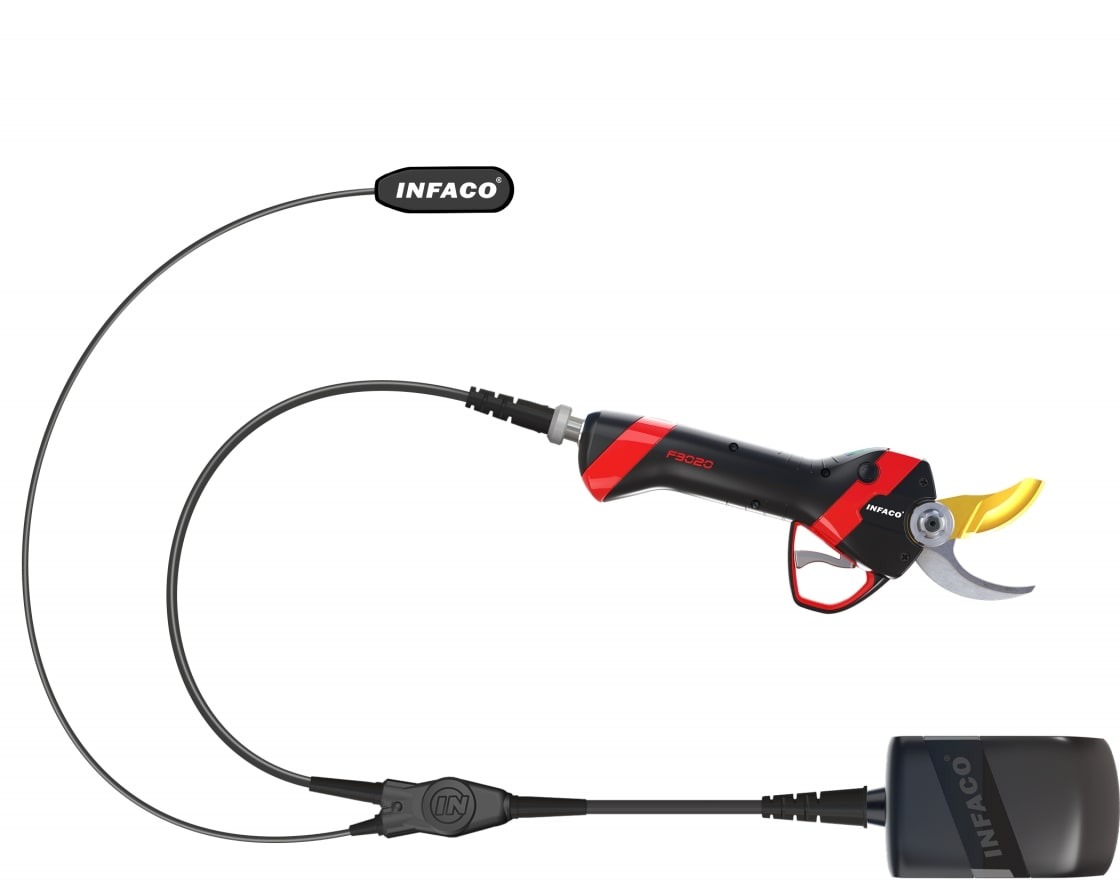
The F3020 Electrocoup weighs less and is more compact, which offers improved efficiency and faster-cutting speed, making the new generation F3020 a total advancement in features. The separate battery and shear design ensures the handpiece has minimal weight, maximising ergonomics, reducing fatigue, and providing a streamlined, efficient day of pruning. 

____________________________________________________________________

New & Improved Features

  • Ergonomic Design - Easy To Handle 
  • Compact - Decrease in Length by 10mm 
  • Lightweight
  • Increased Speed  
  • Increased Power  
  • Lightweight Battery
  • Technological and Connected
  • Upcoming Bluetooth Capability With Efficiency Reporting
  • Wireless DSES Included Standard
  • New Shear Holder

____________________________________________________________________

Video Overview - New & Improved F3020 & PW3

  • 0:33 Safety System DSES
  • 0:59 Adjustable Blade Opening
  • 1:40 Deactivatable DSES
  • 1:44 New Setting Button
  • 1:51 New Soft Mode
  • 2:00 Extreme Blade Control
  • 2:18 Medium Blade
  • 2:51 Maxi Blade for High Cutting Capacity
  • 3:13 Extension Pole for F3020 Electrocoup (optional)
  • 3:32 Bluetooth Wireless Control
  • 3:58 Battery Charging
  • 4:10 PW3 Powercoup Range
  • 4:13 Chainsaw Head
  • 4:26 Reciprocating Saw Head
  • 5:03 Desuckering Head
  • 5:09 Hedge Trimmer Head
  • 5:15 Sweeper Head
  • 5:19 Weeder Head
  • 5:24 Rotary Weeder Head
  • 5:27 Hoeing Machine Head
  • 5:37 Olive Alternating Harvesting Head

____________________________________________________________________

Improved Design

  • The new Electrocoup F3020 weighs only 708g, which is around 100g less than the F3015. 
  • The length of the unit has decreased by 10mm.
  • There is a significant increase in power and speed by 20% & 15% respectively.   


Technologically Advanced

The Electrocoup F3020 pruners are now fitted with some of the most hi-tech and powerful microcontrollers in the market that are used in mobile phones and computer technology.  This technology results in improved user function and innovation, enabling more data to be compiled and analysed by the pruning shear to improve the F3020 performance.


Operating Modes F3020

Standard Mode

Progressive Blade Advance at Full Speed (+15% vs F3015) 

 The Standard mode is for experienced users and for those who are willing to take full advantage of the tool's increased cutting speed capabilities. 

____________________________________________________________________

NEW Soft Mode

Progressive Blade Advance is at a slightly reduced speed

The Soft Mode is for users who prefer a slower cutting speed or beginners who are new to the trade.  Same speed as the previous model F3015.  (Refer to the video to see soft mode in operation.


Electronic Blade Adjustment

Half Aperture Setting

10 Easily programmable half-aperture settings for ideal half open postion. 

____________________________________________________________________

Blade Overlap Setting

10 Easily programmable blade overlap positions for ideal blade crossing.


New Shear Holder

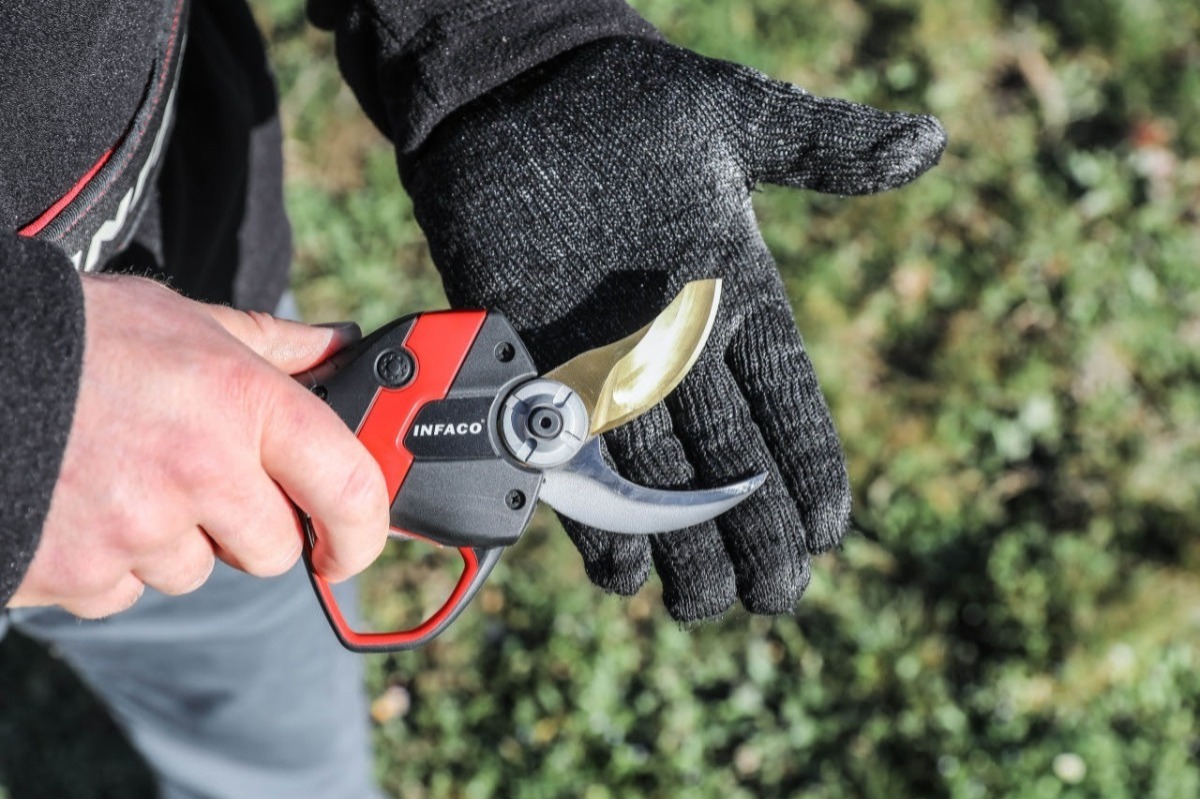
The new patented shear holder provides the cutting head protection and storage in just two actions.

Available for Standard and Medium heads.

** Fitted with Quick Lock-Unlock


Removable Accessory Holder

The removable accessory holder is included with your F3020 kit and allows you to store your smartphone within easy reach.

A large zipped central pocket guarantees safe storage of sharpening stone, burnishing tools, etc.


Cobalt L100B Li-Ion Battery

The Electrocoup F3020's new Cobalt L100B Lithium-ion battery weighs just 698 grams compared to 810 grams from the F3015. Its voltage is now 36 Volts as compared to the 48 Volts*** on the old F3015 model.  However, the 48V battery from previous units is compatible with the new F3020.  We can offer an optional 48V battery if you would like to make your previous units cross-compatible.

Its sleek design and small footprint will give you a day of pruning without recharging. With its versatile carrying system, the F3020 battery can be easily slipped into the user's pocket or clipped to a belt,  giving the user an effortless pruning experience. 


Electrocoup Battery Specifications

  • Lithium 107 Wh Battery 
  • Weight 698g 
  • Full-Day Complete Autonomy
  • Battery with Built-in Electronic Management System (BMS) and Cell Protection
  • High-Capacity Lithium Cells
  • "High Power" type and "Long Life" Intelligent Cells
  • 5 Year Warranty on a Pro-Rata basis

Battery Comparison

36V Cobalt Battery

  • Battery Weight:  698g
  • Weight of Cable: 122g
  • Right Hand/Left Hand Adaptable: Yes
  • Battery Average Autonomy: Up to 8 hours, Depending On Use
  • Complete Charging Time: 2 hours
  • Battery Average Voltage: 36V
  • Charger Feed Voltage: 230V, 50Hz
  • Sleep Mode Function: Yes
  • Powercoup Range Battery Compatible: No

48V Lithium Cobalt Battery

  • Battery Weight:   810g
  • Weight of Cable:  150g
  • Right Hand/Left Hand Adaptable:  Yes
  • Battery Average Autonomy:  up to 9 hours, depending on use
  • Complete Charging Time:  1.5 hours
  • Battery Average Voltage:  48V
  • Charger Feed Voltage: 230v, 50Hz
  • Sleep Mode Function: Yes
  • Powercoup Range Battery Compatible: Yes


***NEED 48V:  The Olive Centre can provide a 48v Battery as standard instead of the 36v battery if purchasing a new set.  If you have other Infaco tools we can offer the 48v to ensure there is no disruption with your other tools.  This ensures seamless changeover to the new generation F3020


Battery Positioning

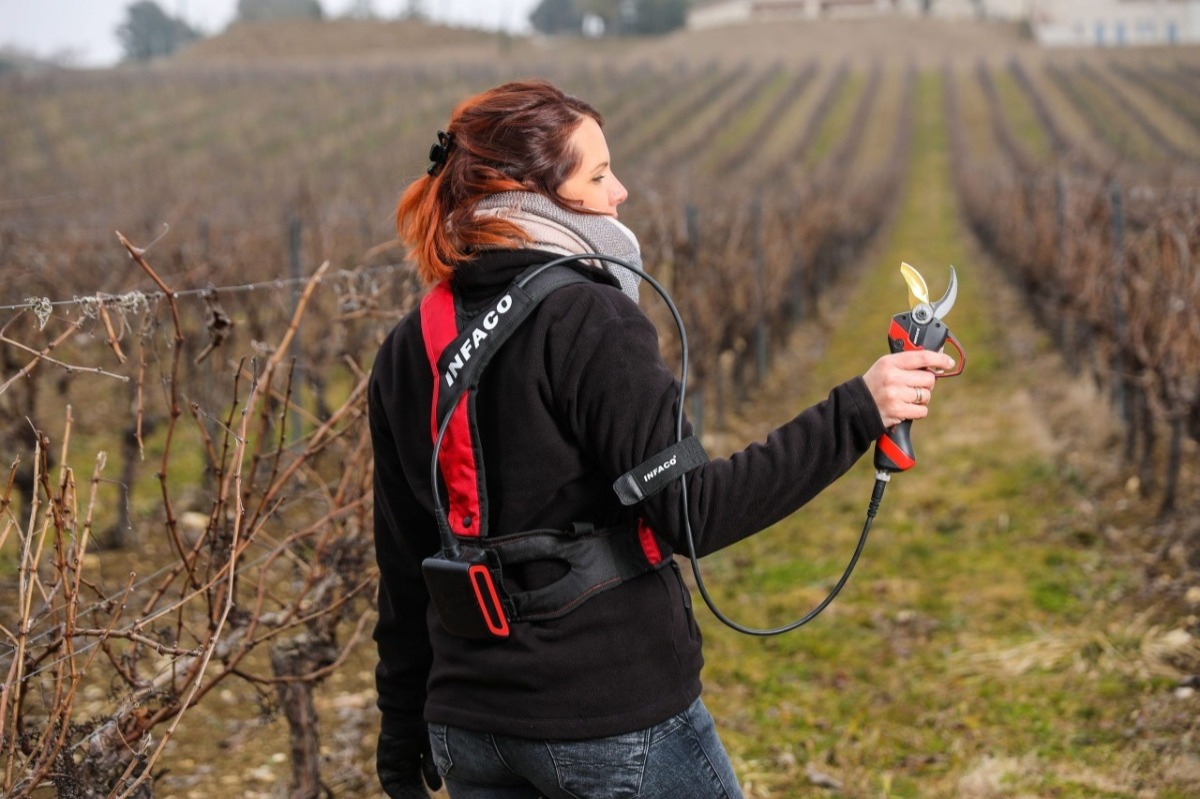
Battery used with Shoulder Straps and Waist Belt

Battery Used with Waistbelt Only

Battery Clipped on to Trousers


F3020 Automatic Smart Charger 36V

How long does it take to charge the battery?

The new F3020 Chargers are designed to charge the battery in 2 hours. Similar to its predecessor, the new charger enables the battery to be charged up to 90% in 1.5 hours and a full charge is achieved in 2 hours.  

Can the battery remain on the vest while charging?

The new connector plug allows for the battery to be charged while on the vest, making it more practical and easier to use.   

How does the Battery Sleep Mode work?

The "Sleep Function" on the charger helps the battery fall into an extended storage state, thus optimising its storage life. Recharging the battery is no longer required during the off-season. Just press the sleep button once after the pruning season, and it does its thing for the next few hours. Once the sleep process is complete, the battery can be stored in its case in a cool, dry place until the following season. 


Wireless DSES Is Now A Standard Feature

Infaco, the manufacturer of the Electrocoups, have always prioritised user safety over the years. A true pioneer in technology, the company has continually invested time and resources to ensure an innovative and safe experience for its users operating the Electrocoups.  Today, the all-new Electrocoup F3020 comes fitted with the wireless DSES system and is a standard feature on all units.

The Wireless DSES system comprises a conductive metal trigger enabling a connection between the user's body and the pruner's patented electronic system. While operating, if and when the cutting head touches any part of the opposite hand, the pruning shear blade opens instantly, thereby preventing accidents.

The Wireless DSES system operates in direct contact with the skin. However, each individual has their own level of conductivity. In order to achieve a continuous level of high conductivity and better protection, INFACO recommends the use of its special conductive gloves.

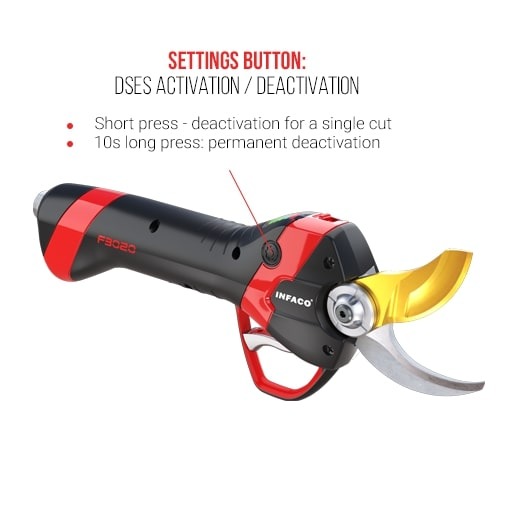
The Wireless DSES system may sometimes trigger unintended opens on damp wood, sappy wood or when close to the ground. To prevent this from happening, users now have the option of turning OFF & ON the DSES feature when required, using the settings button.


Contrary to the wireless system, the wired DSES option requires the user to wear the conductive glove that is physically connected to the handpiece by a power supply cable.  The wired DSES system provides the user the same protection while reducing unintentional opening of the blade because of damp or sappy wood.

More information about DSES


Optional Interchangeable Kits : 3 TOOLS IN 1

Similar to its most recent predecessors, Electrocoups remain the only shears in the world with 3 interchangeable heads with adjustable blade opening and DSES safety systems.  One of the tool's main assets is its versatility to use multiple cutting heads. With the options of the Standard Kit, Medium Kit or the Maxi Kit, users can easily swap the heads over in under 5 mins to meet the demands of the cutting application.  Kits are optional and not part of the standard kit. Please ask for details.


40mm 

Standard Kit

Ideal for pruning grapevines and orchard pruning.  This kit achieves the highest results for cutting rate and power.

45mm 

Medium Kit

Designed especially for fruit growers, forestry, and landscaping. This kit offers a higher cutting capacity while maintaining speed for relevant applications.

55mm

Maxi Kit

Perfect for cutting back vines, shaping fruit trees, and tree lopping.  This kit with a single-piece blade-rack combo will give unrivaled cutting capacity.


More About Head Kits F3020


Optional Extension Poles For F3020

Infaco's design engineers have completely revolutionized the pole system by creating an ergonomic and innovative solution.  There are 2 different kinds of pole options available with this new model. First option is the pole can be connected to the battery through a cord and the second option is the battery can be plugged in at the bottom of the pole.  Both options have the cord on the sliding handle eliminated and replaced by a more advanced wireless Bluetooth technology making it easy and convenient to use. 


Pole size options in the image to right.

____________________________________________________________________

Extension Pole with Wired Battery Connection

Extension Pole with Plug In Battery

Battery not included with Pole      

____________________________________________________________________

More About F3020 Extension Pole Functionality


Optional Accessories

A48V3 Electric Sharpener

Regular blade sharpening reduces the cutting force exerted on the motor of the Electrocoup and also helps to reduce motor stress. Infaco recommends the use of the optional electric sharpener to help keep the blade profile sharp. Thanks to its 3-pin connector plug, the A48V3 electric sharpener is now compatible with the Electrocoup F3005, F3010, F3015, and F3020 batteries. It saves significant time on daily sharpening and maintains a good cutting profile on the blade.

See video at 1:02 for the A48V3 Electric Sharpener in action.


Carbide Burnisher

The new tungsten carbide burnisher helps maintain a good cutting edge on the blade. A sharp blade guarantees a good, clean cut and reduces the risk of spreading wood diseases. In addition to 2 recommended daily sharpening sessions with the stone, it is also advised to use the new Carbide Burnisher to maintain a sharp edge on the blade for a good, clean cut.


Bluetooth Control Box

With the latest innovations in wireless connectivity, the Electrocoup F3020 pruning shears can be connected to the newly designed INFACO mobile app (available exclusively on Android and iOS compatible smartphones) through the Bluetooth Control Box.  

The app provides a wide array of features that assist Electrocoup users in day-to-day operations:

  • Setting up pruning shears - Adjust blade opening, blade bypass, choose operation modes (STANDARD or SOFT) 
  • View user statistics - Use time, number of cuts 
  • Manage the pruning progress of the block via geolocated use points through the smartphone   


The app also allows users (without the Bluetooth Control Box) 

  • View purchase history and guarantee status  
  • Access to service, troubleshooting, tips and video tutorials 
  • Option to take notes on the app that can be doubled as reminders 
Information on pruning progress can also be managed on the computer with more detailed features. 


What's In The Box As Standard

  1. F3020 Electrocoup Secateur
  2. 36V Battery Or 48V Battery
  3. Cable For Battery
  4. Charger (36 or 48V model) with Power Cord
  5. Battery Vest
  6. Secateur Sheath or Pouch
  7. Accessory Holder & Wristband
  8. Spare Blade
  9. Torque Tightening Tool
  10. Sharpening Stone
  11. Manual For Operation And Care
  12. Greasing Tool
  13. Spare Parts
  14. Glove (to fit the correct glove, please provide whether you need LH or RH and the measurement from the crease of your wrist to the tip of your middle finger)
  15. Carry Storage Box For Whole Kit


Helpful Information

Pruning Medium Density Olive Trees by Paul Vossen - University of California

Paul Vossen, a renowned olive oil production expert and former farm advisor with UC Cooperative Extension, presents a hands-on tutorial focused on pruning medium-density olive trees for optimal health, structure, and productivity.
Please log in to view the entire article

Mechanical vs Hand Pruning in Traditional and SHD Olive Groves

Pruning is a critical practice in olive cultivation, directly influencing yield, tree health, and orchard longevity. Australian olive growers manage a range of grove systems, from traditional low-density plantings (typically 8 × 5 m spacing) to modern super high-density (SHD) hedgerow systems. Each system presents unique challenges and opportunities for pruning. Traditional groves often consist of large vase-shaped trees pruned by skilled ....
Please log in to view the entire article

Olive Grove Seasonal Planning Checklist

This Olive Orchard Yearly Planner provides a structured, seasonal framework to help growers schedule and prioritise irrigation, nutrition, pruning, pest management, machinery maintenance and harvest activities in a commercial olive grove.
Please log in to view the entire article

Comprehensive Operational System for Professional Olive Producers

This comprehensive operational report outlines a full management system for professional olive producers, covering seasonal orchard tasks, planning, nutrition management, pest control, pruning, forecasting tools, budgeting, and technology integration.
Please log in to view the entire article

Optimising Olive Tree Health and Yield Through Effective Pruning

SMART PRUNING FOR STRONGER, HIGHER-YIELD OLIVE TREES

Optimising Olive Tree Health and Yield Through Effective Pruning

By Marcelo Berlanda, Agronomist & Consultant for The Olive Centre

“Olive trees must put out fresh growth each year to produce fruit.”

Training shapes the tree to support efficient harvesting and encourage early production

When trees reach the canopy size best suited to their environment, yields may begin to drop. This often happens because the inner canopy receives limited sunlight, leading to leaf loss and a reduced Leaf-to-Wood Ratio. If a tree grows beyond its ideal size, it creates challenges for mechanical harvesters. Excess height and width, along with thick branches, can strain or damage harvesting equipment, reduce fruit removal efficiency, and slow the harvest. Because olive trees need to produce new shoots annually to maintain fruiting, consistent growth is essential—and pruning becomes an important management practice. Pruning improves fruit size, oil content, light penetration, and the Leaf-to-Wood Ratio. It also stimulates fresh growth and lowers water and fertiliser demand. 

1- TREE TRAINING 

Purpose: Establish early productivity with stronger yields, extend the productive lifespan of the tree, enhance fruit quality, and prepare trees for the harvesting system used in the grove. 

Timing: Training occurs within the first three years of the tree’s development. 


In the first year, pruning is minimal (assuming nursery trees arrive with a good structure). Remove lower or overly vigorous branches that compete with the central leader. The goal is to maintain an upright main trunk with outward-growing horizontal branches. Water shoots should be removed so they do not compete for nutrients and moisture.

During the second and third years, gradually remove lower branches below approximately 600–1000 mm. 

A balance is essential. Removing too much canopy reduces the tree’s photosynthetic area, slowing its progress until new growth resumes.

Light pruning involves removing only small sections of foliage (such as a few short shoots), which keeps the tree stable. This can be done from August through late May. 

Heavy pruning removes larger amounts of foliage, prompting a stronger regrowth response but also increasing frost risk. Heavy cuts should generally be delayed until late September unless conditions are warm enough to begin earlier. 

Tree training may also include tying and skirting as part of shaping and preparation.

2- PRODUCTION 

This stage focuses on mature trees that have reached full size. The aim is to maintain balance so the tree can produce consistent, reliable crops each year.


Young trees contain many non-productive branches because they are still actively growing. Once these branches mature and begin producing fruit, they eventually become exhausted and stop fruiting. At that point, they need to be removed to make room for new productive growth and renewal of the canopy. 

LoIf the bloom is light, pruning should focus mainly on non-productive wood to preserve as much fruiting potential as possible. In years with heavy bloom, pruning can be more assertive without significantly reducing the crop. 

Timing: From bud break through early December.

3- AFTER HARVEST (CLEANING) 

The goal at this stage is to remove large damaged branches left behind after mechanical harvest. This step can be postponed by applying copper after harvest and waiting until spring to remove the affected wood.

Read More:Marcelo BerlandaMechanical PruningMechanical Harvesting

Relationship Between Production Per Tree, Productive Efficiency And Canopy Volume

This study examines how canopy volume influences olive production per tree and productive efficiency across traditional Portuguese olive varieties, providing guidance for pruning, water use and yield optimisation.
Please log in to view the entire article

A New Olive Cultivar For Hedgerow Orchards

This poster presents research on a newly developed olive cultivar designed for hedgerow orchards, highlighting growth habit, pruning requirements, maturation timing, yield performance and oil quality traits.
Please log in to view the entire article

Pruning & Plant Growth Regulators To Increasing Fruit Yield

08/11/19:? Pruning techniques and timing are always a misunderstood practice throughout the olive growing community.? This study is interesting because it delves into simulated mechanical pruning and also introduces the potential use of plant growth regulators.

Pruning is a necessary grove management practice to assist in maintaining appropriate canopy size and promote higher levels of flowering in olive groves.? Recent studies assessing the agronomic responses to mechanical pruning have found that moderate to severe winter mechanical hedge pruning can result in a vigorous vegetative growth response the next season which could reduce subsequent flowering for up to three seasons.

The latest research out of Argentina highlights a potential direction in findings that plant growth regulators need to be assessed in its use for increasing fruit yield.

The study looked at the different techniques for the impact of increasing flowering and fruit yield which included:

  • Tip heading of new shoots
  • Thinning of vigorous new shoots
  • Application of growth regulators - Mepiquat Chloride (MC)

Researchers noted ?The thinning of the new water sprouts at pit hardening 4 months after the simulated mechanical winter pruning reduced tree size and improved the return flowering and yield but is time-consuming.? Whilst tip heading was not effective in controlling shoot growth nor promoting flowering on new shoots.?

?The encouraging responses to plant growth regulator on unpruned trees indicate the need for further studies combining winter pruning with MC applications in the 2000?3000 ppm range at pit hardening and at other phenological stages and for several consecutive years to confirm whether this practice is a better post pruning management tool."

This research is interesting because the use of plant growth regulators could become an important tool for improving flowering and fruit yields.? With the current drought conditions looking at alternative techniques to improve fruit yield could be a game-changer for the Olive Industry and should be explored.

_____________________________________________

Responses of Shoot Growth, Return Flowering, and Fruit Yield to Post-Pruning Practices and Growth Regulator Applications In Olive Trees

Abstract

Winter mechanical hedge pruning of olive trees can result in a strong post-pruning shoot growth response and a low return flowering intensity the following year. However, post-pruning practices including tip heading, water sprout thinning, and the application of the growth inhibitor mepiquat chloride (MC) may positively reduce subsequent vegetative growth and promote flowering. Two experiments were carried out with the aim of addressing the following questions: (1) Do these post-pruning practices applied on trees that received simulated mechanical pruning during the winter reduce growth and increase flowering in the spring of the following year?; and (2) What is the optimal MC dose in unpruned trees needed to increase flowering the following spring? In the first experiment, five-year-old olive trees (cv. Arbequina) growing in a fairly low-density orchard (208 trees ha-1) were hedge pruned at the end of winter using manual clippers on the east and west sides to simulate mechanical disk pruning, and the post-pruning treatments were applied at the pit hardening stage (early summer). In the second experiment, foliar or soil application of MC was performed at pit hardening in unpruned trees. The results show that tip heading of new shoots led to a large number of lateral shoots that flowered little, or not at all, the following spring. In contrast, the water sprout thinning treatment had sufficient flowering to significantly increase fruit number and yield the following year compared to tip heading. Foliar application of MC (1500 ppm) after winter pruning did not inhibit new shoot growth, return flowering was low, and yield was less than the water sprout thinning treatment. The lack of a post-pruning response to foliar MC was likely related to the dose used (1500 ppm). In the second experiment, a foliar application of MC at 3000 ppm was associated with greater return flowering and yield than the untreated control. In conclusion, thinning of vigorous water sprouts at the pit hardening stage three months after simulated winter mechanical hedge pruning can improve fruit number and yield the next year, especially on a per canopy volume basis. Furthermore, the responses to foliar MC application in unpruned trees suggest that more detailed post-pruning studies with MC application doses in the 2000?3000 ppm range and at additional phenological stages should be performed over several consecutive years to assess whether this practice could be a suitable management tool.

Results The effects of water regimes on the plant water status, photosynthetic performance, metabolites fluctuations and fruit quality parameters were evaluated. All DIS treatments enhanced leaf tissue density, RDI and SDI generally did not affect leaf water status and maintained photosynthetic machinery working properly, while SDIAF treatment impaired olive tree physiological indicators. DIS treatments maintained the levels of primary metabolites in leaves, but SDIAF plants showed signs of oxidative stress.

Moreover, DIS treatments led to changes in the secondary metabolism, both in leaves and in fruits, with increased total phenolic compounds, ortho-diphenols, and flavonoids concentrations, and higher total antioxidant capacity, as well higher oil content.

Phenolic profiles showed the relevance of an early harvest in order to obtain higher oleuropein levels with associated higher health benefits.

Conclusion Different treatments (or curing methods) that are necessary to remove the bitterness of the raw olive and to stabilize them to obtain edible table olives, causing a loss in phenolic substances which also results in a loss of anthocyanins and antioxidant activity. However, CdN black table olives were the richest in polyphenols, consequently possessing the best antioxidant activity among the analyzed black table olives and among other black table olives reported in literature.? Moreover, it is plausible that regular consumption of CdN table olives can give real returns in terms of prevention of oxidative stress.

Authors: V aleriaAlbarrac?na1, Antonio J.Hallb, Peter S.Searlesa, M. CeciliaRousseauxa

  • a Centro Regional de Investigaciones Cient?ficas y Transferencia Tecnol?gica de La Rioja (CRILAR-Provincia de La Rioja-UNLaR-SEGEMAR-UNCa-CONICET), Entre R?os y Mendoza s/n, Anillaco, 5301, La Rioja, Argentina
  • b IFEVA, Facultad de Agronom?a, Universidad de Buenos Aires/CONICET, Av. San Mart?n 4453, Buenos Aires, C1417DSE, Argentina

Read the full study at Scientia Horticulture


Improved Pruning efficiency with Electric Powered Secateurs - F3015

The Ultimate Pruning Companion for Horticulture

The world of pruning has changed since the innovation of 'the world's first electric pruning shear"... the ELECTROCOUP was pioneered in 1984 by INFACO in France. INFACO stands for 'IN'novation, 'FA'brication & 'CO'mmercialisation.

Since this time INFACO has released their 8th GENERATION ELECTROCOUP to the Australian market for commercial orchards and groves which forges the way for efficiency and safety like no other.

INFACO's F3015 is super fast and offers exceptional speed when pruning between cuts. The trigger is ready to take orders from the operator and when we trialed these amongst many other brands on the market this was one area where the speed had excelled in this new model. Efficiency is key to any commercial pruning operation.

The ability to vary the cutting capacity with the standard, medium and maxi head (up to 50mm cutting capacity) ensures this unit is flexible to be used across many horticultural operations. For Olive Trees we have found the best user experience is with the Medium cutting head and it offers to be not too large and is weighted quite well in the user's hand. The half aperture allows for quick pruning of small material as well, which makes the realisation in pruning speed to occur.


Today, INFACO has engineered a streamlined experience which morphs the 8th Generation, F3015, into the lightest, most compact, and powerful electric pruner ever made.

TheElectrocoup F3015's are a significant evolution and a new era in pruning capability. Beneath the covers of this cutting-edge design, major advancement in motor and circuitry functionality - powered by new-generation lithium battery technology. It is measurably faster and more powerful than any other tool currently on the market! 

Built for performance, the F3015's comes with unprecedented versatility, clean finish, and comfortable handling, giving the modern-day pruner the ultimate professional experience and speed to match.? Efficiency improvement is the real strength in the modern-day orchard!


Revolutionary Design - Meticulously Crafted and Built to Last

LIFETIME WARRANTY - Reinforced Balance and Stability?

The Inner Body of the F3015 is made up of a sturdy, singular piece of alloy (predominantly used in aeronautics) that holds together all the central components, making it the lightest design possible.?

Advanced Motor and Circuitry

New lightweight brushless motor & new circuit boards with a water-resistant coating.

New Outer Covers

Soft and comfortable NON-SLIP grip. Double sealed water resistant covers.

New LED Light System

ON - OFF indicator,?Battery life indicator, troubleshooting aids.?

ON-OFF Switch

Power switch is now on the shear which means no more control box.

The Blade Adjustment

Adjust Half Open Position?

10 pre-set half open positions.

Adjust Blade Overlap Position?

10 pre-set blade overlap positions.


Infaco Battery & Smart Charger System


Ultra Compact Lithium Battery


  • Lithium-Ion Cobalt battery weighs only 810 grams
  • Battery Autonomy: 8-10 hours with Electrocoup
  • Built-in electronic management system and cell protection (BMS)
  • Shock Proof casing


Smart Charger


The smart charger extends daily usability to ensure the battery lasts all day and charges fast.?

  • Recharges 90% of battery in 1hour.
  • Takes another 30 mins to balance charge to 100%.
  • Sleep Mode: Protects Battery during an extended storage period (also called winterisation mode).
  • The charger has two standard charge outputs (as on the F3010) specially designed for the other energy-consuming tools in the line that runs off the shear battery such as the POWERCOUP PW2 saw, chain saw, hedge-trimmer, de-suckering tool, olive harvester, etc.

Battery Jacket

The new F3015 battery can be carried 4 different ways:

  • on a jacket with straps,
  • on the belt (without the removable straps),
  • using a clip on the trouser belt,
  • directly in the pocket thanks to its small size.


Award-winning Wireless Safety System - DSES

DSES Pruning System work with your bodies conductivity.

With this new generation award-winning safety system, it is a real benefit for operators to no longer need to be hooked up with additional wires connected to the secateurs.

The system comprises of a conductive trigger (patented) that connects the user?s body to the electronic control system of the shear, thus detecting any contact between the cutting head and the operator?s skin. When this occurs, the system immediately initiates the re-opening of the blades thus avoiding any potential grievous incident.

This system can be retrofitted to any existing F3015 model or can be purchased with NEW units that come fitted from the factory.


https://www.youtube.com/watch?v=o0I_VSfbUI8


Safety Glove DSES (option)

Extension Poles Electrocoup

The sliding trigger on the pole ensures the user is in complete control!

The F3015 Electrocoup can be used on a set of fixed or telescopic extension poles ranging between 1.2M and 3.5M. This enables the user to reach a height of up to 5M from the ground.?


There is now no need for cherry pickers or ladders to be involved in pruning to keep the operator's safety at the forefront which also enhances the safety features of the Electrocoup. Each part of the Electrocoup has been field-tested to ensure maximum usability.

More flexibility with the Interchangeable Cutting Head

The tool?s key asset is its versatility to adapt to different cutting capacities of up to 50mm in the Maxi Head.

Electrocoup is currently the?only electric shear in the world with 4 interchangeable heads with adjustable half-aperture and DSES Safety system. F3015 can be purchased in Light, Standard, Medium, or Maxi versions at a special price.


Summary

The F3015 has alot to offer and has many benefits;

  • 30% more power than F3010
  • 30% faster
  • 50% lighter
  • Ability to interchange blade size (from a secateur to a lopper cutting ability) with the optional kits.
  • International Award-Winning Wireless Safety System and the ability to upgrade to a glove system to improve conductivity.
  • Can fit to an optional extension pole if needing higher reach.
  • Battery can be used for other PW2 Infaco Tools like a Chainsaw, Reciprocating Saw, Hedge Trimmer etc.
  • The lightweight battery and faster charging.
  • The battery can be discharged in winterisation mode to keep on the shelf if not needed to be used for long durations of time. The battery needs an overnight charge when taking out of winterisation mode. After this, the battery can be rapidly charged as normal.
  • The battery can be mounted in 4 different ways depending on operator preference.
  • Any part for any unit is available with full backup support.
  • Care kit comes with every unit which includes a torque tool, spare blade, grease, sharpening stone, and full operation manual with instructions.

The F3015 Electrocoup is a very well thought out and engineered pruning tool and we would highly recommend it.

More about Electrocoup F3015


Horticultural Industries: Grapes, Hazelnuts, Macadamia, Olives, Stone Fruit, Apples, Pears, Almond, Avocado, Blueberries, Custard Apples, Lychees, Tree Nuts, Avocado, Citrus; Orange, Lemon, Lime, Mandarin and much more...