My Shopping Cart
| Bulk Discounts Prices | |
| Quantity | Price |
| 1 | $74.30 |
Shipping calculated separately at checkout
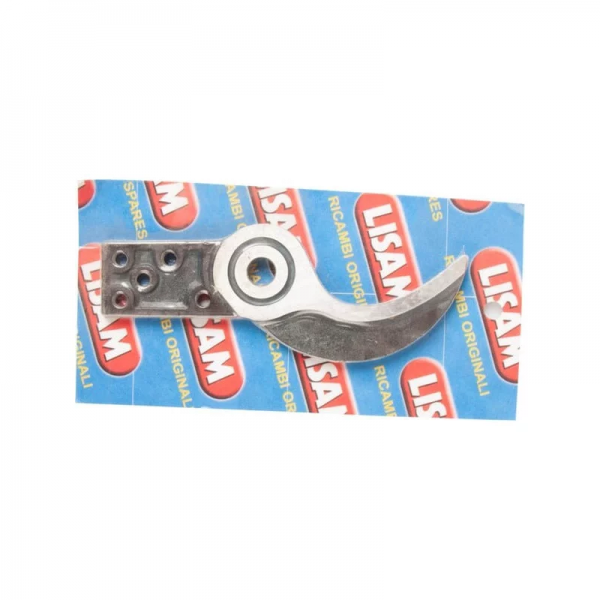
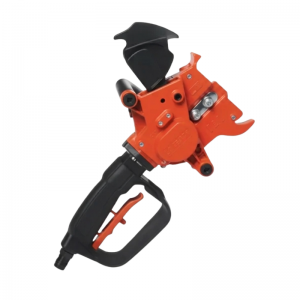
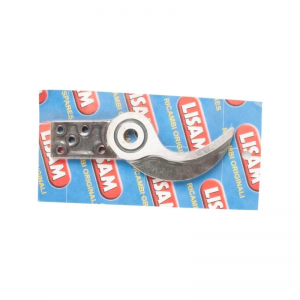
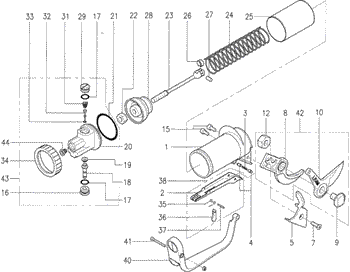
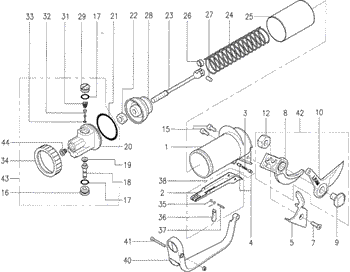
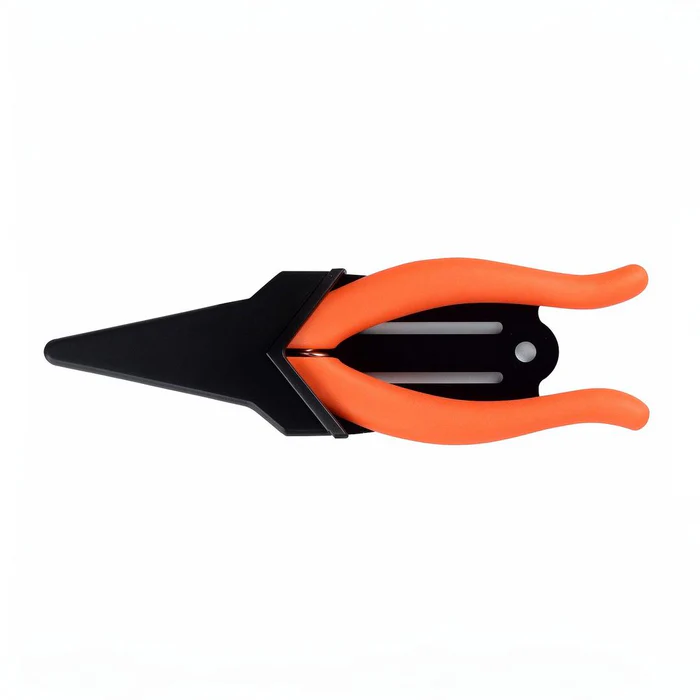
Genuine Lisam replacement anvil designed to maintain precise cutting performance in Lisam pneumatic pruning shears.
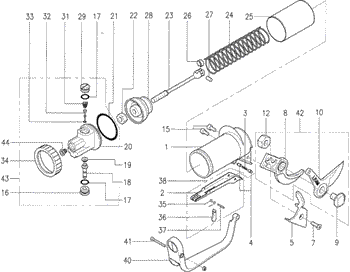
The Lisam A1206 Anvil / Counter Blade is a replacement component used in Lisam pneumatic pruning shears. This hardened metal counter blade provides the support surface for the cutting blade, helping produce clean pruning cuts while reducing wear on the main cutting edge.
| Specification | Details |
|---|---|
| Product Name | Lisam A1206 Anvil / Counter Blade |
| Brand | Lisam |
| Model Reference | A1206 |
| Material | Hardened metal |
| Application | Pneumatic pruning shears |
| Use | Replacement counter blade component |
This replacement anvil is used in compatible Lisam pneumatic pruning shears commonly used in olive groves, vineyards and horticultural orchards where precision pruning equipment is required.
In the Australian Olive Industry
Please contact us if you would like to be listed?
OBJECTIVES OF PRUNING
Train and Shape Olive trees, Maintain or Increase Production and Improve Harvest Efficiency
Training helps giving the tree the optimal shape to allow for efficient harvest as well as achieving early crops.
Once the trees have reached their optimum canopy volume for the environmental conditions of the area, it is likely that the yields could start declining. This is due to the fact that the inner part of the canopy does not receive sufficient sunlight, which causes defoliation, resulting in a low Leaf to Wood Ratio.
If the tree grows above its optimum size, it creates serious issues for the harvester machines. The tree becomes too high and too wide for the machines, it has thick branches that can cause damage on the picking heads and also reduces the removal efficiency of the machine as well as slows down the harvesting speed.
It is a fact that to produce fruit, Olive trees need to grow and produce new branches each year; therefore the trees need to grow every year. It is here where pruning becomes a very useful management tool.
Pruning helps increasing Fruit Size, Oil Yield, Light Interception and Leaf to Wood Ratio, it promotes new growth, and reduces water and fertiliser requirements.
see the full article at:
1- Tree Training
Objectives: Achieve early start of production with higher yields, increased number of production years, higher fruit quality, prepare the trees for the type of harvester that is going to be used on the grove.
Training takes place during the first 3 years of the tree life.
During the first year minimum pruning is required (provided the trees come with a suitable shape from the nursery), lower and vigorous branches competing with the leader should be removed. The aim is to encourage a straight vertical trunk with horizontal branches coming out. Water shoots must be removed to stop competition for water and nutrients.
On the second and third year the aim is to remove lower branches below 600-700-800-1000mm (must be done gradually).
“Always keep in mind that if we prune too hard is because either we came too late or because we do not know what to do”.
There must be a balance between what is taken out and what is left on. If we remove too much canopy, we have a negative effect on the tree, because we are removing photosynthetic area setting the tree back for a while until it starts growing again.
Light pruning is a process by which we only take a small amount of foliage (a couple of small branches), therefore we are not affecting tree balance. That is why it can be done from August until the end of May.
Heavier pruning in this process we take a large amounts of foliage therefore we are promoting a stronger reaction from the tree, this makes it susceptible to frost damage. That is why we should be delaying it until the end of September unless the weather is warmer. If that is the case we could start at the beginning of September.
Tree training not only involves light and heavy pruning but also tree tying and skirting.
2- Production
This type of pruning is performed on mature trees once they have reached full size. It has the aim of balancing the tree to obtain uniform and constant production every year.
As we all know when trees are young there is a larger number of non productive branches and that is because those branches are actively growing, but once they have reached their potential, they stop growing and start producing fruits, after a while those branches are exhausted and they stop producing, therefore they should be removed, to encourage new growth and renew the tree.
If bloom is light, pruning can be confined to non-productive parts of the tree, preserving as much bloom and potential crop as possible. In years of heavy bloom, pruning can be more severe without excessive crop removal.
Time of pruning: bud break until early December.
3- After Harvest (Cleaning)
The aim is to clean up the large broken branches that are left after the harvesters have gone through the grove. We could avoid it by spraying the trees with copper after harvest and wait until spring to take the damaged wood out.
View Industry Contracting Services in a full screen map
John Gallard
, john@gallardservices.com.au
Servicing Hunter Valley and other areas upon request.
Mulching service
Peter Birch - Thunderbolt's Olives
, thunderboltsolives@bigpond.com
Mulches wood up to 300mm diameter
Servicing NSW areas
Kent Hallett
PO Box 114,Riverton SA 5412
PH:
, FAX:
Eberhard Kunze
203 Everton Road, Markwood VIC 3678
PH:
, Email: ekunze@netc.net.au
Service: Contract Bottling & Cask Filling
Fini Olives
Jim Hollingworth
237 Orange Springs Road, Regan's Ford, Gin Gin WA 6503
PH:
, Email: jimh@finiolives.com.au
Email: racquel@pukaraestate.com.au
Servicing NSW, QLD, SA, TAS, VIC & WA
John Daniel resides in Lewiston on the outskirts of Adelaide, SA.
Email: jtdaniel@adam.com.au
Olympus Olive Contractors & Transport
Tige & Joy Boyd, RSD L260 Lockwood Vic 3539
olympusolives@impulse.net.au
PH:
Mob:
Fax:
Servicing QLD, NSW & VIC
Peter Haslett - Haslett Harvesting
PO Box 164 Paringa, SA 5340
mail@haslettharvesting.com.au
(AH)
Servicing SA.
Ashville Contracting Pty Ltd
P.O. Box 828 Merbein Victoria 3505
Contact; Ashley Munro
Ph:
or
Fax
Email ashville@ncable.com.au
Puma Olive Harvesting
Self propelled tractor mounted shaker.Capable of 1T/hr.
Contact: Fran Goryan
Ph:
or
Servicing SA only.
Andrew Bucknell
Ph:
or
bucknell@westnet.com.au
6 years experience, Sicma F3 harvester
Looking to expand into QLD and SA
Click here to download information for Andrew Bucknell
La Barre Olives
An average of 40 - 60 trees / Hour
Sicma Harvester, Operator has 5 years full time experience
Please contact La Barre Olives for more info
Ph:
denanteuil@bigpond.com
Preston Valley Grove
Sicma Speedy Harvester
Contact Mick Ryan for more info
Ph:
, email:info@prestonvalleygrove.com.au
Barilla Olive Harvesting
Lot 286 Stebonheath Rd, Munno Para Downs. S.A. 5015
Shaker Harvesting, grove layout is important, please book early.
Servicing South Australia
Contact: Steve Barilla
Ph:
, email:bariloil@tpg.com.au
National Olive Harvesters Pty. Ltd.
1 Nelson Road Lameroo S.A. 5302
Over-the-row Style Harvesting,Shaker Harvesting
Servicing: ACT,NSW,QLD,SA,TAS,VIC & WA
Contact: Ian Mead
Ph:
or
E-mail: iwmead@internode.on.net
EV Olives
Eberhard Kunze
203 Everton Road, Markwood VIC 3678
PH:
or
, Email: ekunze@netc.net.au
Service: Contract harvesting
New generation harvester, small or large jobs, bin hire, fruit transport
& processing
SMART PRUNING FOR STRONGER, HIGHER-YIELD OLIVE TREES
By Marcelo Berlanda, Agronomist & Consultant for The Olive Centre
“Olive trees must put out fresh growth each year to produce fruit.”
Training shapes the tree to support efficient harvesting and encourage early production
When trees reach the canopy size best suited to their environment, yields may begin to drop. This often happens because the inner canopy receives limited sunlight, leading to leaf loss and a reduced Leaf-to-Wood Ratio. If a tree grows beyond its ideal size, it creates challenges for mechanical harvesters. Excess height and width, along with thick branches, can strain or damage harvesting equipment, reduce fruit removal efficiency, and slow the harvest. Because olive trees need to produce new shoots annually to maintain fruiting, consistent growth is essential—and pruning becomes an important management practice. Pruning improves fruit size, oil content, light penetration, and the Leaf-to-Wood Ratio. It also stimulates fresh growth and lowers water and fertiliser demand.
1- TREE TRAINING
Purpose: Establish early productivity with stronger yields, extend the productive lifespan of the tree, enhance fruit quality, and prepare trees for the harvesting system used in the grove.
Timing: Training occurs within the first three years of the tree’s development.
In the first year, pruning is minimal (assuming nursery trees arrive with a good structure). Remove lower or overly vigorous branches that compete with the central leader. The goal is to maintain an upright main trunk with outward-growing horizontal branches. Water shoots should be removed so they do not compete for nutrients and moisture.
During the second and third years, gradually remove lower branches below approximately 600–1000 mm.
A balance is essential. Removing too much canopy reduces the tree’s photosynthetic area, slowing its progress until new growth resumes.
Light pruning involves removing only small sections of foliage (such as a few short shoots), which keeps the tree stable. This can be done from August through late May.
Heavy pruning removes larger amounts of foliage, prompting a stronger regrowth response but also increasing frost risk. Heavy cuts should generally be delayed until late September unless conditions are warm enough to begin earlier.
Tree training may also include tying and skirting as part of shaping and preparation.
2- PRODUCTION
Young trees contain many non-productive branches because they are still actively growing. Once these branches mature and begin producing fruit, they eventually become exhausted and stop fruiting. At that point, they need to be removed to make room for new productive growth and renewal of the canopy.
LoIf the bloom is light, pruning should focus mainly on non-productive wood to preserve as much fruiting potential as possible. In years with heavy bloom, pruning can be more assertive without significantly reducing the crop.
Timing: From bud break through early December.
3- AFTER HARVEST (CLEANING)
The goal at this stage is to remove large damaged branches left behind after mechanical harvest. This step can be postponed by applying copper after harvest and waiting until spring to remove the affected wood.
Read More: ● Marcelo Berlanda ● Mechanical Pruning ● Mechanical Harvesting
08/11/19:? Pruning techniques and timing are always a misunderstood practice throughout the olive growing community.? This study is interesting because it delves into simulated mechanical pruning and also introduces the potential use of plant growth regulators.
Pruning is a necessary grove management practice to assist in maintaining appropriate canopy size and promote higher levels of flowering in olive groves.? Recent studies assessing the agronomic responses to mechanical pruning have found that moderate to severe winter mechanical hedge pruning can result in a vigorous vegetative growth response the next season which could reduce subsequent flowering for up to three seasons.
The latest research out of Argentina highlights a potential direction in findings that plant growth regulators need to be assessed in its use for increasing fruit yield.
The study looked at the different techniques for the impact of increasing flowering and fruit yield which included:
Researchers noted ?The thinning of the new water sprouts at pit hardening 4 months after the simulated mechanical winter pruning reduced tree size and improved the return flowering and yield but is time-consuming.? Whilst tip heading was not effective in controlling shoot growth nor promoting flowering on new shoots.?
?The encouraging responses to plant growth regulator on unpruned trees indicate the need for further studies combining winter pruning with MC applications in the 2000?3000 ppm range at pit hardening and at other phenological stages and for several consecutive years to confirm whether this practice is a better post pruning management tool."
This research is interesting because the use of plant growth regulators could become an important tool for improving flowering and fruit yields.? With the current drought conditions looking at alternative techniques to improve fruit yield could be a game-changer for the Olive Industry and should be explored.
_____________________________________________
Responses of Shoot Growth, Return Flowering, and Fruit Yield to Post-Pruning Practices and Growth Regulator Applications In Olive Trees
Abstract
Winter mechanical hedge pruning of olive trees can result in a strong post-pruning shoot growth response and a low return flowering intensity the following year. However, post-pruning practices including tip heading, water sprout thinning, and the application of the growth inhibitor mepiquat chloride (MC) may positively reduce subsequent vegetative growth and promote flowering. Two experiments were carried out with the aim of addressing the following questions: (1) Do these post-pruning practices applied on trees that received simulated mechanical pruning during the winter reduce growth and increase flowering in the spring of the following year?; and (2) What is the optimal MC dose in unpruned trees needed to increase flowering the following spring? In the first experiment, five-year-old olive trees (cv. Arbequina) growing in a fairly low-density orchard (208 trees ha-1) were hedge pruned at the end of winter using manual clippers on the east and west sides to simulate mechanical disk pruning, and the post-pruning treatments were applied at the pit hardening stage (early summer). In the second experiment, foliar or soil application of MC was performed at pit hardening in unpruned trees. The results show that tip heading of new shoots led to a large number of lateral shoots that flowered little, or not at all, the following spring. In contrast, the water sprout thinning treatment had sufficient flowering to significantly increase fruit number and yield the following year compared to tip heading. Foliar application of MC (1500 ppm) after winter pruning did not inhibit new shoot growth, return flowering was low, and yield was less than the water sprout thinning treatment. The lack of a post-pruning response to foliar MC was likely related to the dose used (1500 ppm). In the second experiment, a foliar application of MC at 3000 ppm was associated with greater return flowering and yield than the untreated control. In conclusion, thinning of vigorous water sprouts at the pit hardening stage three months after simulated winter mechanical hedge pruning can improve fruit number and yield the next year, especially on a per canopy volume basis. Furthermore, the responses to foliar MC application in unpruned trees suggest that more detailed post-pruning studies with MC application doses in the 2000?3000 ppm range and at additional phenological stages should be performed over several consecutive years to assess whether this practice could be a suitable management tool.
Results The effects of water regimes on the plant water status, photosynthetic performance, metabolites fluctuations and fruit quality parameters were evaluated. All DIS treatments enhanced leaf tissue density, RDI and SDI generally did not affect leaf water status and maintained photosynthetic machinery working properly, while SDIAF treatment impaired olive tree physiological indicators. DIS treatments maintained the levels of primary metabolites in leaves, but SDIAF plants showed signs of oxidative stress.
Moreover, DIS treatments led to changes in the secondary metabolism, both in leaves and in fruits, with increased total phenolic compounds, ortho-diphenols, and flavonoids concentrations, and higher total antioxidant capacity, as well higher oil content.
Phenolic profiles showed the relevance of an early harvest in order to obtain higher oleuropein levels with associated higher health benefits.
Conclusion Different treatments (or curing methods) that are necessary to remove the bitterness of the raw olive and to stabilize them to obtain edible table olives, causing a loss in phenolic substances which also results in a loss of anthocyanins and antioxidant activity. However, CdN black table olives were the richest in polyphenols, consequently possessing the best antioxidant activity among the analyzed black table olives and among other black table olives reported in literature.? Moreover, it is plausible that regular consumption of CdN table olives can give real returns in terms of prevention of oxidative stress.
Authors: V aleriaAlbarrac?na1, Antonio J.Hallb, Peter S.Searlesa, M. CeciliaRousseauxa
Read the full study at Scientia Horticulture
The world of pruning has changed since the innovation of 'the world's first electric pruning shear"... the ELECTROCOUP was pioneered in 1984 by INFACO in France. INFACO stands for 'IN'novation, 'FA'brication & 'CO'mmercialisation.
Since this time INFACO has released their 8th GENERATION ELECTROCOUP to the Australian market for commercial orchards and groves which forges the way for efficiency and safety like no other.
INFACO's F3015 is super fast and offers exceptional speed when pruning between cuts. The trigger is ready to take orders from the operator and when we trialed these amongst many other brands on the market this was one area where the speed had excelled in this new model. Efficiency is key to any commercial pruning operation.
The ability to vary the cutting capacity with the standard, medium and maxi head (up to 50mm cutting capacity) ensures this unit is flexible to be used across many horticultural operations. For Olive Trees we have found the best user experience is with the Medium cutting head and it offers to be not too large and is weighted quite well in the user's hand. The half aperture allows for quick pruning of small material as well, which makes the realisation in pruning speed to occur.
Today, INFACO has engineered a streamlined experience which morphs the 8th Generation, F3015, into the lightest, most compact, and powerful electric pruner ever made.
TheElectrocoup F3015's are a significant evolution and a new era in pruning capability. Beneath the covers of this cutting-edge design, major advancement in motor and circuitry functionality - powered by new-generation lithium battery technology. It is measurably faster and more powerful than any other tool currently on the market!
Built for performance, the F3015's comes with unprecedented versatility, clean finish, and comfortable handling, giving the modern-day pruner the ultimate professional experience and speed to match.? Efficiency improvement is the real strength in the modern-day orchard!
LIFETIME WARRANTY - Reinforced Balance and Stability?
The Inner Body of the F3015 is made up of a sturdy, singular piece of alloy (predominantly used in aeronautics) that holds together all the central components, making it the lightest design possible.?
Advanced Motor and Circuitry
New lightweight brushless motor & new circuit boards with a water-resistant coating.
New Outer Covers
Soft and comfortable NON-SLIP grip. Double sealed water resistant covers.
New LED Light System
ON - OFF indicator,?Battery life indicator, troubleshooting aids.?
ON-OFF Switch
Power switch is now on the shear which means no more control box.
Adjust Half Open Position?
10 pre-set half open positions.
Adjust Blade Overlap Position?
10 pre-set blade overlap positions.
Ultra Compact Lithium Battery
Smart Charger
The smart charger extends daily usability to ensure the battery lasts all day and charges fast.?
The new F3015 battery can be carried 4 different ways:
With this new generation award-winning safety system, it is a real benefit for operators to no longer need to be hooked up with additional wires connected to the secateurs.
The system comprises of a conductive trigger (patented) that connects the user?s body to the electronic control system of the shear, thus detecting any contact between the cutting head and the operator?s skin. When this occurs, the system immediately initiates the re-opening of the blades thus avoiding any potential grievous incident.
This system can be retrofitted to any existing F3015 model or can be purchased with NEW units that come fitted from the factory.
The sliding trigger on the pole ensures the user is in complete control!
The F3015 Electrocoup can be used on a set of fixed or telescopic extension poles ranging between 1.2M and 3.5M. This enables the user to reach a height of up to 5M from the ground.?
There is now no need for cherry pickers or ladders to be involved in pruning to keep the operator's safety at the forefront which also enhances the safety features of the Electrocoup. Each part of the Electrocoup has been field-tested to ensure maximum usability.
The tool?s key asset is its versatility to adapt to different cutting capacities of up to 50mm in the Maxi Head.
Electrocoup is currently the?only electric shear in the world with 4 interchangeable heads with adjustable half-aperture and DSES Safety system. F3015 can be purchased in Light, Standard, Medium, or Maxi versions at a special price.
The F3015 has alot to offer and has many benefits;
The F3015 Electrocoup is a very well thought out and engineered pruning tool and we would highly recommend it.
More about Electrocoup F3015
Horticultural Industries: Grapes, Hazelnuts, Macadamia, Olives, Stone Fruit, Apples, Pears, Almond, Avocado, Blueberries, Custard Apples, Lychees, Tree Nuts, Avocado, Citrus; Orange, Lemon, Lime, Mandarin and much more...
?It is a fact that to produce fruit, olive trees need to grow and produce new branches each year?Training helps give the tree the optimal shape to allow for efficient harvest as well as achieving early crops.
Once the trees have reached their optimum canopy volume for the environmental conditions of the area, it is likely that the yields could start declining. This is due to the fact that the inner part of the canopy does not receive sufficient sunlight, which causes defoliation, resulting in a low Leaf to Wood Ratio.
If the tree grows above its optimum size, it creates serious issues for the harvester machines.? The tree becomes too high and too wide for the machines, it has thick branches which can cause damage on the picking heads and also reduces removal efficiency of the machine as well as slows down the overall harvesting speed.
It is a fact that to produce fruit, Olive trees need to grow and produce new branches each year; therefore the trees need to grow every year. It is here where pruning becomes a very useful management tool.
Pruning helps increase Fruit Size, Oil Yield, Light Interception, and Leaf to Wood ratio, it promotes new growth and reduces water and fertiliser requirements.
Timing: training takes place during the first 3 years of tree life.During the first year minimum pruning is required (provided the trees come with a suitable shape from the nursery), lower and vigorous branches competing with the leader should be removed. The aim is to encourage a straight vertical trunk with horizontal branches coming out. Water shoots must be removed to stop competition for water and nutrients.?
On the second and third year the aim is to remove lower branches below 600-700-800-1000mm (must be done gradually)?
There must be a balance between what is taken out and what is left on.? If we remove too much canopy, we have a negative effect on the tree, because we are removing photosynthetic area setting the tree back for a while until it starts growing again.
Light pruning is a process by which we only take a small amount of foliage (a couple of small branches), therefore we are not affecting tree balance. That is why it can be done from August until the end of May.
Heavier pruning in this process we take large amounts of foliage therefore we are promoting a stronger reaction from the tree, this makes it susceptible to frost damage. That is why we should be delaying it until the end of September unless the weather is warmer. If that is the case we could start at the beginning of September.
Tree training not only involves light and heavy pruning but also tree tying and skirting.
This type of pruning is performed on mature trees once they have reached full size. It has the aim of balancing the tree to obtain uniform and constant production every year.
As we know when trees are young there is a larger number of non-productive branches and that is because those branches are actively growing, but once they have reached their potential, they stop growing and start producing fruits, after a while, those branches are exhausted and they stop producing, therefore they should be removed, to encourage new growth and renew the tree.
If bloom is light, pruning can be confined to non-productive parts of the tree, preserving as much bloom and potential crop as possible. In years of heave bloom, pruning can be more severe without excessive crop removal.
Time of pruning: bud break until early December.
More: