PRUNING & STAKING YOUNG OLIVE TREES
FOR MECHANICAL HARVESTING
The information is supplied as a guide for during the first two years after planting olive trees between approximately 300mm (1 ft) and 1.5 metres (5 ft) in height. During this fast growth period the trees require specific pruning to maximise their growth, keep them in good health, and very importantly, prepare them for mechanical harvesting. Before pruning you should choose which style of harvesting you prefer and prune accordingly.
The briefness of this sheet cannot give all the answers and options but it does give a basic guide to pruning and staking during the first couple of years.
Whenever you are pruning a young olive tree there are four main points to keep in mind:
- Too much pruning at a young age will stunt the tree's growth.
- You are ultimately wanting to prune for mechanically harvesting the crop.
- A central leader trunk will assist growth in the early stages.
- Practice makes perfect!
Let's take a closer look at these points.
1. Olive trees are like human beings in many ways and in no way are they so similar as in the pruning. It's as simple as this:
A human can afford to lose an arm or even a leg and
still live reasonably well BUT if you lose both arms and both legs
at the same time, you're in trouble! - SO IS AN OLIVE TREE.
If your young tree is 900mm (3 ft) tall and has side branches growing all the way up its trunk DO NOT take them ALL off just because you've read that you need a clean straight trunk for 1.0 to 1.2 metres.
At first, only take off any that are growing below 300mm (1 ft) and then in several months time when the tree has grown considerably more on top, and has 'recovered' from the first pruning, you can take off any branches between 300mm and 600mm (1-2 ft). Repeat this process until finally after about two years, you have your clean straight trunk for 1.0 to 1.2 metres. Don't make the mistake of pruning 'too much too soon'. This can send the young tree into 'shock' and set it back by up to a full year. Always leave large amounts of leaf on the tree for photosynthesis to take place so that maximum root growth etc will occur.
2. Mechanical harvesting is the most efficient method of removing fruit from olive trees. Whereas oil olives have been the only mechanically harvested olives for many years, table fruit are now sometimes dropping into catching umbrellas in countries around the world, including Australia. Unless you have made a clear decision to hand harvest your fruit, to neglect pruning for future mechanical harvesting in the modern orchard may be a serious error from a long term economic viewpoint.
So what shape of tree do we need for mechanical harvesting? The most important requirement is a straight trunk for 1.0 to 1.2 metres (3'4"-4 ft) from the ground. This section of trunk must finally be free from all branches to allow the harvester's head to securely grip the trunk without any obstruction. This will allow the harvester to work more quickly and will also avoid damage to the tree.
Achieving this straight clean trunk occurs over about 18 months to two years. Initially, when the tree is only 300mm to 600mm (1-2 ft) tall you simply need to remove any branches which want to grow off the trunk below 300mm (1 ft) from the ground. Other branches above 300mm (1 ft) can be left to grow or, if they try to grow larger and faster than your main leader, they can have their tips removed to slow down their growth - thus allowing more nutrients to be focussed into the leader. This clearing will make it easier for weed spraying and will also allow the tree to focus all of its growth into the main 'leader' trunk and some higher lateral branches. At no stage should any growth touch the ground. In the early years, it is important to leave as much growth as possible on the tree because foliage promotes root growth which in turn promotes the production of more foliage.
Some trees will develop with a 'leader' (trunk) going straight up the centre with small side branches. Others will head straight for the sky as a single trunk with no side branches. Both cases are fine, but with single trunks you will need to nip off the growing tip at about 1.2-1.3m (48-50") to encourage side or lateral branches to grow at this place. It is these lateral branches that will form the main structure of your mature tree.
Mature olive trees need to be kept reasonably open in the centre to allow light penetration for better tree health and fruit production. This is best achieved through a vase shaped, sturdy growth habit which also facilitates mechanical harvesting. Your trees will probably have quite a number of lateral branches at about one metre or so from the ground when the tree is 18 months of age. Thoughtfully choose out four evenly spaced lateral branches. These need not all come from exactly the same height but should not be any lower than 800mm from the ground. As these will form the vase framework for your tree, if possible choose branches that are growing at least 30 degrees up from horizontal. This will give a vase rather than a flat plate shaped tree structure. Remove the other growth as outlined below.
If your main leader is damaged or slow growing for some reason then you may choose to allow a faster growing side branch to become the new leader. Simply remove the old leader from the stake and tie the new leader to it. (A bit like politics!)
When the tree is between 900mm and 1200mm (3-4 ft) tall, and if it has plenty of leafy branches towards its top, you can remove the branches which are growing from the trunk between 300mm and 600mm (1-2 ft) from the ground. You should now have a tree with a straight clean trunk to 600mm (2 ft) and a nice number of branches above 600mm (2 ft). If your tree is over 1200mm (4 ft) high then you can remove the tips of any branches that leave the trunk between 600mm and 900mm (2-3 ft). (Don't forget BODY TALK's advice - if there aren't many branches between 900mm and 1200mm (3-4 ft) then don't cut too heavily at this stage).
Several months after you have done the last step of pruning above, you can remove any of the final branches up to about one metre (3'4"). Your trunk is now clean to the desired height for machine harvesting and yet you still have about four evenly spaced solid branches at the top of the tree to keep root growth to a maximum. Depending on variety, land preparation and climate this whole pruning cycle from a 300mm (1 ft) tall tree to a solidly trunked tree which is branching well on top should take about eighteen months to two years.
STAKING YOUR TREE
The staking of young olive trees is very important. Stakes need to be strong enough to support the tree while the anchor roots are developing, and yet flexible enough to allow the tree to move in the wind. If the stake is too rigid or the tree tied too tightly to it, then the tree will be over protected and not feel the need to develop strong roots.
The most common size stake to use was the 1.5 metre (5 ft) high, 24-26mm thick. Thicker stakes are available for sandy soils: 1.8m (7ft) high, 25-28mm.
The bamboo stakes have some advantages over hardwood stakes as they have as they allow the tree to flex in the wind thereby encouraging the tree to develop a thick trunk and also to develop its anchor roots quickly. A tree rigidly tied to an unbending hardwood stake will not realise the need to develop its anchor roots strongly.
Sourcing Stakes - for further details and pricing for Stakes are available from The Olive Centre.
After about two years at which point the tree probably will no longer need staking. It is rare for a tree to need any support after it has outgrown such a stake.
Place the stake about 50mm (2") from the base of the tree and push it into the soil at least 300mm vertically until it feels quite stable. A better option is to use the stakes to mark your tree sites prior to planting and then simply plant the trees beside them. You can then tie both the young tree and its small nursery stake to the main stake with a tool such as the tapener described below. (There is no need to cut off the the tapes between the young tree and its nursery stake as they will break away naturally as the tree trunk thickens.)
After planting and staking the tree, the stake will prove to be a good solid anchor point to attach protective guards or netting to if you have severe animal problems and do not have a full netting fence around the boundary of your orchard.
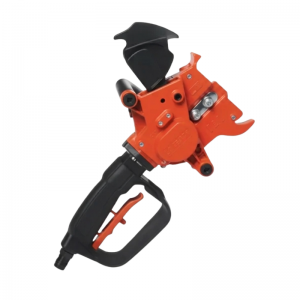
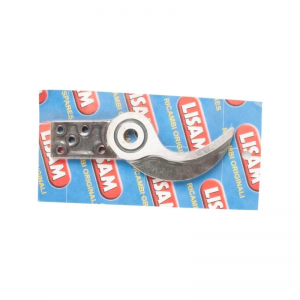
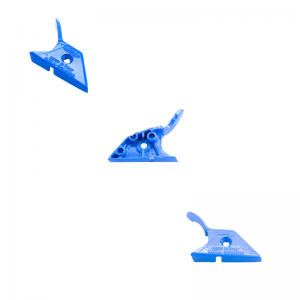
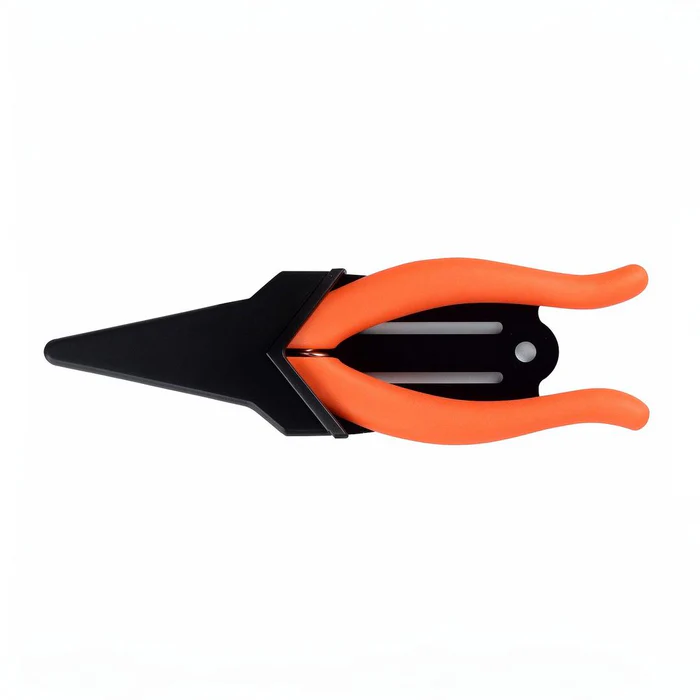
Tying the Tree - From our experience with tying methods over many years, we have found that the tape tying tools available from The Olive Centre are an excellent investment. The taping tool is very fast and efficient and if you have a number of trees to tie, you will get the cost of your tool back very quickly in saved time. When you order your tool Full Staking Kits are available which include a packet of staples, a packet of spare cutter blades, and unless you have very thick trunks, the 26 metre rolls of tape will be what you'll use.
After testing many brands of tape, we recommend the high quality, green tape. As the tree trunk grows thicker it will be better able to support itself without so much need for the stake. As the trunk thickens, the tape will stretch and naturally tear out at the staple point so it will not strangle the tree as some ties do. For windy areas other heavy duty tree ties are available.
3. A central leader trunk will help to speed up your tree's growth during the early years. Because this trunk will be fast growing and always growing upwards in the centre of your tree, it will be drawing nutrients up through the tree to sustain its growth. As it draws these nutrients up the tree, the nutrients will be carried to lower branches and thereby increase their speed of growth as well. The central leader acts as a type of 'nutrient pump' within the tree. (If your tree decides to grow straight up without any lateral (side) branches, nip the growing tip out when it reaches about 1.2 - 1.3 metres (4 ft). This will force it to start lateral branching into your vase shape.)
What we have finally achieved is a young tree with approximately four main scaffold branches. The shape is commonly known as an Inverted Conical Vase.
As mentioned in the introduction, this is not a conclusive pruning guide. It only touches on the basics of pruning young trees with what are considered the most commercially viable methods.
4. Practice Makes Perfect! Olive trees have a mind of their own and as such they will sometimes fight against many of your efforts to prune them into shape. Don't give up. Perseverance wins the race. Remember that time is on your side. A tree that won't grow correctly this season can often be restaked and then pruned into shape next season.