My Account
Sign-in / Join

Sign-in

Hi My Account

Dashboard

Logout

Cart

My Shopping Cart

Subtotal
${{total.toFixed(2)}}
QUOTE

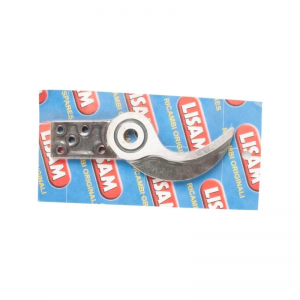
A1220 Valve Spring – Upper Valve Return Spring for Lisam Pneumatic Shears

Delivery will be calculated separately
Bulk Discounts Prices
Quantity Price
1 $8.69
Quantity

RAGSL131
  • Description
  • Features
  • Enquiry
  • Specifications
  • Knowledge
  • Blog
A1220 Valve Spring – Upper Valve Return Spring for Lisam Pneumatic Shears

Delivery will be calculated separately

Conical valve return spring for Lisam pneumatic scissors, restoring precise valve action and consistent air control.

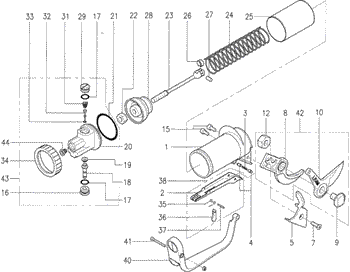
The Lisam A1220 Valve Spring is a precision upper valve return spring designed for Lisam pneumatic pruning shears. This conical spring is responsible for returning the valve pin (OT valve plug) to its resting position after activation, ensuring accurate airflow control, responsive trigger action and smooth cutting cycles. Manufactured for durability and consistent tension, the A1220 spring is an essential internal spare part for maintaining professional-grade performance in vineyard and orchard pneumatic shears.

Where this product is used

Installed within the valve assembly of Lisam pneumatic scissors, the A1220 spring works directly with the valve pin to regulate air flow and reset the valve after each cutting action.

Compatible equipment
  • Lisam pneumatic orchard shears – Model SLY (Red)
  • Lisam pneumatic vineyard shears – Model 4/WIN (Blue)
  • Lisam VR36 pneumatic shears
  • Spare part reference: A1220

A1220 Valve Spring – Technical Specifications

Specification Details
Product type Valve return spring (conical)
Part number A1220
Compatible brand Lisam
Compatible models Lisam SLY, Lisam 4/WIN, Lisam VR36
Function Returns valve pin to resting position
Spring type Conical compression spring
Item weight 0.003 kg

Why choose this product

A weakened or damaged valve spring can cause delayed trigger response, air leakage or inconsistent cutting cycles. Replacing it with the correct A1220 valve return spring restores proper valve function, improves air regulation and ensures reliable performance during intensive pruning work.

Application guidelines

Installation should be performed by a qualified technician or experienced user. Always disconnect and fully depressurise the pneumatic system before servicing. Inspect the valve pin and seals during replacement for optimal performance.

Frequently Asked Questions
The A1220 Valve Spring is a conical return spring used in the upper valve assembly of Lisam pneumatic shears. Its primary role is to return the valve pin or OT valve plug to its resting position after actuation. This ensures correct air flow control, fast valve reset and consistent trigger response during cutting operations.
A weakened or damaged valve spring can cause slow valve reset, inconsistent trigger response, air flow issues or delayed blade movement. In some cases, the shears may not cycle correctly between cuts. Replacing the spring restores proper valve operation and reliable cutting performance.
Common signs include sluggish trigger return, inconsistent cutting rhythm, air leaks around the valve area or reduced responsiveness during operation. If the spring shows visible deformation or loss of tension, replacement is recommended.

 
General main key features

• Precision conical valve spring
• Ensures fast and reliable valve reset
• Maintains consistent airflow control
• Designed for Lisam pneumatic shears
• Essential internal maintenance spare part
  • :
  • :
  • :
  • :
  • :

Olive Mechanical Harvesting, Pruning & Bottling Contractors

Olive Mechanical Harvesting, Pruning & Bottling Contractors

In the Australian Olive Industry

Pruning Services


  • Gallard Pruning Services John Gallard 0428 761 798 , john@gallardservices.com.au Servicing Hunter Valley and other areas upon request.
  • Mulching service Peter Birch - Thunderbolt's Olives 0428 669 157 , thunderboltsolives@bigpond.com Mulches wood up to 300mm diameter Servicing NSW areas

Botling Contractors

  • EV Olives Wenbo 203 Everton Road, Markwood VIC 3678 PH: 03 5727 0209, Email: wenbowwu@hotmail.com Service: Contract Bottling & Cask Filling
  • Fini Olives Jim Hollingworth 237 Orange Springs Road, Regan's Ford, Gin Gin WA 6503 PH: 08 9259 4131, Email: jimh@finiolives.com.au

Mechanical Harvesting Contractors

  • Costa - Mount Camel Mechanical Harvesting Contractors servicing around the Mount Camel area with New Generation Sicma B411 Plus call 0488 010 173
  • John Daniel - Tarlia Olive Estate Servicing NSW, QLD, SA, TAS, VIC & WA John Daniel resides in Lewiston on the outskirts of Adelaide, SA. Email: jtdaniel@adam.com.au
  • Peter Haslett - Haslett Harvesting PO Box 164 Paringa, SA 5340 mail@haslettharvesting.com.au 08 8595 8046  (AH) Servicing SA.
  • Puma Olive Harvesting Self propelled tractor mounted shaker.Capable of 1T/hr. Contact: Fran Goryan Ph: 0408 897 869  or 08 8823 3287 Servicing SA only.
  • Andrew Bucknell Ph: 02 6343 7101  or 0428 232 798 bucknell@westnet.com.au 6 years experience, Sicma F3 harvester Looking to expand into QLD and SA Click here to download information for Andrew Bucknell
  • Preston Valley Grove Sicma Speedy Harvester Contact Mick Ryan for more info Ph: 0419 907 701 , email:info@prestonvalleygrove.com.au
  • Barilla Olive Harvesting Lot 286 Stebonheath Rd, Munno Para Downs. S.A. 5015 Shaker Harvesting, grove layout is important, please book early. Servicing South Australia Contact: Steve Barilla Ph: 0411 402 405 , email:bariloil@tpg.com.au
  • National Olive Harvesters Pty. Ltd. 1 Nelson Road Lameroo S.A. 5302 Over-the-row Style Harvesting,Shaker Harvesting Servicing: ACT,NSW,QLD,SA,TAS,VIC & WA Contact: Ian Mead Ph:0885774062 or 0427879125 E-mail: iwmead@internode.on.net
  • EV Olives Wenbo Wu 203 Everton Road, Markwood VIC 3678 PH: 03 5727 0209 or 0408 519 955, Email: wenbowwu@hotmail.com Service: Contract harvesting New generation harvester, small or large jobs, bin hire, fruit transport  & processing

Please contact us if you would like to be listed?

Pruning & Staking Young Olive Trees for Mechanical Harvesting


PRUNING & STAKING YOUNG OLIVE TREES

FOR MECHANICAL HARVESTING

The information is supplied as a guide for during the first two years after planting olive trees between approximately 300mm (1 ft) and 1.5 metres (5 ft) in height. During this fast growth period the trees require specific pruning to maximise their growth, keep them in good health, and very importantly, prepare them for mechanical harvesting. Before pruning you should choose which style of harvesting you prefer and prune accordingly.

The briefness of this sheet cannot give all the answers and options but it does give a basic guide to pruning and staking during the first couple of years.

Whenever you are pruning a young olive tree there are four main points to keep in mind:

  1. Too much pruning at a young age will stunt the tree's growth.
  2. You are ultimately wanting to prune for mechanically harvesting the crop.
  3. A central leader trunk will assist growth in the early stages.
  4. Practice makes perfect!

Let's take a closer look at these points.


1. Olive trees are like human beings in many ways and in no way are they so similar as in the pruning. It's as simple as this:

A human can afford to lose an arm or even a leg and
still live reasonably well BUT if you lose both arms and both legs
at the same time, you're in trouble! - SO IS AN OLIVE TREE.

If your young tree is 900mm (3 ft) tall and has side branches growing all the way up its trunk DO NOT take them ALL off just because you've read that you need a clean straight trunk for 1.0 to 1.2 metres.

At first, only take off any that are growing below 300mm (1 ft) and then in several months time when the tree has grown considerably more on top, and has 'recovered' from the first pruning, you can take off any branches between 300mm and 600mm (1-2 ft). Repeat this process until finally after about two years, you have your clean straight trunk for 1.0 to 1.2 metres. Don't make the mistake of pruning 'too much too soon'. This can send the young tree into 'shock' and set it back by up to a full year. Always leave large amounts of leaf on the tree for photosynthesis to take place so that maximum root growth etc will occur.


2. Mechanical harvesting is the most efficient method of removing fruit from olive trees. Whereas oil olives have been the only mechanically harvested olives for many years, table fruit are now sometimes dropping into catching umbrellas in countries around the world, including Australia. Unless you have made a clear decision to hand harvest your fruit, to neglect pruning for future mechanical harvesting in the modern orchard may be a serious error from a long term economic viewpoint.

So what shape of tree do we need for mechanical harvesting? The most important requirement is a straight trunk for 1.0 to 1.2 metres (3'4"-4 ft) from the ground. This section of trunk must finally be free from all branches to allow the harvester's head to securely grip the trunk without any obstruction. This will allow the harvester to work more quickly and will also avoid damage to the tree.

Achieving this straight clean trunk occurs over about 18 months to two years. Initially, when the tree is only 300mm to 600mm (1-2 ft) tall you simply need to remove any branches which want to grow off the trunk below 300mm (1 ft) from the ground. Other branches above 300mm (1 ft) can be left to grow or, if they try to grow larger and faster than your main leader, they can have their tips removed to slow down their growth - thus allowing more nutrients to be focussed into the leader. This clearing will make it easier for weed spraying and will also allow the tree to focus all of its growth into the main 'leader' trunk and some higher lateral branches. At no stage should any growth touch the ground. In the early years, it is important to leave as much growth as possible on the tree because foliage promotes root growth which in turn promotes the production of more foliage.

Some trees will develop with a 'leader' (trunk) going straight up the centre with small side branches. Others will head straight for the sky as a single trunk with no side branches. Both cases are fine, but with single trunks you will need to nip off the growing tip at about 1.2-1.3m (48-50") to encourage side or lateral branches to grow at this place. It is these lateral branches that will form the main structure of your mature tree.

Mature olive trees need to be kept reasonably open in the centre to allow light penetration for better tree health and fruit production. This is best achieved through a vase shaped, sturdy growth habit which also facilitates mechanical harvesting. Your trees will probably have quite a number of lateral branches at about one metre or so from the ground when the tree is 18 months of age. Thoughtfully choose out four evenly spaced lateral branches. These need not all come from exactly the same height but should not be any lower than 800mm from the ground. As these will form the vase framework for your tree, if possible choose branches that are growing at least 30 degrees up from horizontal. This will give a vase rather than a flat plate shaped tree structure. Remove the other growth as outlined below.

If your main leader is damaged or slow growing for some reason then you may choose to allow a faster growing side branch to become the new leader. Simply remove the old leader from the stake and tie the new leader to it. (A bit like politics!)

When the tree is between 900mm and 1200mm (3-4 ft) tall, and if it has plenty of leafy branches towards its top, you can remove the branches which are growing from the trunk between 300mm and 600mm (1-2 ft) from the ground. You should now have a tree with a straight clean trunk to 600mm (2 ft) and a nice number of branches above 600mm (2 ft). If your tree is over 1200mm (4 ft) high then you can remove the tips of any branches that leave the trunk between 600mm and 900mm (2-3 ft). (Don't forget BODY TALK's advice - if there aren't many branches between 900mm and 1200mm (3-4 ft) then don't cut too heavily at this stage).

Several months after you have done the last step of pruning above, you can remove any of the final branches up to about one metre (3'4"). Your trunk is now clean to the desired height for machine harvesting and yet you still have about four evenly spaced solid branches at the top of the tree to keep root growth to a maximum. Depending on variety, land preparation and climate this whole pruning cycle from a 300mm (1 ft) tall tree to a solidly trunked tree which is branching well on top should take about eighteen months to two years.


STAKING YOUR TREE


The staking of young olive trees is very important. Stakes need to be strong enough to support the tree while the anchor roots are developing, and yet flexible enough to allow the tree to move in the wind. If the stake is too rigid or the tree tied too tightly to it, then the tree will be over protected and not feel the need to develop strong roots.

The most common size stake to use was the 1.5 metre (5 ft) high, 24-26mm thick. Thicker stakes are available for sandy soils: 1.8m (7ft) high, 25-28mm.

The bamboo stakes have some advantages over hardwood stakes as they have as they allow the tree to flex in the wind thereby encouraging the tree to develop a thick trunk and also to develop its anchor roots quickly. A tree rigidly tied to an unbending hardwood stake will not realise the need to develop its anchor roots strongly.

Sourcing Stakes - for further details and pricing for Stakes are available from The Olive Centre.

After about two years at which point the tree probably will no longer need staking. It is rare for a tree to need any support after it has outgrown such a stake.

Place the stake about 50mm (2") from the base of the tree and push it into the soil at least 300mm vertically until it feels quite stable. A better option is to use the stakes to mark your tree sites prior to planting and then simply plant the trees beside them. You can then tie both the young tree and its small nursery stake to the main stake with a tool such as the tapener described below. (There is no need to cut off the the tapes between the young tree and its nursery stake as they will break away naturally as the tree trunk thickens.)

After planting and staking the tree, the stake will prove to be a good solid anchor point to attach protective guards or netting to if you have severe animal problems and do not have a full netting fence around the boundary of your orchard.

Tying the Tree - From our experience with tying methods over many years, we have found that the tape tying tools available from The Olive Centre are an excellent investment. The taping tool is very fast and efficient and if you have a number of trees to tie, you will get the cost of your tool back very quickly in saved time. When you order your tool Full Staking Kits are available which include a packet of staples, a packet of spare cutter blades, and unless you have very thick trunks, the 26 metre rolls of tape will be what you'll use.

After testing many brands of tape, we recommend the high quality, green tape. As the tree trunk grows thicker it will be better able to support itself without so much need for the stake. As the trunk thickens, the tape will stretch and naturally tear out at the staple point so it will not strangle the tree as some ties do. For windy areas other heavy duty tree ties are available.


3. A central leader trunk will help to speed up your tree's growth during the early years. Because this trunk will be fast growing and always growing upwards in the centre of your tree, it will be drawing nutrients up through the tree to sustain its growth. As it draws these nutrients up the tree, the nutrients will be carried to lower branches and thereby increase their speed of growth as well. The central leader acts as a type of 'nutrient pump' within the tree. (If your tree decides to grow straight up without any lateral (side) branches, nip the growing tip out when it reaches about 1.2 - 1.3 metres (4 ft). This will force it to start lateral branching into your vase shape.)

What we have finally achieved is a young tree with approximately four main scaffold branches. The shape is commonly known as an Inverted Conical Vase.

As mentioned in the introduction, this is not a conclusive pruning guide. It only touches on the basics of pruning young trees with what are considered the most commercially viable methods.


4. Practice Makes Perfect! Olive trees have a mind of their own and as such they will sometimes fight against many of your efforts to prune them into shape. Don't give up. Perseverance wins the race. Remember that time is on your side. A tree that won't grow correctly this season can often be restaked and then pruned into shape next season.

Objectives of Pruning by Marcelo Berlanda

OBJECTIVES OF PRUNING


Train and Shape Olive trees, Maintain or Increase Production and Improve Harvest Efficiency

by Marcelo Berlanda

Marcelo High Density II.jpg

Training helps giving the tree the optimal shape to allow for efficient harvest as well as achieving early crops.

Once the trees have reached their optimum canopy volume for the environmental conditions of the area, it is likely that the yields could start declining. This is due to the fact that the inner part of the canopy does not receive sufficient sunlight, which causes defoliation, resulting in a low Leaf to Wood Ratio.

If the tree grows above its optimum size, it creates serious issues for the harvester machines. The tree becomes too high and too wide for the machines, it has thick branches that can cause damage on the picking heads and also reduces the removal efficiency of the machine as well as slows down the harvesting speed.

It is a fact that to produce fruit, Olive trees need to grow and produce new branches each year; therefore the trees need to grow every year. It is here where pruning becomes a very useful management tool.

Pruning helps increasing Fruit Size, Oil Yield, Light Interception and Leaf to Wood Ratio, it promotes new growth, and reduces water and fertiliser requirements.


see the full article at:

1- Tree Training

Objectives: Achieve early start of production with higher yields, increased number of production years, higher fruit quality, prepare the trees for the type of harvester that is going to be used on the grove.

Training takes place during the first 3 years of the tree life.

During the first year minimum pruning is required (provided the trees come with a suitable shape from the nursery), lower and vigorous branches competing with the leader should be removed. The aim is to encourage a straight vertical trunk with horizontal branches coming out. Water shoots must be removed to stop competition for water and nutrients.

On the second and third year the aim is to remove lower branches below 600-700-800-1000mm (must be done gradually).

“Always keep in mind that if we prune too hard is because either we came too late or because we do not know what to do”.

There must be a balance between what is taken out and what is left on. If we remove too much canopy, we have a negative effect on the tree, because we are removing photosynthetic area setting the tree back for a while until it starts growing again.

Light pruning is a process by which we only take a small amount of foliage (a couple of small branches), therefore we are not affecting tree balance. That is why it can be done from August until the end of May.

Heavier pruning in this process we take a large amounts of foliage therefore we are promoting a stronger reaction from the tree, this makes it susceptible to frost damage. That is why we should be delaying it until the end of September unless the weather is warmer. If that is the case we could start at the beginning of September.

Tree training not only involves light and heavy pruning but also tree tying and skirting.

2- Production

This type of pruning is performed on mature trees once they have reached full size. It has the aim of balancing the tree to obtain uniform and constant production every year.

As we all know when trees are young there is a larger number of non productive branches and that is because those branches are actively growing, but once they have reached their potential, they stop growing and start producing fruits, after a while those branches are exhausted and they stop producing, therefore they should be removed, to encourage new growth and renew the tree.


If bloom is light, pruning can be confined to non-productive parts of the tree, preserving as much bloom and potential crop as possible. In years of heavy bloom, pruning can be more severe without excessive crop removal.

Time of pruning: bud break until early December.

3- After Harvest (Cleaning)

The aim is to clean up the large broken branches that are left after the harvesters have gone through the grove. We could avoid it by spraying the trees with copper after harvest and wait until spring to take the damaged wood out.


Mechanical Harvesting, Pruning & Bottling Contractors

View Industry Contracting Services in a full screen map

PRUNING SERVICES

Gallard Pruning Services
John Gallard
0428 761 798, john@gallardservices.com.au
Servicing Hunter Valley and other areas upon request.

Mulching service
Peter Birch - Thunderbolt's Olives
0428 669 157, thunderboltsolives@bigpond.com
Mulches wood up to 300mm diameter
Servicing NSW areas

BOTTLING CONTRACTORS

Olive Oil Packaging Service
Kent Hallett
PO Box 114,Riverton SA 5412
PH: (08) 8847 2255, FAX: (08) 8847 2676

EV Olives
Eberhard Kunze
203 Everton Road, Markwood VIC 3678
PH: 03 5727 0209, Email: ekunze@netc.net.au
Service: Contract Bottling & Cask Filling

Fini Olives
Jim Hollingworth
237 Orange Springs Road, Regan's Ford, Gin Gin WA 6503
PH: 08 9259 4131, Email: jimh@finiolives.com.au

FRUIT TESTING SERVICES

Groverite Australia
Email: racquel@pukaraestate.com.au

MECHANICAL HARVESTING CONTRACTORS

John Daniel - Tarlia Olive Estate
Servicing NSW, QLD, SA, TAS, VIC & WA
John Daniel resides in Lewiston on the outskirts of Adelaide, SA.
Email: jtdaniel@adam.com.au

Olympus Olive Contractors & Transport
Tige & Joy Boyd, RSD L260 Lockwood Vic 3539
olympusolives@impulse.net.au
PH: 03 5435 3644 Mob: 0429 056 437 Fax: 03 5435 3704
Servicing QLD, NSW & VIC

Peter Haslett - Haslett Harvesting
PO Box 164 Paringa, SA 5340
mail@haslettharvesting.com.au
08 8595 8046 (AH)
Servicing SA.

Ashville Contracting Pty Ltd
P.O. Box 828 Merbein Victoria 3505
Contact; Ashley Munro
Ph: 0428840235 or 03 50253305
Fax 03 50253305
Email ashville@ncable.com.au

Puma Olive Harvesting
Self propelled tractor mounted shaker.Capable of 1T/hr.
Contact: Fran Goryan
Ph: 0408 897 869 or 08 8823 3287
Servicing SA only.

Andrew Bucknell
Ph: 02 6343 7101 or 0428 232 798
bucknell@westnet.com.au
6 years experience, Sicma F3 harvester
Looking to expand into QLD and SA
Click here to download information for Andrew Bucknell

La Barre Olives
An average of 40 - 60 trees / Hour
Sicma Harvester, Operator has 5 years full time experience
Please contact La Barre Olives for more info
Ph: 02 6344 3170
denanteuil@bigpond.com

Preston Valley Grove
Sicma Speedy Harvester
Contact Mick Ryan for more info
Ph: 0419 907 701, email:info@prestonvalleygrove.com.au

Barilla Olive Harvesting
Lot 286 Stebonheath Rd, Munno Para Downs. S.A. 5015
Shaker Harvesting, grove layout is important, please book early.
Servicing South Australia
Contact: Steve Barilla
Ph: 0411 402 405, email:bariloil@tpg.com.au

National Olive Harvesters Pty. Ltd.
1 Nelson Road Lameroo S.A. 5302
Over-the-row Style Harvesting,Shaker Harvesting
Servicing: ACT,NSW,QLD,SA,TAS,VIC & WA
Contact: Ian Mead
Ph:0885774062 or 0427879125
E-mail: iwmead@internode.on.net

EV Olives
Eberhard Kunze
203 Everton Road, Markwood VIC 3678
PH: 03 5727 0209 or 0408 519 955, Email: ekunze@netc.net.au
Service: Contract harvesting
New generation harvester, small or large jobs, bin hire, fruit transport
& processing

Introducing the latest advancement in Electric Pruning Technology... the F3020

Introducing the F3020 Electrocoup Electric Pruner - 36V & 48V models

PRODUCT INNOVATION


The F3020 Electrocoup Electric Pruner

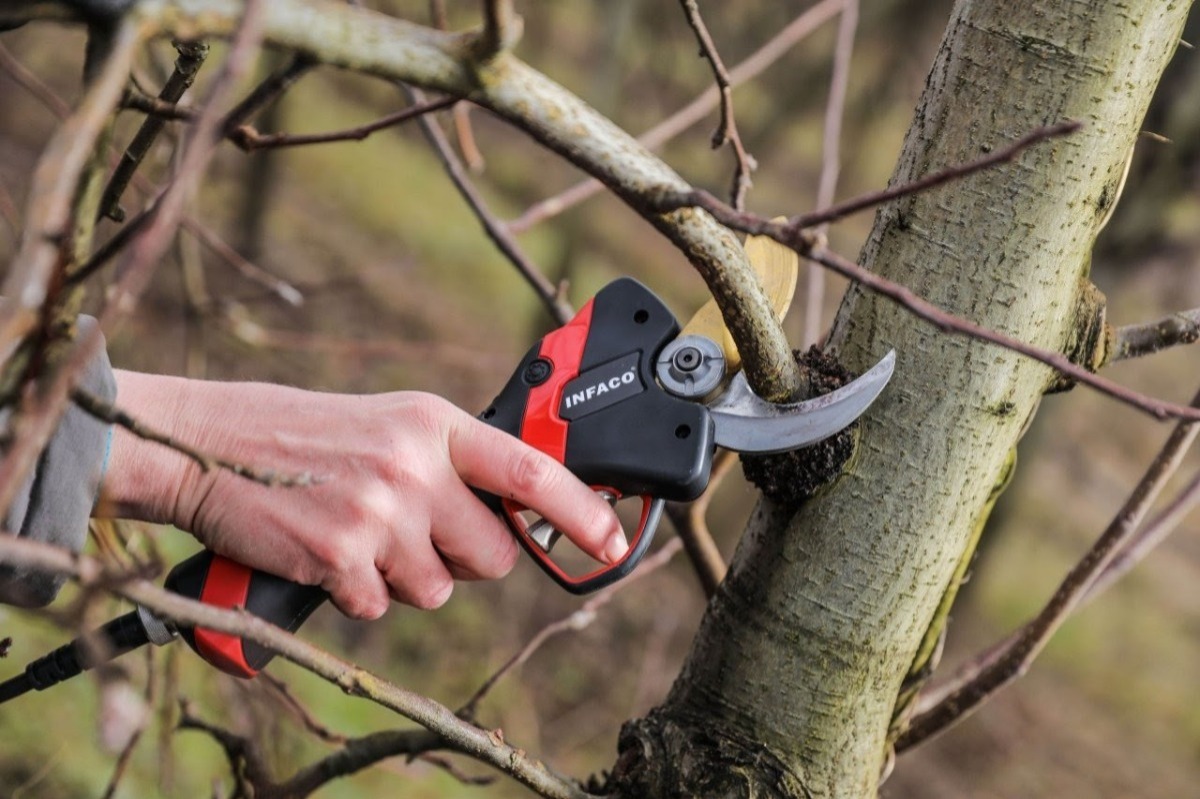
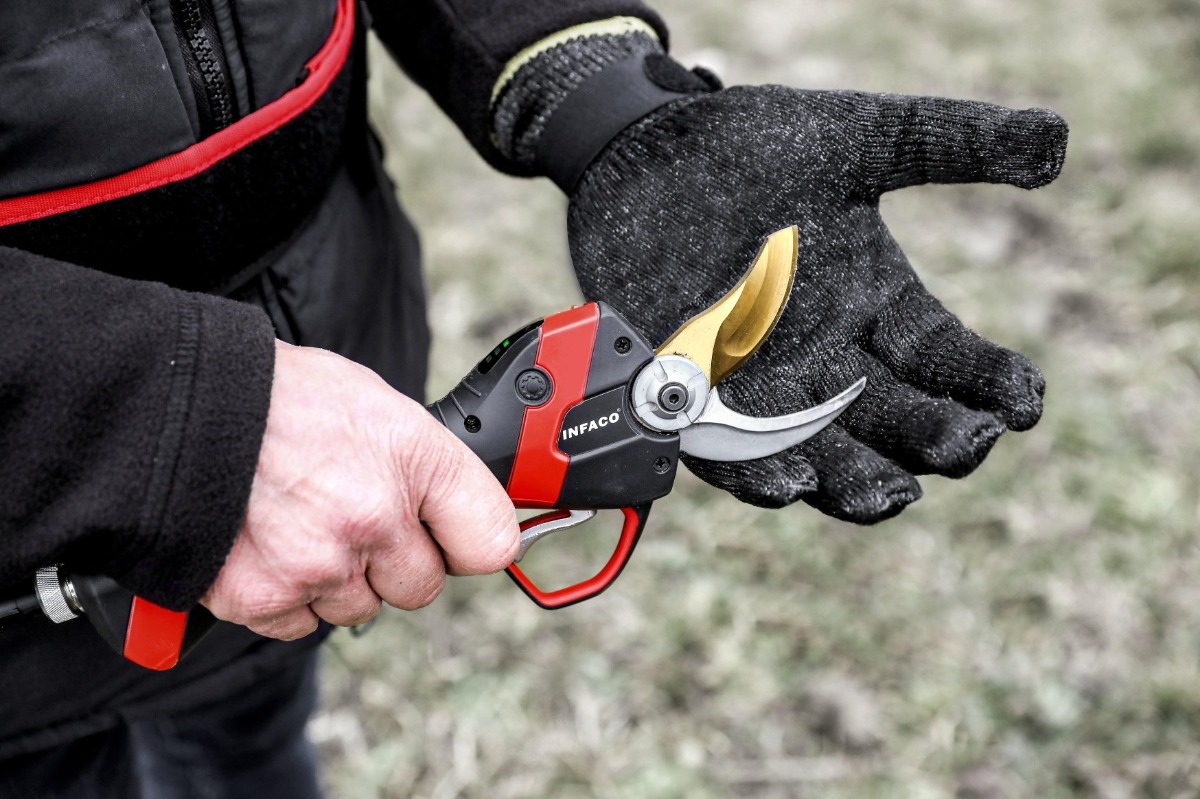
INFACO is proud to present the latest, most technologically advanced electric shears on the market. 

The Electrocoup F3020 offers a technologically advanced secateur packed with a multitude of features.  

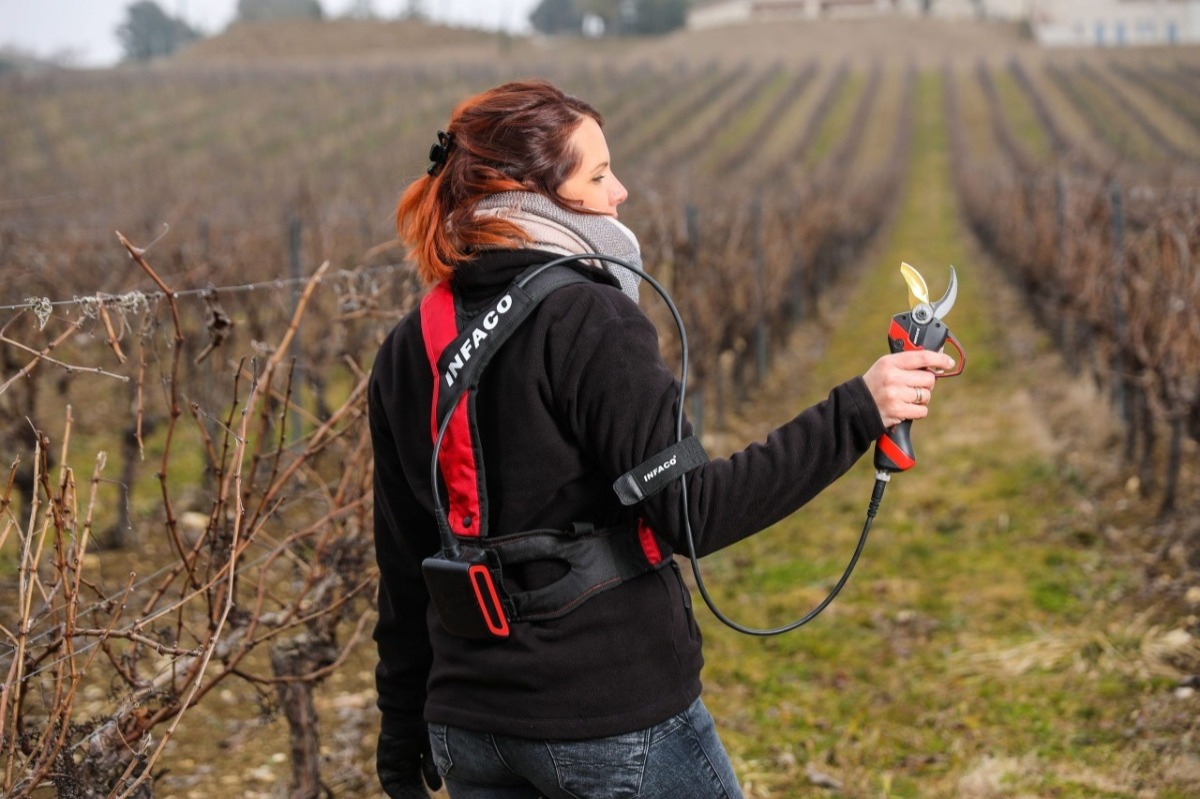
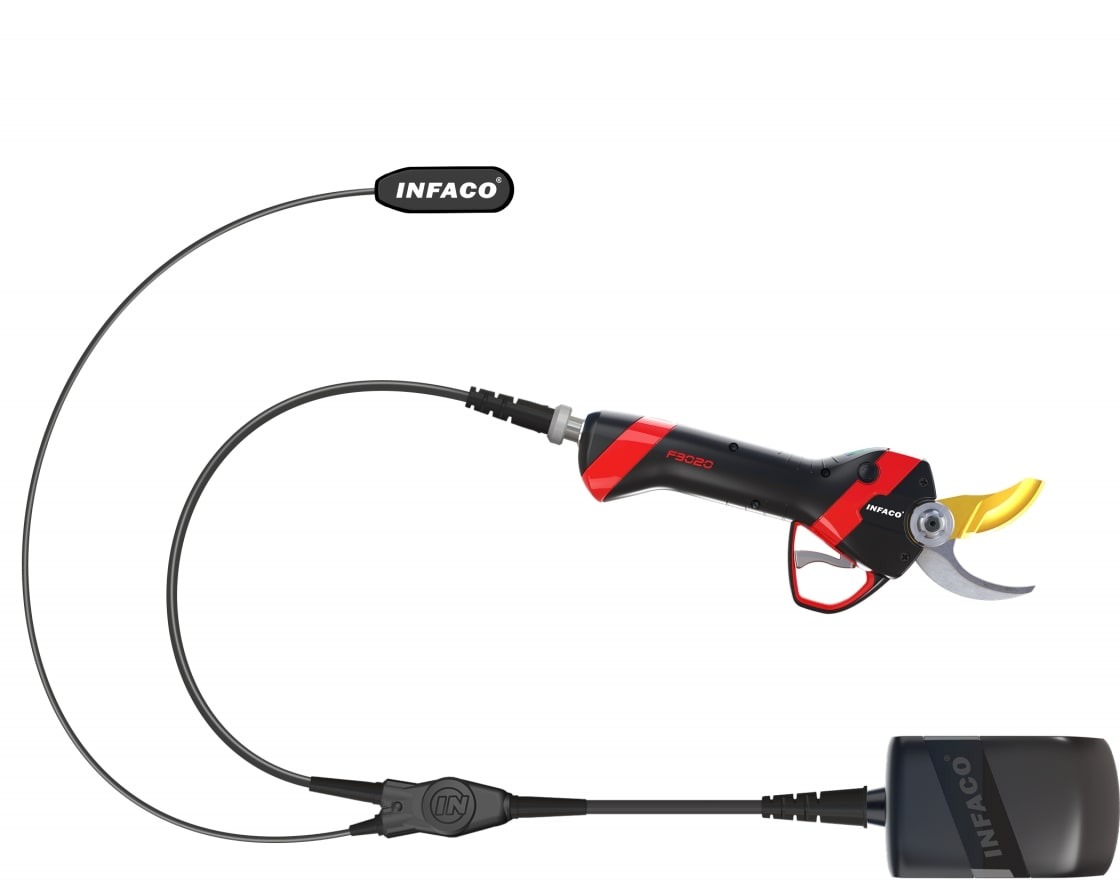
The F3020 Electrocoup weighs less and is more compact which offers improved efficiency and faster-cutting speed, making the new generation F3020 a total advancement in features. The separate battery and shear design ensures the handpiece has minimal weight maximising ergonomics, reducing fatigue, and providing a streamlined efficient day of pruning. 

____________________________________________________________________

New & Improved Features

  • Ergonomic Design - Easy To Handle 
  • Compact - Decrease In Length By 10mm 
  • Lightweight
  • Increased Speed  
  • Increased Power  
  • Lightweight Battery
  • Technological and Connected
  • Upcoming Bluetooth Capability With Efficiency Reporting
  • Wireless DSES Included Standard
  • New Shear Holder

____________________________________________________________________

Video Overview - New & Improved F3020 & PW3

  • 0:33 Safety System DSES
  • 0:59 Adjustable Blade Opening
  • 1:40 Deactivatable DSES
  • 1:44 New Setting Button
  • 1:51 New Soft Mode
  • 2:00 Extreme Blade Control
  • 2:18 Medium Blade
  • 2:51 Maxi Blade for High Cutting Capacity
  • 3:13 Extension Pole for F3020 Electrocoup (optional)
  • 3:32 Bluetooth Wireless Control
  • 3:58 Battery Charging
  • 4:10 PW3 Powercoup Range
  • 4:13 Chainsaw Head
  • 4:26 Reciprocating Saw Head
  • 5:03 Desuckering Head
  • 5:09 Hedge Trimmer Head
  • 5:15 Sweeper Head
  • 5:19 Weeder Head
  • 5:24 Rotary Weeder Head
  • 5:27 Hoeing Machine Head
  • 5:37 Olive Alternating Harvesting Head

____________________________________________________________________

Improved Design

  • The new Electrocoup F3020 weighs only 708g, which is around 100g less than the F3015. 
  • The length of the unit has decreased by 10mm.
  • There is a significant increase in power and speed by 20% & 15% respectively.   


Technologically Advanced

The Electrocoup F3020 pruners are now fitted with some of the most hi-tech and powerful microcontrollers in the market that are used in mobile phones and computer technology.  This technology results in improved user function and innovation enabling more data to be compiled and analyzed by the pruning shear to improve the F3020 performance.


Operating Modes F3020

Standard Mode

Progressive Blade Advance at Full Speed (+15% vs F3015) 

 The Standard mode is for experienced users and for those who are willing to take full advantage of the tool's increased cutting speed capabilities. 

____________________________________________________________________

NEW Soft Mode

Progressive Blade Advance is at a slightly reduced speed

The Soft Mode is for users who prefer a slower cutting speed or beginners who are new to the trade.  Same speed as the previous model F3015.  (refer to the video to see soft mode in operation).


Electronic Blade Adjustment

Half Aperture Setting

10 Easily programmable half aperture settings for ideal half open postion. 

____________________________________________________________________

Blade Overlap Setting

10 Easily programmable blade overlap positions for ideal blade crossing.


New Shear Holder

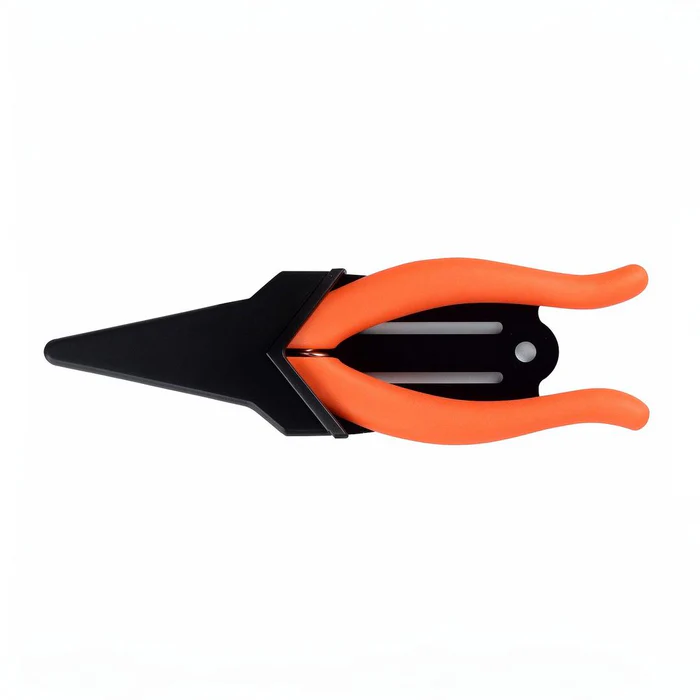
The new patented shear holder provides the cutting head protection and storage in just two actions.

Available for Standard and Medium heads.

** Fitted with Quick Lock-Unlock


Removable Accessory Holder

The removable accessory holder is included with your F3020 kit and allows you to store your smartphone within hands-reach.

A large zipped central pocket guarantees safe storage of sharpening stone, burnishing tools etc.


Cobalt L100B Li-Ion Battery

The Electrocoup F3020's new Cobalt L100B Lithium-ion battery weighs just 698 grams compared to 810 grams from the F3015. Its voltage is now 36 Volts as compared to the 48 Volts*** on the old F3015 model.  However, the 48v battery from previous units is compatible with the new F3020.  We can offer an optional 48v battery if you would like to make your previous units cross-compatible.

Its sleek design and small footprint will give you a day of pruning without recharging. With its versatile carrying system, the F3020 battery can be easily slipped into the user's pocket or clipped to a belt,  giving the user an effortless pruning experience. 


Electrocoup Battery Specifications

  • Lithium 107 Wh Battery 
  • Weight 698g 
  • Full-Day Complete Autonomy
  • Battery with Built-in Electronic Management System (BMS) and Cell Protection
  • High Capacity Lithium Cells
  • "High Power" type and "Long Life" Intelligent Cells
  • 5 Year Warranty on a Pro-Rata basis

Battery Comparison

36V Cobalt Battery

  • Battery Weight:  698g
  • Weight Of Cable: 122g
  • Right Hand/Left Hand Adaptable: Yes
  • Battery Average Autonomy: Up To 8 hours Depending On Use
  • Complete Charging Time: 2 hours
  • Battery Average Voltage: 36V
  • Charger Feed Voltage: 230V, 50Hz
  • Sleep Mode Function: Yes
  • Powercoup Range Battery Compatible: No

48V Lithium Cobalt Battery

  • Battery Weight:   810g
  • Weight Of Cable:  150g
  • Right Hand/Left Hand Adaptable:  Yes
  • Battery Average Autonomy:  up to 9 hours depending on use
  • Complete Charging Time:  1.5 hours
  • Battery Average Voltage:  48V
  • Charger Feed Voltage: 230v, 50Hz
  • Sleep Mode Function: Yes
  • Powercoup Range Battery Compatible: Yes


***NEED 48V:  The Olive Centre can provide a 48v Battery as standard instead of the 36v battery if purchasing a new set.  If you have other Infaco tools we can offer the 48v to ensure there is no disruption with your other tools.  This ensures seamless changeover to the new generation F3020


Battery Positioning

Battery used with Shoulder Straps and Waist Belt

Battery Used with Waistbelt Only

Battery Clipped on to Trousers


F3020 Automatic Smart Charger 36V

How long does it take to charge the battery?

The new F3020 Chargers are designed to charge the battery up in 2hrs. Similar to its predecessor, the new charger enables the battery to be charged up to 90% in 1.5Hrs and full charge is achieved in 2Hrs.  

Can the battery remain on the vest while charging?

The new connector plug allows for the battery to charged up while on the vest making it more practical and easier to use.   

How does the Battery Sleep Mode work?

The "Sleep Function" on the charger helps the battery fall in to an extended storage state thus optimizing its storage life. Recharging the battery is no longer required during the off-season. Just press the sleep button once after the pruning season and it does its thing for the next few hours. Once the sleep process is complete, the battery can be stored in its case in a cool, dry place until the following season. 


Wireless DSES Is Now A Standard Feature

Infaco, the manufacturers of the Electrocoups, have always prioritized user safety over the years. A true pioneer in technology, the company has continually invested time and resources in order to ensure an innovative and safe experience for its users operating the Electrocoups.  Today, the all-new Electrocoup F3020 come fitted with the wireless DSES system and is a standard feature on all units.

The Wireless DSES system comprises of a conductive metal trigger enabling a connection between the users body and the pruner's patented electronic system. While operating, if and when the cutting head touches any part of the opposite hand, the pruning shear blade opens instantly thereby preventing accidents.

The Wireless DSES system operates in direct contact with the skin. However, each individual has their own level of conductivity. In order achieve a continuous level of high conductivity and better protection, INFACO recommends the use of its special conductive gloves.

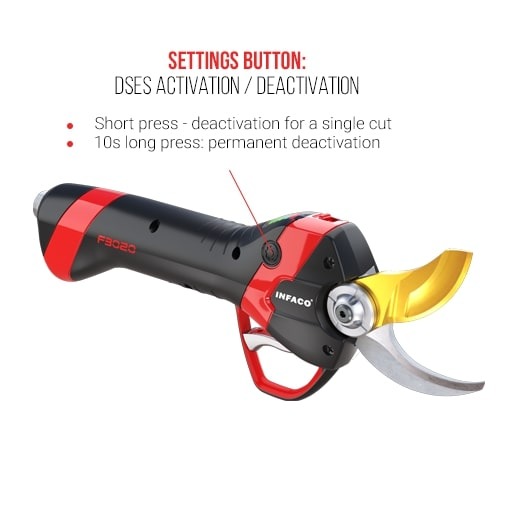
The Wireless DSES system may sometime trigger unintended opens on damp wood, sappy wood or when close to the ground. To prevent this from happening users now have the option of turning OFF & ON the DSES feature when required using the settings button.


Contrary to the wireless system, the wired DSES option requires the user to wear the conductive glove that is physically connected to the handpiece by a power supply cable.  The wired DSES system provides the user the same protection while reducing unintentional opening of the blade because of damp or sappy wood.

More information about DSES

See demo video of the features of the International Award Winning DSES Safety System


Optional Interchangeable Kits : 3 TOOLS IN 1

Similar to its most recent predecessors, Electrocoups remain the only shears in the world with 3 interchangeable heads with adjustable blade opening and DSES safety systems.  One of the tool's main assets is its versatility to use multiple cutting heads. With the options of the Standard Kit, Medium Kit or the Maxi Kit, users can easily swap the heads over in under 5 mins to meet the demands of the cutting application.  Kits are optional and not part of the standard kit. Please ask for details.


40mm 

Standard Kit

Ideal for pruning grapevines and orchard pruning.  This kit achieves the highest results for cutting rate and power.

45mm 

Medium Kit

Designed especially for fruit growers, forestry, and landscaping. This kit offers a higher cutting capacity while maintaining speed for relevant applications.

55mm

Maxi Kit

Perfect for cutting back vines, shaping fruit trees, and tree lopping.  This kit with a single-piece blade-rack combo will give unrivaled cutting capacity.


More About Head Kits F3020

See the instructional video to change the head of the F3020 Electrocoup Secateurs to the Medium Head using the Medium Head Kit:
See tutorial video


Optional Extension Poles For F3020

Infaco's design engineers have completely revolutionized the pole system by creating an ergonomic and innovative solution.  There are 2 different kinds of pole options available with this new model. First option is the pole can be connected to the battery through a cord and the second option is the battery can be plugged in at the bottom of the pole.  Both options have the cord on the sliding handle eliminated and replaced by a more advanced wireless Bluetooth technology making it easy and convenient to use. 


Pole size options in the image to right.

____________________________________________________________________

Extension Pole with Wired Battery Connection

Extension Pole with Plug In Battery

*** Battery not included with Pole      

____________________________________________________________________

More About F3020 Extension Pole Functionality

See tutorial video:


Optional Accessories

A48V3 Electric Sharpener

Regular blade sharpening reduces the cutting force exerted on the motor of the Electrocoup and also helps to reduce motor stress. Infaco recommends the use of the optional electric sharpener to help keep the blade profile sharp. Thanks to its 3-pin connector plug, the A48V3 electric sharpener is now compatible with the Electrocoup F3005, F3010, F3015, and F3020 batteries. It saves significant time on daily sharpening and maintains a good cutting profile on the blade.

See video at 1:02 for the A48V3 Electric Sharpener in action.


Carbide Burnisher

The new tungsten carbide burnisher helps maintain a good cutting edge on the blade. A sharp blade guarantees a good clean cut and reduces the risk of spreading wood diseases. In addition to 2 recommended daily sharpening sessions with the stone, it is also advised to use the new Carbide Burnisher to maintain a sharp edge on the blade for a good clean cut.


Bluetooth Control Box

With latest innovations in wireless connectivity, the Electrocoup F3020 pruning shears can be connected to the newly designed INFACO mobile app (available exclusively on Android and iOS compatible smartphones) through the Bluetooth Control Box.  

The app provides a wide array of features that assists Electrocoup users in day to day operations:

  • Setting up pruning shears - Adjust blade opening, blade bypass, choose operation modes (STANDARD or SOFT) 
  • View user statistics - Use time, number of cuts 
  • Manage pruning progress of the block via geolocated use points through the smartphone   


The app also allows users (without the Bluetooth Control Box) 

  • View purchase history and guarantee status  
  • Access to service, troubleshooting, tips and video tutorials 
  • Option to take notes on the app that can be doubled as reminders 
Information on pruning progress can also be managed on the computer with more detailed features. 


What's In The Box As Standard

  1. F3020 Electrocoup Secateur
  2. 36V Battery Or 48V Battery
  3. Cable For Battery
  4. Charger (36 or 48V model) With Power Cord
  5. Battery Vest
  6. Secateur Sheath or Pouch
  7. Accessory Holder & Wristband
  8. Spare Blade
  9. Torque Tightening Tool
  10. Sharpening Stone
  11. Manual For Operation And Care
  12. Greasing Tool
  13. Spare Parts
  14. Glove (to fit the correct glove, please provide whether you need LH or RH and measurement from crease of your wrist to tip of your middle finger)
  15. Carry Storage Box For Whole Kit


Helpful Information

See the tutorial video of the different sharpening techniques on the F3020 electric pruning shears:
See the video tutorial:
Adjusting the blade crossing on the F3020 electric pruning shear, see the tutorial video:


To winterise the F3020 Electrocoup Battery see the video tutorial: 
The different ways to carry the F3020 electric pruning shears see tutorial:
See video tutorial on the use of the pruning shear holder for the F3020 electric pruning shears:
See tutorial video about how to use the pole compatible with the F3020 electric pruning shears:
See the tutorial video:
See tutorial video for Blade tightening on the F3020 electric pruning shear:
See tutorial for grease gun for the F3020 pruning shears:
Changing the medium kit on the F3020 electric pruning shears, see tutorial video:

Optimising Olive Grove Layout

When establishing an olive grove, one of the most critical decisions you will make is the layout of your trees. The arrangement you choose will influence tree health, productivity, and long-term management efficiency. This guide will walk you through key considerations, including aspect, tree spacing, irrigation, harvesting methods, drainage, pruning, and marking out your olive grove.
Please log in to view the entire article

Pruning Medium Density Olive Trees by Paul Vossen - University of California

Paul Vossen, a renowned olive oil production expert and former farm advisor with UC Cooperative Extension, presents a hands-on tutorial focused on pruning medium-density olive trees for optimal health, structure, and productivity.
Please log in to view the entire article

So You Want to Plant an Olive Grove?

Healthy olive groves need the right balance of soil care, water, and pruning. While olives are hardy, they can suffer from pests like black scale or lace bug, and diseases such as anthracnose. With good monitoring and sustainable practices, most issues can be managed before they become serious problems.
Please log in to view the entire article

Mechanical vs Hand Pruning in Traditional and SHD Olive Groves

Discover the pros and cons of vs hand pruning in olive groves. This guide compares traditional and super high-density (SHD) systems, showing how pruning methods affect yield, costs, and tree health. Learn best practices to boost productivity, reduce labor, and manage disease for a more sustainable olive orchard.
Please log in to view the entire article

Comprehensive Operational System for Professional Olive Producers

INSIGHTS FROM THE FIELD

Comprehensive Operational System for Professional Olive Producers


Introduction

Managing a professional olive production enterprise requires a holistic operational system that covers every aspect of grove management – from seasonal field practices to financial tracking and technology integration. This report outlines a comprehensive system designed for professional olive producers in Australia (with relevance internationally), detailing best-practice management structures, cost tracking methods, data monitoring and decision-support tools, forecasting techniques, and ready-to-use workflows and templates. By implementing a structured approach with clear planning, recordkeeping, and modern tech integration, olive growers can improve productivity, sustainability, and profitability. The following sections break down the components of this system with practical guidelines and examples.

Olive Grove Management Structure 

Effective olive grove management is multi-faceted, involving year-round planning and execution of tasks. It is helpful to organise these tasks by season and category, ensuring nothing is overlooked throughout the year. Table 1 provides an overview of key seasonal activities in an Australian context (southern hemisphere), which can be adjusted for other regions (the timing of seasons will differ in the northern hemisphere ). Each activity should be supported by detailed record-keeping and adherence to best practices for orchard maintenance, irrigation, nutrition, pest control, pruning, and harvest. 

Table 1: Seasonal Calendar of Key Olive Grove Activities (Southern Hemisphere)

Season (Months) Key Activities
Spring
(Sep–Nov)
Nutrient management: Apply balanced fertiliser as trees exit winter dormancy to ensure soil nutrients are adequate before flowering.
Irrigation: If spring rainfall is low, start irrigation to support flowering and fruit set, ensuring driplines and pumps are functioning.
Pest & disease monitoring: Warmer weather triggers pests and diseases—inspect trees regularly for issues (e.g. scale insects, olive lace bug) and apply preventative measures (e.g. copper spray).
Bloom management: Monitor flowering progress; ensure good pollination conditions (adequate water, no nutrient stress).        
Summer
(Dec–Feb)
Irrigation management: Peak water demand period—use regular soil moisture checks or sensors to irrigate optimally without waste. Flush irrigation lines and clean filters as needed.
Canopy maintenance: Conduct summer “green” pruning if needed (remove water sprouts or suckers to improve airflow). Maintain groundcover to manage weeds and reduce fire risk.
Pest & disease control: Continue integrated pest management—monitor for olive fruit fly (in regions where present) with traps starting early summer, and watch for other pests such as black scale or olive lace bug. Use mass-trapping or targeted sprays only if thresholds are exceeded. Apply fungicides if necessary to contain diseases like Peacock Spot in humid areas.        
Autumn
(Mar–May)
Harvest preparation: As fruit ripens, plan harvest logistics. Service and prepare harvesting equipment in advance (e.g. check and calibrate mechanical harvesters or organise picking teams). Order required supplies (crates, nets, fuel) ahead of time.
Harvest operations: Harvest at optimal ripeness—olives are often picked when ~60–70% of fruit has turned purple. Coordinate labour or machinery and transport to the mill promptly to ensure quality. Record yields per block for later analysis.
Post-harvest tasks: Immediately after harvest, perform foliar nutrient sprays if recommended (to help trees recover). Begin pruning soon after harvest (in late autumn or early winter) in oil groves, removing dead or diseased wood and thinning canopies for next season. Apply a copper-based fungicide post-harvest to reduce overwintering disease inoculum (e.g. peacock spot, olive knot).        
Winter
(Jun–Aug)
Pruning and orchard maintenance: This is the main period for structural pruning in most regions (trees are in vegetative rest). Prune to maintain tree shape, manage tree height (after harvest), and remove dense interior growth to improve light penetration. Chip or mulch pruned material for soil health. Repair trellis or tree support systems if used.
Soil and tree health: Take soil and leaf samples in winter for analysis; use results to plan spring fertilisation. Apply organic matter or compost if needed to improve the soil. Deploy snail bait if small pests are an off-season issue in the grove.
Equipment and infrastructure: This is a downtime period for fieldwork, so service farm machinery and irrigation infrastructure. Overhaul sprayers and harvesters. Flush and maintain irrigation systems (clean filters, flush sub-mains, check pumps, and replace batteries in controllers) so they are ready for the dry season. Also, use winter to review and update grove records from the past season and refine the coming year’s plan.        

Seasonal Planning and Task Scheduling 

Proactive seasonal planning is vital. By mapping out activities month-by-month, growers can ensure each critical task is done at the right time. Many producers use a yearly task calendar or planner to schedule operations. For example, the Australian Olive Association’s Yearly Orchard Planner outlines monthly tasks ranging from machinery servicing in the off-season to timely fertiliser applications and harvest prep. Such a planner ensures cross-over tasks (e.g. tractor maintenance benefiting both grove and other farm enterprises) are efficiently scheduled. It’s important to adjust the calendar to local climate patterns and whether the grove is in the southern or northern hemisphere. Regular planning meetings (e.g. before each season change) can help assign responsibilities and resources for upcoming tasks.

Record Keeping and Documentation 

Accurate record keeping underpins all aspects of the operational system. Every activity – from spray applications to harvest yields – should be logged. This not only aids internal decision-making but also is often required for compliance (e.g. chemical use records) or quality assurance programs (such as the OliveCare® code of best practice ). Key records to maintain include: 

  • Spray and pest monitoring logs: Document all pesticide/herbicide applications (date, product, rate, target pest/disease) and use Integrated Pest Management (IPM) scouting sheets to note pest pressures. Templates for spray records are available from agricultural extensions, helping ensure no treatment is missed and preventing overuse or misuse of chemicals. Fertiliser and irrigation records: Keep a diary of fertiliser applications (dates, type, amount per hectare) and irrigation events or water meter readings. This can highlight correlations between inputs and yields and assist in water management audits. 
  •  Fertiliser and irrigation records: Keep a diary of fertiliser applications (dates, type, amount per hectare) and irrigation events or water meter readings. This can highlight correlations between inputs and yields and assist in water management audits. 
  • Labour and equipment use: Track labour hours and machinery use for each major task (pruning, harvesting, etc.), which feeds into cost analysis (discussed later) and helps evaluate efficiency. 
  • Yield and quality data: Record yield (tonnes of olives or litres of oil) per block or variety, along with quality parameters (e.g. oil yield %, free fatty acid, etc., for oil production). These records enable analysis of which practices or blocks are most productive. 
  • Monitoring and scouting reports: Note observations such as tree health issues, phenological stages (flowering, fruit set dates), weather events (frosts, heatwaves) and any interventions taken. Photographs and drone images can be attached to records for visual reference. 
Using standardised templates and digital tools can simplify record-keeping. For instance, the USDA’s toolkit for growers provides templates that cover “all aspects of operations, from production costs to sales data, and everything in between,” highlighting the importance of comprehensive records for farm management. Good recordkeeping not only supports day-to-day management but is indispensable for legal compliance, certifications (e.g. organic standards), and obtaining financing or insurance. In summary, “knowledge is power” in olive growing, and knowledge comes from meticulous records. 

Orchard Maintenance and Infrastructure

General orchard maintenance activities ensure the grove’s long-term health and accessibility. These include ground cover management, upkeep of equipment, and maintaining the orchard environment: 

  • Ground cover and weed control: Decide on a floor management strategy (e.g. maintain a mowed grass cover vs. bare ground). Ground covers can prevent erosion and improve soil health, but must be mowed or controlled to reduce competition for water. Scheduled slashing (mowing) of row middles is typically done multiple times per year. Apply herbicides in tree rows if needed to manage weeds; many groves use strip-spraying under trees a few times per year (e.g. paraquat or glyphosate in the growing season, plus a pre-emergent herbicide in winter). All chemical use should be recorded and follow safety regulations. 
  • Soil health and fertilisation: Maintain soil structure and fertility through periodic amendments. Soil tests (e.g. annually or biennially, ideally in the same season each time) guide nutrient programs. Typical olive nutrition programs supply nitrogen (N) as the primary nutrient for yield, along with phosphorus, potassium and micronutrients as needed. In Australia, a common approach is to apply N fertiliser in split applications from late winter through summer to sustain shoot and fruit development. Some growers fertigate (apply fertiliser via irrigation) to spoon-feed nutrients. Organic matter additions (e.g. well-rotted manure or compost in winter) can improve soil water retention and microbial activity. Maintaining soil health is fundamental: “maximising soil health and quality is key” to productive trees. 
  • Infrastructure and equipment: Regularly inspect and maintain farm infrastructure. This includes servicing machinery (tractors, mowers, sprayers, harvesters) during the off-season, maintaining roads and drainage in the grove, and repairing trellises or tree stakes in high-density systems. Having a workshop log for equipment ensures each tractor or implement receives timely oil changes, filter replacements, etc. Also, maintain storage sheds, fencing, and signage (especially for chemical storage areas, to meet safety standards). A well-maintained infrastructure reduces downtime during critical periods like harvest.

Irrigation Management

Efficient water management is crucial for olive production, especially in Australia’s climate, where seasonal droughts are common. Olives are relatively drought-tolerant, but strategic irrigation greatly improves yield and oil quality in most Australian growing regions. Key components of irrigation management include:

  • Irrigation system design & maintenance: Most professional growers use drip irrigation for precision and water efficiency. Ensure the system is well-designed (e.g. one or two drip lines per row, emitters appropriately spaced for the tree density and soil type ). Regular maintenance tasks should be scheduled: flushing lines and sub-mains to clear sediment, cleaning filters, checking for clogged emitters, and repairing leaks. In the yearly planner, irrigation maintenance appears as a recurring task (line checks, filter cleaning, etc.) multiple times a year. Also, check pump performance and replace batteries in electronic controllers or moisture sensor units on a set schedule. 
  • Scheduling and monitoring: Use a combination of methods to schedule irrigation – weather data, soil moisture monitoring, and phenological stage of the trees. Installing on-site weather stations provides localised climate data (rainfall, evapotranspiration, temperature) for scheduling decisions. Soil moisture probes at different depths offer real-time insight into soil water status. Many Australian groves employ such probes and even have staff dedicated to monitoring soil moisture and irrigation efficiency. By tracking soil moisture and tree stress (e.g. via leaf turgor or even remote sensing of canopy), irrigation can be applied only when necessary – conserving water while avoiding yield-reducing stress. A common strategy is to meet full water needs during critical growth stages (flowering, fruit set, early fruit growth) and possibly reduce water towards harvest to concentrate oil (regulated deficit irrigation). For example, in Western Australia, a mature grove might need ~3 to 10 megaliters per hectare over the dry season, depending on the region. Each grove should have an irrigation schedule that is updated weekly based on weather and soil feedback. 
  • Technology integration: Modern “smart irrigation” technologies can greatly aid water management. Automated irrigation controllers that adjust watering based on sensor inputs or weather forecasts are commercially available. As one industry guide notes, “smart irrigation systems – combining soil-moisture sensors and automated controllers – enable more precise, efficient water management,” tailoring water delivery to the orchard’s needs. A recommended setup for high-efficiency irrigation includes an on-site weather station, multi-depth soil moisture probes (to monitor moisture and even salinity at various depths), water quality sensors (EC sensors for salinity), flow meters for tracking volumes, and a digital platform or dashboard to view all this data. By adopting such technology, growers can remotely monitor their irrigation and even receive alerts (e.g. if soil is too dry or a pump fails), allowing quick adjustments. In practice, this means a more data-driven irrigation strategy, improving water use efficiency and potentially boosting yields for the same water input. 

Overall, irrigation in an olive operational system should be proactive and precision-focused. Given water scarcity concerns, Australian producers in particular benefit from these efficient practices – a fact evidenced by large groves like Boundary Bend investing heavily in irrigation technology research to “use less water but retain optimum productivity”. Well-managed irrigation not only saves water and energy, but also directly contributes to consistent yields and oil quality. 

Fertilisation and Soil Nutrition

Proper fertilisation of olive trees ensures they have the nutrients needed for vegetative growth, fruiting, and recovering after harvest. The nutrition program should be based on soil and leaf analysis plus the grove’s yield goals. Key points include:

  • Macro-nutrients: Nitrogen (N) is typically the most yield-driving nutrient for olives. Deficiency in N can limit fruit set and yield, while adequate N supports new shoot growth (which forms next year’s fruiting wood). Common practice is to apply N fertiliser annually, split into 2–3 applications: e.g. one in late winter (just before bud-break), one in spring (during fruit set), and sometimes another in early summer. This timing ensures nutrients are available at critical stages. Phosphorus (P) and Potassium (K) should also be maintained at sufficient levels; K in particular is removed in large amounts with the fruit (olives are high in oil and thus K) and needs replenishment. If leaf or soil tests show low P or K, apply appropriate fertilisers (often in autumn or winter so they are in place by spring). Calcium (Ca) is important for drupe development and can be supplied via lime if soil pH needs correction or gypsum if pH is fine, but Ca is needed.  
  • Micro-nutrients: Boron is a micronutrient especially important for olive flowering and fruit set; boron foliar sprays before flowering can improve fruit set in boron-deficient areas. Other micronutrients like iron, zinc, and manganese can be foliar-fed if deficiencies are indicated. A foliar feeding program in spring (e.g. including urea, boron, zinc) is practised by some growers to give the trees an extra boost during flowering/fruit-set. Always use soil/leaf analysis to guide micronutrient use, as excesses can be harmful. 
  • Soil management and amendments: Olive trees prefer well-drained soils; if the orchard has compacted soil or poor structure, consider off-season soil amendments (organic matter, gypsum for clay, etc.) or physical soil loosening. For example, subsoiling in winter (cutting vertical slots in grassy middles) can improve root penetration and water infiltration. Maintaining a slightly alkaline soil pH (~7-8) is often ideal for olives; apply lime if the soil is too acidic. Additionally, cover crops or mulches can be used to improve soil organic matter and nutrient cycling. Some advanced groves recycle their olive pomace or prunings back into the soil as compost/mulch, contributing to a “zero waste” approach and carbon sequestration. 
  • Fertigation and foliar feeding: Where drip irrigation is used, fertigation (injecting soluble fertilisers into irrigation) can distribute nutrients efficiently. It allows spoon-feeding of N or K throughout the growing season, avoiding large single doses. Foliar feeding (spraying nutrients on leaves) can quickly correct deficiencies or provide timely nutrients (e.g., a postharvest foliar N spray to help build reserves, or a pre-bloom boron spray as mentioned). The Yearly Orchard Planner explicitly schedules foliar fertiliser sprays and post-harvest foliar feeds in certain months. Always follow guidelines for concentration and do foliar sprays in appropriate conditions (cool parts of the day, adequate humidity) to avoid leaf burn.
In summary, a fertilisation plan should be documented each year, including what products to apply, approximate timing, and target rates per hectare. Regular review of tree nutrient status (via leaf analysis and observation) and yield outcomes should inform adjustments. By keeping trees well-nourished but not overly vegetative, growers set the foundation for high yields and tree longevity

Pest and Disease Control

Pest and disease management in olives should follow an Integrated Pest and Disease Management (IPDM) approach. This means using a combination of monitoring, cultural practices, biological controls, and chemical controls when needed. Key elements for a professional group include:

  • Regular monitoring (scouting): Walk or drive through the grove frequently (at least weekly in spring and summer) to inspect for signs of pests or disease. Pay extra attention during key periods: for example, as soon as the weather warms in spring, look for new infestations of olive lace bug (which thrives in warm, moist conditions), or in late spring/summer, watch for scale insects on leaves and twigs. Use monitoring tools like yellow sticky traps or pheromone traps for pests such as olive fruit fly (in regions where it exists). The traps should be checked regularly and counts recorded. For diseases, winter and spring rains can trigger issues like Peacock Spot (olive leaf spot) and Anthracnose – inspect leaves and fruit after wet weather and consider lab testing if unsure of the pathogen. Maintaining a monitoring log is critical; the motto is “know how to spot the early sign and ensure affected trees are treated quickly to stop the spread”
  • Preventative and cultural measures: Many problems can be mitigated by orchard maintenance. Pruning to open the canopy reduces humidity and foliar diseases. Cleaning up fallen fruit and pruning debris can break pest life cycles. For example, if black scale or other scales are a known problem, encourage natural enemies (avoid broad-spectrum insecticides that kill beneficial wasps) and prune out sooty mould-covered twigs. If olive fruit fly is present (a major pest in Mediterranean regions), a cultural technique is mass-trapping and prompt harvest (overripe fruit left on trees invites higher fly infestation). Also, in Australian groves, biosecurity is a consideration – preventing entry of exotic threats like Xylella fastidiosa (a deadly bacterium not present in Australia as of 2025) by controlling nursery stock movement and sanitising equipment that has been abroad. 
  • Targeted chemical controls: When pest or disease pressures reach economic thresholds, timely use of pesticides or fungicides is necessary. Always choose registered chemicals and follow label rates and withholding periods. Common sprays in olives include copper-based fungicides (e.g. copper hydroxide) applied in winter or spring to combat fungal diseases like Peacock Spot and olive knot – the planner shows copper sprays in winter months. For insect pests, petroleum oil or specific insecticides can be used for scale insects and olive lace bug if infestations are heavy (some Australian growers gained permits for certain insecticides to manage lace bug outbreaks). Olive fruit fly control internationally often uses bait sprays (protein bait with insecticide) or cover sprays with spinosad or pyrethroids, timed to when fly populations rise; alternatively, kaolin clay sprays can deter oviposition. It’s crucial to rotate modes of action to avoid resistance and observe any export market restrictions on chemical use. 
  • Best-practice IPM resources: Leverage industry resources and research. For instance, the AOA has published an Olive IPDM Best Practice Manual (by researchers Spooner-Hart and Tesoriero), which provides detailed guidance on managing olive pests and diseases in Australia. The International Olive Council also offers guidelines on olive diseases and their management. Being part of local grower networks or associations helps in staying informed about pest outbreaks or new control methods (as many regions have alert systems for things like olive fruit fly).  
By integrating these approaches, pest and disease control becomes proactive and sustainable, minimising crop losses while reducing chemical inputs over time. Remember that a healthy, vigorous tree (through good nutrition and water) is more resilient to pests and diseases, so these aspects of the system work hand-in-hand. Continual improvement (reviewing each season’s pest issues and outcomes) will refine the IPM strategy for the grove. 

Pruning and Canopy Management 

Pruning is a cornerstone of olive grove management, directly influencing yield, tree health, and harvest efficiency. A well-structured pruning program in a professional system includes: 

  • Training young trees: In new orchards, establish the desired tree shape in the first 3–4 years with minimal pruning. Olive trees can be trained to various systems (traditional vase shape, central leader for hedge rows, etc.). The goal is to achieve the definitive shape early to stimulate production. For example, in high-density hedgerow groves, trees are often trained to a single central leader with supporting stakes and possibly a trellis in the first few years. Early pruning is mostly about removing shoots that disrupt the training form and encouraging a strong framework. Limited intervention in the first years maximises vegetative growth, as excessive pruning delays first yields. 
  • Maintenance pruning of mature trees: Once in production, olives generally require annual light pruning and heavier pruning in alternate years, depending on the system. Objectives are to remove dead or diseased wood, thin out dense interior branches to let light into the canopy, and manage tree height/spread. This maintains productivity throughout the canopy and helps manage alternate bearing by balancing the fruiting wood. In traditional hand-harvest groves, pruning can be heavier (since trees may be larger and labour availability is a factor). In mechanical harvest (e.g. trunk shakers or over-row harvesters), keeping trees within a size range is critical – e.g. not taller than the harvester or keeping lower branches clear for trunk shaker clamps. Many modern groves use mechanical hedging every 1–2 years to trim sides or tops, combined with hand follow-up to clean up cuts and remove problem limbs. This reduces labour and encourages renewal growth. 
  • Timing of pruning: In Australian conditions, pruning is often done in winter (Jun–Aug) when trees are in vegetative rest and after fruiting is finished. Pruning just after harvest is ideal, so the tree has maximum time to regrow before the next flowering. It’s noted that pruning very late (after bud burst in spring) can reduce yield potential because you’ve already invested resources in growth that gets removed. Conversely, pruning too early (in autumn before cold weather) can make trees susceptible to frost or disease through fresh cuts. Thus, timing should consider local climate (e.g. in colder areas, prune towards the end of winter to avoid frost damage to pruned trees ). If a disease like olive knot is present, some experts recommend summer pruning of infected limbs because wounds heal faster and disease spread is less in dry conditions. In practice, a combination may be used: main structural pruning in winter, with minor green pruning in summer to remove suckers or address disease. 
  • Hygiene and disposal: Always use clean, sharp tools. Disinfect pruning equipment between trees if diseases are present (to avoid spreading pathogens like olive knot). After pruning, manage the prunings – in a professional grove, pruned branches are typically mulched/chipped on-site and returned to the row as mulch (saves on burning or removal, and recycles nutrients). However, if a serious disease is in the wood (e.g. Verticillium wilt), burning or disposing off-site may be necessary. The Yearly Planner includes “pruning and mulching” in its task list, indicating that prunings are mulched in situ. 
  • Pruning intensity and yield: Proper pruning seeks to balance vegetative growth and fruiting. Since olives bear fruit on one-year-old wood, excessive pruning can reduce the next crop, while too little pruning leads to overcrowded branches and smaller fruits. Adopting a moderate, consistent pruning regime is often best for steady production (IOC guidelines emphasise rational pruning to keep olive growing competitive). Additionally, pruning is used to manage alternate bearing – in a heavy “on-year”, pruning a bit more can reduce fruit load and preserve tree resources, mitigating the following “off-year.” Research and field experience help inform how much to cut; for instance, some groves remove a certain percentage of canopy volume each year. As a reference, pruning can represent about 10–15% of production costs in traditional systems, so efficient pruning (mechanising where possible, or optimising labour) can also save costs. 
In essence, pruning and canopy management are an art supported by science. It should be tailored to the grove’s design (traditional vs hedgerow), the cultivar’s vigour, and the production goals. Document the pruning strategy in the operational plan (e.g. note if you’ll hedge every second row each year, or do a full prune annually) and record the dates and extent of pruning each season for future reference.

Harvest Planning and Logistics

Harvest is the culmination of the season and requires careful logistical planning to execute efficiently and preserve fruit quality. A comprehensive operational system addresses harvest in several ways: 

  • Harvest timing strategy: Decide the optimal harvest window based on the end use of the olives and their ripeness indicators. For oil production, Australian producers often target a certain ripeness index (e.g. when 60–70% of fruit have turned purple on the skin, indicating peak oil yield and quality balance ). Table olive producers may harvest earlier (green to yellow-green stage) for green olives or later for black olives. The system should include sampling fruit for ripeness: for example, performing a rapid oil content analysis (such as a fruit NIR test) a few weeks before expected harvest, to forecast oil yield and schedule processing. Indeed, the orchard planner lists “Fruit NIR test (pre-harvest)” as a task in the lead-up to harvest. These data feed into yield projections and help coordinate with the mill or processing facility. 
  • Labour and equipment coordination: In a professional setting, harvest may be done by mechanical means (trunk shakers with catch nets, over-the-row harvesters for hedgerows, or other harvesters) or by contracted hand crews (for table olives or smaller groves). Equipment preparation is crucial – as noted, pre-harvest servicing of machinery (cleaning, repairs, spare parts on hand) should be completed in advance. If contracting harvesters or crews, confirm bookings well ahead. The system should include a harvest plan document covering: which blocks to harvest in what sequence, estimated yield and picking days per block, the crew or machine assigned, bin availability, and transport arrangements. Contingency plans for rain or delays should be in place (e.g. access to additional storage if processing gets backed up). 
  • Logistics and processing: Arrange logistics so that harvested olives are processed quickly. For oil, olives should ideally be milled within 24 hours of harvest to preserve quality. This means scheduling trucking from the orchard to the mill daily (sometimes multiple runs per day in peak). For table olives, handling is also time-sensitive to prevent heating or damage in the picked fruit. The operational system might use tools like a harvest dashboard or daily log: tracking each day’s picking output, any machine breakdown, and quality notes. Communication devices or apps can allow field supervisors to update the processing plant on incoming quantities. If the grove is large, consider dividing into teams or sections to stagger harvest and use resources optimally. 
  • Safety and compliance: Harvest operations should be conducted safely. Include in the plan a checklist for safety gear (e.g. hearing protection for machine operators, proper fruit ladder usage for hand pickers), machine safety checks, and adequate breaks and amenities for workers (especially important in Australian heat conditions). Also, ensure food safety standards if the fruit is for consumption: bins and equipment that contact olives should be clean and, if required, food-grade. If exporting, ensure any phytosanitary requirements are met (some destinations require certification that olives are pest-free – integrate any required field inspections or documentation into the harvest workflow). 
  • Post-harvest activities: Immediately after harvest, the system should initiate post-harvest tasks. These include equipment clean-down (preventing disease spread or corrosion from olive juice on machinery), orchard clean-up (collect any dropped fruit to reduce pest carryover), and post-harvest orchard treatments as mentioned (foliar nutrients, irrigation adjustments, etc.). Also, yield recording is finalised post-harvest – total weights and oil yields per block are compiled. A debrief meeting at the end of harvest can capture what went well and what could improve (e.g. was labour sufficient, were there bottlenecks at the mill, etc.), which then feeds into planning for the next season. 

By detailing harvest logistics in the operational system, a grower ensures that this critical period is handled smoothly. It’s often said that in olives, “90% of the quality is influenced by what happens on the farm” – timely harvest and proper handling are a big part of that. Thus, the comprehensive plan treats harvest not as a rushed event but as a well-orchestrated project each year.

Cost of Production Tracking

Understanding and controlling the cost of production is essential for a sustainable olive business. This part of the system involves setting up templates and tools to track all costs, from orchard inputs to labour and equipment, and calculating metrics like cost per hectare and cost per tonne of olives (or per litre of oil). A professional approach includes:

  • Defined cost categories: Organise expenses into clear categories. For example: Input costs (fertilizers, manures, pesticides, herbicides, fuel for irrigation pumps), Labour (permanent staff salaries, seasonal pickers’ wages, contract pruners, etc.), Equipment and machinery (maintenance, depreciation, fuel for tractors, harvester lease or purchase costs), Services (outsourced activities like contract harvesting or milling fees, agronomy consulting services, laboratory tests), Monitoring & technology (costs for sensors, farm management software subscriptions, drone imaging services), and Overheads (land leases or rates, insurance, admin). By itemising costs, you can pinpoint where money is going. Many growers use a spreadsheet or farm accounting software that mirrors these categories in the chart of accounts. 
  • Templates for data entry: Develop or adopt templates where staff can enter data regularly. For instance, a daily log could capture labour hours and machine hours by task (these can later be summed per operation). A purchase log tracks all input purchases (date, vendor, quantity, cost, purpose). A harvest cost worksheet might compile costs specifically incurred during harvest (extra labour, fuel, machinery rental) and can be matched against the yield from that harvest. These templates ensure data is collected consistently. Over time, the data can populate an enterprise budget for the olive operation, showing the cost of each activity per hectare. The University of California, for example, publishes sample cost studies for olive production, which list typical operations and their costs per acre; growers can use such studies as a starting template and adjust them with their actual figures. 
  • Per-hectare and per-tonne analysis: At the end of each season (or financial year), calculate the total cost per hectare of managing the orchard and the cost per tonne of olives produced (or per ton of oil, if oil is the product). These metrics are crucial for benchmarking. For instance, if it costs $4,000/ha/year to maintain the grove and the yield is 8 tonnes/ha, the production cost is $500 per tonne. Breaking it down further, you might find harvesting is $150/tonne, pruning $50/tonne, etc. Notably, international studies have found that harvest is often the single largest cost in olive oil production – around 35% of total costs on average – followed by irrigation (~17%) and fertilisation (~16%). Pruning is also significant (in one study, ~14% of costs). These figures underscore why efficiency in harvest and water use is financially important. Table 2 illustrates a hypothetical cost breakdown for an olive oil grove, which might be compared against industry benchmarks or previous years. 

Table 2: Example Annual Cost Breakdown per Hectare for an Olive Grove (for illustration)

Cost Category Example Items Cost (AUD/ha) Share of Total (%)
Labour – Harvest Picking crew wages or harvester contract, supervision, and fuel $1,200 35% (highest single cost)
Irrigation Water purchase, pumping energy (diesel/electric), irrigation maintenance parts $600 18%
Fertilisation Fertilisers (N, P, K), soil amendments, and application labour $550 16%
Pruning Labour or contract pruning, tool maintenance, brush mulching $450 13% (varies by manual vs mechanical)
Pest & Disease Control Pesticides, fungicides, traps, application labour (spraying) $300 9%
Other Labour (non-harvest) Irrigation management, mowing, and general supervision (portion of manager wages) $200 6%
Machinery & Fuel Tractor fuel, maintenance, depreciation (portion allocated) $150 4%
Miscellaneous Monitoring tech, insurance, admin, etc. $100 3%
* Total (per hectare per year) $3,550 100%

Table Note: The above breakdown is illustrative. Actual costs will differ by grove and system (e.g. superintensive groves might have higher harvest costs due to machinery leases but lower per-unit labour, etc.). The IOC study figures in the table (italicised) are from a traditional system example and show the relative importance of harvest, irrigation, and fertiliser inputs. Tracking your own costs allows you to refine these numbers for your operation. 

  • Cost monitoring and control: With data in hand, the system should support monitoring key cost drivers. For example, tracking labour hours per task can reveal if pruning took significantly more hours this year than last – prompting investigation (were trees too overgrown? Do workers need better tools or training?). Monitoring chemical costs might show if pest issues are increasing. These insights allow for course corrections. Perhaps investing in a mechanical pruner reduces pruning labour cost, or improving IPM reduces spray costs. Cost data also support pricing decisions and negotiation: e.g. if contract harvesting is a big slice, you might negotiate a better rate or invest in your own equipment if economical. The goal is to continuously improve the cost-efficiency of operations without sacrificing yield or quality. 
  • Budgeting and forecasting costs: The system should include an annual budgeting step. Before each season, project the expected costs (and yields/prices) to forecast profitability. Use the previous year’s actuals as a base and adjust for changes (e.g. new planting coming into production, or rising fertiliser prices). A budget helps ensure adequate working capital is available throughout the year and highlights if the cost per tonne is creeping too high relative to expected oil prices, for instance. Many farm management software packages allow setting budgets and then tracking actual expenses against them in real time. 
In summary, the cost of production tracking transforms raw expense data into actionable intelligence. By diligently recording expenses and analysing cost per hectare and per tonne, professional olive producers can identify areas to optimise, make informed financial decisions, and ultimately improve their profit margins while staying competitive.

Integration of Data Monitoring Systems and Decision Support Tools

Modern olive farming can greatly benefit from data-driven decision support, using sensors and information technology (the realm of IoT – Internet of Things and smart farming). Integrating such systems into daily operations turns raw data (weather, soil moisture, pest counts, etc.) into actionable insights. In this comprehensive system, the following integrations are recommended:

  • Environmental monitoring (weather and climate): Install an on-site weather station that logs temperature, humidity, rainfall, wind, and possibly evaporation rates. This provides real-time local climate data, which can feed irrigation scheduling models and disease risk models (many disease forecasting tools for fungi, for instance, use leaf wetness and temperature data). The weather station should ideally connect to an online platform or a dashboard so that you can view current conditions and 7-day forecasts. Commercial dashboards often integrate professional forecast services; for example, the Agricolus platform provides 7-day localised weather forecasts updated hourly. Knowing forecasted rain or heat helps decide when to spray or irrigate. Over the years, climate data also informs varietal performance and flowering/ harvest timing trends. 
  • Soil moisture and irrigation sensors: As touched on in the irrigation section, soil moisture probes are key IoT devices. These typically are buried at multiple depths in representative parts of the orchard and transmit soil moisture readings regularly. Many systems use capacitance or FDR sensors that can be read remotely. By checking the soil moisture profile via a dashboard, managers can make precise irrigation calls (e.g. wait another day vs. irrigate now, how deep the last rain/irrigation wetted, etc.). Some advanced systems also have automatic valve control – essentially, the system can trigger irrigation when soil dries beyond a threshold or based on a scheduled program adjusted by sensor input. Additionally, monitoring soil temperature is useful (for root health and timing of fertiliser uptake), and soil electrical conductivity (EC) sensors can warn of salinity build-up, prompting leaching irrigations if necessary. All these sensors can be part of an integrated network sending data to the central dashboard. 
  • Plant and pest monitoring IoT: New technologies are emerging for monitoring plants and pests directly. Examples include dendrometers (sensors on tree trunks that measure minute changes in trunk diameter to detect water stress), although still more common in research than in industry. Another example is electronic pest traps – some companies have smart traps for insects (like olive fruit fly traps with cameras or sensors that count insects and send data). These can greatly reduce the labour of checking traps and provide early warnings. Remote camera surveillance in the grove can also monitor for animal intrusions or even growth progress (with AI to count fruit or assess canopy health). In the absence of such specialised tools, manual data collection can be digitised: field workers can use a mobile app to input scouting observations (for phenology stage, pest counts, etc.), which gets geotagged and uploaded. In fact, platforms like Agricolus offer a mobile app for crop scouting where staff can log phenology, pest presence, and even trap counts on the go. This ensures pest data is not just on paper but part of the data repository for analysis. 
  • Remote sensing and aerial data: Integrating satellite imagery or drone imagery adds another layer of monitoring. Sentinel-2 satellite imagery, for example, is freely available and provides vegetation indices like NDVI every 5 days at 10m resolution. Some farm platforms incorporate this automatically – Agricolus, for instance, allows consulting Sentinel-2 images with vigour and water stress indices to assess crop health and guide scouting. These vegetation index maps can highlight areas of the orchard that are underperforming or stressed, so you can investigate those specific zones (perhaps an irrigation issue or nutrient deficiency). Drones can capture higher-resolution images; some growers use drone flights to get detailed maps of tree canopy density or even thermal images to see water stress. As noted in a project with Boundary Bend, combining satellite, airborne, and ground sensor data can reveal when parts of a grove are water-stressed or facing issues that “can’t be detected with the naked eye”, enabling earlier intervention. The ultimate aim is an integrated view of the orchard’s health in near real-time. 
  • Digital dashboards and software: All the above data streams (weather, soil, pest, imagery) are most useful when aggregated into a dashboard or farm management software. There are commercially available solutions tailored for olives. For example, Agricolus OLIWES is a decision support system specifically for olive farms that integrates various data inputs and models. It acts as a “control and forecast tool” helping growers apply effective strategies by combining forecast models, scouting data, and remote sensing. OLIWES and similar platforms often include features like: field mapping and geo-referenced records, operations tracking (recording all cultivation practices by location/date), pest and disease risk forecasting models (e.g. an olive fly risk model that warns when conditions are favorable for a fly outbreak ), phenology models predicting flowering and fruit development stages, irrigation and fertilization recommendation models (suggesting when and how much to irrigate or fertilize based on weather and crop stage), and economic/sustainability reports (yield, inputs, and even generating traceability records for each batch of olives). Such software can significantly improve decision-making: for instance, a dashboard might alert the manager that, according to the model, the orchard needs X mm of irrigation this week, or that olive fly trap counts have hit threshold in Block A, recommending treatment. Additionally, tasks can be assigned to staff through these platforms (task management features) to ensure everyone is informed in real-time. 
  • Examples of adoption: In Australia, there's a push for these technologies. Hort Innovation’s pilot programs have shown that using a digital dashboard to integrate sensor data on farms can “improve the productivity and environmental performance of farming systems”. By 2023, guides were published to share knowledge of emerging sensors and software across horticulture. Large olive enterprises like Cobram Estate (Boundary Bend) are actively evaluating “a range of systems, including remote sensing and low-cost sensors” to inform water management and other practices. These examples signal that the future of olive grove management will be increasingly data-rich. Professional growers are encouraged to start with whatever scale of tech integration is feasible – even if it’s just one weather station and a soil sensor to start – and build up the digital monitoring system over time. The ROI (return on investment) can come from water savings, better pest control timing, improved yields, and labour efficiency (fewer manual checks needed, more targeted interventions). 
In integrating data monitoring and IoT tools, ensure that staff are trained to use the new systems and that there’s a good IT support or backup plan (e.g. if a sensor fails, manual observation should cover for it until fixed). Ultimately, the marriage of traditional knowledge with modern data streams can elevate grove management to a higher precision level, making the operation both smarter and more resilient in the face of challenges like climate variability.

Forecasting Tools: Yield Projection, Budgeting, and Long-Term Planning

To run a sustainable olive operation, one must not only react to the present conditions but also anticipate the future. Forecasting tools help in predicting yields, planning resources and finances, and strategising for the long term. This section details how to incorporate forecasting into the operational system:

  • Historical data analysis: The simplest tool is your own historical data. Analyse yields of each block over years alongside factors like weather and biennial bearing patterns. Wide olive varieties exhibit alternate bearing (heavy “on” crop one year, lighter “off” crop the next). If your records show such patterns, your baseline forecast might alternate high and low accordingly, adjusted by any known changes (like heavier pruning in an on-year may reduce the dip in the next off-year). Graphing yields against rainfall or irrigation can also yield insights – e.g. perhaps yields correlate strongly with spring rainfall totals, allowing a rough prediction if the spring was particularly wet or dry. 
  • Tree observation and sampling: Fruit set counts early in the season can be extrapolated to forecast yield. For example, after flowering (say in spring), randomly select some trees and count the number of fruit per inflorescence or per branch, then estimate the tree’s total fruit count or weight. This can be labour-intensive but gives a field-based estimate. Some growers also measure inflorescence density during bloom (flowers per shoot) to gauge potential – low bloom suggests a low yield year. As the season progresses, one can do fruit size checks: e.g. in January (southern hemisphere summer), check fruit size and load to refine predictions. This method is not high-tech but is practical and often reasonably accurate by the halfway point of fruit development. 
  • Pollen and climate models: Interestingly, research has shown that olive pollen counts and certain climate metrics can statistically predict yields well in advance. For instance, a study in Albania developed a regression model using spring rainfall and temperatures, plus the amount of pollen emitted, to forecast the olive crop up to 8 months before harvest. They found factors like rainfall in May–June and minimum night temperatures were significant predictors, as well as the volume of pollen (which indicates flowering intensity). The model produced a forecast in November for the next year’s harvest with about 0.77 correlation to actual yield. While such detailed models might not be readily available for all growers, the principle is that flowering intensity (which can be approximated by observing how heavy the bloom is or by pollen traps), combined with climatic conditions, can provide an early yield outlook. If the spring was very favourable (good chill in winter, no spring frost, ample bloom, good fruit set weather), one can expect a higher yield, and vice versa. 
  • Remote sensing and AI yield estimation: Emerging tools use imagery and AI to estimate yield by literally “counting” or assessing fruit load. For table olives, machine vision can count fruits on sample branches. For olives, where counting tiny fruit is difficult, researchers have used canopy indicators. For example, a Spanish study used drone-based imagery to gauge tree canopy volume and area, then regressed that against yield to create an “on-year” yield forecast tool. They showed that by measuring each tree’s crown area via UAV (drone) orthoimages, they could predict the tree’s production in a given year with useful accuracy. The output was even used to generate spatial yield variability maps, which can help identify low-yield sectors of a grove. Likewise, satellite vegetation indices (like NDVI) combined with weather data have been used in research to predict regional olive yields months ahead. Some advanced growers or cooperatives employ agronomists or data analysts to run such models. For an individual grower, using a service or platform that offers yield forecasting might be the practical route. Agritech companies are beginning to offer yield forecasting modules in their software (for example, some farm management systems incorporate bloom surveys or NDVI data to output a yield estimate). 
  • Integration with budgeting: Once a pre-harvest yield estimate is made (even if it’s a range like “likely 8–10 tons/ha”), plug that into your financial plans. It will drive decisions like whether additional harvest labour needs to be secured or if storage space at the mill is sufficient. It may also influence marketing – e.g. securing contracts for sales in advance if a big crop is expected. Conversely, if a poor crop is projected, a producer might plan to cut costs where possible or focus on quality (perhaps picking early for premium oil since quantity is low). 

In the operational system, it’s wise to formalise yield forecasting. For instance, schedule a “yield forecast review” meeting mid-season (maybe 6–8 weeks post flowering) to discuss all available info (fruit set, tree health, etc.) and come to a forecast. Update it again just before harvest with more solid numbers (e.g. from sample picking an olive bin from a tree or small plot and weighing). Document these forecasts and later compare them to actual yield to improve your methods over time. 

Budgeting and Financial Planning

Forecasting is not only about yield – it’s equally about financials. A robust operational system will include:

  • Annual budgets: At the start of each financial year or growing season, prepare a detailed budget covering expected revenues and expenses. Use the cost tracking data from prior years (as described earlier) and the yield forecast to project income. For example, if you expect 50 tonnes of olives and plan to process them into oil with an extraction rate of 18%, that’s 9,000 litres of oil; if the market price is, say, $10/L for extra virgin, potential gross revenue is $90,000. Then see all costs (perhaps $60,000) to anticipate a profit margin. The budget helps ensure the business remains viable and can flag if you’d operate at a loss under certain scenarios, prompting strategy adjustments (like seeking higher prices or reducing certain costs). 
  • Cash flow forecasting: Farming often has an uneven cash flow (expenses throughout the year, but revenue mainly at harvest/marketing time). A cash flow projection ensures you have the funds on hand to cover expenses until revenue comes. For instance, you may need to pay for harvest labour in April but only receive payment for oil sold in June. The system should include a cash flow spreadsheet or software tool that plots monthly cash in and out, so you can plan financing (overdrafts or savings usage) accordingly. Capital and long-term planning: Identify long-term investments needed and plan for them. This might include orchard redevelopment (e.g. replanting old low-density blocks to high-density), equipment purchases (a new harvester or mill), or irrigation system upgrades. These typically require multi-year planning financially. A capital expenditure plan covering the next 5– 10 years is useful. For example, if trees are 30 years old and declining, the plan might say: “Block A (10 ha) to be replanted in 3 years, Block B in 5 years,” with rough costs and timelines. Similarly, forecast equipment lifespan – if the tractor fleet will age out in 2 years, budget for replacements. Long-term resource planning also includes human resources (will you need to hire an orchard manager as the business grows?) and water resources (do you need to secure more water rights for expansion?). By forecasting these needs, you can start allocating funds or finding financing well in advance. 
  • Sensitivity analysis: A good practice is to perform “what-if” scenarios as part of financial forecasting. For instance, what if the yield is 20% lower than expected? What if olive oil prices drop by 10% next year? Or conversely, what if a new pest causes a spike in costs? By modelling these scenarios, you can develop risk mitigation strategies (such as crop insurance, diversifying income streams, or establishing emergency reserves). This exercise makes the operation more resilient. 
  • Use of software: Consider leveraging farm finance software or even just well-structured spreadsheets for budgets. Some farm management systems allow linking the operational records with budgeting – for example, you input your planned activities, and it can estimate costs from your cost data (like if you plan 3 sprays, it sums up the expected chemical and labour cost). Hort Innovation and ag extension bodies sometimes provide budgeting tools for growers. The International Olive Council has done studies on production costs, and industry associations might have downloadable budget templates as part of business planning resources.

By treating budgeting and financial forecasting as an integral part of the operational system (rather than an afterthought at tax time), professional growers ensure that agronomic decisions are grounded in financial reality. It also impresses stakeholders (banks, investors) when the business can show proactive financial planning. 

Long-Term Resource and Strategic Planning

Beyond the annual scale, a comprehensive system should guide strategic planning over the long term:

  • Grove longevity and renewal: Olive trees can live for many decades, but commercial yields may decline or become inefficient to harvest if trees grow too large. Have a strategy for grove renewal: e.g. every X years, evaluate blocks for replanting or top-working to new varieties. If new high-performing cultivars or clonal rootstocks become available (through research by institutions or nurseries), consider trial blocks. Align replanting so it’s phased and doesn’t remove too much production at once – a rolling replant program can replace say 5–10% of the orchard at a time. Also, plan for tree density changes – some traditional groves are being converted to semi-intensive or hedgerow systems for mechanisation; this requires investment and learning new management methods, so it should be in the strategic roadmap with timelines.
  • Technology roadmap: Similar to trees, technology evolves. Map out potential tech upgrades: for instance, aim to have a farm-wide sensor network in 3 years, or adopt a new farm management software next year, or acquire a drone for imagery. If current dashboards or software are working, still keep an eye on updates or alternatives that might offer better analytics or integration (for example, perhaps an Australian research body releases an app specifically for olive irrigation scheduling – it would be worth evaluating such a tool). Staff training is part of this plan – allocate time and budget for training on new tools or attending industry tech workshops. 
  • Sustainability and certifications: Increasingly, long-term success is tied to sustainability. Plan for resources like soil and water to be maintained or improved. This could include water efficiency targets (e.g. reduce water use per tonne by 10% over 5 years through tech and practices) or soil health targets (organic carbon percentage increase, etc.). If pursuing certifications (organic, sustainable farming programs, or quality schemes like OliveCare®), include the timeline to achieve and maintain those. Sustainable practices often also future-proof the farm against regulatory changes or market demands (e.g. if carbon footprint becomes a selling point).  
  • Market and product strategy: While agronomy is core, a professional operation also plans how to maximise the value of the product. Strategically, you might plan to shift more production to extra virgin olive oil-branded product vs bulk, or develop a table olive line, or invest in an on-site processing plant. These decisions involve resource planning (money, expertise, possibly partnerships) and are multi-year endeavours. Having them in the operational system’s strategic outlook ensures day-to-day decisions align with those goals (for instance, if planning for a premium oil brand, you might invest more in quality management in the grove, like selective harvesting at optimal times). 
  • External factors and contingency planning: Identify long-term risks such as climate change (do models predict less rainfall or more heatwaves in your region? If so, consider droughtresilient varieties or additional water storage projects), biosecurity threats (like the spread of olive fruit fly or Xylella – keep updated with research and preparedness plans via organizations like your local ag department or the IOC), and economic shifts (tariffs, changing consumer preferences). Having contingency plans or at least awareness can help you adapt proactively. For example, some Australian producers are exploring high-density plantings with mechanical harvest to remain profitable as labour costs rise – this kind of strategic pivot can be planned and trialled before it becomes urgent.
In implementing forecasting and long-term planning, it’s valuable to review and update the plan annually. Many businesses do an annual strategy review post-harvest, looking at performance vs. plan and adjusting the outlook. This report, as part of the operational system, essentially becomes a living document – guiding the business year by year toward its goals with foresight. As the saying goes, “Failing to plan is planning to fail”; by contrast, a forward-looking olive producer can navigate uncertainties and seize opportunities, ensuring the orchard’s productivity and profitability for decades. 

Workflows, Templates, and Operational Checklists 

To translate all the above components into day-to-day action, the system should provide clear workflows and ready-to-use templates. These resources ensure consistency, save time, and serve as training tools for staff. Below are some of the key templates and checklists recommended, along with their purpose:

  • Operational Checklists: These are step-by-step lists for specific activities or periods. For example, a Pre-Harvest Checklist might include items like “Confirm harvest crew availability or harvester booking,” “Service harvesting machinery (checklist of parts),” “Prepare harvest bins/ crates and cleaning of storage,” “Arrange fuel supply for continuous running,” “Test scales or weighing equipment,” etc. Having this checklist means as harvest season approaches, managers can systematically ensure everything is ready (the AOA Yearly Planner includes “Pre-harvesting equipment preparation” as a task, which would tie into such a checklist ). Similarly, a Post-Harvest Checklist ensures things like equipment clean-up, remaining fruit removal, final irrigation, sending samples of oil for analysis, and data recording are all done. Other useful checklists could be Weekly Field Inspection (listing what to inspect: irrigation function, any new pest damage, tree stress signs, etc.), Spray Day Checklist (covering PPE, correct calibration of sprayer, suitable weather conditions, notifying any neighbours if required, record entry after spraying). By making these checklists part of the SOPs, even new employees can follow the standard procedure and nothing critical is forgotten. 
  • Templates for Cost and Labour Tracking: We discussed in the cost section about maintaining logs. Concretely, provide your team with templates such as a Daily Work Log (with columns for date, task performed, employee, hours, machine used, etc.), a Chemical Use Record (to record details each time pesticides are applied – often a legal requirement; this can be a pre-made form including fields for weather at time of spraying, which nozzle, etc.), and a Purchase Order or Input Inventory Template (tracking incoming supplies and their usage). If using spreadsheets, these templates can have formulas, e.g., summing up total hours per task each month or calculating costs when you input quantity and price. If the farm uses farm management software, many of these records can be entered via the software’s interface, but having a defined template ensures the data captured is uniform. For instance, Penn State Extension offers spray record-keeping spreadsheets for orchards to integrate with IPM plans – a template like that can be adapted for olives and included in the system. 
  • Monitoring and Field Logs: Create field scouting sheets that prompt what to observe. An IPM scouting template might list key pests (with a space to rate their incidence or count them) and common diseases, plus the phenological stage of the olives and general tree condition. This can be on paper or a digital form on a tablet. By filling these out regularly, the team ensures a systematic approach to monitoring (not just ad hoc observation). Similarly, an Irrigation log template can record weekly water amounts applied per block and any notes (e.g. pump issues, or a heatwave requiring extra water), which later helps in evaluating water use efficiency. 
  • Reporting Formats: For a professional operation, periodic reports keep everyone (owners, managers, investors) informed. Establish a format for a Monthly Operations Report that summarises activities completed, any issues, and progress vs. plan. It could include sections like Weather Summary, Field Operations Done, Pest/Disease status, Labour hours used, Expenses vs budget for the month, etc. This not only provides accountability but also serves as a diary of the season. Additionally, an Annual Report or Season Review can be compiled post-harvest with overall yield, quality outcomes, total costs, lessons learned, and plan adjustments for next year. If the farm is part of certifications or programs, these reports can help in audits or renewing certifications by documenting adherence to certain protocols. 
  • Digital Task Management: If using digital tools, leverage any task or workflow features. For example, assign recurring tasks in a calendar (many farm apps allow scheduling tasks with reminders). Create a maintenance schedule for equipment within the system – e.g. tractor service every 250 hours – so it notifies when due. A lot of modern farm management software essentially digitises templates and workflows (like generating work orders for fertilisation events with pre-filled instructions and safety notes). For those preferring traditional methods, a simple whiteboard or pin-up board in the farm office with the week’s and month’s checklists can be effective – basically mirroring the planner and checklists in a visible way for the team. 

In the resources library of industry organisations, many of these templates are available. The Australian Olive Association, for instance, provides resources like the Yearly Orchard Planner, an IPDM manual, and other guides which include checklists and record sheets (often accessible to members). International bodies like the IOC or FAO have Good Agricultural Practices manuals that contain sample record forms. The key is to adopt and customise these to your farm’s needs, then consistently use them.

By having structured workflows and templates, the operation runs in a systematised way rather than relying on memory or ad hoc decisions. This reduces risk (e.g. missing a spray or forgetting to service something) and improves training – new staff can quickly learn the ropes by following established formats. Moreover, in the event a manager is away, the existence of clear checklists and templates means the team can continue to function with minimal disruption, since the “recipe” for tasks is documented. 

Recommended Technologies and Software

To support the comprehensive system described, certain technologies and software tools are highly beneficial. Below, we provide recommendations for tools that are either commercially available or emanate from credible research institutions, ensuring they are reliable and suitable for professional use. These cover farm management platforms, specialised olive cultivation tools, and general agtech solutions:

  • Farm Management & Decision Support Software: One of the leading examples tailored for olives is Agricolus – OLIWES (Olive Early Warning System). This is a cloud-based platform specifically designed as “the DSS for the olive grove”, integrating multiple features relevant to olive farming. It allows mapping of your olive fields, recording of all farming operations (with geolocation), and provides decision support models for irrigation, fertilisation, and pest control specifically for olives. Notably, it includes an olive fly forecasting model to warn growers of infestation risk and suggestions on when to treat. It also offers sustainability monitoring (tracking yield, water use, inputs) so you can monitor per-hectare performance and even generate traceability QR codes for your product batches. This kind of integrated platform can replace or supplement many of the manual templates by centralising records and providing powerful analytics. Other farm management systems, not olive-specific but widely used (with mobile app support), include AgriWebb or Agworld (common in Australia) – they allow farm mapping, task management, and record-keeping across enterprises. While those are not specialised for tree crops, they can be configured for olives (e.g. setting up activity templates for spraying, etc.). For growers who prefer self-hosted solutions, even generic tools like Microsoft Excel or Google Sheets can be used with custom formulas – but these lack the automated modelling and sensor integration of dedicated platforms. Considering the time saved and insight gained, investing in a good farm management DSS platform is advisable for professional producers. 
  • IoT Sensor Systems: Various vendors provide complete IoT solutions for agriculture. In Australia, for instance, Farmdeck is an example of a platform that offers sensors (weather, soil, water levels, etc.), network connectivity (LoRaWAN or cellular), and a dashboard to monitor the farm. Another is Moisture Coach or WildEye for irrigation monitoring. When choosing, ensure the system is robust for your conditions (e.g. does it have support in your region, and is it solar-powered to run in the field). The Hort Innovation Smart Farming project mentioned earlier is trialling some of these technologies on pilot farms – their published guide (2023) can give ideas on which sensor brands and software performed well. Weather stations like those from Davis Instruments or Metos can often be integrated into platforms (some farm platforms have direct API connections to certain station brands). For pest monitoring, TrapView is a product that offers automated insect trap monitoring with camera traps – while not specific to olives, it’s used in orchards for moths and could potentially work for monitoring olive moth or fruit fly if customised. Keep an eye on emerging tech from institutions as well: for instance, universities and the CSIRO often develop new sensor tech (there was a CSIRO project on olive water use efficiency that might yield tools like thermal imaging techniques or sap flow sensors for practical use ). 
  • Mobile Apps for Field Data: If not using a comprehensive platform with an app, there are standalone apps that can help. For example, Xero® or QuickBooks® mobile can be used for snapping receipts and tracking expenses on the go (tying into cost tracking). SprayMate (an app for recording spray records) or general note-taking apps can also serve if a full farm app isn’t in place. The AOA’s resources include an Olive IPDM app that was developed to help identify pests/ diseases and guide actions – leveraging such educational apps improves field decisions. 
  • Mapping and GIS tools: Having a digital map of the orchard is extremely useful. Tools like Google Earth Pro (free) or QGIS (open-source GIS) can be used to map tree rows, create management zones, or overlay yield maps. This can tie into precision ag – for example, marking areas with known issues (poor soil or past disease incidence) on a map layer. Some advanced growers use NDVI drone services: companies can be hired to fly a drone and provide NDVI or multispectral maps of your grove at certain times, which can then be analysed for variability in tree vigour. Over time, this can be correlated with yield or used to target soil sampling in low-vigour spots. As remote sensing tech becomes more accessible, even satellites can be leveraged by growers directly; for instance, the Trends in Remote Sensing Technologies in Olive Cultivation report highlights how satellite data has been used in the last 15 years – nowadays, platforms like Sentinel Hub or even some farm management tools allow you to visually assess your fields via recent satellite images (though tree crop interpretation requires some skill). 
  • Institutional Tools and Resources: The International Olive Council (IOC) itself primarily provides research, standards, and manuals rather than software, but those are critical resources. The IOC’s “Production Techniques in Olive Growing” manual (originally by Barranco et al., often referred to as the “Olive Growing” handbook) is an encyclopedic reference covering all aspects of olive cultivation – an excellent resource for training staff or troubleshooting. The IOC also commissions studies like the cost analysis and economic reports; staying up to date with their publications (they have market reports and technical bulletins) can provide insight into industry trends and best practices. In Australia, AgriFutures and Horticulture Innovation Australia (Hort Innovation) produce reports and tools – for example, AgriFutures has published a Guide to Efficient Olive Harvesting, and Hort Innovation’s projects (like the digital monitoring one) often yield publicly available guides or fact sheets. The Australian Olive Association (AOA) is a conduit for many such resources: their website’s library (for members) includes technical manuals, field guides (like the revised IPDM field guide ), and even an online database of research. They also run the OliveCare® program, which essentially provides a framework and checklist for quality and grove management from an end-to-end perspective – enrolling in such a program can give a structure and support to your operational system (including templates, advice, and audits to keep you on track).
  • Mechanisation and Equipment Technology: While not software, it’s worth noting the mechanical technologies that improve efficiency. For instance, modern tree shakers and catching systems drastically cut harvest cost and time – brands like Colossus or Pellenc have olive harvesters that are widely used in Australia’s super-high-density groves. There is also pruning machinery (like disc saw pruners or hedge trimmers) that can be mounted on tractors to speed up pruning in hedgerow systems. Embracing these technologies, where suitable, is part of a comprehensive system – it frees up labour and often improves consistency. The key is to ensure training on their use and maintenance becomes part of the routine. Newer equipment often comes with its own data systems (e.g. a harvester might log the weight harvested per row via load cells, or have GPS yield mapping capability); if available, integrate that data into your records.
In choosing technologies, a principle to follow is cost-benefit: adopt what addresses your key pain points or limitations. A smaller producer might start with just a solid record-keeping app and a weather station, whereas a large enterprise will go for a full IoT integration and advanced software. The good news is that many tech solutions are scalable or modular, and prices have been coming down as agtech matures. Furthermore, using credible sources (like tools tested in research or recommended by grower associations) reduces the risk of investing in gimmicks. By staying connected to industry developments (through the IOC, AOA, or international networks), you can continuously update your arsenal of tools. The combination of traditional knowledge and modern technology in this operational system aims to give olive producers a competitive edge, improving both the bottom line and the ability to produce high-quality olives and oil efficiently. 

Conclusion

In conclusion, a comprehensive operational system for professional olive producers weaves together agronomic best practices, detailed record-keeping, cost management, and technology integration and planning into one coherent framework. By implementing a structured management calendar, maintaining meticulous records of both activities and expenses, and leveraging modern sensors and software, growers can achieve a high level of control and insight into their operations. This system is designed to be holistic – covering the soil beneath the trees to the finances underpinning the enterprise – and adaptive, allowing for localisation (Australian conditions in this context, but with practices applicable globally) and continuous improvement as new knowledge or tools emerge. 

Crucially, the system emphasises that planning and monitoring are as important as doing. Seasonal checklists and annual planners ensure proactive management rather than reactive firefighting. Cost templates and forecasting tools ensure that production is not just good in the grove but also economically sustainable. Meanwhile, data from IoT sensors and decision support models enable precision farming – applying the right intervention at the right time and place, which is both cost-effective and environmentally responsible. 

Implementing this comprehensive system may require an initial investment in time (to set up templates, train staff) and capital (for technology or new equipment), but the returns are seen in higher yields, better quality, lower wastage of inputs, and improved ability to cope with challenges (be it a pest outbreak or a drought year). As demonstrated by progressive growers and supported by research, the integration of traditional olive cultivation wisdom with cutting-edge agtech forms the blueprint for the future of olive production. 

By following the structured approach outlined in this report, professional olive producers in Australia – and those in similar olive-growing regions worldwide – can enhance the productivity and sustainability of their groves. They will be well-equipped to produce olive oil and table olives of the highest quality, with an operation that is efficient, resilient, and ready to capitalise on innovations and market opportunities. The ultimate goal of this system is to ensure that every aspect of the olive orchard, from bud to bottle, is managed with excellence and foresight – securing both the profitability of the enterprise and the legacy of the grove for years to come.

Sources:

  • Meo, C. (2023). Annual Olive Grove Maintenance Calendar (Seasonal tasks planning and example yearly planner tasks). 
  • Thomas, L. (2025). Managing your olive grove – growing season checklist. Australian Olive Assoc. (Importance of soil health, pest monitoring, and OliveCare best practices)
  • International Olive Council (2015). International Olive Oil Production Costs Study (Cost breakdown showing harvest, irrigation, and fertiliser as major cost components). 
  • Agricolus (2025). OLIWES – The DSS for the olive grove (Features of an olive-specific farm management platform integrating remote data and decision support).
  • Agromillora Group (2025). Precision irrigation in super-intensive olives (Use of soil moisture sensors, automated controllers, and digital platform for efficient irrigation management). 
  • UNE & Boundary Bend (2020). Olive industry water efficiency tech study (Integration of remote sensing and low-cost sensors for monitoring tree health and water use). 
  • Laska Merkoci, A. et al. (2016). Yield forecasting by meteorological factors and pollen (Statistical model using spring climate and pollen count to predict olive yield 8 months ahead).  
  • Sola-Guirado, R. et al. (2017). UAV-based canopy geometry for yield forecast (Using drone imagery to estimate canopy volume and predict on-year yields, producing spatial yield maps).  
  • Wisconsin Extension (2021). Recordkeeping Toolkit (Emphasising the importance of accurate recordkeeping and templates to document all farm operations).
  • Australian Olive Association (2022). Yearly Orchard Planner (Month-by-month task checklist for grove maintenance, pest control, irrigation, sampling, etc., in Australian olive groves).

Optimising Olive Tree Health and Yield Through Effective Pruning

SMART PRUNING FOR STRONGER, HIGHER-YIELD OLIVE TREES

Optimising Olive Tree Health and Yield Through Effective Pruning

By Marcelo Berlanda, Agronomist & Consultant for The Olive Centre

“Olive trees must put out fresh growth each year to produce fruit.”

Training shapes the tree to support efficient harvesting and encourage early production

When trees reach the canopy size best suited to their environment, yields may begin to drop. This often happens because the inner canopy receives limited sunlight, leading to leaf loss and a reduced Leaf-to-Wood Ratio. If a tree grows beyond its ideal size, it creates challenges for mechanical harvesters. Excess height and width, along with thick branches, can strain or damage harvesting equipment, reduce fruit removal efficiency, and slow the harvest. Because olive trees need to produce new shoots annually to maintain fruiting, consistent growth is essential—and pruning becomes an important management practice. Pruning improves fruit size, oil content, light penetration, and the Leaf-to-Wood Ratio. It also stimulates fresh growth and lowers water and fertiliser demand. 

1- TREE TRAINING 

Purpose: Establish early productivity with stronger yields, extend the productive lifespan of the tree, enhance fruit quality, and prepare trees for the harvesting system used in the grove. 

Timing: Training occurs within the first three years of the tree’s development. 


In the first year, pruning is minimal (assuming nursery trees arrive with a good structure). Remove lower or overly vigorous branches that compete with the central leader. The goal is to maintain an upright main trunk with outward-growing horizontal branches. Water shoots should be removed so they do not compete for nutrients and moisture.

During the second and third years, gradually remove lower branches below approximately 600–1000 mm. 

A balance is essential. Removing too much canopy reduces the tree’s photosynthetic area, slowing its progress until new growth resumes.

Light pruning involves removing only small sections of foliage (such as a few short shoots), which keeps the tree stable. This can be done from August through late May. 

Heavy pruning removes larger amounts of foliage, prompting a stronger regrowth response but also increasing frost risk. Heavy cuts should generally be delayed until late September unless conditions are warm enough to begin earlier. 

Tree training may also include tying and skirting as part of shaping and preparation.

2- PRODUCTION 

This stage focuses on mature trees that have reached full size. The aim is to maintain balance so the tree can produce consistent, reliable crops each year.


Young trees contain many non-productive branches because they are still actively growing. Once these branches mature and begin producing fruit, they eventually become exhausted and stop fruiting. At that point, they need to be removed to make room for new productive growth and renewal of the canopy. 

LoIf the bloom is light, pruning should focus mainly on non-productive wood to preserve as much fruiting potential as possible. In years with heavy bloom, pruning can be more assertive without significantly reducing the crop. 

Timing: From bud break through early December.

3- AFTER HARVEST (CLEANING) 

The goal at this stage is to remove large damaged branches left behind after mechanical harvest. This step can be postponed by applying copper after harvest and waiting until spring to remove the affected wood.

Read More:Marcelo BerlandaMechanical PruningMechanical Harvesting

Pruning & Plant Growth Regulators To Increasing Fruit Yield

08/11/19:? Pruning techniques and timing are always a misunderstood practice throughout the olive growing community.? This study is interesting because it delves into simulated mechanical pruning and also introduces the potential use of plant growth regulators.

Pruning is a necessary grove management practice to assist in maintaining appropriate canopy size and promote higher levels of flowering in olive groves.? Recent studies assessing the agronomic responses to mechanical pruning have found that moderate to severe winter mechanical hedge pruning can result in a vigorous vegetative growth response the next season which could reduce subsequent flowering for up to three seasons.

The latest research out of Argentina highlights a potential direction in findings that plant growth regulators need to be assessed in its use for increasing fruit yield.

The study looked at the different techniques for the impact of increasing flowering and fruit yield which included:

  • Tip heading of new shoots
  • Thinning of vigorous new shoots
  • Application of growth regulators - Mepiquat Chloride (MC)

Researchers noted ?The thinning of the new water sprouts at pit hardening 4 months after the simulated mechanical winter pruning reduced tree size and improved the return flowering and yield but is time-consuming.? Whilst tip heading was not effective in controlling shoot growth nor promoting flowering on new shoots.?

?The encouraging responses to plant growth regulator on unpruned trees indicate the need for further studies combining winter pruning with MC applications in the 2000?3000 ppm range at pit hardening and at other phenological stages and for several consecutive years to confirm whether this practice is a better post pruning management tool."

This research is interesting because the use of plant growth regulators could become an important tool for improving flowering and fruit yields.? With the current drought conditions looking at alternative techniques to improve fruit yield could be a game-changer for the Olive Industry and should be explored.

_____________________________________________

Responses of Shoot Growth, Return Flowering, and Fruit Yield to Post-Pruning Practices and Growth Regulator Applications In Olive Trees

Abstract

Winter mechanical hedge pruning of olive trees can result in a strong post-pruning shoot growth response and a low return flowering intensity the following year. However, post-pruning practices including tip heading, water sprout thinning, and the application of the growth inhibitor mepiquat chloride (MC) may positively reduce subsequent vegetative growth and promote flowering. Two experiments were carried out with the aim of addressing the following questions: (1) Do these post-pruning practices applied on trees that received simulated mechanical pruning during the winter reduce growth and increase flowering in the spring of the following year?; and (2) What is the optimal MC dose in unpruned trees needed to increase flowering the following spring? In the first experiment, five-year-old olive trees (cv. Arbequina) growing in a fairly low-density orchard (208 trees ha-1) were hedge pruned at the end of winter using manual clippers on the east and west sides to simulate mechanical disk pruning, and the post-pruning treatments were applied at the pit hardening stage (early summer). In the second experiment, foliar or soil application of MC was performed at pit hardening in unpruned trees. The results show that tip heading of new shoots led to a large number of lateral shoots that flowered little, or not at all, the following spring. In contrast, the water sprout thinning treatment had sufficient flowering to significantly increase fruit number and yield the following year compared to tip heading. Foliar application of MC (1500 ppm) after winter pruning did not inhibit new shoot growth, return flowering was low, and yield was less than the water sprout thinning treatment. The lack of a post-pruning response to foliar MC was likely related to the dose used (1500 ppm). In the second experiment, a foliar application of MC at 3000 ppm was associated with greater return flowering and yield than the untreated control. In conclusion, thinning of vigorous water sprouts at the pit hardening stage three months after simulated winter mechanical hedge pruning can improve fruit number and yield the next year, especially on a per canopy volume basis. Furthermore, the responses to foliar MC application in unpruned trees suggest that more detailed post-pruning studies with MC application doses in the 2000?3000 ppm range and at additional phenological stages should be performed over several consecutive years to assess whether this practice could be a suitable management tool.

Results The effects of water regimes on the plant water status, photosynthetic performance, metabolites fluctuations and fruit quality parameters were evaluated. All DIS treatments enhanced leaf tissue density, RDI and SDI generally did not affect leaf water status and maintained photosynthetic machinery working properly, while SDIAF treatment impaired olive tree physiological indicators. DIS treatments maintained the levels of primary metabolites in leaves, but SDIAF plants showed signs of oxidative stress.

Moreover, DIS treatments led to changes in the secondary metabolism, both in leaves and in fruits, with increased total phenolic compounds, ortho-diphenols, and flavonoids concentrations, and higher total antioxidant capacity, as well higher oil content.

Phenolic profiles showed the relevance of an early harvest in order to obtain higher oleuropein levels with associated higher health benefits.

Conclusion Different treatments (or curing methods) that are necessary to remove the bitterness of the raw olive and to stabilize them to obtain edible table olives, causing a loss in phenolic substances which also results in a loss of anthocyanins and antioxidant activity. However, CdN black table olives were the richest in polyphenols, consequently possessing the best antioxidant activity among the analyzed black table olives and among other black table olives reported in literature.? Moreover, it is plausible that regular consumption of CdN table olives can give real returns in terms of prevention of oxidative stress.

Authors: V aleriaAlbarrac?na1, Antonio J.Hallb, Peter S.Searlesa, M. CeciliaRousseauxa

  • a Centro Regional de Investigaciones Cient?ficas y Transferencia Tecnol?gica de La Rioja (CRILAR-Provincia de La Rioja-UNLaR-SEGEMAR-UNCa-CONICET), Entre R?os y Mendoza s/n, Anillaco, 5301, La Rioja, Argentina
  • b IFEVA, Facultad de Agronom?a, Universidad de Buenos Aires/CONICET, Av. San Mart?n 4453, Buenos Aires, C1417DSE, Argentina

Read the full study at Scientia Horticulture

Improved Pruning efficiency with Electric Powered Secateurs - F3015

The Ultimate Pruning Companion for Horticulture

The world of pruning has changed since the innovation of 'the world's first electric pruning shear"... the ELECTROCOUP was pioneered in 1984 by INFACO in France. INFACO stands for 'IN'novation, 'FA'brication & 'CO'mmercialisation.

Since this time INFACO has released their 8th GENERATION ELECTROCOUP to the Australian market for commercial orchards and groves which forges the way for efficiency and safety like no other.

INFACO's F3015 is super fast and offers exceptional speed when pruning between cuts. The trigger is ready to take orders from the operator and when we trialed these amongst many other brands on the market this was one area where the speed had excelled in this new model. Efficiency is key to any commercial pruning operation.

The ability to vary the cutting capacity with the standard, medium and maxi head (up to 50mm cutting capacity) ensures this unit is flexible to be used across many horticultural operations. For Olive Trees we have found the best user experience is with the Medium cutting head and it offers to be not too large and is weighted quite well in the user's hand. The half aperture allows for quick pruning of small material as well, which makes the realisation in pruning speed to occur.


Today, INFACO has engineered a streamlined experience which morphs the 8th Generation, F3015, into the lightest, most compact, and powerful electric pruner ever made.

TheElectrocoup F3015's are a significant evolution and a new era in pruning capability. Beneath the covers of this cutting-edge design, major advancement in motor and circuitry functionality - powered by new-generation lithium battery technology. It is measurably faster and more powerful than any other tool currently on the market! 

Built for performance, the F3015's comes with unprecedented versatility, clean finish, and comfortable handling, giving the modern-day pruner the ultimate professional experience and speed to match.? Efficiency improvement is the real strength in the modern-day orchard!


Revolutionary Design - Meticulously Crafted and Built to Last

LIFETIME WARRANTY - Reinforced Balance and Stability?

The Inner Body of the F3015 is made up of a sturdy, singular piece of alloy (predominantly used in aeronautics) that holds together all the central components, making it the lightest design possible.?

Advanced Motor and Circuitry

New lightweight brushless motor & new circuit boards with a water-resistant coating.

New Outer Covers

Soft and comfortable NON-SLIP grip. Double sealed water resistant covers.

New LED Light System

ON - OFF indicator,?Battery life indicator, troubleshooting aids.?

ON-OFF Switch

Power switch is now on the shear which means no more control box.

The Blade Adjustment

Adjust Half Open Position?

10 pre-set half open positions.

Adjust Blade Overlap Position?

10 pre-set blade overlap positions.


Infaco Battery & Smart Charger System


Ultra Compact Lithium Battery


  • Lithium-Ion Cobalt battery weighs only 810 grams
  • Battery Autonomy: 8-10 hours with Electrocoup
  • Built-in electronic management system and cell protection (BMS)
  • Shock Proof casing


Smart Charger


The smart charger extends daily usability to ensure the battery lasts all day and charges fast.?

  • Recharges 90% of battery in 1hour.
  • Takes another 30 mins to balance charge to 100%.
  • Sleep Mode: Protects Battery during an extended storage period (also called winterisation mode).
  • The charger has two standard charge outputs (as on the F3010) specially designed for the other energy-consuming tools in the line that runs off the shear battery such as the POWERCOUP PW2 saw, chain saw, hedge-trimmer, de-suckering tool, olive harvester, etc.

Battery Jacket

The new F3015 battery can be carried 4 different ways:

  • on a jacket with straps,
  • on the belt (without the removable straps),
  • using a clip on the trouser belt,
  • directly in the pocket thanks to its small size.


Award-winning Wireless Safety System - DSES

DSES Pruning System work with your bodies conductivity.

With this new generation award-winning safety system, it is a real benefit for operators to no longer need to be hooked up with additional wires connected to the secateurs.

The system comprises of a conductive trigger (patented) that connects the user?s body to the electronic control system of the shear, thus detecting any contact between the cutting head and the operator?s skin. When this occurs, the system immediately initiates the re-opening of the blades thus avoiding any potential grievous incident.

This system can be retrofitted to any existing F3015 model or can be purchased with NEW units that come fitted from the factory.


https://www.youtube.com/watch?v=o0I_VSfbUI8


Safety Glove DSES (option)

Extension Poles Electrocoup

The sliding trigger on the pole ensures the user is in complete control!

The F3015 Electrocoup can be used on a set of fixed or telescopic extension poles ranging between 1.2M and 3.5M. This enables the user to reach a height of up to 5M from the ground.?


There is now no need for cherry pickers or ladders to be involved in pruning to keep the operator's safety at the forefront which also enhances the safety features of the Electrocoup. Each part of the Electrocoup has been field-tested to ensure maximum usability.

More flexibility with the Interchangeable Cutting Head

The tool?s key asset is its versatility to adapt to different cutting capacities of up to 50mm in the Maxi Head.

Electrocoup is currently the?only electric shear in the world with 4 interchangeable heads with adjustable half-aperture and DSES Safety system. F3015 can be purchased in Light, Standard, Medium, or Maxi versions at a special price.


Summary

The F3015 has alot to offer and has many benefits;

  • 30% more power than F3010
  • 30% faster
  • 50% lighter
  • Ability to interchange blade size (from a secateur to a lopper cutting ability) with the optional kits.
  • International Award-Winning Wireless Safety System and the ability to upgrade to a glove system to improve conductivity.
  • Can fit to an optional extension pole if needing higher reach.
  • Battery can be used for other PW2 Infaco Tools like a Chainsaw, Reciprocating Saw, Hedge Trimmer etc.
  • The lightweight battery and faster charging.
  • The battery can be discharged in winterisation mode to keep on the shelf if not needed to be used for long durations of time. The battery needs an overnight charge when taking out of winterisation mode. After this, the battery can be rapidly charged as normal.
  • The battery can be mounted in 4 different ways depending on operator preference.
  • Any part for any unit is available with full backup support.
  • Care kit comes with every unit which includes a torque tool, spare blade, grease, sharpening stone, and full operation manual with instructions.

The F3015 Electrocoup is a very well thought out and engineered pruning tool and we would highly recommend it.

More about Electrocoup F3015


Horticultural Industries: Grapes, Hazelnuts, Macadamia, Olives, Stone Fruit, Apples, Pears, Almond, Avocado, Blueberries, Custard Apples, Lychees, Tree Nuts, Avocado, Citrus; Orange, Lemon, Lime, Mandarin and much more...

The Objectives of Pruning Olive Trees by Marcelo Berlanda

The Objectives of Pruning?

By Marcelo Berlanda,?Agronomist & Consultant for The Olive Centre
?It is a fact that to produce fruit, olive trees need to grow and produce new branches each year?
Training helps give the tree the optimal shape to allow for efficient harvest as well as achieving early crops.

Once the trees have reached their optimum canopy volume for the environmental conditions of the area, it is likely that the yields could start declining. This is due to the fact that the inner part of the canopy does not receive sufficient sunlight, which causes defoliation, resulting in a low Leaf to Wood Ratio.

If the tree grows above its optimum size, it creates serious issues for the harvester machines.? The tree becomes too high and too wide for the machines, it has thick branches which can cause damage on the picking heads and also reduces removal efficiency of the machine as well as slows down the overall harvesting speed.

It is a fact that to produce fruit, Olive trees need to grow and produce new branches each year; therefore the trees need to grow every year. It is here where pruning becomes a very useful management tool.

Pruning helps increase Fruit Size, Oil Yield, Light Interception, and Leaf to Wood ratio, it promotes new growth and reduces water and fertiliser requirements.

1- Tree Training
Objectives:? Achieve early start of production with higher yields, an increased number of production years, higher fruit quality, prepare the trees for the type of harvester that is going to be used on the grove.
Timing: training takes place during the first 3 years of tree life.
During the first year minimum pruning is required (provided the trees come with a suitable shape from the nursery), lower and vigorous branches competing with the leader should be removed. The aim is to encourage a straight vertical trunk with horizontal branches coming out. Water shoots must be removed to stop competition for water and nutrients.?

On the second and third year the aim is to remove lower branches below 600-700-800-1000mm (must be done gradually)?

There must be a balance between what is taken out and what is left on.? If we remove too much canopy, we have a negative effect on the tree, because we are removing photosynthetic area setting the tree back for a while until it starts growing again.

Light pruning is a process by which we only take a small amount of foliage (a couple of small branches), therefore we are not affecting tree balance. That is why it can be done from August until the end of May.

Heavier pruning in this process we take large amounts of foliage therefore we are promoting a stronger reaction from the tree, this makes it susceptible to frost damage. That is why we should be delaying it until the end of September unless the weather is warmer. If that is the case we could start at the beginning of September.

Tree training not only involves light and heavy pruning but also tree tying and skirting.

2- Production
This type of pruning is performed on mature trees once they have reached full size. It has the aim of balancing the tree to obtain uniform and constant production every year.

As we know when trees are young there is a larger number of non-productive branches and that is because those branches are actively growing, but once they have reached their potential, they stop growing and start producing fruits, after a while, those branches are exhausted and they stop producing, therefore they should be removed, to encourage new growth and renew the tree.

If bloom is light, pruning can be confined to non-productive parts of the tree, preserving as much bloom and potential crop as possible. In years of heave bloom, pruning can be more severe without excessive crop removal.

Time of pruning: bud break until early December.
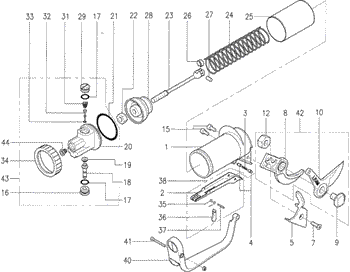
3- After Harvest (Cleaning)
The aim is to clean up the large broken branches that are left after the harvesters have gone through the grove. We could avoid it by spraying the trees with copper after harvest and wait until spring to take the damaged wood out.
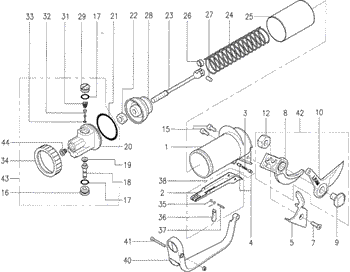
 

More: