My Account
Sign-in / Join

Sign-in

Hi My Account

Dashboard

Logout

Cart

My Shopping Cart

Subtotal
${{total.toFixed(2)}}
QUOTE

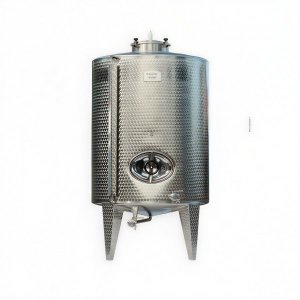
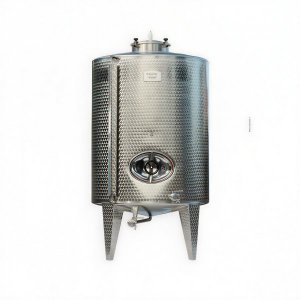
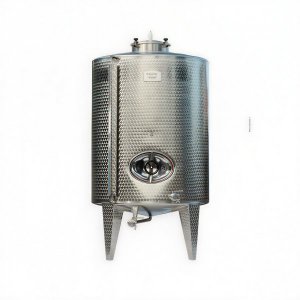
3,000L Fixed Capacity, Conical Bottom, Manhole

Delivery will be calculated separately
Quantity

LB06A
  • Description
  • Features
  • Enquiry
  • Specifications
  • Knowledge
  • Blog
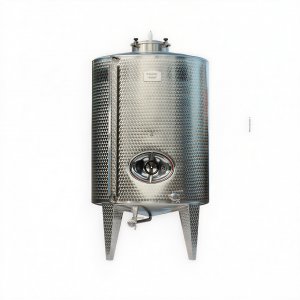
3,000L Fixed Capacity Conical Bottom Stainless Steel Tank – Sansone

Delivery will be calculated separately

Professional Stainless Steel Storage Tank with Manhole, Nitrogen Nipple & Butterfly Valves

The 3,000L Fixed Capacity Conical Bottom Tank is designed for professional olive oil storage, providing hygienic, durable and efficient handling for medium–large production volumes. Constructed from AISI 304 food-grade stainless steel, it offers long-term corrosion resistance and full compliance with food industry standards. Its fixed conical bottom ensures complete drainage and effective sediment separation, maximising product recovery and reducing cleaning time. With a top manhole for access, nitrogen compatibility for inert gas blanketing and precision butterfly valves, this tank supports clean, controlled storage from harvest to bottling. Supported by welded stainless steel legs for strength and stability, it is an ideal solution for olive oil mills requiring dependable processing equipment.

Uses – For
  • Olive oil storage
  • Wine, vinegar and fermentation products
  • Food-grade liquid processing
  • Professional production and storage facilities
  • Medium–large batch processing

Technical Specifications

Specification Value
Capacity 3,000 Litres
Construction AISI 304 Stainless Steel
Bottom Type Fixed Conical
Access Top Manhole
Valves Butterfly Racking & Discharge Valves
Additional Features Nitrogen Nipple, Sample Tap
Support 4 Welded Stainless Steel Legs

*All measurements are approximate and may vary slightly.

Available Size

Capacity (L) Height (mm) Base (mm) Opening (mm) Total Height (mm)
1,000 1,500 950 950 2,300
1,500 1,500 1,100 1,100 2,600
2,000 1,500 1,270 1,270 2,300
2,500 2,000 1,270 1,270 2,800
3,000 2,000 1,430 1,430 2,800
5,000 2,500 1,600 1,600 3,400

*All measurements are approximate and may vary slightly.


Why Choose This Product

This 3,000L stainless steel tank offers reliable, hygienic and efficient storage for professional olive oil producers. The conical base ensures complete drainage and clean separation of sediment, reducing product loss and improving workflow. Nitrogen blanketing capability helps preserve quality by protecting against oxidation. With welded legs, precision valves and a sample tap for testing, the tank delivers strong usability, safety and consistency for ongoing production needs.

Frequently Asked Questions (FAQ)
 
Key Features

● 3,000L fixed-capacity stainless steel tank
● Conical bottom for complete drainage and sediment separation
● Top manhole for safe access and maintenance
● Nitrogen nipple for inert gas blanketing
● Hygienic butterfly racking & discharge valves
● Sample tap for small-volume testing
● 4 welded stainless steel legs for maximum stability
  • :
  • :
  • :
  • :
  • :
  • :
  • :
  • :

Research into olive oil Storage

Research into olive oil storage

In a world-first, Industry & Investment (I&I) NSW scientists are exploring how long olive oil can be confidently stored and still taste great. The Rural Industries Research and Development Corporation funded project aims to enhance the science which predicts the shelf life of olive oil.

I&I NSW principal research scientist Dr Rod Mailer said that although the tests to predict oil shelf life exist, this project is taking the chemistry a step further.
"We're already testing oil to authenticate that it is extra virgin olive oil, now we're looking at the factors which cause oil to oxidise and recording the reactions of a range of oils during the three-year project," said Dr Mailer.
"The chemical composition of each oil has been analysed and we are exposing them to light, temperature and oxygen all of which cause oxidation," he added.

Oxidation eventually produces offflavours and bad odours in oil and the aim of the project is to identify how to extend oil stability so that the fruity olive oil flavour lasts longer. Dr Mailer said that oils with high levels of polyphenols, which are antioxidants, and low levels of polyunsaturated fatty acids can last 18 months or two years.

"Some of these oils made from younger, early-harvest olives have a pungent, bitter flavour which is not popular with some consumers and while oils from older olives taste mellow they
may have a shorter shelf life," he said.

"The research is examining how to get the best of both worlds. We can take oil which is high in antioxidants with a stable fatty acid profile and blend it with less pungent, softer oil to produce a mellow, fruity-tasting oil with an increased shelf life," he added.

Crop management, olive variety and harvest techniques also impact on how long oil will last.

"The amount of water trees get during the growing season also affects shelf life water-stressed trees produce more polyphenols resulting in pungent, longer lasting oil," he concluded.

Source:
Food Australia
September, 2010
Page: 396
Section: General News
Region: National
Circulation: 2,883
Type: Not available
Size: 159.64 sq.cms.
Published: Monthly
Copyright Agency Ltd (CAL) licenced copy.

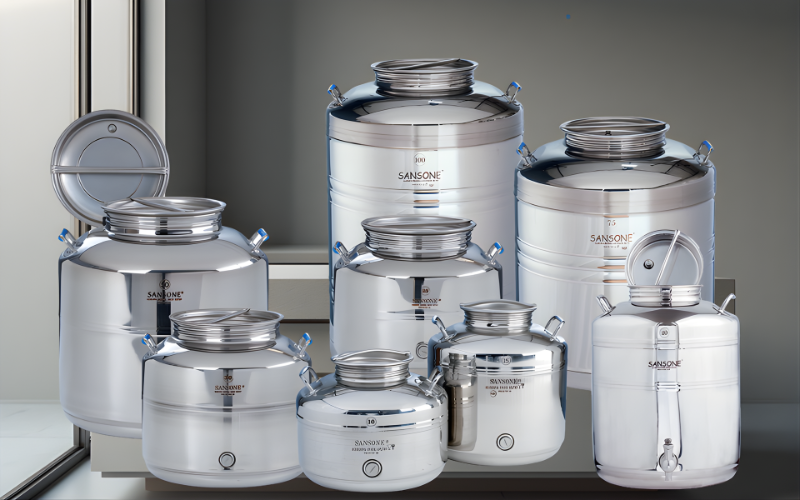
Sansone Welded Fusti Tanks - Stainless Steel Containers for Olive Oil and Food Storage

OLIVE OIL STORAGE

Sansone Welded Fusti Tanks - Europa Model Stainless Steel Containers for Olive Oil Storage


Italian Precision, Certified Hygiene, And Long-Term Durability

The Sansone Welded Fusti Tanks represent one of the most trusted stainless steel container designs in the food industry. Manufactured in Italy by Sansone, these tanks are built according to the highest international standards for the preservation of food-grade liquids such as olive oil, wine, honey, and food-grade liquids.

Each unit is produced using 18/10 AISI 304 stainless steel and is NSF certified, ensuring unmatched reliability, purity, and corrosion resistance. Their seamless welded construction guarantees easy cleaning and prevents the accumulation of organic matter or bacterial colonies - a crucial feature for industries where hygiene is paramount.

Welded Drums - Food-Grade Stainless Steel 

Built with head-to-head welding technology, the Sansone welded drums are designed to achieve maximum cleanliness and strength. This advanced welding method eliminates internal joints, making the surface completely smooth, which allows for easy sanitation and total prevention of bacterial growth

These tanks are ideal for food processing, laboratory, and industrial applications that require hygiene compliant liquid handling. The seamless welded design also upholds that no residues or flavour transfer occur, maintaining the quality of your stored product. 

Each model undergoes strict testing to meet the most rigorous quality standards and is part of Sansone’s commitment to producing long-lasting stainless steel containers that meet professional and domestic needs alike.

  Technical Specifications - Welded Drums Europa Model  
Capacity (L) Weight (kg) Height (mm) Base (mm) Opening (mm) Tap Size
10 1.85 240 280 130 ½”
15 2.20 310 280 130 ½”
20 2.40 390 280 130 ½”
25 3.40 320 360 230 ½”
30 3.65 360 360 230 ½”
50 4.80 440 420 230 ½”
75 7.05 550 460 230 ½”
100 8.35 690 460 230 ½”

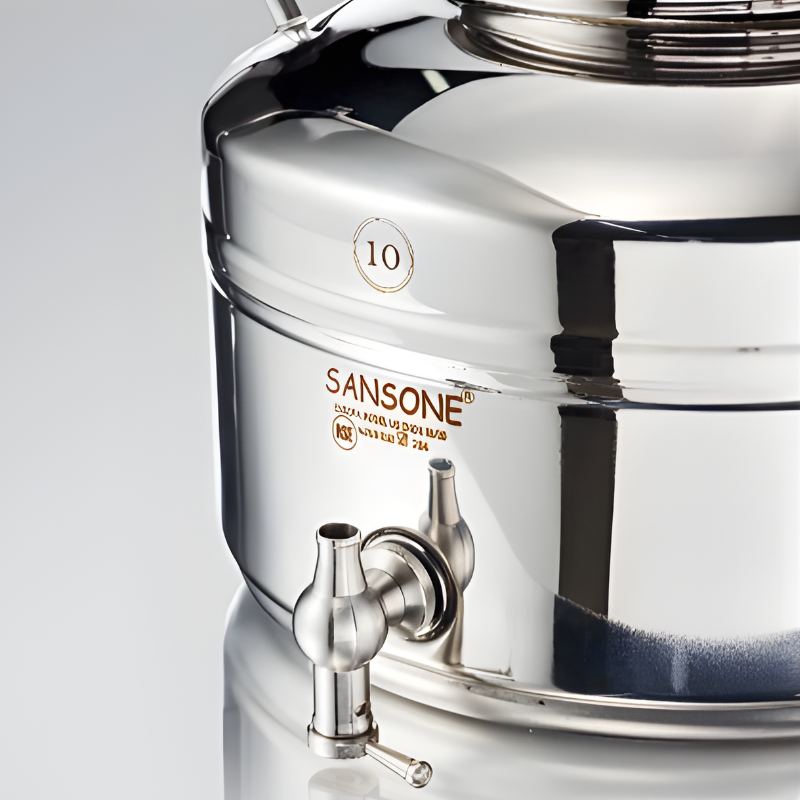
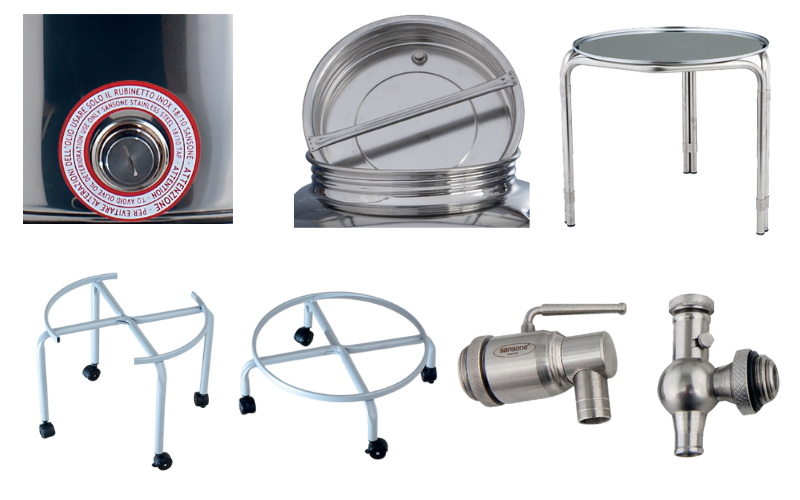
All models are equipped with a welded stainless-steel setup for a ½-inch tap, allowing safe and precise liquid dispensing. Each drum can also be paired with optional stainless steel or laminated stands, available in tall and short models or even with wheels for mobility. 

Features

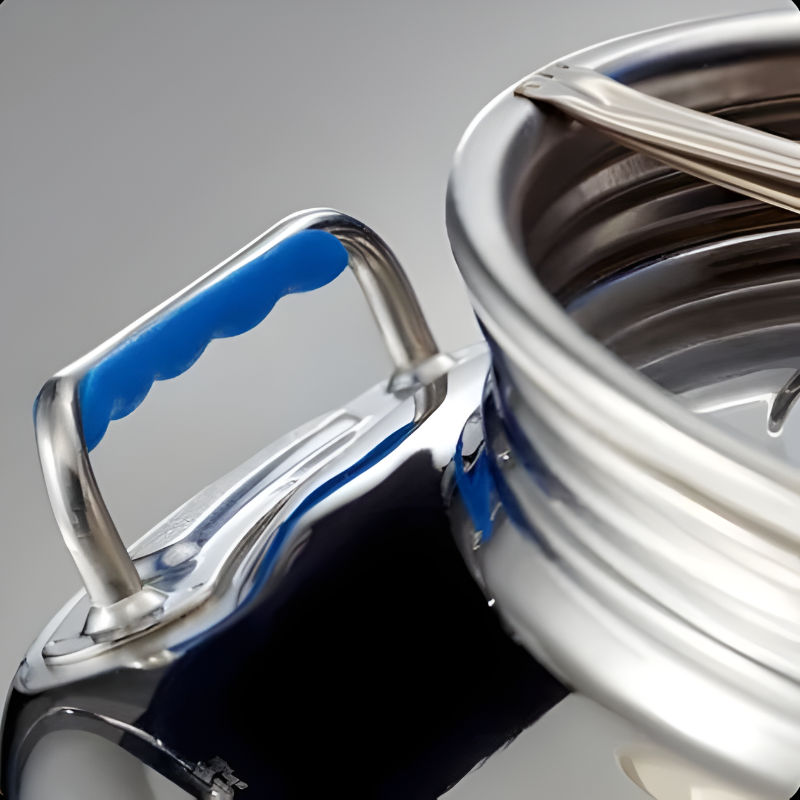
  • Manufactured entirely from AISI 304 stainless steel (18/10 food-grade) 
  • Seamless welded body ensures superior hygiene and effortless cleaning 
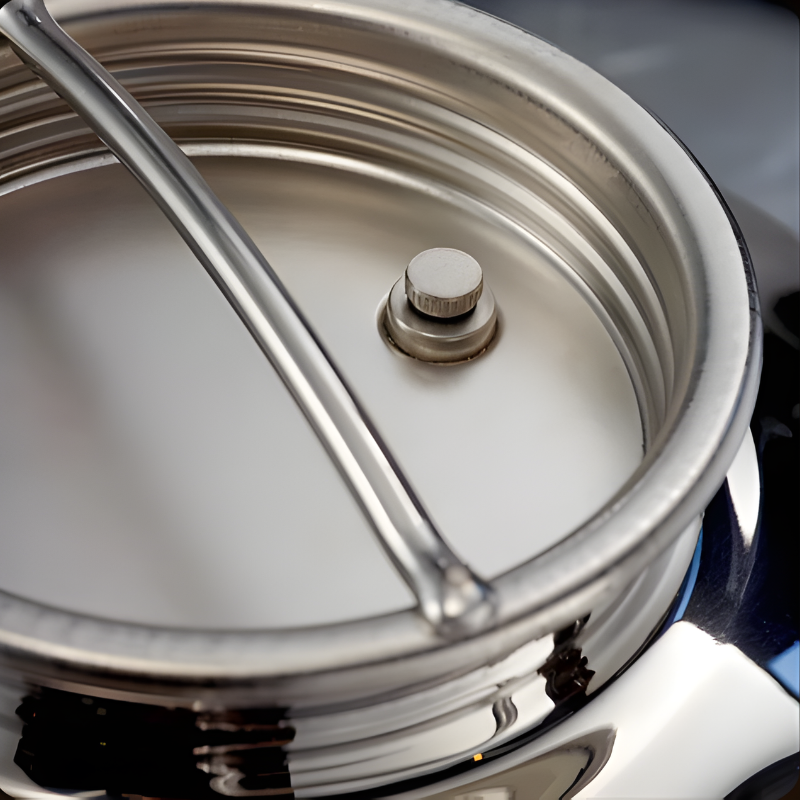
  • Polished mirror finish both inside and outside 
  • NSF Certified, ensuring compliance with international food safety standards
  • Air valve system for smooth depressurisation and easier liquid release
  • Customisable options available, including steel tap types, metal stands, and NSF components (as a special order option)
  • Designed for olive oil storage, winemaking, honey production, and other liquid foods
The air valve feature enables controlled depressurisation, allowing for easy container opening even after prolonged use. These tanks are built for professionals who value dependability and craftsmanship in every detail. 

Optional Accessories - Special Order 


Sansone provides several high-quality accessories to enhance functionality and handling convenience:

  • Stainless steel tap with turning lever for precise dispensing
  • Tall or short metal support stands, available with or without wheels
  • New NSF stainless steel tap (½” US model) for enhanced flow control and hygiene (special order tap)
  • Custom configurations available upon request to suit specific production environments like honey gate or other specialty application.

Engineered for Excellence & Quality 

Each Sansone welded fusti is produced under ISO 9001:2000 certified quality control systems to ensure consistent performance and reliability. The use of premium-grade 18/10 stainless steel guarantees long life, even under demanding industrial use. 

Whether used in olive oil production by producers, wineries, or laboratories, these tanks provide the peace of mind that comes from Italian-made precision engineering, smooth cleaning surfaces, and safe, airtight liquid containment. 

Perfect for Olive Oil and Artisan Food Producers 


For olive oil producers, the Sansone Europa welded tanks provide the ideal environment for oil preservation, protecting against oxidation and contamination while maintaining taste and freshness. The tanks’ sleek finish and robust structure also make them suitable for front-of-house or retail presentation, where hygiene and visual quality are essential.

From boutique olive oil farms to food manufacturers, these stainless steel fusti tanks represent a long-term investment in quality, safety, and professionalism

Order Your Sansone Welded Fusti Tanks from The Olive Centre

If you’re ready to elevate your storage and preservation standards with Sansone stainless steel welded tanks, explore the full range at

https://theolivecentre.com/shop/stainless-steel-tanks-2l-to-99l 

As Australia’s leading distributor for Sansone products, The Olive Centre provides expert advice, local support, and fast delivery — helping you choose the perfect stainless steel fusti to suit your needs

Opportunities for Australian EVOO Exports to India

India’s olive oil market is small but rapidly growing, with rising health awareness, premiumisation and tariff reductions under the Australia-India ECTA creating new opportunities for Australian extra virgin olive oil exporters.
Please log in to view the entire article

The Svalbard Global Seed Vault Receives Olive Seeds for the First Time

OLIVE GENETIC PRESERVATION

The Svalbard Global Seed Vault Receives Olive Seeds for the First Time


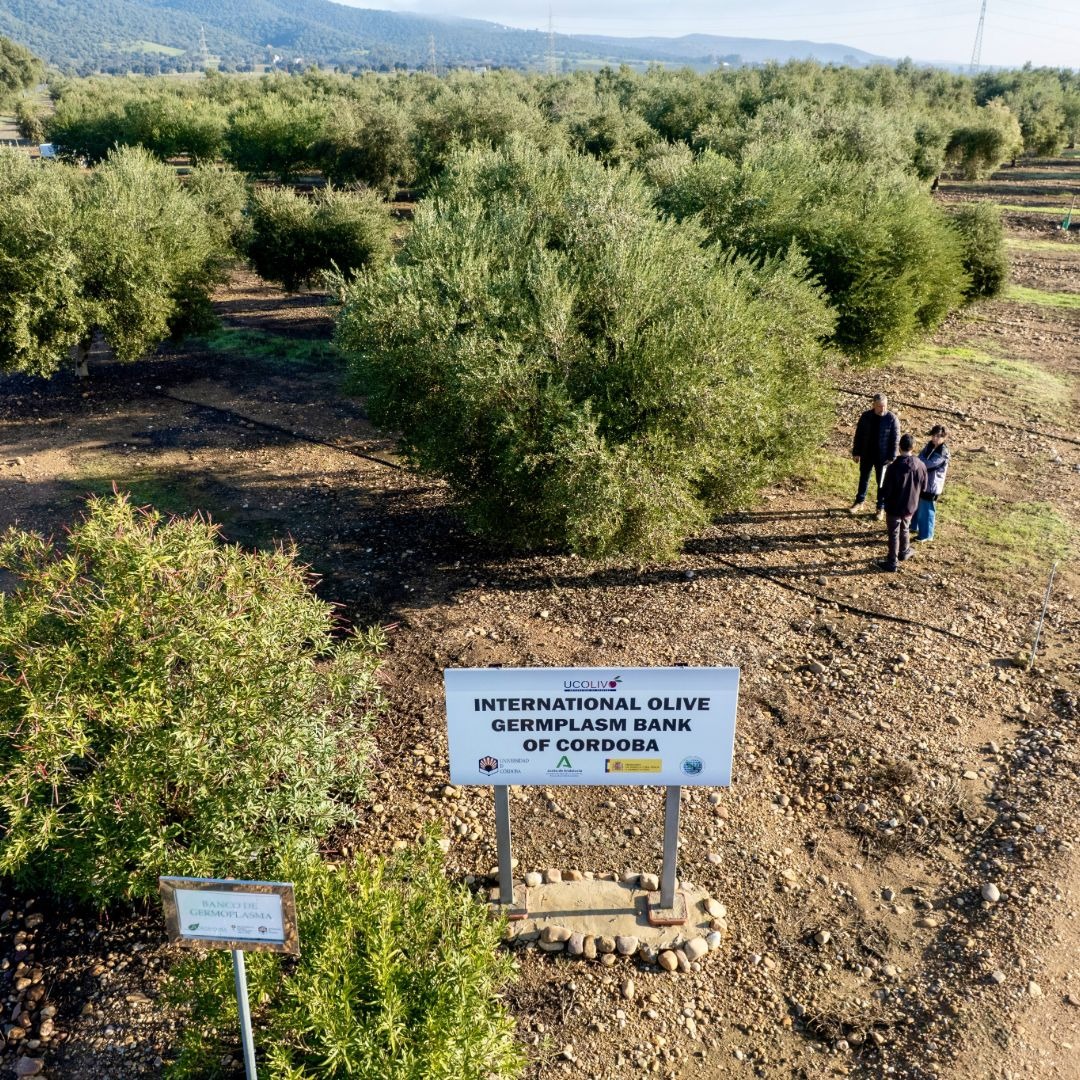
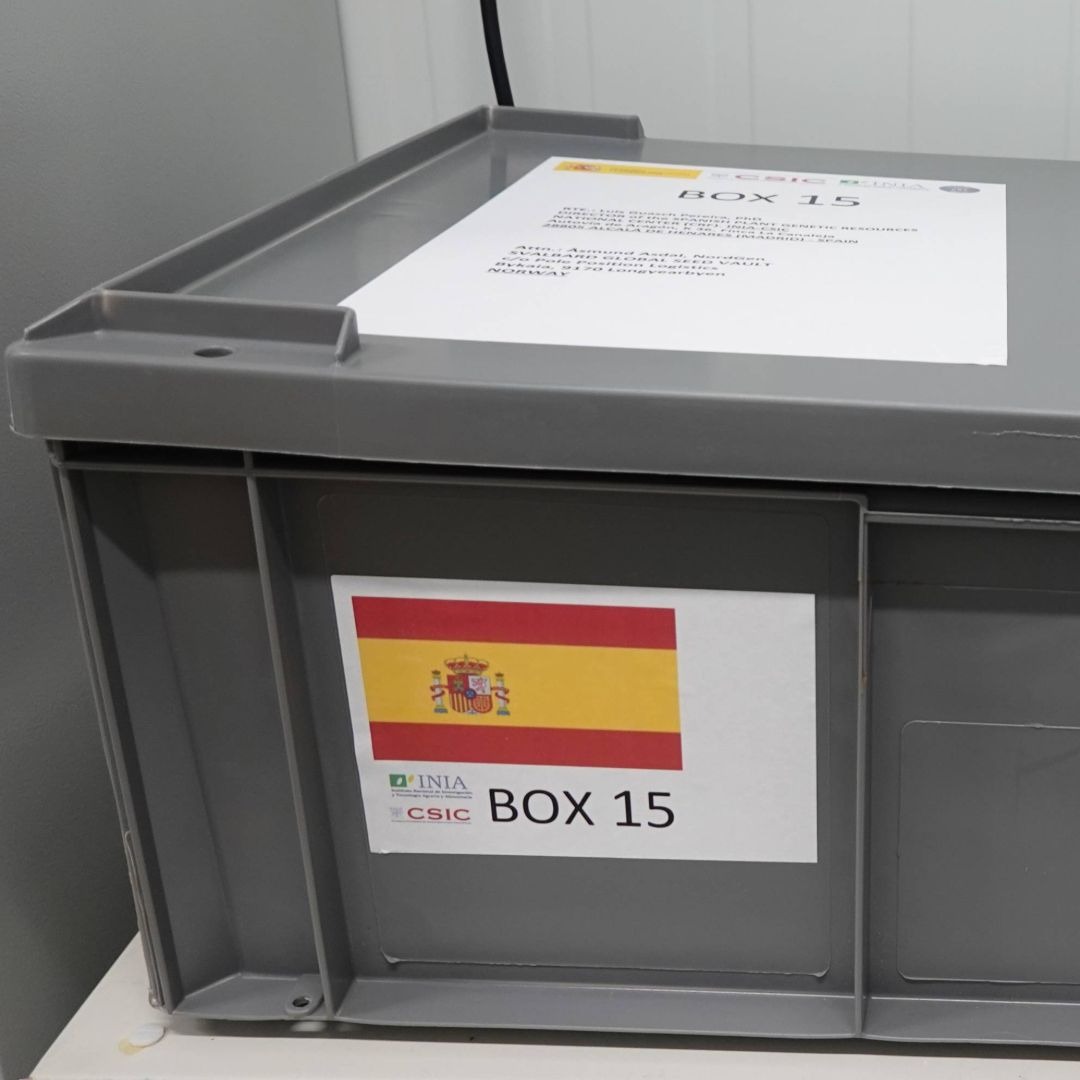
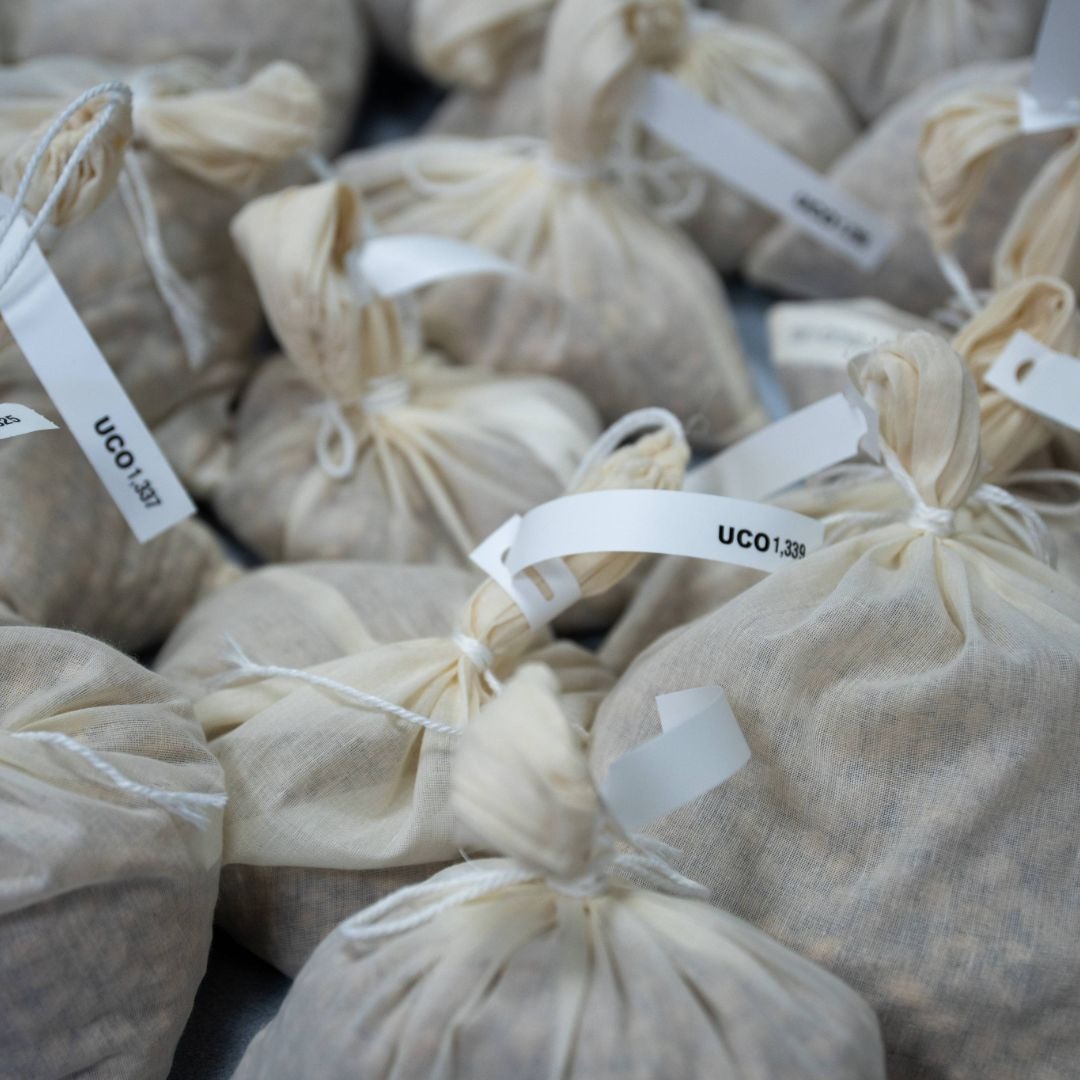
In a landmark moment for global agricultural preservation, olive seeds have been deposited for the first time in the Svalbard Global Seed Vault - the world’s most secure facility for safeguarding crop diversity.

Located deep within the Arctic permafrost of Norway’s Svalbard archipelago, the Seed Vault serves as a global backup system for the planet’s agricultural biodiversity. Often described as the “doomsday vault,” it protects seeds against the risks of climate change, natural disasters, conflict, and biodiversity loss.

Now, for the first time in history, olive seeds are part of that global legacy.

A Historic Milestone for the Olive Sector

The deposit marks a significant step forward in protecting one of the world’s most iconic and culturally important crops. Olive trees have sustained civilizations for thousands of years, symbolising peace, resilience and nourishment. Preserving their genetic diversity ensures that this legacy continues for generations to come.

Jaime Lillo Lopez, Executive Director of the International Olive Council (IOC), highlighted the importance of the moment:

“The seeds we have deposited are the legacy of farmers who, throughout history, selected the most resistant trees - those that produced the best fruit or adapted to diverse soils, climates and diverse conditions. These seeds are a guarantee that future generations will continue to enjoy such an extraordinary product as olive oil.”

His words underscore what this deposit truly represents: not just seeds, but centuries of accumulated knowledge, adaptation, and agricultural selection.

A Global Collaboration for Agricultural Resilience


This initiative was launched within the framework of the European H2020 GEN4OLIVE project, a research programme dedicated to unlocking and conserving olive genetic diversity. It was subsequently promoted by the IOC, the Food and Agriculture Organization of the United Nations (FAO), and Spain’s Ministry of Agriculture, Fisheries and Food.

The collaboration extended to leading academic and research institutions, including:

  • Universidad de Córdoba (UCO)
  • Universidad de Granada (UGR)
  • Plant Genetic Resources Centre (CRF-INIA)
  • National Institute for Agricultural and Food Research and Technology (INIA)
  • Spanish National Research Council (CSIC)
This broad coalition demonstrates that conserving traditional and wild olive varieties is not merely a scientific exercise - it is a collective commitment to strengthening agricultural resilience and ensuring long-term food security.

Organisations such as NordGen and the Crop Trust, along with representatives including Juan Antonio Polo Palomino, Abderraouf Laajimi, Álvaro Toledo, Dr. Kent Nnadozie, Concepción Muñoz Diez, Hristofor Miho and Pablo Morello Parra, also played key roles in bringing this milestone to fruition.

Olive Genetics

For olive growers and producers worldwide, this development carries profound implications.

Olive trees are uniquely adapted to marginal soils, water scarcity, and variable climates. However, increasing pressures from:

  • Climate variability
  • Emerging pests and diseases
  • Water limitations
  • Soil degradation
  • Shifting production zones
Make genetic diversity more important than ever.

Traditional and wild olive varieties contain traits that may hold the key to:

  • Improved drought tolerance
  • Disease resistance
  • Adaptation to new climatic conditions
  • Enhanced oil quality characteristics
  • Resilience to environmental stress
By preserving these genetic resources in the Svalbard Global Seed Vault, the industry is effectively safeguarding a toolbox for future breeding, research and innovation.

From Mediterranean Heritage to Arctic Safeguard


The symbolic power of Mediterranean olive genetics being stored in Arctic ice is profound. It reflects the global importance of olives - no longer confined to traditional growing regions but increasingly cultivated across diverse climates worldwide.

As olive production expands into new regions, including areas facing climatic volatility, the value of preserved genetic material grows exponentially. The Svalbard deposit ensures that even in worst-case scenarios, the genetic foundation of the olive sector remains secure.

A Commitment Beyond Science

This initiative goes beyond seed banking.

It represents recognition that agricultural biodiversity is a shared global responsibility. Farmers, researchers, governments, and international organisations are united by a common understanding: safeguarding crop diversity is essential for future food systems.

The olive industry - deeply rooted in tradition - is demonstrating that it is equally committed to innovation, resilience and long-term stewardship.

Securing the Future of Olive Oil

For growers, processors, and industry stakeholders, this historic deposit sends a message: the olive sector is planning for the long term.

Preserving traditional and wild varieties ensures that future generations will continue to:

  • Cultivate olives in changing climates
  • Maintain oil quality standards
  • Protect regional characteristics and heritage
  • Develop improved cultivars
  • Sustain global olive oil production
The olive tree has endured for millennia. By placing its seeds in the world’s most secure seed vault, the global community has taken a decisive step to ensure it thrives for millennia more.

New Research Highlights the Health Value of Olive Oil Polyphenols

New clinical research shows olive oil polyphenols may improve metabolic health markers linked to cardiovascular disease and metabolic syndrome.
Please log in to view the entire article

New Grocery Supply Rules Start April 2026: What Olive Growers Need to Know

New mandatory grocery supply rules start applying from 1 April 2026, bringing stronger contract, pricing and dispute protections for olive growers supplying major supermarkets.
Please log in to view the entire article

Seed Oils vs Extra Virgin Olive Oil: What the Science Says

An evidence-based comparison shows extra virgin olive oil is more stable, less processed and richer in beneficial compounds than most seed oils.
Please log in to view the entire article

U.S. Olive Oil Market Faces Policy Crossroads as Standards, Tariffs and Trust Take Centre

U.S. Olive Oil Market Faces Policy Crossroads as Standards, Tariffs and Trust Take Centre Stage
Please log in to view the entire article

"Get Drizzling" 2026 - A National Marketing Campaign For Olive Oil

Get Drizzling 2026: The Chef’s Secret to Extraordinary Dishes The Australian Olive Oil Association’s 2026 Get Drizzling campaign returns this Autumn. Discover how a simple drizzle of olive oil transforms flavor and texture with insights from top chefs like Khanh Ong and Darren Robertson. Master the finishing touch that turns everyday meals into restaurant-quality masterpieces.
Please log in to view the entire article

GROWING OLIVES: Research confirms importance of right Olive Oil Storage

When it comes to oil storage you need to consider the impacts on quality in relation to the proposed storage to be used.

This article is about some of the latest research as funded by RIRDC to determine the best storage for your oil.

Remember just because a manufacturer states the container(s) are food-grade doesn't necessarily means they are safe to use for olive oil. ?(All the containers used in this study were regarded as "Food Grade").

Here is a excerpt from the article:

For example, sometimes growers produce oil with very high quality initially, which quickly deteriorates due to the conditions under which it is stored,? he said.

The olive oil can deteriorate so much that it can no longer be classified as extra virgin olive oil, at a huge expense to the growers.

The changes in oil quality described in this report will encourage producers, as well as others in the supply chain of olive oil, to consider the facilities used to store olive oil in order to maintain the high-quality olive oil Australia is increasingly renowned for producing.

Read the article here....?Storing olive oil - Local News - News - General - Town and Country Magazine.