My Account
Sign-in / Join

Sign-in

Hi My Account

Dashboard

Logout

Cart

My Shopping Cart

Subtotal
${{total.toFixed(2)}}
QUOTE
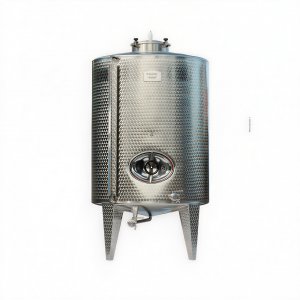
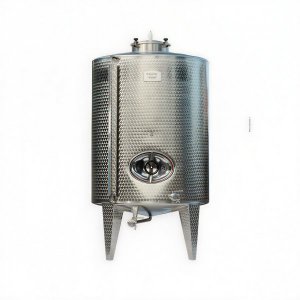
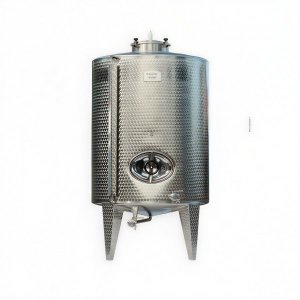
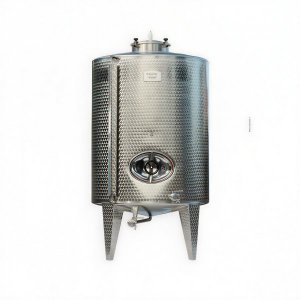
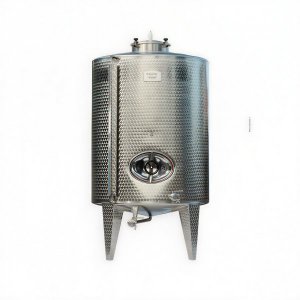
1,500Lt Fixed Capacity, Conical Bottom Tank

Delivery will be calculated separately
Call for Price
Quantity

LE10A
  • Description
  • Features
  • Enquiry
  • Specifications
  • Knowledge
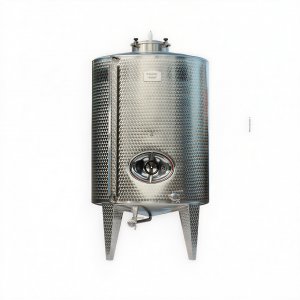
1,500L Fixed Capacity Conical Bottom Tank – Sansone

Delivery will be calculated separately


Professional Stainless Steel Conical Tank for Olive Oil & Wine Storage

The Sansone 1,500L Fixed Capacity Conical Bottom Tank is engineered for professional olive oil and wine processors requiring hygienic, durable and efficient liquid storage. Built from AISI 304 food-grade stainless steel, it supports long-term product preservation with superior corrosion resistance and cleanliness. The conical bottom design ensures complete drainage and effective sediment separation, improving product quality and reducing cleaning time. With a top manway, nitrogen nipple, racking and discharge valves and integrated sight gauge, the tank provides full operational control for large-scale production. Supported by four welded stainless steel legs, this tank offers stability, safety and reliability for heavy-duty processing environments.

Uses – For
  • Olive oil storage
  • Wine storage and racking
  • Vinegar and liquid fermentation
  • Food-grade liquid processing
  • Commercial production facilities

Technical Specifications

Specification Value
Capacity 1,500 Litres
Bottom Type Fixed Conical
Construction AISI 304 Stainless Steel (Food Grade)
Valves Hygienic Butterfly Discharge & Racking Valves
Accessories Top Manway, Nitrogen Nipple, Sight Gauge
Support 4 Welded Stainless Steel Legs

*All measurements are approximate and may vary slightly.

 
Available Sizes
Capacity (L) Height (mm) Base (mm) Opening (mm) Total Height (mm)
1,000 1,500 950 950 2,300
1,500 1,500 1,100 1,100 2,600
2,000 1,500 1,270 1,270 2,300
2,500 2,000 1,270 1,270 2,800
3,000 2,000 1,430 1,430 2,800
5,000 2,500 1,600 1,600 3,400

*All measurements are approximate and may vary slightly.


Why Choose This Product

This 1,500L conical tank is built for processors who require absolute control over quality and hygiene. Its conical base ensures complete drainage and clean separation of sediments, reducing waste and improving workflow efficiency. The nitrogen nipple supports inert gas blanketing to protect product freshness, while the butterfly valves enable precise liquid handling. With four welded legs for stability and a top manway for access and cleaning, this tank provides the durability and professional functionality needed in commercial olive oil mills, wineries and food-grade processing.

Frequently Asked Questions (FAQ)
A 1,500L tank is ideal for mid-sized olive oil mills, boutique wineries, and small commercial producers who need reliable storage capacity without investing in oversized industrial tanks. It balances high volume with manageable footprint and maintenance.
Yes. The top manway is equipped with a nitrogen nipple, allowing inert gas blanketing to protect olive oil and wine from oxidation. A licensed technician is required to install and connect the nitrogen system safely.
These two valves serve different purposes:
  • Racking Valve: Draws clear product from above the sediment layer.
  • Discharge Valve: Empties all remaining liquid and solids from the bottom point of the cone.

This combination ensures clean transfers, higher yield, and less waste.
While no external foundation is required, the tank should be placed on a level, load-bearing concrete floor, as a full 1,500L tank weighs over 1.5 tonnes. The four welded stainless steel legs provide stable support during filling and discharge.
 
Features
  • Top manway with nitrogen nipple for inert gas blanketing
  • Discharge and racking valves for efficient liquid transfer
  • Front door access for easy cleaning and inspection
  • Integrated sight gauge (level reader) for accurate volume control
  • Heavy-duty welded construction with four sturdy stainless steel legs
  • Conical bottom design for complete drainage and sediment separation
  • :
  • :
  • :
  • :
  • :
  • :
  • :
  • :
  • :

The Role of Ethylene in Olive Ripening: Minor Player Amid Dominant ABA, Jasmonate, and Aux

This article explores the unique hormonal controls behind olive fruit ripening. Unlike climacteric fruits that rely on ethylene, olives are primarily guided by abscisic acid (ABA), jasmonates (JA), and auxins. It explains how these hormones regulate color change, oil accumulation, and fruit drop, while highlighting ethylene’s limited but practical role in harvest management. Designed for growers and agronomists, it translates physiology ins
Please log in to view the entire article

Australian Olive Growers Face Lower Yields After Unseasonal Weather

INDUSTRY UPDATE: AUSTRALIAN OLIVE GROWERS 2023 SEASON

Australian Olive Growers Face Lower Yields After Unseasonal Weather

   
The Australian olive industry has faced a tough growing season, with unpredictable weather conditions significantly influencing the 2023 olive harvest. Prolonged periods of unseasonably cold and wet weather shortened the growing cycle, slowed fruit ripening, and delayed harvest schedules, according to David Valmorbida, President of the Australian Olive Oil Association (AOOA). 

“Earlier in the season, the industry was anticipating an excellent harvest,” Mr Valmorbida said. “However, persistent cold weather and rainfall during May and June, particularly across south-east Australia, have taken their toll.”

Although the Australian olive harvest is not officially recorded each year, the AOOA estimates that the 2023 season will produce between 18 and 19 million litres of olive oil from roughly 110,000 to 120,000 tonnes of olives.

This compares with last year’s output of 14–15 million litres and the record-breaking 2021 crop, which yielded 20–22 million litres of oil.

Mr Valmorbida explained that these fluctuations reflect the biennial cycle of olive production. “This is what we call an ‘on’ year for olives. While we were expecting an excellent yield earlier in the year, harvest results always depend heavily on weather conditions, and this season has been quite mixed for many growers.”

“The oil yield per tonne is noticeably lower than average due to the cooler growing period,” he added, “but the quality of the oil remains excellent because the fruit had more time to ripen gradually.”

Around the world, olive oil prices have reached record highs in Spain, Italy, and Greece, driven by a severe global shortage of olive oil. Hot temperatures, minimal rainfall during key stages of the growing season, and extended drought conditions across southern Spain have drastically reduced European output. In addition, the ongoing conflict in Ukraine has disrupted the production of vegetable and seed oils, increasing global demand for olive oil as an alternative.

In Australia, growers are currently achieving $6–$7 per litre for larger commercial volumes of olive oil, with even higher prices for export batches, premium small-lot oils, and organic extra virgin olive oil.

“With this global shortage, some of the larger Australian producers are in a strong position to export olive oil to Europe and receive competitive returns,” Mr Valmorbida said.

“While that’s encouraging news for the Australian olive oil industry, globally the sector is under pressure,” he continued. “There’s currently a 35–40 percent shortfall in available products, combined with escalating packaging costs, especially for glass and tin materials.”

“These factors, along with rising labour and energy expenses, are leading to higher retail prices for consumers,” he noted.

Mr Valmorbida concluded with a reminder to consumers: “It’s important to remember there’s no product quite like olive oil—its distinctive flavour, health benefits, and culinary versatility make it irreplaceable.”

#oliveharvest2024 #harvest2024

About the Australian Olive Oil Association

The Australian Olive Oil Association (AOOA) is a not-for-profit, independent organisation dedicated to promoting the quality, integrity, and fair trade of olive oil in Australia. Membership is open to olive oil producers, distributors, industry stakeholders, and related organisations.

Since 1993, AOOA has been a signatory to the International Olive Council (IOC) global quality control program. Each year, the Association coordinates independent laboratory testing of leading olive oil brands to ensure compliance with IOC standards.

In addition, the AOOA Certified Quality Seal Program upholds even stricter quality criteria, allowing AOOA-member products to distinguish themselves in both domestic and international markets.


For more information: 

Jan Jacklin, General Manager, Australian Olive Oil Association gm@aooa.com.au www.aooa.com.au

Photo credit:  Julia, olive grove – Kyneton Olives” by avlxyz is licensed under CC BY-SA 2.0. To view a copy of this license, visithttps://creativecommons.org/licenses/by-sa/2.0/?ref=openverse

Global Olive Oil Prices Soar to Record Highs in 2023 Amid Spain’s Severe Drought Crisis

MARKET INSIGHT: GLOBAL OLIVE OIL ECONOMY 2023

Global Olive Oil Prices Soar to Record Highs in 2023 Amid Spain’s Severe Drought Crisis

Introduction

The global olive oil industry in 2023 has entered uncharted territory, experiencing an extraordinary surge in olive oil prices driven by a combination of climatic and economic forces. At the centre of this crisis lies Spain’s devastating drought, which has crippled the world’s largest olive oil producer. This severe shortage has led to a dramatic contraction in olive oil supply, triggering price escalation and a corresponding decline in consumer demand. The ripple effects are being felt worldwide, reshaping the balance between producers and consumers alike. Meanwhile, Australian olive oil producers find themselves in a rare position of advantage, benefitting from unprecedented market highs. This article explores the causes, consequences, historical trends, and economic signals surrounding this remarkable global olive oil price spike.


The Spanish Drought and Its Impact on Supply

The ongoing drought across Spain stands as the principal factor behind the current olive oil price surge. As one of the largest olive oil-producing nations globally, Spain’s drastically reduced harvest - caused by months of extreme heat and minimal rainfall - has sharply curtailed olive oil availability in both European and international markets. This has intensified supply shortages, compelling consumers to pay more for what has long been a staple Mediterranean product. The interplay of limited supply and escalating demand has magnified price volatility, reinforcing the classic supply-and-demand imbalance now driving global markets.

Decline in Consumer Demand

As prices have risen steeply, the shortage of olive oil has led to a noticeable decline in consumption, particularly in Spain, where demand has reportedly dropped by around 35%. Consumers are now scaling back their purchases, finding olive oil increasingly unaffordable compared to other cooking oils. The once-steady household consumption patterns are shifting as people seek alternatives or modify their cooking habits. This contraction in domestic demand not only highlights the growing accessibility gap for consumers but also underscores the broader economic strain caused by high inflation and food price increases.

Australian Olive Oil Producers Reap the Rewards

Amid the turmoil, Australian olive oil producers are experiencing a windfall. Thanks to limited global supply, Australian growers are commanding record prices exceeding AUD $8 per litre, marking the highest levels ever recorded in the nation’s olive oil industry. This lucrative period presents a rare opportunity for Australian exporters, with demand from Europe - including Spain itself - now turning toward Australian supplies. For producers Down Under, this unique reversal of roles underscores how regional climate resilience and diversified production can translate into significant financial gains when global shortages arise.

Historical Context: How the Market Reached 2023

The olive oil market’s volatility is not a new phenomenon. Previous spikes occurred in 1996, 2006, and 2015, each triggered by weather-related supply constraints. Yet, the 2023 price explosion stands out as the most dramatic in recorded history -over 40% higher than any previous price peak, and roughly double the magnitude of earlier surges. This extreme escalation reflects not just climatic hardship but a clear pricing bubble forming within the market, echoing the cyclical nature of commodity pricing.

Cyclical Trends and Economic Correlations

The olive oil sector has long followed cyclical pricing patterns, typically alternating between low and high price phases roughly every decade. The current surge aligns almost perfectly with the predicted start of another 10-year cycle, occurring just three years into its anticipated timeline. Furthermore, a notable correlation has been identified between the Australian Food Inflation Index and the Global Olive Oil Price Index as reported by the International Monetary Fund (IMF). This connection illustrates the deep interdependence between food commodity pricing and global economic conditions.

While the IMF’s benchmark prices are denominated in USD, for the purposes of this analysis they have been converted to AUD to track the trend relative to Australian markets. These benchmark indicators -based on the world’s largest olive oil exporters -serve as a reliable gauge of overall market direction, confirming how global shortages and inflationary pressures move in tandem.

   Global olive oil prices show a recurring 10-year cycle, driven by droughts, crop shortages, and rising production costs

Technical Indicators: Signals of an Overbought Market

From a technical analysis perspective, the Relative Strength Indicator (RSI) is often used to measure price momentum and potential overextension in markets. On recent olive oil price charts, the RSI (represented in purple) indicates that prices have once again entered overbought territory - a level seen during previous speculative phases. Historically, such readings have preceded market corrections or reversals, suggesting that the current surge may not be sustainable in the long term.

Analysts caution that as the European olive harvest begins in September and October 2023, an influx of new oil supplies could help ease prices, though the timing and extent of this correction remain uncertain. Until then, speculative trading and limited inventory continue to support inflated market values.

Conclusion

The record-breaking olive oil prices of 2023, primarily triggered by Spain’s drought-induced production collapse, mark a turning point for the global olive oil economy. With consumer demand declining under the pressure of soaring prices and Australian producers thriving amid the scarcity, the industry is experiencing a dramatic rebalancing. Historical precedents, cyclical trends, and market indicators all point toward a complex, transitional period defined by volatility and uncertainty.

As the world’s producers, traders, and consumers adapt to these new market dynamics, one truth remains clear: olive oil - celebrated for its taste, health benefits, and cultural significance - continues to be at the mercy of both climate change and economic cycles. Stakeholders across the value chain must remain alert, flexible, and forward-thinking as the olive oil market navigates this extraordinary phase of transformation.

Other Sources

Comparing Olive Oil Packaging Options: Plastic, Glass, Metal, Bag-in-Box and Bag-on-Valve

MARKET INSIGHT: EVOO PACKAGING OPTIONS

Comparing Olive Oil Packaging Options: Plastic, Glass, Metal, Bag-in-Box and Bag-on-Valve

Extra virgin olive oil (EVOO) is extremely sensitive to light, oxygen, heat and metal contact. Packaging, therefore, plays a direct role in how long an olive oil remains “extra virgin.” Major reviews from UC Davis emphasise that optimal packaging must reduce light exposure, oxygen ingress, and headspace, while also ensuring cool storage. At the same time, producers—especially small to medium Australian growers—must consider costs, machinery requirements, recyclability, consumer preferences, and minimum order quantities (MOQ). Below is the most complete and updated comparison of all common packaging formats.

1. Plastic Bottles (PET)

Quality & Shelf Life

PET offers convenience and low cost but has moderate oxygen permeability and allows light penetration, which accelerates oxidation. A 2023 study showed PET-stored EVOO experienced higher acidity, peroxide values, UV oxidation indices and sensory degradation over 12 months—especially at elevated temperatures.

Chemical Safety

Migration of PET oligomers and antimony into oil is within regulatory limits, but increases under heat.

Sustainability

rPET has a lower carbon footprint than glass, but Australian recycling for PET varies by region.

Practicality

  • Cheapest and compatible with basic filling lines.
  • Lightweight and non-breakable.
  • Perceived as lower-quality for premium EVOO.
Best for: High-turnover oils sold quickly and stored cool.

2. Metal Cans (Tinplate or Aluminium with Food-Grade Lining)

Quality & Shelf Life

Metal cans provide total light protection and excellent oxygen barrier characteristics. UC Davis stresses that lined cans effectively prevent metal migration and protect quality.

Compared with BIB, cans may show slightly faster oxidation when half-empty, but still protect oil well if stored cool. A 24-month study found both cans and BIB maintained EVOO within legal quality limits.

Consumer & Practical Benefits

  • Easily filled by weight, needing no specialised equipment.
  • Compatible with pull-up pourers that provide tamper evidence and reduce leakage.
  • High consumer trust-no plastic contact with oil.
  • Stackable and ideal for 3–20 L formats.

Sustainability

Steel and aluminium have high recycling rates in Australia.

Many producers prefer cans because Australian consumers are increasingly concerned about soft plastics, especially given the collapse of local soft-plastic recycling schemes (e.g., REDcycle).

Best for: Bulk, foodservice, premium oils, export, and producers who want reliability without specialised equipment.

3. Coloured Glass Bottles (Green / Amber)

Quality & Shelf Life

Glass is chemically inert. Coloured glass offers some UV and visible light protection—amber performs better than green - but clear glass accelerates photo-oxidation significantly.

Coloured glass slows degradation but still allows some light through, so shelf lighting and storage conditions matter.

Practicality

  • Easy to fill.
  • Caps can be hand-applied, or producers can install a screw-cap capping machine that forms the thread consistently, reducing leakage.
  • Widely accepted for retail and gifting.

Sustainability

Highly recyclable, but heavy to transport. Bottle breakage is an inconvenience for producers.

Best for: Premium retail oils with attention to storage conditions.

4. Clear Glass Bottles

Research shows clear glass provides almost no light protection, leading to rapid losses in phenolics and faster oxidation.

UC Davis warns that clear glass should be avoided unless heavily covered by labels or cartons.

Best for: Fast-moving products or promotional oils kept strictly in the dark.

5. Bag-in-Box (BIB)

Quality & Shelf Life

Bag-in-box offers some of the best oxygen protection because the collapsing bag limits headspace oxygen, and the cardboard blocks light. Numerous studies, including 12- to 24-month trials, confirm superior preservation of phenolics, freshness, and sensory properties compared with bottles and cans.

Limitations for Australian Producers

  • Requires costly specialised filling equipment (nitrogen flushing, precise tap sealing).
  • High minimum order quantities for bags and taps.
  • Soft plastics inside bags are not recyclable in most of Australia, causing consumer concern.

Consumer Perception

Plastic contact and disposal concerns hinder adoption, despite technical superiority.

Best for: Large producers with dedicated filling lines, subscription models, or export markets where BIB is accepted.

6. Bag-on-Valve (BOV) / Aerosol Pouch Systems

BOV packaging uses a hermetically sealed internal pouch separated from an external propellant. The oil never contacts the propellant; instead, it is dispensed by pressure.

Quality & Shelf Life

  • Zero oxygen contact once sealed.
  • Excellent light protection when used with opaque or metallic cans.
  • Very low risk of oxidation compared with conventional bottles.
While formal olive oil-specific studies are limited, aerosol and BOV literature show extremely low oxygen ingress, making it ideal for sensitive oils.

Practical Benefits for Producers

  • The Olive Centre can supply BOV systems, but minimum order quantities apply, increasing upfront cost.
  • Allows controlled spray application, excellent for cooking oils, finishing oils, and portion control.
  • Protects oil quality even after repeated use, unlike bottles that suck in air after each pour.

Consumer & Market Benefits

  • Hygienic, non-drip, clean application.
  • Perceived as modern and premium.

Limitations

  • More expensive per unit than bottles or cans.
  • Cannot be easily refilled or recycled as a single stream; consumers must dispose of the metal can + internal pouch.

Best for: High-end culinary oils, premium lines, foodservice, and producers wanting differentiation without investing in BIB equipment.


Compact comparison showing light and oxygen protection levels across packaging types.

Packaging Type Light Protection Oxygen Protection Machinery Required Recyclability (Australia) Cost Consumer Acceptance Best Use Case
Cans (lined)
★★★★★
★★★★☆
Easy High Medium High Bulk, premium, foodservice
Bag-in-Box
★★★★★
★★★★★
Specialised Low (soft plastics) High (at scale) Medium–Low Long shelf life, export
Coloured Glass
★★★☆☆
★★★★★
Easy High Higher Very High Retail premium
Clear Glass
★☆☆☆☆
★★★★★
Easy High Higher High Fast turnover only
PET Plastic
★☆☆☆☆
★★☆☆☆
Easy Moderate Low Medium Value lines, short shelf life
Bag-on-Valve (BOV)
★★★★★
★★★★★
Moderate Low–Moderate Higher Medium–High Premium spray oils             

Practical Recommendations for Australian Producers

  1. For maximum quality + minimal investmentMetal cans are the best balance: easy to fill by weight, compatible with tamper-evident pull-up pourers, highly recyclable, and very protective.
  2. For premium bottled products → Use dark (preferably amber) glass, avoid clear glass unless fully shrouded, and invest in a thread-forming capping machine to prevent leaks.
  3. For innovation and high-end marketsBag-on-valve is an excellent oxygen-free system, ideal for dressings, premium oils, and portion control—MOQ applies, but no major filling-line overhaul is required.
  4. For long shelf-life and exportBag-in-box remains technically superior but is limited by consumer plastics concerns, poor soft-plastic recycling, and specialised filler cost.
  5. For low-cost, high-turnover lines → PET can work if cool, dark storage is guaranteed. Not suitable for long-term premium EVOO.

Conclusion

Selecting the most suitable packaging for extra virgin olive oil hinges on finding the right balance between quality preservation, consumer expectations, and production practicality. Among all options, lined metal cans stand out as one of the most reliable and efficient choices: they are easy to fill by weight, offer excellent protection from light and oxygen, avoid consumer concerns around plastics, and are highly recyclable in Australia. Coloured glass bottles remain the strongest retail performer, pairing good product protection with strong shelf appeal and flexible filling options - from hand-applied caps to automated capping machines that minimise leakage risks. Clear glass should only be used for fast-moving products due to its poor light protection. 

 While innovative systems like bag-on-valve offer outstanding oxygen exclusion and controlled dispensing, their higher cost and MOQ requirements mean they are best suited for premium or specialised product lines. PET plastic bottles can work for value-oriented, short-shelf-life oils kept in cool, dark environments, but they are not ideal for long-term storage or premium markets. 

Overall, Australian producers benefit most by matching each packaging format to the oil’s intended shelf life, sales channel, and brand positioning. Thoughtful packaging selection not only safeguards quality but also streamlines production and aligns with evolving consumer and environmental expectations.

References

  • UC Davis Olive Centre (2014). Packaging Influences on Olive Oil Quality: A Review of the Literature. University of California, Davis. (Comprehensive review of light, oxygen, metals, and packaging materials.)
  • Pinto, M., Soares, C., Silva, A. S. et al. (2023). “Degradation and Migration in Olive Oil Packaged in Polyethylene Terephthalate under Thermal Treatment and Storage Conditions.” Applied Sciences, 14(17), 7507. (Examines chemical migration and quality loss in PET bottles.)
  • Iqdiam, B., Hasan, M., Agouillal, F. et al. (2022). “Influence of Headspace Oxygen on Quality and Shelf Life of Extra Virgin Olive Oil During Storage.” Foods, 11(10), 1484. (Shows how oxygen exposure accelerates oxidation in packaged EVOO.)
  • De Leonardis, A., Lopez, F., Macciola, V. (2021). “Effects of Bag-in-Box Packaging on Long-Term Shelf Life of Extra Virgin Olive Oil.” European Food Research and Technology, 247, 839–850. (24-month comparison study of BIB vs metal cans.)
  • Abuhabib, M. M., Serri, N. A., Aljamal, A. et al. (2025). “Evaluation of Packaging Effects on the Phenolic Profile and Sensory Characteristics of Extra Virgin Olive Oil During Storage.” Foods, 14(14), 2532. (Shows BOV/BIB-type barrier systems outperform conventional packaging.)
  • De Feo, G., Malvano, C., Sica, C. et al. (2023). “Comparative Life Cycle Assessment of Glass Bottle and 100% Recycled PET Bottle for Extra-Virgin Olive Oil.” Sustainability, 15(4), 3665. (Shows rPET has a lower carbon footprint than glass.)
  • Lolis, A., Katsouli, M., Kotsiou, K. et al. (2019). “Effect of Bag-in-Box Packaging on Quality Characteristics of Extra Virgin Olive Oil Stored Under Household and Abuse Temperature Conditions.” Food Packaging and Shelf Life, 21, 100368. (Demonstrates the protective effect of high-barrier films.).
  • Esposto, S., Taticchi, A., Urbani, S. et al. (2022). “Effect of Light Exposure and Packaging Conditions on the Quality and Shelf Life of Virgin Olive Oil.” Journal of the Science of Food and Agriculture, 102(10), 4304–4313. (Quantifies degradation rates in clear vs coloured containers.)
  • FSANZ (Food Standards Australia New Zealand) (2020). Food Packaging and Migration Guidelines. (Authoritative reference for food-contact material safety, including PET and metal linings.)