My Shopping Cart
Note: Pricing includes delivery within Australia.
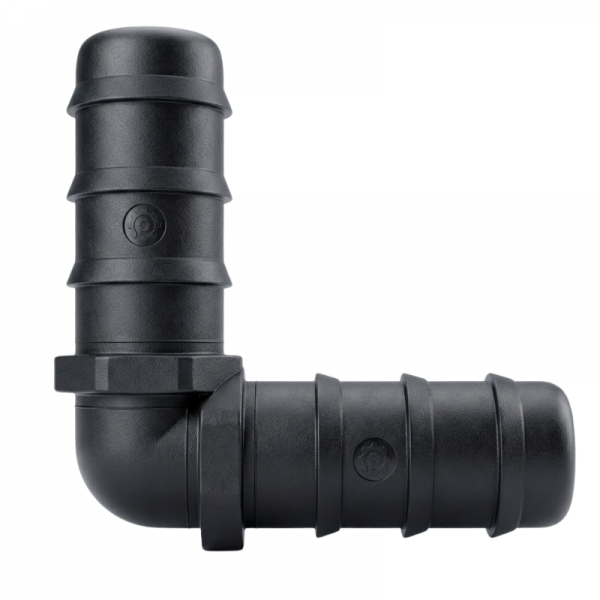
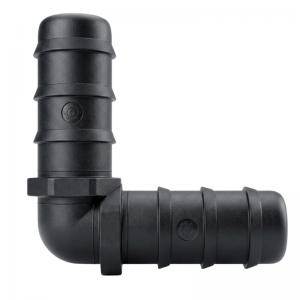
These Barbed Elbow Joiners are essential components for creating precise 90-degree turns in irrigation and fluid transport systems. Designed for a secure, leak-resistant fit, these connectors allow for efficient routing around corners, obstacles, or garden beds without kinking your tubing.
Constructed from high-quality, UV-stabilised plastic, these joiners feature a multi-barbed surface that grips the interior of the tubing for a high-pressure seal. This robust design ensures the connection remains intact under varying environmental conditions, making them suitable for both surface and sub-surface installations.
Bulk Pack Options: Whether you are performing a small repair or installing a complete vineyard irrigation system, these joiners are available in convenient packs of 5 or 100 to suit your project scale.
| Feature | Details |
|---|---|
| Type | 90-Degree Elbow Joiner |
| Connection Style | Multi-Barb for Secure Grip |
| Material | UV-Stabilised Industrial Plastic |
| Pack Sizes | Available in 5 or 100 units |
| Shipping | Included (Within Australia) |
A successful Grove Management Plan must cover these key areas:
"A grove without an effective irrigation system is unlikely to deliver consistent yields year after year. Many growers still underestimate the water needs of olive trees, and few actually monitor soil moisture levels. This is why so many groves have never achieved a commercial crop." Marcelo Berlanda Specialist Olive Consultant
Water stress negatively affects flowering, fruit set, oil accumulation (oil production), fruit size (table olives), fruit quality, and overall tree health. However, many growers lack a proper system to monitor soil moisture or manage irrigation effectively.
Marcelo recommends:
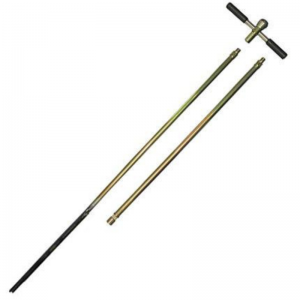
"Growers should inspect soil moisture weekly during spring and summer, and every two weeks in autumn and winter. Use a shovel to dig at least 400mm under the tree canopy to check moisture. If the soil is hard to dig, it’s too dry – even if the canopy shows no visible signs of stress."
Advanced soil moisture monitoring tools can also provide reliable data on a digital display or computer dashboard.
For optimal grove health, growers must consistently check soil moisture and prevent water stress.
As discussed previously, taking leaf samples is essential to assess your trees’ nutritional status. This information guides the creation of a fertiliser program, a critical component for boosting or maintaining yields.
Typically, no fertiliser is needed in winter, unless you’re addressing soil amendments. However, some groves have severe nutrient deficiencies requiring fertiliser even in winter. Where proper irrigation systems aren’t in place, growers must broadcast fertiliser before rain to allow rainfall to incorporate nutrients into the soil profile, an inefficient use of resources but often the only option.
When applying fertiliser in these conditions, target the area beneath the canopy and, if possible, cultivate the soil to improve incorporation and reduce product loss.
Olives need four essential nutrients: Nitrogen, Phosphorus, Potassium, and Calcium. Check product labels carefully. As a general guideline, aim for:
Avoid pruning during the coldest part of winter and when it’s wet or foggy to reduce the risk of bacterial and fungal disease spread.
The main goals of pruning are to remove dead wood, reduce canopy size, restore tree balance, encourage healthy new growth, and increase fruit set in spring.
Tip: After pruning, apply a copper-based spray to protect wounds from infection by fungi and bacteria.
Pest & disease management is crucial for sustaining yield and tree health. Winter’s colder temperatures reduce insect activity, offering a prime time to tackle pest issues.
Set up a comprehensive Pest and Disease Monitoring Program. During winter, check-marked trees (previously affected by pests or diseases) every two weeks; in spring, check weekly. Look under leaves and on new growth for signs like crawlers, yellow spots, black sooty mould, or anything unusual.
Proactive, weekly management is essential for a successful grove.
If you need further assistance, please contact us.
At the 5th International Conference on Sustainable Agriculture and Biosystems, researchers in Iran presented findings on why fruit and flower drop occurs in fruit trees and what growers can do to reduce losses. Drawing on their work, we explore the phenomenon of fruit and flower drop, the underlying causes, and practical remedies for orchard managers.
Fruit trees contribute significantly to agricultural economies across the world. Their production supports farm income, provides employment for skilled horticulturists, and underpins industries ranging from fresh produce to processing and food manufacturing. Cultivation involves a complex mix of practices: careful irrigation management, balanced fertilisation, pruning, pest control, and the application of modern technologies. Beyond economics, fruit trees are valued for their nutritional contributions, supplying sugars, oils, proteins, vitamins, and essential minerals through both fresh consumption and processed goods.
Fruit and flower drop is a natural occurrence in many tree species. Its extent varies according to cultivar, climate, soil type, and orchard practices. In some cases, drop is beneficial, helping the tree regulate excessive fruit load through “natural thinning.” But when drop is excessive or occurs at the wrong stage, it becomes detrimental, reducing yields and profitability.
Researchers typically divide drop into three categories:
Environmental Factors
The underlying mechanism of drop is closely linked to plant hormones. As fruits grow, the concentration of auxins (growth-promoting hormones) declines, while ethylene levels rise. This shift lowers the fruit detachment force (FDF), weakening the connection between fruit and tree. The abscission zone (the separation layer) becomes increasingly sensitive to ethylene, causing fruit drop. Environmental conditions such as temperature and humidity interact with these hormonal signals to intensify drop.
Growers can apply several strategies to reduce drop and improve fruit set:
While some degree of fruit and flower drop is unavoidable, excessive losses can usually be mitigated through careful orchard management. Attention to fertilisation, irrigation, pest control, and pollination provides the best defence against unnecessary drop.
Al-Dulaimy, A.F.Z., Alalaf, A.H., Al-Hayali, R.E.Y., & ALTaey, D.K.A. (2023). Flowers and Fruits Drop in Fruit Trees … Causes and Solutions: A review. Practical Advice
Presented at the 5th International Conference for Agricultural and Environment Sciences. IOP Conf. Ser.: Earth Environ. Sci. 1158 042010. Read Full Article
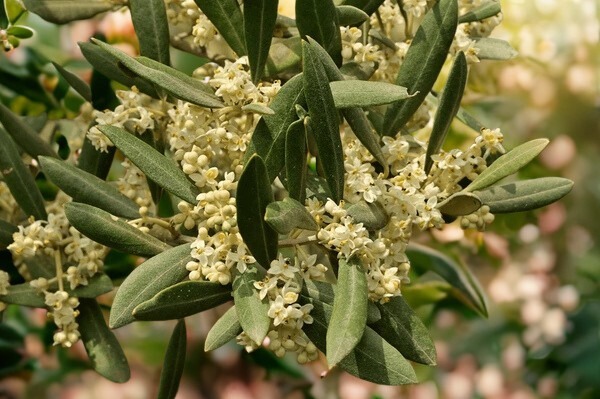
Photo credit: “Landscape view of the flowers of an olive tree (Olea europaea)” by Zsolyomi, available on Shutterstock (Asset ID: 2470400251). Licensed via Shutterstock Royalty-Free License.