My Shopping Cart
| Bulk Discounts Prices | |
| Quantity | Price |
| 1 | $622.50 |
| Specification | Value |
|---|---|
| Product Name | INFACO 48V Lithium-Ion Battery |
| Voltage | 48V |
| Power Capacity | 120 Wh |
| Current Output | 3.8 A |
| Charge Time | 1.5 hours |
| Operational Time | Up to 9 hours (varies by tool and conditions) |
| Weight | 0.82 kg (1.8 lbs) |
| Battery Protection | Integrated BMS (cell protection & balancing) |
| Compatibility | F3020, F3015, PW2, PW3, 48V A3Mv2.0 |
| Warranty | 5-year pro-rated |
| Included | Battery only (no cables, vest, control box) |
In the Australian Olive Industry
Please contact us if you would like to be listed?
OBJECTIVES OF PRUNING
Train and Shape Olive trees, Maintain or Increase Production and Improve Harvest Efficiency
Training helps giving the tree the optimal shape to allow for efficient harvest as well as achieving early crops.
Once the trees have reached their optimum canopy volume for the environmental conditions of the area, it is likely that the yields could start declining. This is due to the fact that the inner part of the canopy does not receive sufficient sunlight, which causes defoliation, resulting in a low Leaf to Wood Ratio.
If the tree grows above its optimum size, it creates serious issues for the harvester machines. The tree becomes too high and too wide for the machines, it has thick branches that can cause damage on the picking heads and also reduces the removal efficiency of the machine as well as slows down the harvesting speed.
It is a fact that to produce fruit, Olive trees need to grow and produce new branches each year; therefore the trees need to grow every year. It is here where pruning becomes a very useful management tool.
Pruning helps increasing Fruit Size, Oil Yield, Light Interception and Leaf to Wood Ratio, it promotes new growth, and reduces water and fertiliser requirements.
see the full article at:
1- Tree Training
Objectives: Achieve early start of production with higher yields, increased number of production years, higher fruit quality, prepare the trees for the type of harvester that is going to be used on the grove.
Training takes place during the first 3 years of the tree life.
During the first year minimum pruning is required (provided the trees come with a suitable shape from the nursery), lower and vigorous branches competing with the leader should be removed. The aim is to encourage a straight vertical trunk with horizontal branches coming out. Water shoots must be removed to stop competition for water and nutrients.
On the second and third year the aim is to remove lower branches below 600-700-800-1000mm (must be done gradually).
“Always keep in mind that if we prune too hard is because either we came too late or because we do not know what to do”.
There must be a balance between what is taken out and what is left on. If we remove too much canopy, we have a negative effect on the tree, because we are removing photosynthetic area setting the tree back for a while until it starts growing again.
Light pruning is a process by which we only take a small amount of foliage (a couple of small branches), therefore we are not affecting tree balance. That is why it can be done from August until the end of May.
Heavier pruning in this process we take a large amounts of foliage therefore we are promoting a stronger reaction from the tree, this makes it susceptible to frost damage. That is why we should be delaying it until the end of September unless the weather is warmer. If that is the case we could start at the beginning of September.
Tree training not only involves light and heavy pruning but also tree tying and skirting.
2- Production
This type of pruning is performed on mature trees once they have reached full size. It has the aim of balancing the tree to obtain uniform and constant production every year.
As we all know when trees are young there is a larger number of non productive branches and that is because those branches are actively growing, but once they have reached their potential, they stop growing and start producing fruits, after a while those branches are exhausted and they stop producing, therefore they should be removed, to encourage new growth and renew the tree.
If bloom is light, pruning can be confined to non-productive parts of the tree, preserving as much bloom and potential crop as possible. In years of heavy bloom, pruning can be more severe without excessive crop removal.
Time of pruning: bud break until early December.
3- After Harvest (Cleaning)
The aim is to clean up the large broken branches that are left after the harvesters have gone through the grove. We could avoid it by spraying the trees with copper after harvest and wait until spring to take the damaged wood out.
View Industry Contracting Services in a full screen map
The F3020 Electrocoup Electric Pruner
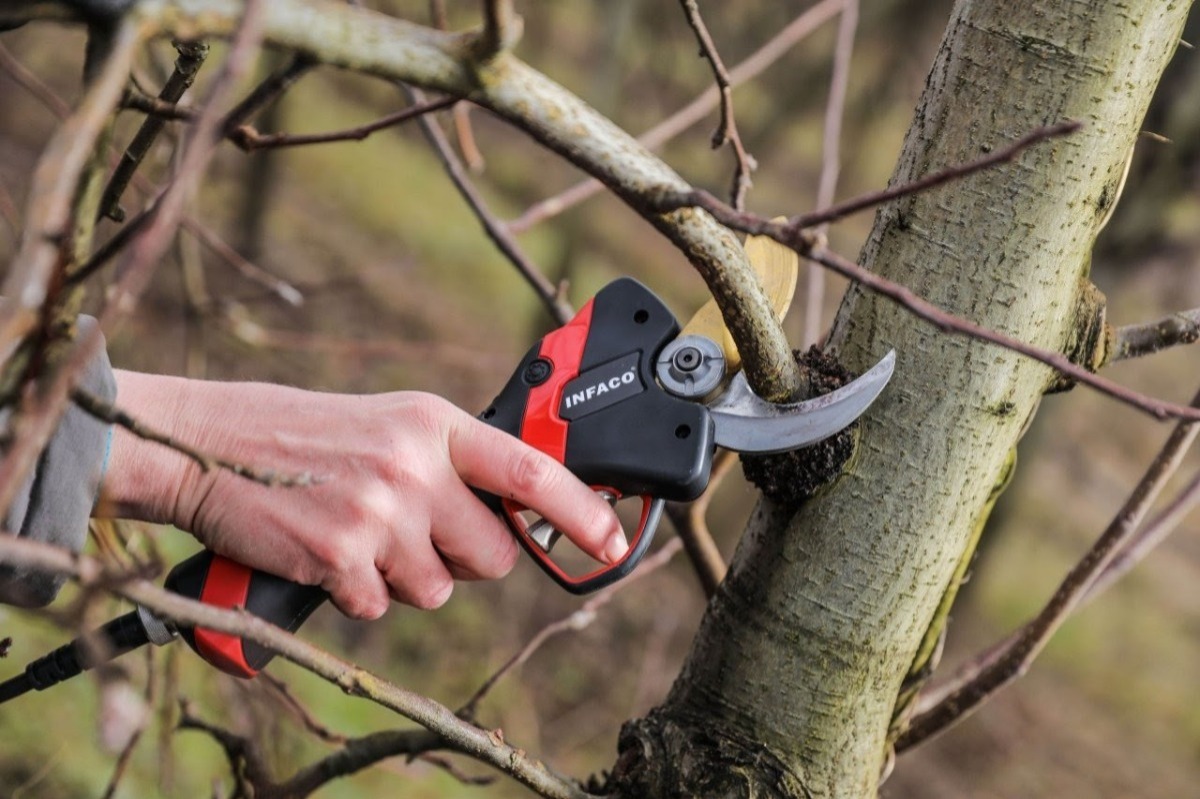
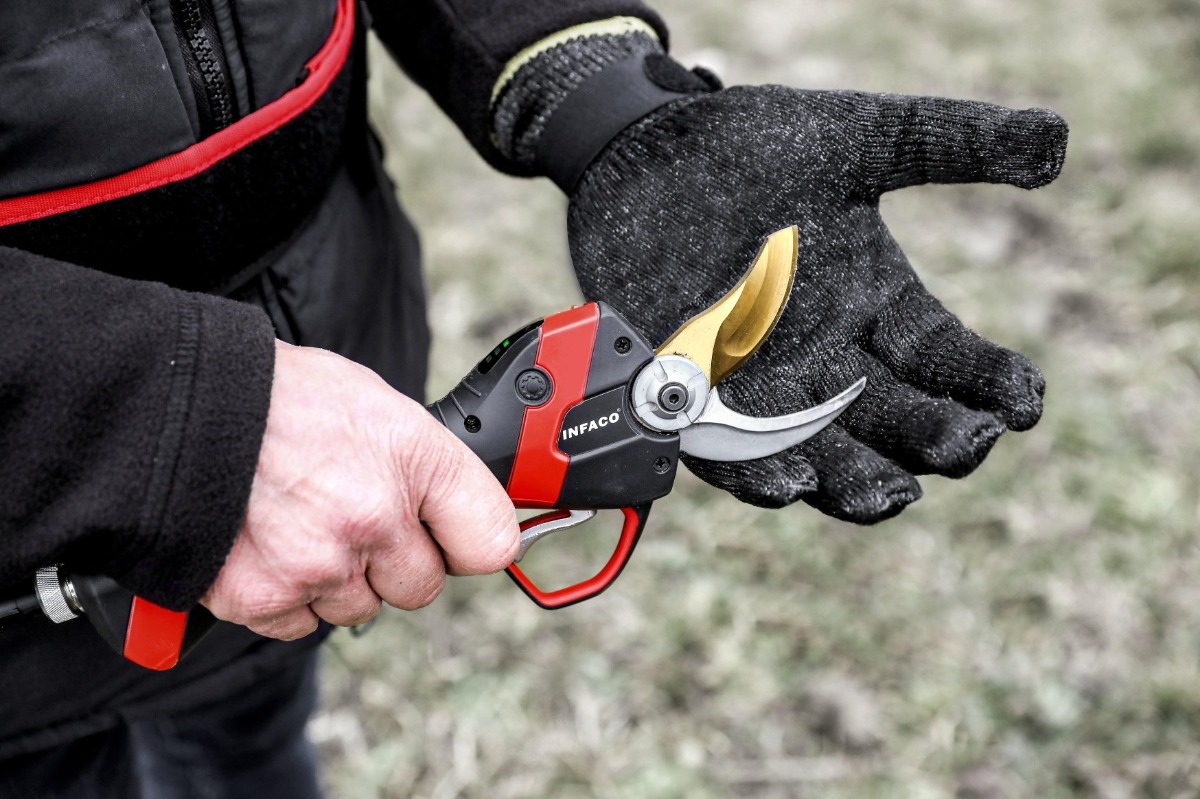
INFACO is proud to present the latest, most technologically advanced electric shears on the market.
The Electrocoup F3020 offers a technologically advanced secateur packed with a multitude of features.
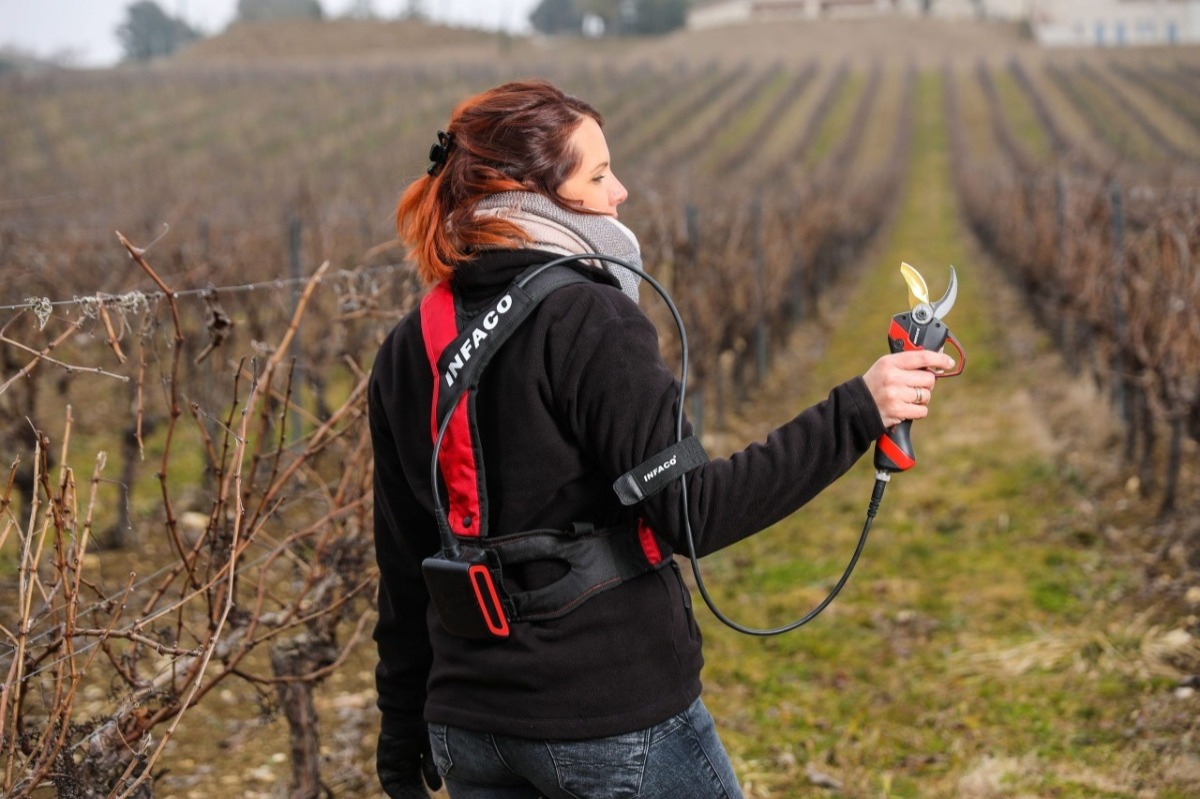
The F3020 Electrocoup weighs less and is more compact which offers improved efficiency and faster-cutting speed, making the new generation F3020 a total advancement in features. The separate battery and shear design ensures the handpiece has minimal weight maximising ergonomics, reducing fatigue, and providing a streamlined efficient day of pruning.
____________________________________________________________________
____________________________________________________________________
____________________________________________________________________
The Electrocoup F3020 pruners are now fitted with some of the most hi-tech and powerful microcontrollers in the market that are used in mobile phones and computer technology. This technology results in improved user function and innovation enabling more data to be compiled and analyzed by the pruning shear to improve the F3020 performance.
Progressive Blade Advance at Full Speed (+15% vs F3015)
The Standard mode is for experienced users and for those who are willing to take full advantage of the tool's increased cutting speed capabilities.
____________________________________________________________________
Progressive Blade Advance is at a slightly reduced speed
The Soft Mode is for users who prefer a slower cutting speed or beginners who are new to the trade. Same speed as the previous model F3015. (refer to the video to see soft mode in operation).
____________________________________________________________________
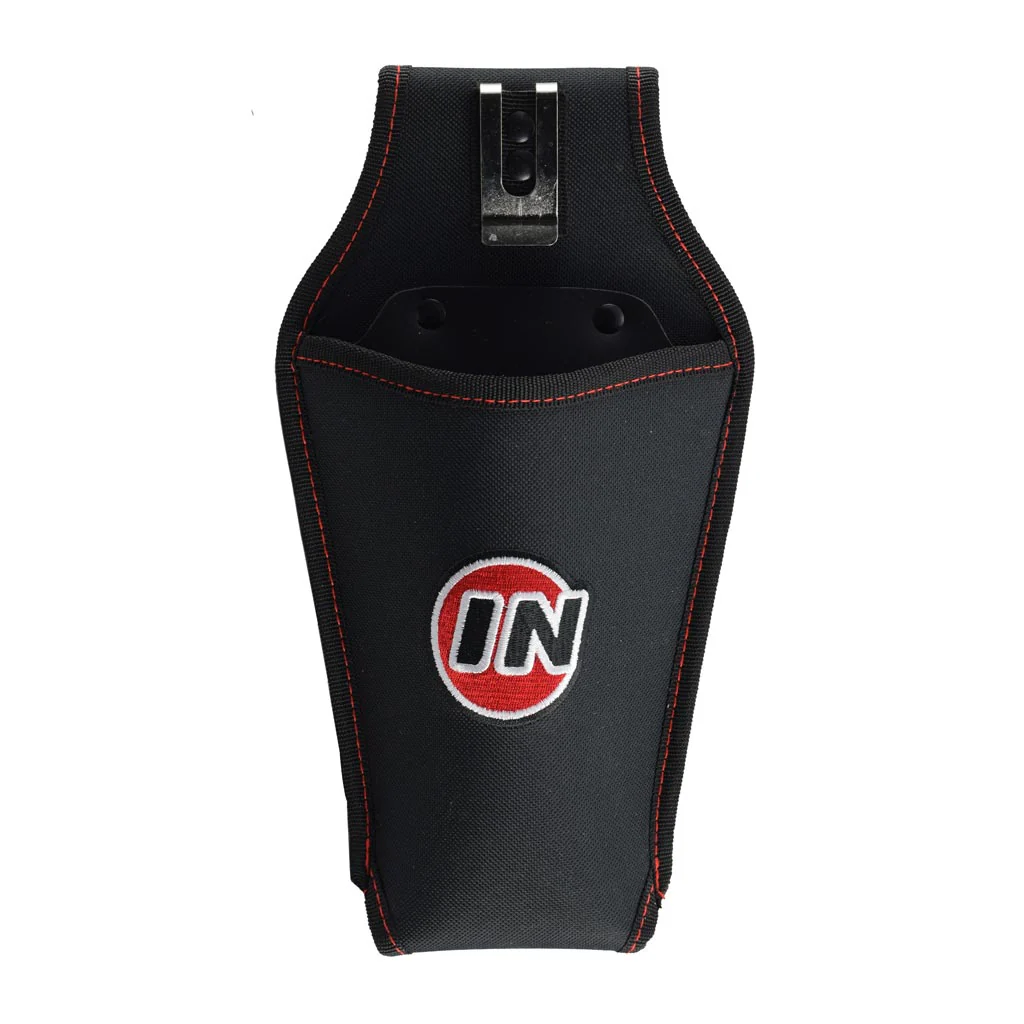
The new patented shear holder provides the cutting head protection and storage in just two actions.
Available for Standard and Medium heads.
** Fitted with Quick Lock-Unlock
The removable accessory holder is included with your F3020 kit and allows you to store your smartphone within hands-reach.
A large zipped central pocket guarantees safe storage of sharpening stone, burnishing tools etc.
The Electrocoup F3020's new Cobalt L100B Lithium-ion battery weighs just 698 grams compared to 810 grams from the F3015. Its voltage is now 36 Volts as compared to the 48 Volts*** on the old F3015 model. However, the 48v battery from previous units is compatible with the new F3020. We can offer an optional 48v battery if you would like to make your previous units cross-compatible.
Its sleek design and small footprint will give you a day of pruning without recharging. With its versatile carrying system, the F3020 battery can be easily slipped into the user's pocket or clipped to a belt, giving the user an effortless pruning experience.
Battery used with Shoulder Straps and Waist Belt
Battery Used with Waistbelt Only
Battery Clipped on to Trousers
How long does it take to charge the battery?
The new F3020 Chargers are designed to charge the battery up in 2hrs. Similar to its predecessor, the new charger enables the battery to be charged up to 90% in 1.5Hrs and full charge is achieved in 2Hrs.
Can the battery remain on the vest while charging?
The new connector plug allows for the battery to charged up while on the vest making it more practical and easier to use.
How does the Battery Sleep Mode work?
The "Sleep Function" on the charger helps the battery fall in to an extended storage state thus optimizing its storage life. Recharging the battery is no longer required during the off-season. Just press the sleep button once after the pruning season and it does its thing for the next few hours. Once the sleep process is complete, the battery can be stored in its case in a cool, dry place until the following season.
Infaco, the manufacturers of the Electrocoups, have always prioritized user safety over the years. A true pioneer in technology, the company has continually invested time and resources in order to ensure an innovative and safe experience for its users operating the Electrocoups. Today, the all-new Electrocoup F3020 come fitted with the wireless DSES system and is a standard feature on all units.
The Wireless DSES system comprises of a conductive metal trigger enabling a connection between the users body and the pruner's patented electronic system. While operating, if and when the cutting head touches any part of the opposite hand, the pruning shear blade opens instantly thereby preventing accidents.
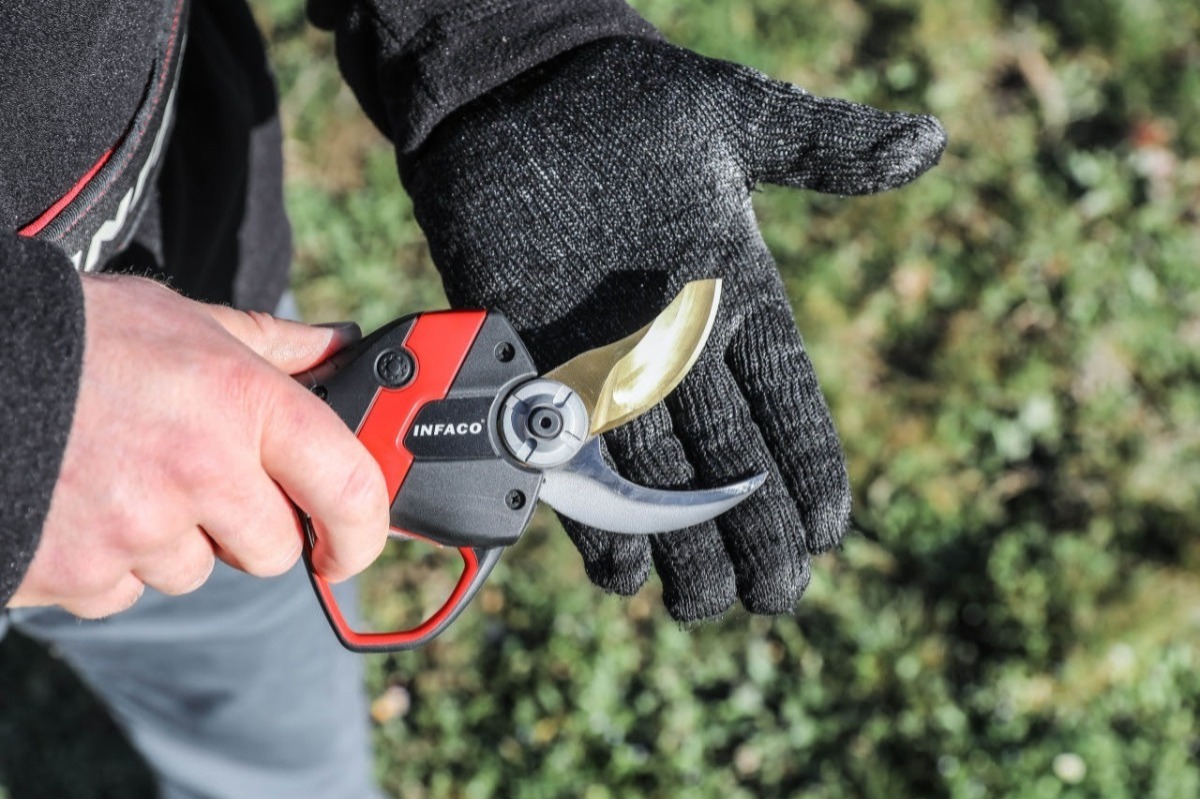
The Wireless DSES system operates in direct contact with the skin. However, each individual has their own level of conductivity. In order achieve a continuous level of high conductivity and better protection, INFACO recommends the use of its special conductive gloves.
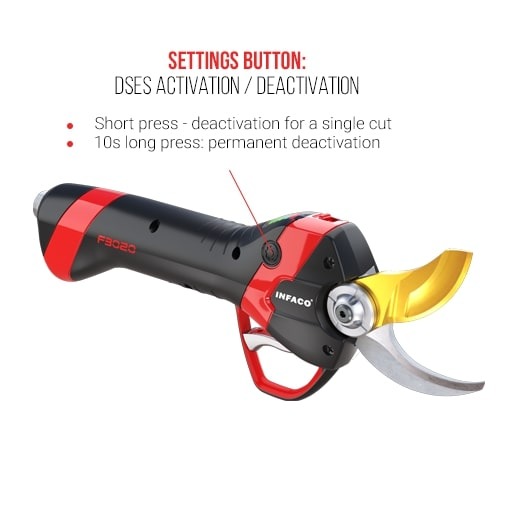
The Wireless DSES system may sometime trigger unintended opens on damp wood, sappy wood or when close to the ground. To prevent this from happening users now have the option of turning OFF & ON the DSES feature when required using the settings button.
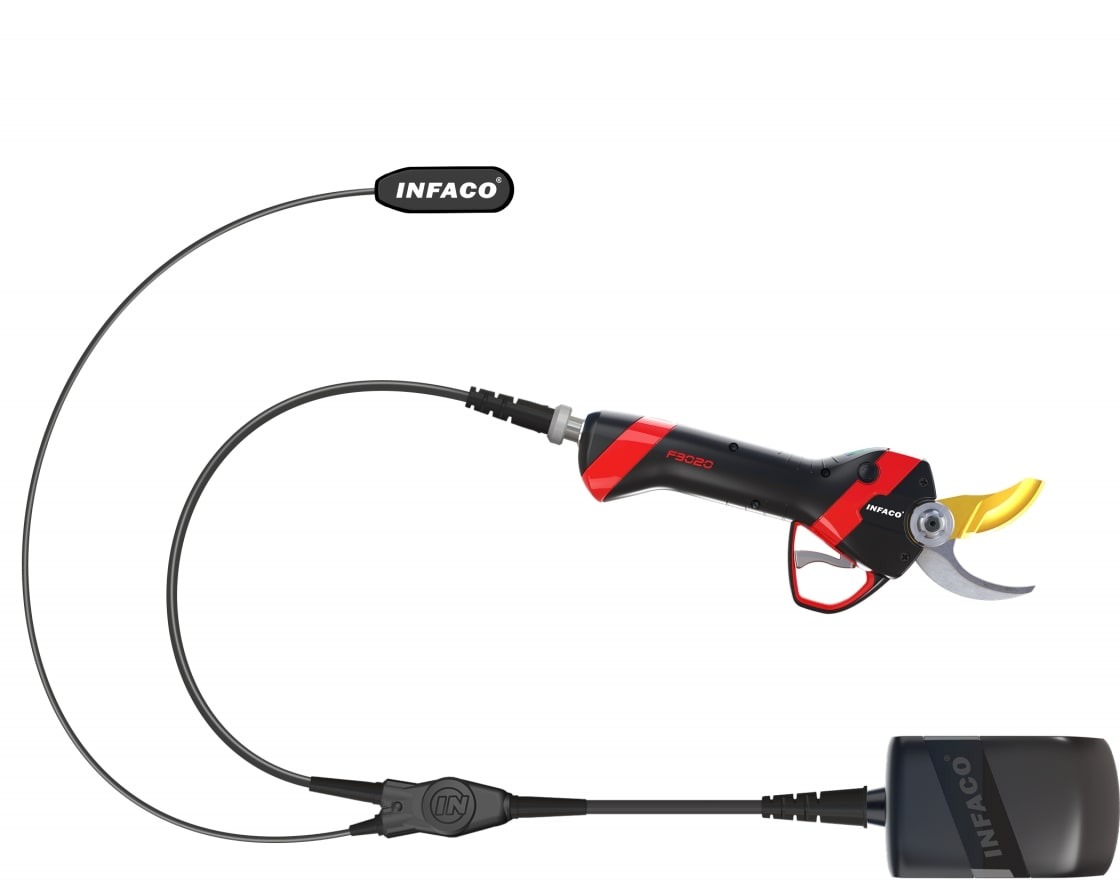
Contrary to the wireless system, the wired DSES option requires the user to wear the conductive glove that is physically connected to the handpiece by a power supply cable. The wired DSES system provides the user the same protection while reducing unintentional opening of the blade because of damp or sappy wood.
Similar to its most recent predecessors, Electrocoups remain the only shears in the world with 3 interchangeable heads with adjustable blade opening and DSES safety systems. One of the tool's main assets is its versatility to use multiple cutting heads. With the options of the Standard Kit, Medium Kit or the Maxi Kit, users can easily swap the heads over in under 5 mins to meet the demands of the cutting application. Kits are optional and not part of the standard kit. Please ask for details.
Ideal for pruning grapevines and orchard pruning. This kit achieves the highest results for cutting rate and power.
Designed especially for fruit growers, forestry, and landscaping. This kit offers a higher cutting capacity while maintaining speed for relevant applications.
Perfect for cutting back vines, shaping fruit trees, and tree lopping. This kit with a single-piece blade-rack combo will give unrivaled cutting capacity.
Infaco's design engineers have completely revolutionized the pole system by creating an ergonomic and innovative solution. There are 2 different kinds of pole options available with this new model. First option is the pole can be connected to the battery through a cord and the second option is the battery can be plugged in at the bottom of the pole. Both options have the cord on the sliding handle eliminated and replaced by a more advanced wireless Bluetooth technology making it easy and convenient to use.
Pole size options in the image to right.
____________________________________________________________________
Extension Pole with Wired Battery Connection
Extension Pole with Plug In Battery
*** Battery not included with Pole
____________________________________________________________________
Regular blade sharpening reduces the cutting force exerted on the motor of the Electrocoup and also helps to reduce motor stress. Infaco recommends the use of the optional electric sharpener to help keep the blade profile sharp. Thanks to its 3-pin connector plug, the A48V3 electric sharpener is now compatible with the Electrocoup F3005, F3010, F3015, and F3020 batteries. It saves significant time on daily sharpening and maintains a good cutting profile on the blade.
See video at 1:02 for the A48V3 Electric Sharpener in action.
The new tungsten carbide burnisher helps maintain a good cutting edge on the blade. A sharp blade guarantees a good clean cut and reduces the risk of spreading wood diseases. In addition to 2 recommended daily sharpening sessions with the stone, it is also advised to use the new Carbide Burnisher to maintain a sharp edge on the blade for a good clean cut.
With latest innovations in wireless connectivity, the Electrocoup F3020 pruning shears can be connected to the newly designed INFACO mobile app (available exclusively on Android and iOS compatible smartphones) through the Bluetooth Control Box.
The app provides a wide array of features that assists Electrocoup users in day to day operations:
The app also allows users (without the Bluetooth Control Box)
I've been working in the horticultural equipment industry and it is amazing a number of times you see the wrong tools being used for the job. ?It ends up that a grower may not be comfortable using the equipment and not get the efficiency from the tool. ?Today we are going to look at Pruning Saws. ?Of course, we have a range of Pruning Saws and you will notice that some have a straight blade and some have a curved blade. ?Why do they make them because one is better than the other? ?... no...
Let's look at the reasons why you would use one over the other
Straight blades are designed to have a reach between say your hips and around your head height. ?When you place the blade into the tree you will notice that the action of your arm is also forward to back and feels quite comfortable when you do this action within the range of the tree.
Curved blades, however, are designed for work where to you need to reach up into the tree or below the waist. ?If you prune material between the range of straight blades??(i.e. ?hip to head height region) then you tend to automatically sway or curve the saw to meet the curvature action of the blade.
So there you have it! ?We recommend if you have a grove then you need two types of saws on hand; one straight and one curved.
HANDY TIP: ?Remember most of the saws available today are in fact what I call 'Pull saws' which means they make their cut on the pulling action of the blade. ?You shouldn't push or force the blade forward when pruning as this does nothing and makes the work much harder.
See our range of Pruning Saws
https://www.youtube.com/watch?v=Aw07LJ0DOI0
Infaco has released the DSES Wireless Safety Pruning System which is a new innovation released after a 3-year field trial.? The DSES System has now won a Gold award at SIVAL Innovation 2019 in France.
The DSES WIRELESS* system is a new safety device to protect users of electric shears from cuts.? The device instantly responds to any contact with the skin or a conductive glove.? Invented and patented by INFACO and its partners, this WIRELESS system protects any part of the user?s body coming into contact with the shears? cutting head: for MAXIMUM SAFETY and ERGONOMICS!
After 25 years at the forefront of the anti-cutting safety business, the INFACO company is now the first manufacturer worldwide to design and sell electric shears featuring an anti-cutting safety device; until now, users were required to wear a glove wired to the shears? control box.
[caption id="attachment_961" align="alignleft" width="630"]
Upon the secateur touching the skin of the user the safety system activates and makes the unit unusable for the time the unit is in contact with the skin.? See the red indicator light on the secateur.? Electrocoup F3015 Wireless DSES System Wins International Award for french company Infaco.[/caption]
With the next generation of the DSES WIRELESS* system, operators no longer need additional equipment: no glove, no wire! A conductive trigger (patented system) connects the user?s body to the electronic system in the shears. The latter detects any contact between the cutting head and the operator?s skin.? When this occurs, the system immediately initiates the re-opening of the shears? blades thus avoiding an accident.
If DSES WIRELESS* users wish to wear protective gloves in cold weather, the system requires non-matching INFACO conductive gloves be worn on the hand holding the shears (little wear) and the hand holding the wood to be cut.
To prevent users from getting hurt, INFACO is intent on making the DSES WIRELESS* safety system available to as many customers as possible.? It has undergone trial in Australia and is available now.
The goods news is that in about March 2020, INFACO will be releasing an upgrade "wireless kit" for the existing F3015 users.
*Additional wireless electronic safety device
Read more about F3015 Electrocoup
See video of the new DSES Wireless system in use:
https://www.youtube.com/watch?v=o0I_VSfbUI8
08/11/19:? Pruning techniques and timing are always a misunderstood practice throughout the olive growing community.? This study is interesting because it delves into simulated mechanical pruning and also introduces the potential use of plant growth regulators.
Pruning is a necessary grove management practice to assist in maintaining appropriate canopy size and promote higher levels of flowering in olive groves.? Recent studies assessing the agronomic responses to mechanical pruning have found that moderate to severe winter mechanical hedge pruning can result in a vigorous vegetative growth response the next season which could reduce subsequent flowering for up to three seasons.
The latest research out of Argentina highlights a potential direction in findings that plant growth regulators need to be assessed in its use for increasing fruit yield.
The study looked at the different techniques for the impact of increasing flowering and fruit yield which included:
Researchers noted ?The thinning of the new water sprouts at pit hardening 4 months after the simulated mechanical winter pruning reduced tree size and improved the return flowering and yield but is time-consuming.? Whilst tip heading was not effective in controlling shoot growth nor promoting flowering on new shoots.?
?The encouraging responses to plant growth regulator on unpruned trees indicate the need for further studies combining winter pruning with MC applications in the 2000?3000 ppm range at pit hardening and at other phenological stages and for several consecutive years to confirm whether this practice is a better post pruning management tool."
This research is interesting because the use of plant growth regulators could become an important tool for improving flowering and fruit yields.? With the current drought conditions looking at alternative techniques to improve fruit yield could be a game-changer for the Olive Industry and should be explored.
_____________________________________________
Responses of Shoot Growth, Return Flowering, and Fruit Yield to Post-Pruning Practices and Growth Regulator Applications In Olive Trees
Abstract
Winter mechanical hedge pruning of olive trees can result in a strong post-pruning shoot growth response and a low return flowering intensity the following year. However, post-pruning practices including tip heading, water sprout thinning, and the application of the growth inhibitor mepiquat chloride (MC) may positively reduce subsequent vegetative growth and promote flowering. Two experiments were carried out with the aim of addressing the following questions: (1) Do these post-pruning practices applied on trees that received simulated mechanical pruning during the winter reduce growth and increase flowering in the spring of the following year?; and (2) What is the optimal MC dose in unpruned trees needed to increase flowering the following spring? In the first experiment, five-year-old olive trees (cv. Arbequina) growing in a fairly low-density orchard (208 trees ha-1) were hedge pruned at the end of winter using manual clippers on the east and west sides to simulate mechanical disk pruning, and the post-pruning treatments were applied at the pit hardening stage (early summer). In the second experiment, foliar or soil application of MC was performed at pit hardening in unpruned trees. The results show that tip heading of new shoots led to a large number of lateral shoots that flowered little, or not at all, the following spring. In contrast, the water sprout thinning treatment had sufficient flowering to significantly increase fruit number and yield the following year compared to tip heading. Foliar application of MC (1500 ppm) after winter pruning did not inhibit new shoot growth, return flowering was low, and yield was less than the water sprout thinning treatment. The lack of a post-pruning response to foliar MC was likely related to the dose used (1500 ppm). In the second experiment, a foliar application of MC at 3000 ppm was associated with greater return flowering and yield than the untreated control. In conclusion, thinning of vigorous water sprouts at the pit hardening stage three months after simulated winter mechanical hedge pruning can improve fruit number and yield the next year, especially on a per canopy volume basis. Furthermore, the responses to foliar MC application in unpruned trees suggest that more detailed post-pruning studies with MC application doses in the 2000?3000 ppm range and at additional phenological stages should be performed over several consecutive years to assess whether this practice could be a suitable management tool.
Results The effects of water regimes on the plant water status, photosynthetic performance, metabolites fluctuations and fruit quality parameters were evaluated. All DIS treatments enhanced leaf tissue density, RDI and SDI generally did not affect leaf water status and maintained photosynthetic machinery working properly, while SDIAF treatment impaired olive tree physiological indicators. DIS treatments maintained the levels of primary metabolites in leaves, but SDIAF plants showed signs of oxidative stress.
Moreover, DIS treatments led to changes in the secondary metabolism, both in leaves and in fruits, with increased total phenolic compounds, ortho-diphenols, and flavonoids concentrations, and higher total antioxidant capacity, as well higher oil content.
Phenolic profiles showed the relevance of an early harvest in order to obtain higher oleuropein levels with associated higher health benefits.
Conclusion Different treatments (or curing methods) that are necessary to remove the bitterness of the raw olive and to stabilize them to obtain edible table olives, causing a loss in phenolic substances which also results in a loss of anthocyanins and antioxidant activity. However, CdN black table olives were the richest in polyphenols, consequently possessing the best antioxidant activity among the analyzed black table olives and among other black table olives reported in literature.? Moreover, it is plausible that regular consumption of CdN table olives can give real returns in terms of prevention of oxidative stress.
Authors: V aleriaAlbarrac?na1, Antonio J.Hallb, Peter S.Searlesa, M. CeciliaRousseauxa
Read the full study at Scientia Horticulture
?It is a fact that to produce fruit, olive trees need to grow and produce new branches each year?Training helps give the tree the optimal shape to allow for efficient harvest as well as achieving early crops.
Once the trees have reached their optimum canopy volume for the environmental conditions of the area, it is likely that the yields could start declining. This is due to the fact that the inner part of the canopy does not receive sufficient sunlight, which causes defoliation, resulting in a low Leaf to Wood Ratio.
If the tree grows above its optimum size, it creates serious issues for the harvester machines.? The tree becomes too high and too wide for the machines, it has thick branches which can cause damage on the picking heads and also reduces removal efficiency of the machine as well as slows down the overall harvesting speed.
It is a fact that to produce fruit, Olive trees need to grow and produce new branches each year; therefore the trees need to grow every year. It is here where pruning becomes a very useful management tool.
Pruning helps increase Fruit Size, Oil Yield, Light Interception, and Leaf to Wood ratio, it promotes new growth and reduces water and fertiliser requirements.
Timing: training takes place during the first 3 years of tree life.During the first year minimum pruning is required (provided the trees come with a suitable shape from the nursery), lower and vigorous branches competing with the leader should be removed. The aim is to encourage a straight vertical trunk with horizontal branches coming out. Water shoots must be removed to stop competition for water and nutrients.?
On the second and third year the aim is to remove lower branches below 600-700-800-1000mm (must be done gradually)?
There must be a balance between what is taken out and what is left on.? If we remove too much canopy, we have a negative effect on the tree, because we are removing photosynthetic area setting the tree back for a while until it starts growing again.
Light pruning is a process by which we only take a small amount of foliage (a couple of small branches), therefore we are not affecting tree balance. That is why it can be done from August until the end of May.
Heavier pruning in this process we take large amounts of foliage therefore we are promoting a stronger reaction from the tree, this makes it susceptible to frost damage. That is why we should be delaying it until the end of September unless the weather is warmer. If that is the case we could start at the beginning of September.
Tree training not only involves light and heavy pruning but also tree tying and skirting.
This type of pruning is performed on mature trees once they have reached full size. It has the aim of balancing the tree to obtain uniform and constant production every year.As we know when trees are young there is a larger number of non-productive branches and that is because those branches are actively growing, but once they have reached their potential, they stop growing and start producing fruits, after a while, those branches are exhausted and they stop producing, therefore they should be removed, to encourage new growth and renew the tree.
If bloom is light, pruning can be confined to non-productive parts of the tree, preserving as much bloom and potential crop as possible. In years of heave bloom, pruning can be more severe without excessive crop removal.
Time of pruning: bud break until early December.
More: