My Account
Sign-in / Join

Sign-in

Hi My Account

Dashboard

Logout

Cart

My Shopping Cart

Subtotal
${{total.toFixed(2)}}
QUOTE

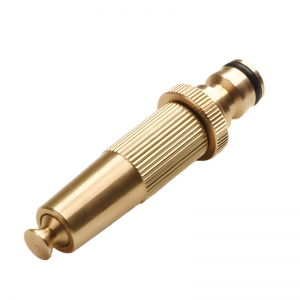
Adjustable Hose Nozzle – GWA2990 (AIFA)

Delivery charges apply
Bulk Discounts Prices
Quantity Price
1 $3.75
Quantity

EAGWA2990
  • Description
  • Features
  • Enquiry
  • Specifications
  • Knowledge
Adjustable Hose Nozzle – GWA2990 (AIFA)

Delivery charges apply

Durable adjustable hose nozzle for controlled water flow, supplied on hang-sell display card.

The GWA2990 AIFA Adjustable Hose Nozzle is a practical, easy-to-use spray nozzle designed for everyday watering and wash-down tasks. Featuring an adjustable spray pattern, it allows quick control from a focused jet to a wider spray, making it suitable for gardens, nurseries and general outdoor use. Supplied on a hang-sell display card, this nozzle is ideal for retail or on-hand utility use.

Where this product is used

Commonly used for garden watering, plant care, cleaning tools and light wash-down tasks around homes, farms and workshops.

Adjustable Hose Nozzle GWA2990 – Technical Specifications

Specification Details
Model GWA2990
Brand AIFA
Spray type Adjustable (jet to spray)
Hose compatibility Standard garden hose connection
Packaging Hang-sell display card


Why choose this product

This adjustable nozzle provides simple, reliable control of water flow without complex mechanisms. Its versatile spray adjustment suits a wide range of tasks, while the retail-ready hang-sell packaging makes it convenient for storage or display.

Application guidelines

Attach securely to a compatible hose fitting. Adjust the nozzle head to select the desired spray pattern. After use, release water pressure and store away from prolonged direct sunlight.

FREQUENTLY ASKED QUESTIONS
The GWA2990 adjustable hose nozzle is used for everyday watering and light wash-down tasks, including garden watering, plant care, cleaning tools and general outdoor cleaning around homes, nurseries, farms and workshops.
The nozzle features an adjustable head that allows the user to change the spray pattern from a focused jet to a wider spray. This provides greater control over water flow depending on the task being performed.
The hang-sell display card makes the nozzle retail-ready, easy to store, and convenient for display in workshops, sheds or retail environments.

 
General main key features

• Adjustable spray control from jet to wide spray
• Suitable for standard 12 mm garden hoses
• Simple, durable design for everyday use
• Two-ended clamp connection
• Supplied on retail-ready hang-sell display card
  • :
  • :
  • :
  • :
  • :
  • :

Flushing your Irrigation System - Mains, Submains & Laterals

INFORMATION SHEET - IRRIGATION

Flushing your Irrigation System - Mains, Submains & Lateral

Flushing constitutes an important maintenance routine. In micro-irrigation systems provisions must be made to flush mains, submains and lateral lines to remove settled sediments.

Mainline should be flushed at scour valve locations, whilst submains are flushed at slushing points usually located at the ends of the lines while the system is running and allow water to run into a container until it runs clear. Collect some of the dirty water in a glass or clear plastic container and examine the contaminants. Take note of the nature of the impurities in the water. If there be significant amount of contaminant in the flush water, find out what it is. Does it appear to be bacterial slime? Are large aggregated particles present? Is there evidence of iron precipitation? Is there any material that could be sand from the media filter?

If unsure, have water examined and take corrective action to cure the problem. If chlorine or acid treatment is required follow the steps below for treatment.

Please note whenever a repair has been carried out on any pipe work in the system, flushing and cleaning of filtration will have to be carried out.

At the end of the season empty mainlines, field filters and valves and ensure all ball valves are opened to drain the water from within the ball and then shut again to prevent vermin and contaminants entering the system. This draining of components will help in preventing frost damage.

Chlorinating the System

Chlorination is recommended to reduce blockages due to organic matter. Chlorine is an oxidising agent that kills bacteria, algae and other organic matter and prevents new growth. Certain bacteria cause iron to precipitate and form a red filamentous sludge that attaches to pipes and may block emitters (sprinkler nozzles as well as drippers). Continuous injection of chlorine prior to the filter, at the rate of 0.5 ppm to 1 ppm, can also be used to precipitate the iron and prevent it moving past the filter.


The most common chlorine compounds are sodium hypochlorite (liquid) and calcium hypochlorite (solid). Sodium hypochlorite (10% chlorine) is easier to use and relatively safe.

There are four main chlorine application methods:-

  • intermittent treatment 
  • continuous treatment
  • superchlorination
  • end of season chlorination

The procedures below should be used as a guide to developing a procedure that suits your system, water conditions and management.

Intermittent treatment involves periodic sterilisation by chlorination and can also be used to prevent build-up of organic matter in the system. This is the most commonly used preventative treatment. 30 ppm chlorine is injected 3 - 4 times during the season.

Continuous Treatment uses a constant injection rate, usually of 5 to10 ppm, adjusted so that 1 ppm of chlorine is detectable at the end of the furthest lateral from the pump. A swimming pool tests kit can be used to detect chlorine and its level.

Optimising Olive Grove Layout

When establishing an olive grove, one of the most critical decisions you will make is the layout of your trees. The arrangement you choose will influence tree health, productivity, and long-term management efficiency. This guide will walk you through key considerations, including aspect, tree spacing, irrigation, harvesting methods, drainage, pruning, and marking out your olive grove.
Please log in to view the entire article

Optimised Irrigation in Olive Orchards – Dr. Giulia Marino

Optimised irrigation is critical for balancing olive tree water stress, yield and oil quality. This article outlines key principles of water management in olives, including evapotranspiration, crop coefficients and irrigation scheduling.
Please log in to view the entire article

Moisture Monitoring: A Key to Sustainable Olive Irrigation and Quality

Moisture monitoring helps olive growers save water, reduce costs, and boost oil quality by ensuring trees get the right amount of irrigation at critical growth stages.
Please log in to view the entire article