My Account
Sign-in / Join

Sign-in

Hi My Account

Dashboard

Logout

Cart

My Shopping Cart

Subtotal
${{total.toFixed(2)}}
QUOTE

Lowe No3 Mitre Pliers Secateur

Shipping calculated separately at checkout
Bulk Discounts Prices
Quantity Price
1 $83.80
Quantity

CAGT196
  • Description
  • Features
  • Enquiry
  • Specifications
  • Documents
  • Knowledge
  • Blog
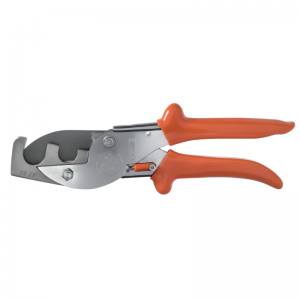
Lowe No.3 Mitre Pliers Secateur – Professional Precision Angle Cutter

Shipping calculated separately at checkout
Professional mitre cutting pliers designed for precise angle cuts in trims, mouldings, PVC and light metal applications.

The Lowe No.3 Mitre Pliers Secateur is a professional-grade precision cutting tool engineered for accurate angle cutting in finishing and installation work. Manufactured by Original LÖWE in Germany, this tool is designed to deliver clean, controlled cuts on mouldings, trims, seals and profiles with minimal effort. Featuring a sharp, replaceable carbon steel blade and optimised power transmission, the No.3 provides reliable cutting performance in both trade and workshop environments. Its compact design, integrated angle guides and ergonomic non-slip handles make it an indispensable tool for professionals requiring precision and consistency.

Where this product is used

The Lowe No.3 Mitre Pliers Secateur is widely used by painters, carpenters, tilers, parquet layers, varnishers and installers working with PVC trims, tile edge profiles, decorative mouldings and light metal components. It is ideal for finishing tasks where precise angle cuts are critical for a clean, professional result.

Lowe No.3 Mitre Pliers Secateur Technical Specifications

Specification Details
Cutting system Mitre pliers with straight blade
Maximum cutting length Up to 50 mm
Blade material Replaceable carbon steel blade
Angle stops 45° stop with markings for 15°, 30° and 90°
Overall length 210 mm (8.27 inches)
Weight 375 g
Handle material Ergonomic rubber, non-slip
Hand orientation Ambidextrous
Finish Powder coated body
Country of manufacture Germany

Why choose this product

The Lowe No.3 Mitre Pliers Secateur offers unmatched precision for angled cutting tasks thanks to its optimised leverage, sharp blade geometry and fixed angle stops. Unlike generic cutters, it delivers consistent professional results while reducing hand fatigue. Its replaceable blade and robust construction ensure long-term value for trade professionals.

Application guidelines

Position the material firmly within the cutting jaws and align it with the desired angle marking. Apply steady hand pressure to allow the blade to cut cleanly through the material. For best results, regularly inspect the blade for wear, keep the tool clean after use, and replace the blade when cutting performance declines.

Frequently Asked Questions
LÖWE pruners are manufactured in Germany and are known for their exceptional durability, precision cutting performance, and ergonomic design. They pioneered the original anvil cutting principle, which reduces cutting force and allows clean, powerful cuts with minimal strain.
  • Anvil Pruners: One blade closes onto a flat base (the anvil). Ideal for hardwood, deadwood, and tougher branches. They require less effort and prevent crushing.
  • Bypass Pruners: Two blades glide past each other like scissors. Ideal for green, living plant material because they produce a clean, smooth cut.
Two blades glide past each other like scissors. Ideal for green, living plant material because they produce a clean, smooth cut.
LÖWE pruners are built for:
  • Fruit orchards
  •  
  • Vineyards
  •  
  • Landscaping & forestry
  •  
  • Nursery production
  •  
  • Olive groves
  •  
  • General garden maintenance
​Professional arborists, growers, and horticulturists trust LÖWE for intensive daily use.
Yes. Every professional LÖWE pruner has fully replaceable parts including:
  • Blades
  •  
  • Anvils
  •  
  • Springs
  •  
  • Screws
  •  
  • Bumpers
  •  
  • Handles
This makes the tools extremely long-lasting and cost-effective.
Depending on the model, LÖWE offers
  • Classic straight handles
  • Ergonomic curved handles
  • Rotating handles (reduce wrist fatigue)
  • Different sizes to suit small, medium or large hands
This allows each user to choose the ideal fit for comfort and long hours of pruning.
Consider the following:
  • Type of wood: bypass for green wood, anvil for hard/dead wood
  •  
  • Hand size: choose handle size accordingly
  •  
  • Frequency of use: rotating handles reduce fatigue for heavy daily pruning
  •  
  • Branch diameter: select model with suitable cutting capacity
LÖWE’s catalog is segmented to help match pruners to specific tasks.
Cutting capacities range from 20 mm to 30 mm, depending on the model. Larger anvil models handle thicker hardwood; compact bypass models are ideal for precision work.
General main key features

• Precision mitre cutting for accurate angled trims
• Fixed angle stops with clear markings for consistency
• Replaceable carbon steel blade for long service life
• Ergonomic non-slip handles for controlled cutting
• Durable powder-coated construction for professional use
  • :
  • :
  • :
  • :
  • :
File Title File Description Type Section
Original-LOWE_GardenPRO2024-EN-compressed.pdf Lowe Pruning Catalogue and Spare Parts Diagrams Catalogue Document

Objectives of Pruning by Marcelo Berlanda

OBJECTIVES OF PRUNING


Train and Shape Olive trees, Maintain or Increase Production and Improve Harvest Efficiency

by Marcelo Berlanda

Marcelo High Density II.jpg

Training helps giving the tree the optimal shape to allow for efficient harvest as well as achieving early crops.

Once the trees have reached their optimum canopy volume for the environmental conditions of the area, it is likely that the yields could start declining. This is due to the fact that the inner part of the canopy does not receive sufficient sunlight, which causes defoliation, resulting in a low Leaf to Wood Ratio.

If the tree grows above its optimum size, it creates serious issues for the harvester machines. The tree becomes too high and too wide for the machines, it has thick branches that can cause damage on the picking heads and also reduces the removal efficiency of the machine as well as slows down the harvesting speed.

It is a fact that to produce fruit, Olive trees need to grow and produce new branches each year; therefore the trees need to grow every year. It is here where pruning becomes a very useful management tool.

Pruning helps increasing Fruit Size, Oil Yield, Light Interception and Leaf to Wood Ratio, it promotes new growth, and reduces water and fertiliser requirements.


see the full article at:

1- Tree Training

Objectives: Achieve early start of production with higher yields, increased number of production years, higher fruit quality, prepare the trees for the type of harvester that is going to be used on the grove.

Training takes place during the first 3 years of the tree life.

During the first year minimum pruning is required (provided the trees come with a suitable shape from the nursery), lower and vigorous branches competing with the leader should be removed. The aim is to encourage a straight vertical trunk with horizontal branches coming out. Water shoots must be removed to stop competition for water and nutrients.

On the second and third year the aim is to remove lower branches below 600-700-800-1000mm (must be done gradually).

“Always keep in mind that if we prune too hard is because either we came too late or because we do not know what to do”.

There must be a balance between what is taken out and what is left on. If we remove too much canopy, we have a negative effect on the tree, because we are removing photosynthetic area setting the tree back for a while until it starts growing again.

Light pruning is a process by which we only take a small amount of foliage (a couple of small branches), therefore we are not affecting tree balance. That is why it can be done from August until the end of May.

Heavier pruning in this process we take a large amounts of foliage therefore we are promoting a stronger reaction from the tree, this makes it susceptible to frost damage. That is why we should be delaying it until the end of September unless the weather is warmer. If that is the case we could start at the beginning of September.

Tree training not only involves light and heavy pruning but also tree tying and skirting.

2- Production

This type of pruning is performed on mature trees once they have reached full size. It has the aim of balancing the tree to obtain uniform and constant production every year.

As we all know when trees are young there is a larger number of non productive branches and that is because those branches are actively growing, but once they have reached their potential, they stop growing and start producing fruits, after a while those branches are exhausted and they stop producing, therefore they should be removed, to encourage new growth and renew the tree.


If bloom is light, pruning can be confined to non-productive parts of the tree, preserving as much bloom and potential crop as possible. In years of heavy bloom, pruning can be more severe without excessive crop removal.

Time of pruning: bud break until early December.

3- After Harvest (Cleaning)

The aim is to clean up the large broken branches that are left after the harvesters have gone through the grove. We could avoid it by spraying the trees with copper after harvest and wait until spring to take the damaged wood out.


Pruning Medium Density Olive Trees by Paul Vossen - University of California

Paul Vossen, a renowned olive oil production expert and former farm advisor with UC Cooperative Extension, presents a hands-on tutorial focused on pruning medium-density olive trees for optimal health, structure, and productivity.
Please log in to view the entire article

Mechanical vs Hand Pruning in Traditional and SHD Olive Groves

Discover the pros and cons of vs hand pruning in olive groves. This guide compares traditional and super high-density (SHD) systems, showing how pruning methods affect yield, costs, and tree health. Learn best practices to boost productivity, reduce labor, and manage disease for a more sustainable olive orchard.
Please log in to view the entire article

Optimising Olive Tree Health and Yield Through Effective Pruning

SMART PRUNING FOR STRONGER, HIGHER-YIELD OLIVE TREES

Optimising Olive Tree Health and Yield Through Effective Pruning

By Marcelo Berlanda, Agronomist & Consultant for The Olive Centre

“Olive trees must put out fresh growth each year to produce fruit.”

Training shapes the tree to support efficient harvesting and encourage early production

When trees reach the canopy size best suited to their environment, yields may begin to drop. This often happens because the inner canopy receives limited sunlight, leading to leaf loss and a reduced Leaf-to-Wood Ratio. If a tree grows beyond its ideal size, it creates challenges for mechanical harvesters. Excess height and width, along with thick branches, can strain or damage harvesting equipment, reduce fruit removal efficiency, and slow the harvest. Because olive trees need to produce new shoots annually to maintain fruiting, consistent growth is essential—and pruning becomes an important management practice. Pruning improves fruit size, oil content, light penetration, and the Leaf-to-Wood Ratio. It also stimulates fresh growth and lowers water and fertiliser demand. 

1- TREE TRAINING 

Purpose: Establish early productivity with stronger yields, extend the productive lifespan of the tree, enhance fruit quality, and prepare trees for the harvesting system used in the grove. 

Timing: Training occurs within the first three years of the tree’s development. 


In the first year, pruning is minimal (assuming nursery trees arrive with a good structure). Remove lower or overly vigorous branches that compete with the central leader. The goal is to maintain an upright main trunk with outward-growing horizontal branches. Water shoots should be removed so they do not compete for nutrients and moisture.

During the second and third years, gradually remove lower branches below approximately 600–1000 mm. 

A balance is essential. Removing too much canopy reduces the tree’s photosynthetic area, slowing its progress until new growth resumes.

Light pruning involves removing only small sections of foliage (such as a few short shoots), which keeps the tree stable. This can be done from August through late May. 

Heavy pruning removes larger amounts of foliage, prompting a stronger regrowth response but also increasing frost risk. Heavy cuts should generally be delayed until late September unless conditions are warm enough to begin earlier. 

Tree training may also include tying and skirting as part of shaping and preparation.

2- PRODUCTION 

This stage focuses on mature trees that have reached full size. The aim is to maintain balance so the tree can produce consistent, reliable crops each year.


Young trees contain many non-productive branches because they are still actively growing. Once these branches mature and begin producing fruit, they eventually become exhausted and stop fruiting. At that point, they need to be removed to make room for new productive growth and renewal of the canopy. 

LoIf the bloom is light, pruning should focus mainly on non-productive wood to preserve as much fruiting potential as possible. In years with heavy bloom, pruning can be more assertive without significantly reducing the crop. 

Timing: From bud break through early December.

3- AFTER HARVEST (CLEANING) 

The goal at this stage is to remove large damaged branches left behind after mechanical harvest. This step can be postponed by applying copper after harvest and waiting until spring to remove the affected wood.

Read More:Marcelo BerlandaMechanical PruningMechanical Harvesting

Pruning & Plant Growth Regulators To Increasing Fruit Yield

08/11/19:? Pruning techniques and timing are always a misunderstood practice throughout the olive growing community.? This study is interesting because it delves into simulated mechanical pruning and also introduces the potential use of plant growth regulators.

Pruning is a necessary grove management practice to assist in maintaining appropriate canopy size and promote higher levels of flowering in olive groves.? Recent studies assessing the agronomic responses to mechanical pruning have found that moderate to severe winter mechanical hedge pruning can result in a vigorous vegetative growth response the next season which could reduce subsequent flowering for up to three seasons.

The latest research out of Argentina highlights a potential direction in findings that plant growth regulators need to be assessed in its use for increasing fruit yield.

The study looked at the different techniques for the impact of increasing flowering and fruit yield which included:

  • Tip heading of new shoots
  • Thinning of vigorous new shoots
  • Application of growth regulators - Mepiquat Chloride (MC)

Researchers noted ?The thinning of the new water sprouts at pit hardening 4 months after the simulated mechanical winter pruning reduced tree size and improved the return flowering and yield but is time-consuming.? Whilst tip heading was not effective in controlling shoot growth nor promoting flowering on new shoots.?

?The encouraging responses to plant growth regulator on unpruned trees indicate the need for further studies combining winter pruning with MC applications in the 2000?3000 ppm range at pit hardening and at other phenological stages and for several consecutive years to confirm whether this practice is a better post pruning management tool."

This research is interesting because the use of plant growth regulators could become an important tool for improving flowering and fruit yields.? With the current drought conditions looking at alternative techniques to improve fruit yield could be a game-changer for the Olive Industry and should be explored.

_____________________________________________

Responses of Shoot Growth, Return Flowering, and Fruit Yield to Post-Pruning Practices and Growth Regulator Applications In Olive Trees

Abstract

Winter mechanical hedge pruning of olive trees can result in a strong post-pruning shoot growth response and a low return flowering intensity the following year. However, post-pruning practices including tip heading, water sprout thinning, and the application of the growth inhibitor mepiquat chloride (MC) may positively reduce subsequent vegetative growth and promote flowering. Two experiments were carried out with the aim of addressing the following questions: (1) Do these post-pruning practices applied on trees that received simulated mechanical pruning during the winter reduce growth and increase flowering in the spring of the following year?; and (2) What is the optimal MC dose in unpruned trees needed to increase flowering the following spring? In the first experiment, five-year-old olive trees (cv. Arbequina) growing in a fairly low-density orchard (208 trees ha-1) were hedge pruned at the end of winter using manual clippers on the east and west sides to simulate mechanical disk pruning, and the post-pruning treatments were applied at the pit hardening stage (early summer). In the second experiment, foliar or soil application of MC was performed at pit hardening in unpruned trees. The results show that tip heading of new shoots led to a large number of lateral shoots that flowered little, or not at all, the following spring. In contrast, the water sprout thinning treatment had sufficient flowering to significantly increase fruit number and yield the following year compared to tip heading. Foliar application of MC (1500 ppm) after winter pruning did not inhibit new shoot growth, return flowering was low, and yield was less than the water sprout thinning treatment. The lack of a post-pruning response to foliar MC was likely related to the dose used (1500 ppm). In the second experiment, a foliar application of MC at 3000 ppm was associated with greater return flowering and yield than the untreated control. In conclusion, thinning of vigorous water sprouts at the pit hardening stage three months after simulated winter mechanical hedge pruning can improve fruit number and yield the next year, especially on a per canopy volume basis. Furthermore, the responses to foliar MC application in unpruned trees suggest that more detailed post-pruning studies with MC application doses in the 2000?3000 ppm range and at additional phenological stages should be performed over several consecutive years to assess whether this practice could be a suitable management tool.

Results The effects of water regimes on the plant water status, photosynthetic performance, metabolites fluctuations and fruit quality parameters were evaluated. All DIS treatments enhanced leaf tissue density, RDI and SDI generally did not affect leaf water status and maintained photosynthetic machinery working properly, while SDIAF treatment impaired olive tree physiological indicators. DIS treatments maintained the levels of primary metabolites in leaves, but SDIAF plants showed signs of oxidative stress.

Moreover, DIS treatments led to changes in the secondary metabolism, both in leaves and in fruits, with increased total phenolic compounds, ortho-diphenols, and flavonoids concentrations, and higher total antioxidant capacity, as well higher oil content.

Phenolic profiles showed the relevance of an early harvest in order to obtain higher oleuropein levels with associated higher health benefits.

Conclusion Different treatments (or curing methods) that are necessary to remove the bitterness of the raw olive and to stabilize them to obtain edible table olives, causing a loss in phenolic substances which also results in a loss of anthocyanins and antioxidant activity. However, CdN black table olives were the richest in polyphenols, consequently possessing the best antioxidant activity among the analyzed black table olives and among other black table olives reported in literature.? Moreover, it is plausible that regular consumption of CdN table olives can give real returns in terms of prevention of oxidative stress.

Authors: V aleriaAlbarrac?na1, Antonio J.Hallb, Peter S.Searlesa, M. CeciliaRousseauxa

  • a Centro Regional de Investigaciones Cient?ficas y Transferencia Tecnol?gica de La Rioja (CRILAR-Provincia de La Rioja-UNLaR-SEGEMAR-UNCa-CONICET), Entre R?os y Mendoza s/n, Anillaco, 5301, La Rioja, Argentina
  • b IFEVA, Facultad de Agronom?a, Universidad de Buenos Aires/CONICET, Av. San Mart?n 4453, Buenos Aires, C1417DSE, Argentina

Read the full study at Scientia Horticulture

The Objectives of Pruning Olive Trees by Marcelo Berlanda

The Objectives of Pruning?

By Marcelo Berlanda,?Agronomist & Consultant for The Olive Centre
?It is a fact that to produce fruit, olive trees need to grow and produce new branches each year?
Training helps give the tree the optimal shape to allow for efficient harvest as well as achieving early crops.

Once the trees have reached their optimum canopy volume for the environmental conditions of the area, it is likely that the yields could start declining. This is due to the fact that the inner part of the canopy does not receive sufficient sunlight, which causes defoliation, resulting in a low Leaf to Wood Ratio.

If the tree grows above its optimum size, it creates serious issues for the harvester machines.? The tree becomes too high and too wide for the machines, it has thick branches which can cause damage on the picking heads and also reduces removal efficiency of the machine as well as slows down the overall harvesting speed.

It is a fact that to produce fruit, Olive trees need to grow and produce new branches each year; therefore the trees need to grow every year. It is here where pruning becomes a very useful management tool.

Pruning helps increase Fruit Size, Oil Yield, Light Interception, and Leaf to Wood ratio, it promotes new growth and reduces water and fertiliser requirements.

1- Tree Training
Objectives:? Achieve early start of production with higher yields, an increased number of production years, higher fruit quality, prepare the trees for the type of harvester that is going to be used on the grove.
Timing: training takes place during the first 3 years of tree life.
During the first year minimum pruning is required (provided the trees come with a suitable shape from the nursery), lower and vigorous branches competing with the leader should be removed. The aim is to encourage a straight vertical trunk with horizontal branches coming out. Water shoots must be removed to stop competition for water and nutrients.?

On the second and third year the aim is to remove lower branches below 600-700-800-1000mm (must be done gradually)?

There must be a balance between what is taken out and what is left on.? If we remove too much canopy, we have a negative effect on the tree, because we are removing photosynthetic area setting the tree back for a while until it starts growing again.

Light pruning is a process by which we only take a small amount of foliage (a couple of small branches), therefore we are not affecting tree balance. That is why it can be done from August until the end of May.

Heavier pruning in this process we take large amounts of foliage therefore we are promoting a stronger reaction from the tree, this makes it susceptible to frost damage. That is why we should be delaying it until the end of September unless the weather is warmer. If that is the case we could start at the beginning of September.

Tree training not only involves light and heavy pruning but also tree tying and skirting.

2- Production
This type of pruning is performed on mature trees once they have reached full size. It has the aim of balancing the tree to obtain uniform and constant production every year.

As we know when trees are young there is a larger number of non-productive branches and that is because those branches are actively growing, but once they have reached their potential, they stop growing and start producing fruits, after a while, those branches are exhausted and they stop producing, therefore they should be removed, to encourage new growth and renew the tree.

If bloom is light, pruning can be confined to non-productive parts of the tree, preserving as much bloom and potential crop as possible. In years of heave bloom, pruning can be more severe without excessive crop removal.

Time of pruning: bud break until early December.
3- After Harvest (Cleaning)
The aim is to clean up the large broken branches that are left after the harvesters have gone through the grove. We could avoid it by spraying the trees with copper after harvest and wait until spring to take the damaged wood out.


More: