My Shopping Cart
Technical Specifications
| Specification | Value |
|---|---|
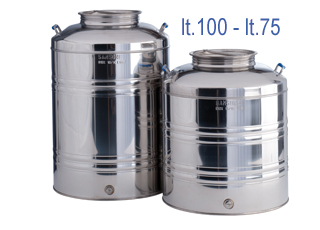
| Capacity | 75 Litres |
| Material | AISI 304 Stainless Steel |
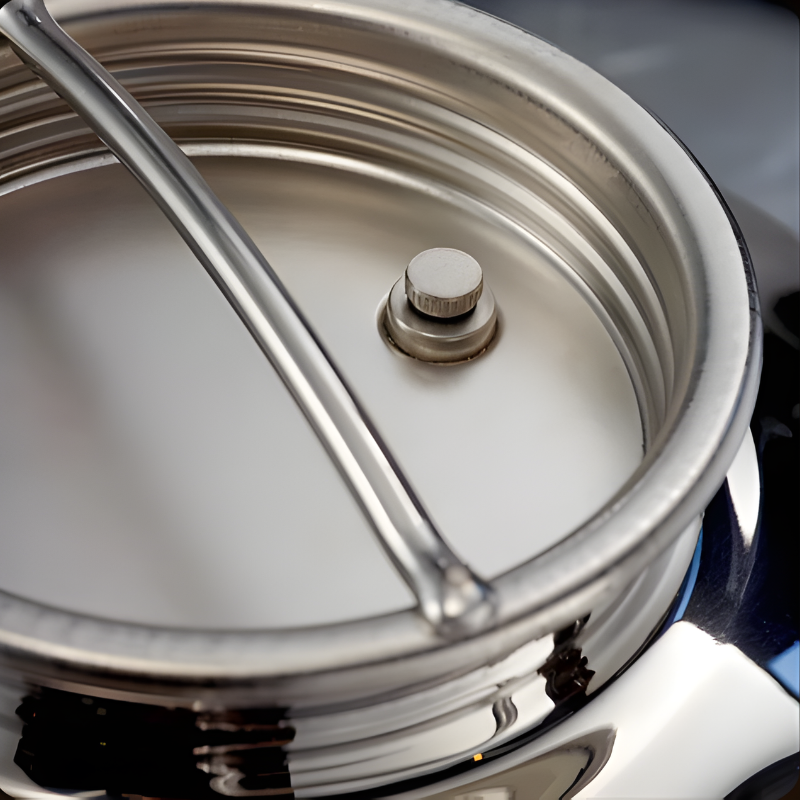
| Lid Type | Screw-Top Lid |
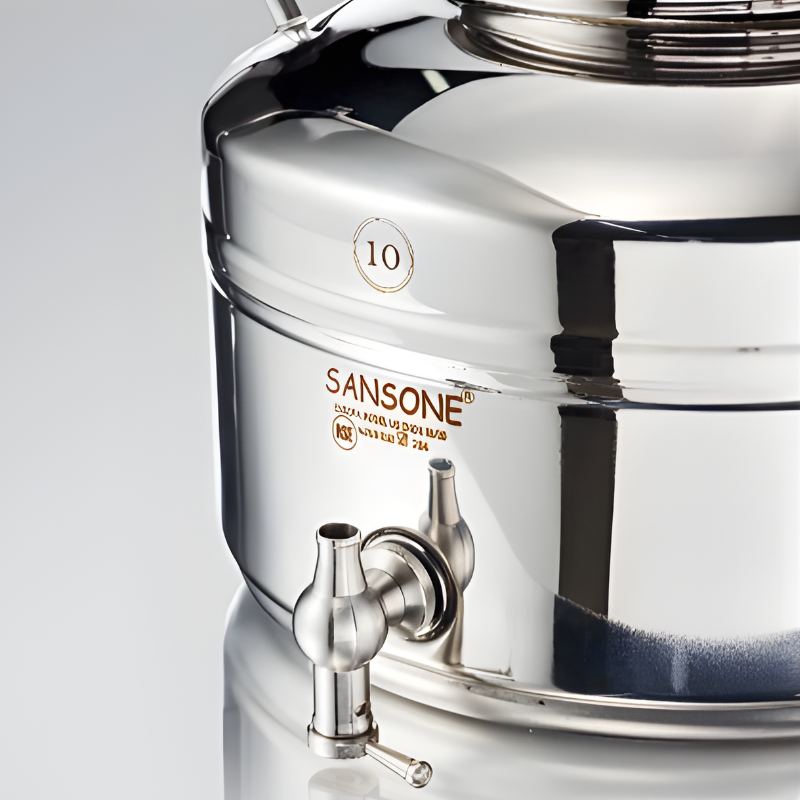
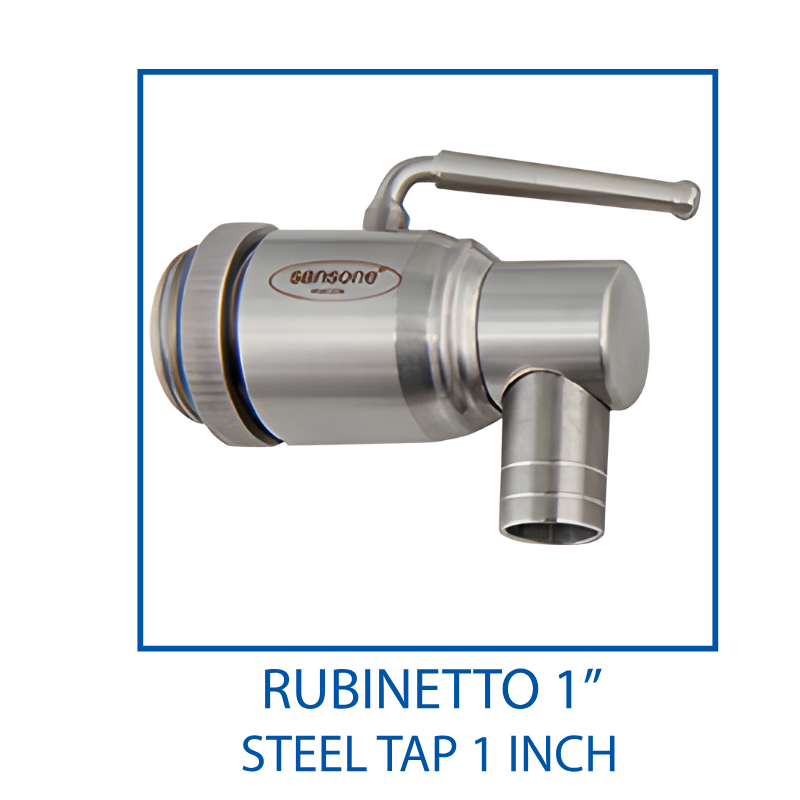
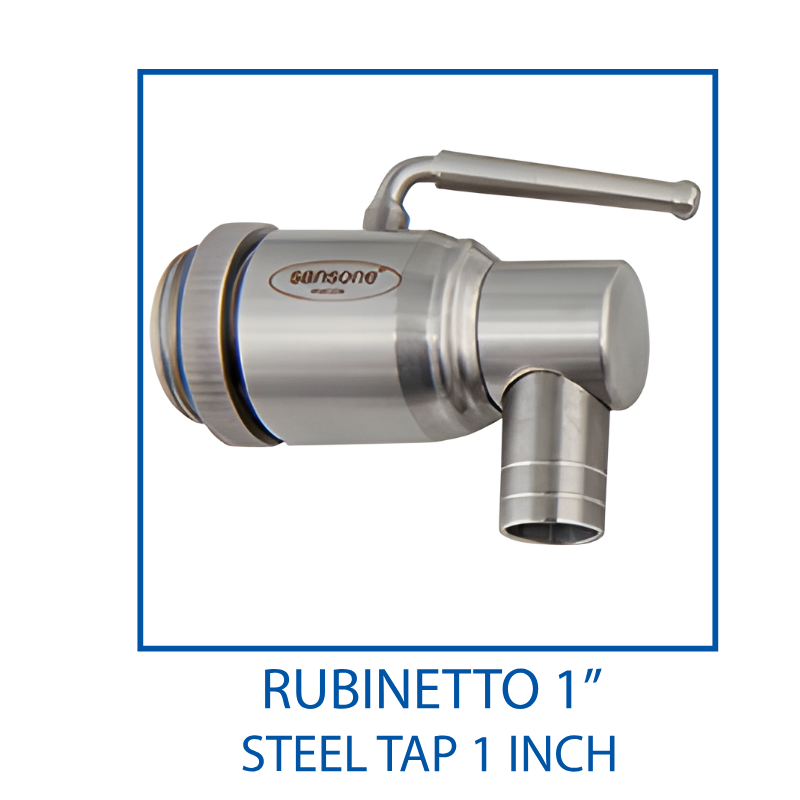
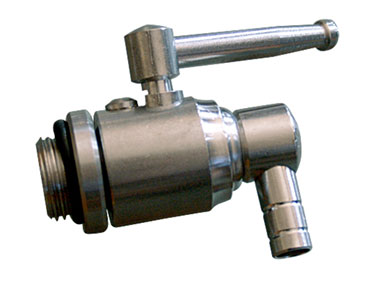
| Tap Type | ½″ Stainless Steel Turn-Pour Tap |
| Width | 480 mm |
| Length | 230 mm |
| Height | 550 mm |
| Weight | 6.50 kg |
*All measurements are approximate.
Why Choose This Product
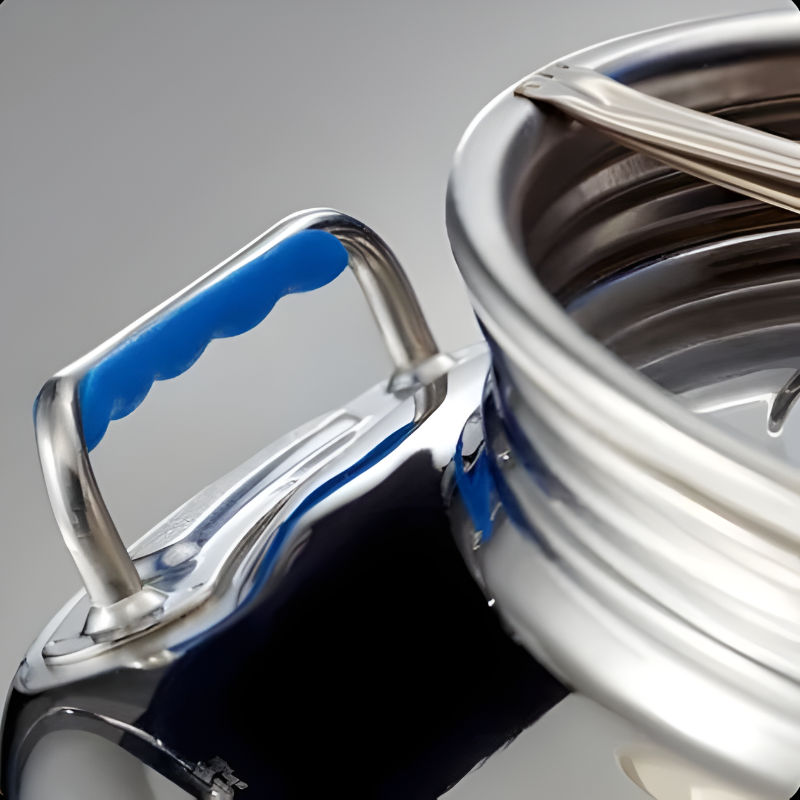
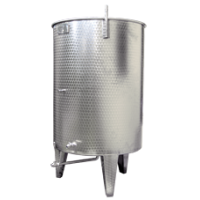
This 75L stainless steel fusti delivers dependable, hygienic storage for large volumes of olive oil and liquid foods. Its welded stainless steel structure, wide opening and smooth-flow tap ensure easy use, durability and efficient dispensing. Ideal for producers, commercial kitchens and food operations needing robust bulk storage.
More Information
In a Pickle!
The following pickling recipes article has been adapted from
Australian Olive Grower Issue 4, November 1997
______________________________________
Chapters
Lost Arts
Pickling in Yesteryear
Favourite Greek pickling method
Pickling in Peasant Style
Ash and olives
______________________________________
No doubt, she then took some home to her humble abode and, to her even greater delight, was able to duplicate the process. People still cure olives today in some Greek islands by dipping a basket of olives daily into the sea for 10 days. When the inner flesh is dark brown, the olives are ready to eat.
To begin the brine processing, place your clean olives in cold water and change the water each day for 10 days. (I use large, plastic, covered buckets from a local restaurant supply.) Weight the olives down with a plate so they all stay submerged. No need to seal at this point.
This will start leaching the bitter glucosides out of the olives. At the end of the ten day period you can make a more permanent brine solution in which to continue the process. Add one cup of noniodized salt to each gallon of water. Use enough of this brine to cover the olives.
Change this solution weekly for four weeks, transfer the olives to a weaker brine solution until you are ready to use them. The solution should contain one half cup of noniodized salt to each gallon (4.2 litres) of water.
Just how long it will take for your olives to become edible I cannot say. Mine seem to take about two or three months to develop a rich, olivey flavour. The best piece of equipment you have for assessing when the olives are done is located between your nose and your chin. It doesn't cost much to maintain (outside of your regular dental checkups), so use it!
Store your olives in the weaker brine in a fairly cool, dark place and keep them covered. A scum may form on the top of the olives, but according to my mother's Italian neighbours, this simply adds to the flavour of the olives! (One of my Italian sources swears that this is the "culture which consumes the bitterness of the olives.") Toss out the scum and use any olives that look unspoiled. (A squishy olive is a spoiled olive.)
Editor's note: Using the pickling method outlined above, and the complete absence of salt during the initial ten day rinsing period, bacteria can form and turn the fruit soft and rotten during the following weeks. If this happens, you will lose your entire production. Experiment with it, use about 5% salt solution for one batch and no salt for another batch. To care for the environment, there are some commercial methods that do not use the daily rinse method.
Pickling in Yesteryear Back to top
The following five recipes come from the Beaumont Nursery Catalogue of many years ago. The Brock family who operated the nursery have since moved on, but Beaumont House, which was taken over by the National Trust in about 1976, is very much a landmark today. Beaumont House was Sir Samuel Davenport's original home in the 1850's.
The nursery catalogue claims that the first olive trees imported to Australia were shipped by Sir Samuel Davenport and planted on his Beaumont property in 1844. Our thanks go to the Brock family for the years they spent in developing the Australian Olive Industry.
"It is a very simple matter to pickle olives and all you need is a small wooden vat or barrel or an earthenware jar with an open top similar to a glazed bread crock, and if you are interested the following recipes may be of some assistance to you:
Referring to all the following recipes, it is essential that when pickling, the olives must not be bruised in any way. Fruit must be picked just as the olive is turning colour from green, that is when it shows a small patch of pinkish purple and is commencing to soften. Always cover the containers to exclude all light.
No. 1 Recipe. Place olives carefully in container, cover the olives with a caustic soda solution (3 oz. of caustic soda to 1 gallon rainwater) for 40 to 48 hours (no longer), using a piece of flat, clean wood to keep them below the surface of the liquid. At the end of 48 hours pour off the caustic liquid, then cover with fresh rainwater and continue the renewing and pouring off of the water twice daily, night and morning, for at least one week (until all caustic soda is eliminated.) Do not worry if olive is bitter to taste.
Next, mix well 1/2 lb. of salt to one gallon of rainwater and cover the olives in this solution for a week, then drain. You then mix 3/4 lb. salt (12 oz.) to each gallon of rainwater, cover for another week and drain again. You then place the olives into jars. A-Gee jars or similar. Place jars in tub of very hot water up to their necks and fill with a boiling brine solution (3/4 lb/ salt to one gallon of water) to overflowing and seal immediately. As the jars cool the rubber rings will seal the tin inner lids perfectly and the olives will keep indefinitely.
Recipe No 2. Place olives in vat and cover with a caustic soda solution (1 lb. caustic soda to five gallons of rainwater). Allow to stand for 18 to 20 hours, then pour off the dark brown liquid. Keep washing in rainwater until the water comes away clear, changing the water each day. This will take seven or eight days. Then bottle the olives in A-Gee jars or other suitable containers. Stand jars in tub of very hot water up to their necks and then pour boiling brine solution over olives to overflowing and seal immediately. This brine to be one cup of salt to 12 cups of rainwater.
Recipe No 3. (for green olives). Dissolve 1 lb. caustic soda in five gallons of water. Pour over the olives and let stand for 15 hours. Drain this off and cover the olives with clear, cold water, and when this becomes discoloured pour it off. Continue in this way until water remains clear. Pack the olives into jars and cover then with a strong solution of salt & water (one part of salt to five parts of water), which has previously been boiled for 10 minutes, then seal.
Recipe No 4. (green olives). 3 ozs. of caustic soda dissolved in one gallon cold rainwater (glass or stone or wood containers) in sufficient quantity to cover the olives to be processed.
Important: Cover to exclude all light. Cover olives with this solution, according to size of olives, 20 to 24 hours. Then wash with running water for at least 3 days (exclude all light) and drain then. Add a prepared solution of 1/2 lb salt per gallon of water and change every day for at least 12 days. Then drain, bottle and cover with a fixing solution of brine, 3/4 lb salt to one gallon of water (use coarse salt. "from the butchers".)
Recipe No 5. (Our experience of this recipe is that the olives do not keep more than a few months). Place olives in container of wood, glass or earthenware and cover with a solution of caustic soda, 5 dessert spoons to one gallon of water, for 48 hours. Then pour off and keep washing in pure cold rainwater until water is clear and natural (change water each day). Then place in jar and cover with brine solution (1 1/2 lb. salt to each gallon of water) and seal. Ready in seven days. When the supplier of this recipe was told his recipe did not keep too long he replied: "If you like pickled olives there will be no need for them to keep!"
Favourite Greek Pickling Method Back to top
There are many different ways to prepare olives and the following old Greek recipe is one of the simplest. Commercial pickling processes generally use caustic soda, food acids and salt. This old fashioned recipe uses salt only.
Olives can be pickled when green or black. A black olive is simply a ripe olive. Generally the green olives are used for pickling. Some black olives are pickled and pressed for oil.
In about February - March, some of the fruit begins to turn from plain green to purplish black. When some of the olives begin to change towards black, it will be fairly safe to pick the green olives for pickling.
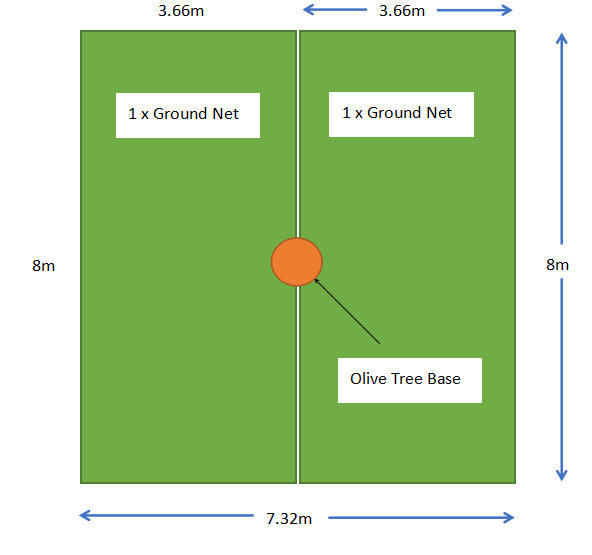
If the tree is large, place cloth sheets on the ground and strip the fruit from the tree with your hands or with a rake with suitably spaced prongs. Collect the fruit from the sheet, remove odd stems and leaves and rinse olives in clean water in a bucket.
Place the olives on a clean stone surface or cutting board and bruise them with another stone or hammer. Alternatively prick several times with a fork, or make three slits in the skin of each olive with a small serrated knife while turning the fruit between the thumb and index finger. This bruising, pricking or cutting will allow the water and salt to penetrate the fruit thereby drawing out the bitterness and also preserving it. This will also do away with the need to use a caustic soda solution as used in commercial processing of olives.
Toss them immediately into a bucket of clean water in which one half cup of coarse or cooking salt has been dissolved into every ten cups of water. A clean plate can be placed on top to keep the olives submerged. All olives must be under the liquid. Pour the liquid away each day and replace with fresh salt water. Repeat this washing process for about 12 days for green olives and about 10 days for black (ripe) olives. The best test is to bite an olive. When the bitterness has nearly gone, the olives are ready for the final salting. As you can see, this simple recipe involves the disposal of salty rinse water into the environment. If you decide to commercially pickle olives, there are other recipes that require a longer pickling time but do not result in salty waste water.
Pour off and measure the last lot of water so you will know the volume of salt brine that will be required. Measure that quantity of fresh, warm water into a pan and dissolve the salt, this time at the rate of 1 cup of salt to 10 cups of water. Bring the salt water preserving mixture to the boil and allow tocool. Place olives in bottles and then pour the salt water brine over them until the fruit is completely submerged. Top up the bottles with up to one centimetre of olive oil to stop air getting to the fruit and seal the lids on. No further preparation is required and the bottled olives will store for at least 12 months in a cool cupboard.
When you are ready eat your olives, pour out the strong preserving solution and fill the jar with clean, cool water. Leave in the refrigerator for 24 hours and taste them. If they are still too salty for your liking, then refill the bottle with a fresh lot of water and return to the refrigerator for a further 24 hours. (The plain water leaches some of the salt back out of the olives). At this stage you can also add any or all of the following flavourings: Grated garlic, basil, oregano, chopped onion, red capsicum, lemon juice and lemon pieces. Especially popular is a combination of garlic, basil and lemon juice.
Now sit back and enjoy the unique flavour of your own olives. You will probably never want to buy chemicalized commercial olives again.
WARNING!
Don't give any of your olives to your olive eating friends to taste or you might finish up with more friends than olives! Tell them to buy themselves a tree - or better still, set up a whole olive grove.
Pickling Peasant Style by Lynne Chatterton, Umbria - Italy
(Extracted from Australian Olive Grower, Issue 5, January 1998) Back to top
"I was interested in the section on pickled olives in the last issue. I've been playing around for some years with different ways of preserving olives and have discovered some very simple methods that may be of interest to your readers.
In Umbria we have a range of uses for olives besides the oil of which we are justly proud. We use them when cooking dishes 'al cacciatore' - the method used by hunters (for instance with wild boar, pigeons, rabbit and pork) - we use them in bread and in pizzas, and we eat them on their own.
Olives to be used in various types of casseroles and stews don't require much work. I have a friend who cooks in one of our best restaurants here. The restaurant is famous for its pigeon dishes which have olives as part of the recipe. He simply takes small black olives directly from the tree and freezes small quantities in plastic bags and then puts them directly into the casserole when cooking begins. I've tried this and it works very well.
My neighbour (a woman of 80 years), takes fresh black olives and packs them into one litre lidded jars with rock salt and leaves them for a couple of months, then rinses them off and uses them straight away in cooked dishes and also for eating with prosciutto or salad. This is another simple yet effective preparation.
I have a Tunisian friend who is a mine of information about traditional products there and he showed me how to preserve olives Tunisian peasant style. You need a shallow tray with sides, two pieces of strong reasonably fine wire netting and several heavy stones. The olives are spread out on the netting (or plastic open weave shelf) which is suspended over a shallow tray. The fruit is interspersed with coarse rock salt and branches of fresh rosemary. The top piece of netting is put on and the whole package is weighted down with heavy stones. The olives are put outside (sheltered from rain) and left for about three weeks. At the end of this time juice from the olive should have leached out into the tray. If not, leave them until it has. Rinse the olives, pack them in jars, cover with either a salt solution or with olive oil. Add some rosemary twigs, black pepper, orange and lemon peel, a clove of garlic and put on the lid and leave until they are needed. I used 2 pieces of rigid netting 30 x 20 cm and it worked very well.
I picked up a tip from Maggie Beer's Book (Maggie's Orchard) that is quite useful. Like most cooks I am always left with part jars of olives I've used for bread or pizza, or half dishes of olives I've put out for nibbles. What to do with them? I keep a glazed terracotta lidded container in the kitchen and put all these olives in there with oil, a dash of wine vinegar, and some weak saline. As long as the olives stay under this mixture they keep very well and when I want to use some, I use a small sieve to get them out and add herbs or spices as I want. By the way, crushed Coriander seeds go very well with olives.
This year I'm using the Greek and Italian method I've used in the past for initial preserving. I picked some large green olives, and the usual medium sized black olives. I do between 2 to 3 kgs of each. With both lots I used a sharp knife to cut across on one side. I then put them into fresh water in a large bowl so that the water is well above them and also between them. I left the green olives for a couple of weeks and the black olives a week or so longer. I changed the water every two days.
Towards the end of the fortnight I began to add a bit of rock salt because, although I've never had olives go off in this process, we had a bit of warm weather and I was being prudent. At the end of this process I put the green olives into a strong solution of brine - about 1 cup of coarse rock salt to 8 cups of water - in a 3kg Kilner jar, and put a half inch of olive oil on top before sealing. These are now in my cool, dark pantry and will stay there for about six months before I begin to use them.
The black olives (which took longer to lose their harsh bitterness), have been rinsed and packed into the jar with the same saline solution as above plus 150mls of malt vinegar (I couldn't get this here so have used some white wine vinegar), and some rosemary, some black peppercorns, and topped the lot with half an inch of olive oil before sealing and storing in the pantry.
Another neighbour here tells me that she never adds aromatics to her olives until the night before she wants to eat as antipasto. Then she takes them from the storage jars in which they live and puts them in a solution of oil, weak saline and a little vinegar, and adds lemon and orange peel, rosemary, garlic, chilli, coriander seed, black pepper, alone or in combination, and soaks them overnight. She takes them out about and hour before using them and serves them in small dishes. I can guarantee they are delicious.
Olives here are also just dried outside in the fresh air and then salted and stored in jars without any liquid or oil at all. They are taken out and rinsed and used just as they are. The same thing is done with tomatoes. Strings of tomatoes hang from every contadino household at the end of summer. Onions and garlic are also dried outdoors and keep very well because of it.
In my experience, the critical thing is to leave the olives in their brine or brine mix for as long as possible before using them. Whatever method you use to process your olives, the flavour needs about six months to become acceptable for eating. I've known people forget they have stored olives in dark places in a saline solution for a couple of years and then found to their surprise that they are delicious. Salt seemed to be a common means of leaching out the bitterness but once that is done a combination or salt, vinegar, and oil (all traditional preservatives) can be mixed or used alone to preserve the fruit. Alternatively, drying alone is a perfectly acceptable way of preserving olives.
One has to remember that olive preservation has been a tradition in peasant societies where complicated methods, fancy utensils and sophisticated chemicals are not possible or available. Today, wooden tubs, and terracotta storage pots are chic and not easily obtainable in anglo-saxon countries (although I can get them easily and cheaply here), but a large crockery bowl and glass preserving jars are, salt and vinegar are cheap and handy, and oil is always available, so one can simply adapt the peasant methods to one's kitchen.
We don't grow large quantities of table olives here in Umbria so all our recipes are for olives we take from our existing trees - Frantoio, Leccino, Dolce Agogia, Moraiolo, and, in our case, some very old and unnamed varieties that we inherited. We have planted some Spanish and Greek table varieties but to date they've had little fruit as we suffered from severe frosts and hail for their first two years of growth. I've found our oil olives quite good for both eating and cooking. - Lynne Chatterton - Umbria, Italy."
Ash and Olives! by Craig Hill Back to top
Craig Hill has very kindly sent us this 'environmentally friendly' pickling recipe.
Following last issue's pickling recipe article, you might be interested in the following green table olive recipe adapted from "L'Olivier et la préparation des olives en Provence: recettes familiales" by Max Lambert:
1. Crush and sift a quantity of new wood ash; the weight of the ash should be equal to the weight of the olives to be prepared. The olives should be freshly picked, clean and undamaged.
2. Make a fairly liquid paste by pouring boiling water on the ash. Cover and allow to cool completely.
3. Carefully stir in the olives to coat them with the ash paste.
4. Gently stir the olives once daily for 5 to 7 days.
5. Towards the end of the week, cut several olives lengthwise; the 'désamérisation' ["de-bitter-isation"] is complete when the fruit has darkened to about 1mm from the stone.
6. Rinse the olives clean [dispose of the ash paste and contaminated water thoughtfully] and submerge them in clean water (avoiding contact with the air); the water should be changed every 4 or so hours for the first day, then daily for 3 or 4 more days. This process is finished when the water remains clear and has no or little rusty discoloration. [At this stage you should also taste the fruit: although the flavour will be rather crude, the bitterness should have all but disappeared.]
7. Preserve in sterile jar(s) in a saline solution or vinegar mixture as in the usual recipes, adding aromatic herbs, garlic, lemon pieces to taste and with a 5mm layer of olive oil.
The concentration of the preservative/saline solution in point 7 should be sufficient to partially float an egg or a small potato. Personally I err on the generous side with the salt (thinking that the olives are doing me so much good that the body can probably tolerate a bit more salt!). Depending on the aromatics, I've usually added about 10% vinegar. An Italian contact also taught me the trick of keeping the olives submerged by placing a 'wreath' of wild fennel stalks under the lid.
An unusual method but with a sound explanation! Wood ash is about as alkaline as the usual soda/lye recipes and this neutralises the oleopicrine. The advantage of this "alkaline" bath is that, done properly, it preserves the integrity ie the flavour, firmness and colour of the fruit. The advantage of this method is that it 'appears' to be a bit more environmentally friendly than using caustic or washing soda. There is still the problem of disposing of the strongly alkaline paste, but it seems to be less environmentally disastrous than some other methods. - Craig Hill"
OLIVE OIL STORAGE

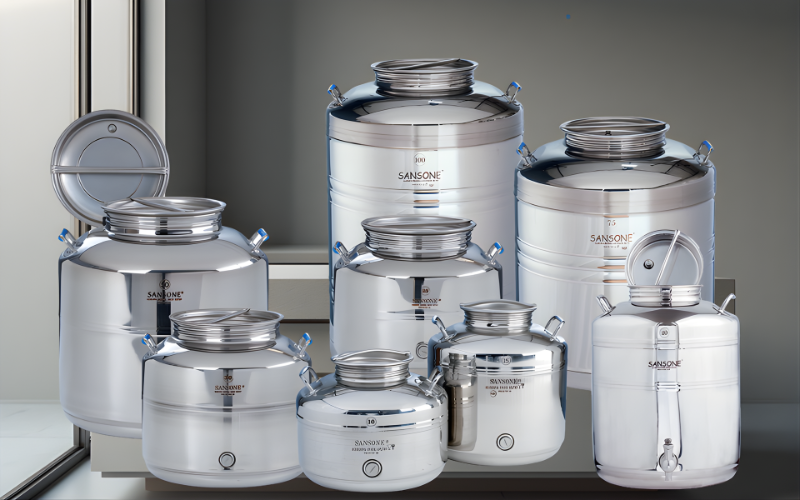
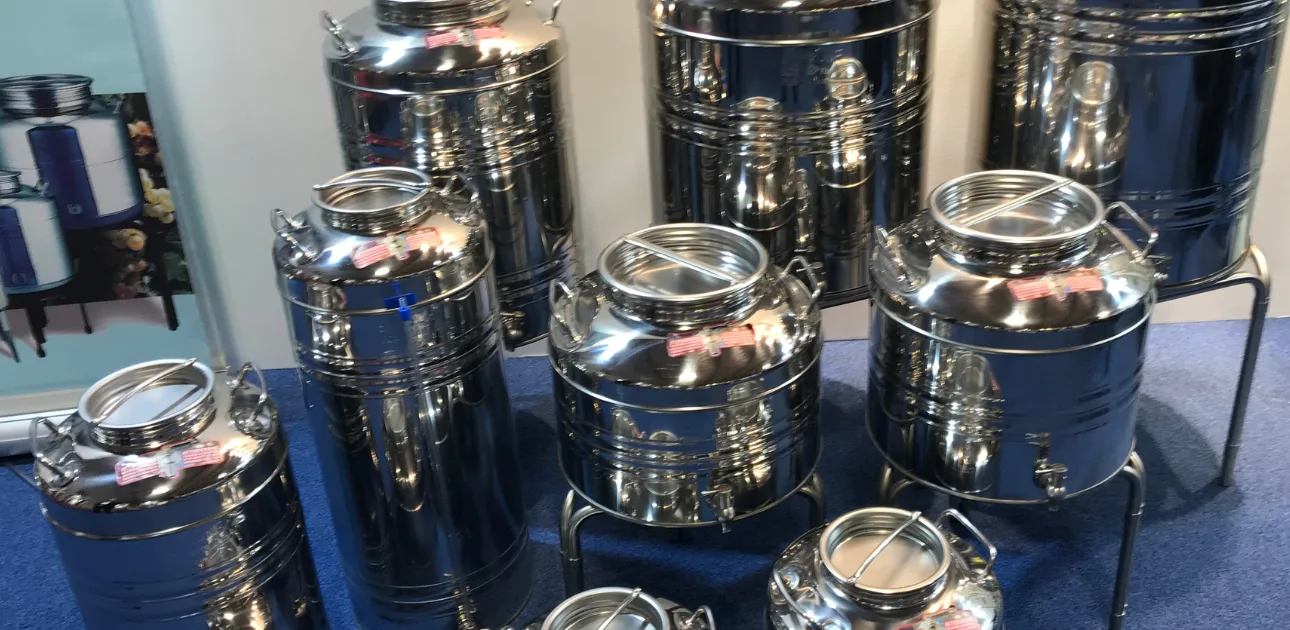
The Sansone Welded Fusti Tanks represent one of the most trusted stainless steel container designs in the food industry. Manufactured in Italy by Sansone, these tanks are built according to the highest international standards for the preservation of food-grade liquids such as olive oil, wine, honey, and food-grade liquids.
Each unit is produced using 18/10 AISI 304 stainless steel and is NSF certified, ensuring unmatched reliability, purity, and corrosion resistance. Their seamless welded construction guarantees easy cleaning and prevents the accumulation of organic matter or bacterial colonies - a crucial feature for industries where hygiene is paramount.
Built with head-to-head welding technology, the Sansone welded drums are designed to achieve maximum cleanliness and strength. This advanced welding method eliminates internal joints, making the surface completely smooth, which allows for easy sanitation and total prevention of bacterial growth.
These tanks are ideal for food processing, laboratory, and industrial applications that require hygiene compliant liquid handling. The seamless welded design also upholds that no residues or flavour transfer occur, maintaining the quality of your stored product.
Each model undergoes strict testing to meet the most rigorous quality standards and is part of Sansone’s commitment to producing long-lasting stainless steel containers that meet professional and domestic needs alike.
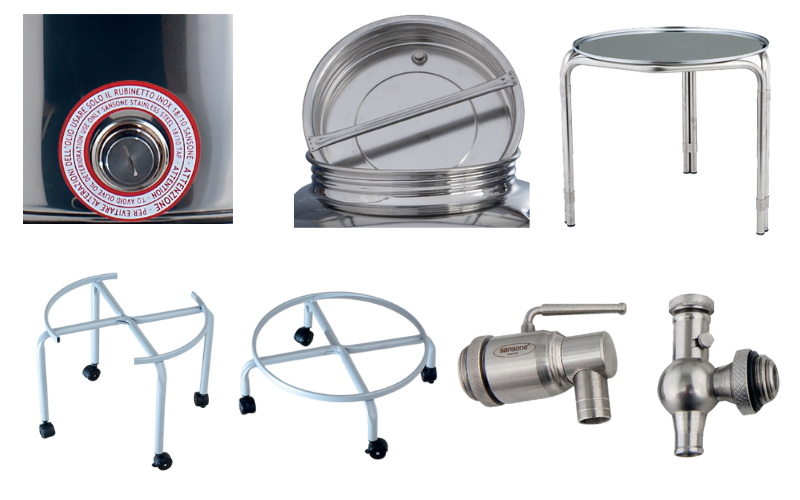
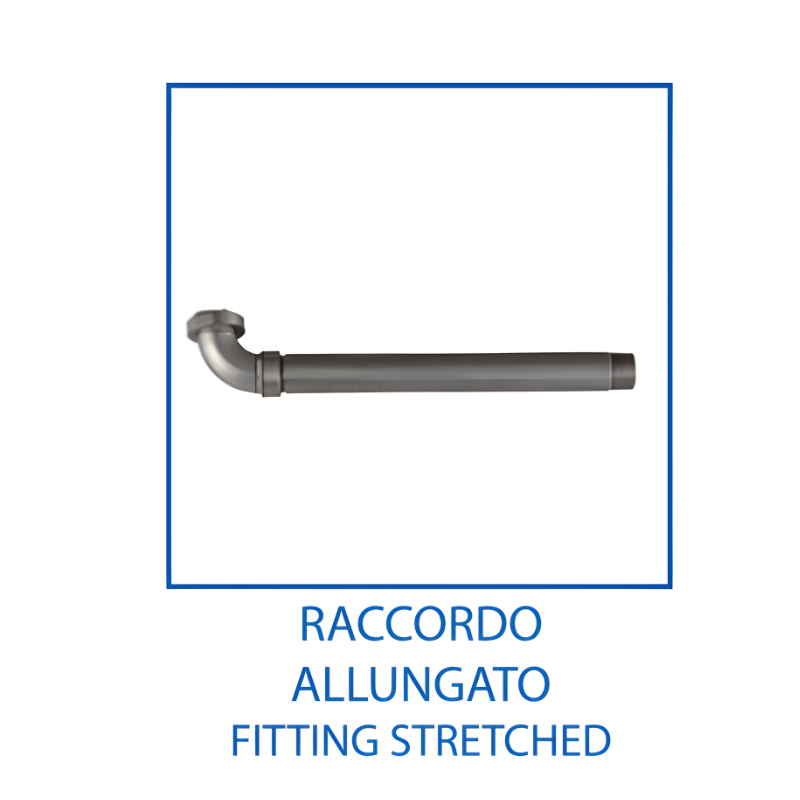
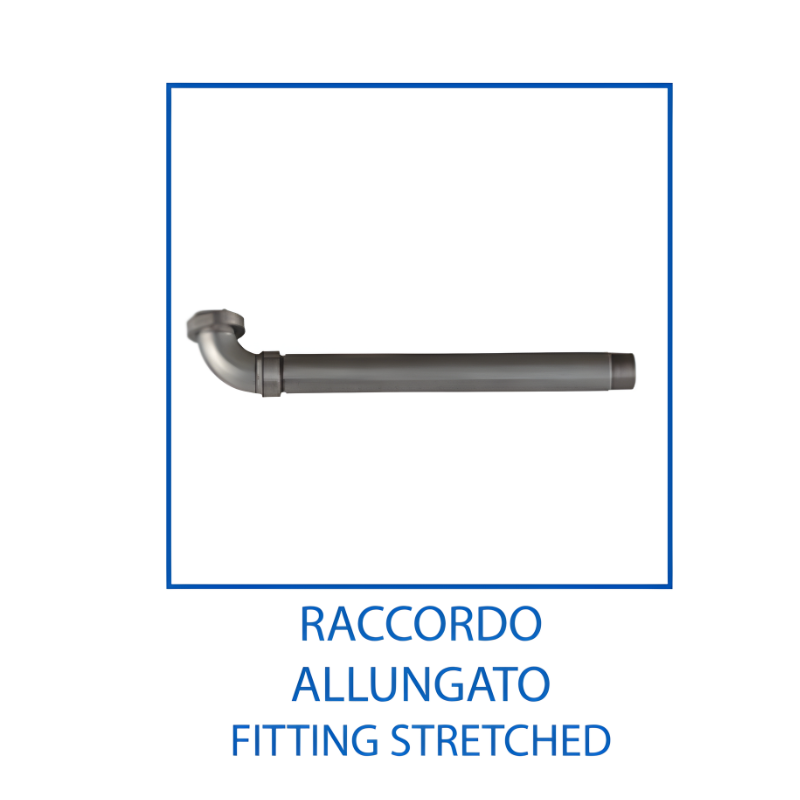
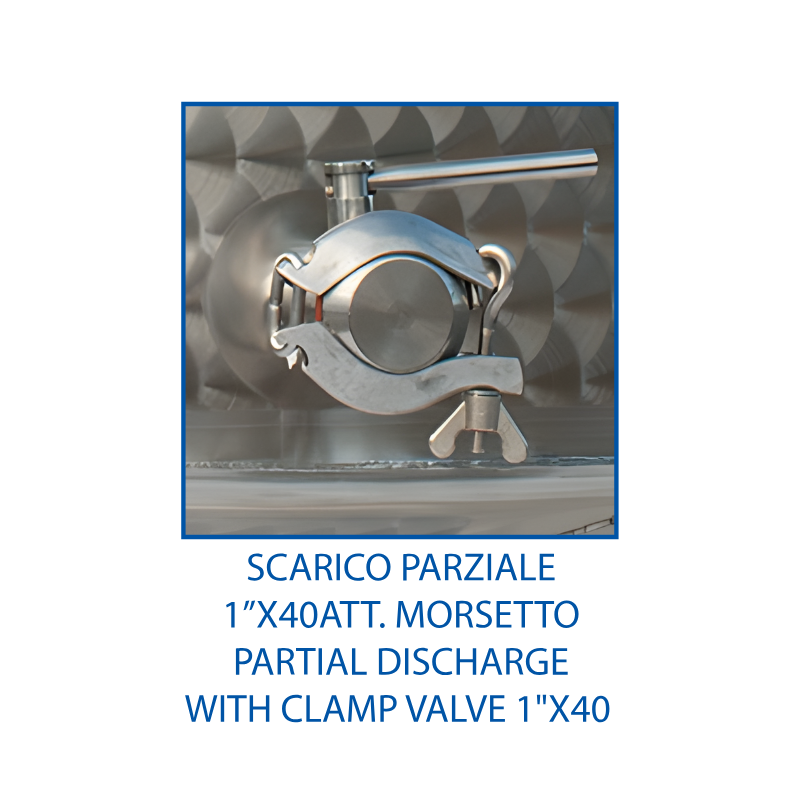
All models are equipped with a welded stainless-steel setup for a ½-inch tap, allowing safe and precise liquid dispensing. Each drum can also be paired with optional stainless steel or laminated stands, available in tall and short models or even with wheels for mobility.
Sansone provides several high-quality accessories to enhance functionality and handling convenience:
Each Sansone welded fusti is produced under ISO 9001:2000 certified quality control systems to ensure consistent performance and reliability. The use of premium-grade 18/10 stainless steel guarantees long life, even under demanding industrial use.
Whether used in olive oil production by producers, wineries, or laboratories, these tanks provide the peace of mind that comes from Italian-made precision engineering, smooth cleaning surfaces, and safe, airtight liquid containment.
For olive oil producers, the Sansone Europa welded tanks provide the ideal environment for oil preservation, protecting against oxidation and contamination while maintaining taste and freshness. The tanks’ sleek finish and robust structure also make them suitable for front-of-house or retail presentation, where hygiene and visual quality are essential.
From boutique olive oil farms to food manufacturers, these stainless steel fusti tanks represent a long-term investment in quality, safety, and professionalism.
If you’re ready to elevate your storage and preservation standards with Sansone stainless steel welded tanks, explore the full range at
https://theolivecentre.com/shop/stainless-steel-tanks-2l-to-99l
As Australia’s leading distributor for Sansone products, The Olive Centre provides expert advice, local support, and fast delivery — helping you choose the perfect stainless steel fusti to suit your needs
Preserving the integrity of high-quality foods and liquids - especially extra virgin olive oil (EVOO) - depends on two things: a sound understanding of correct storage parameters and the use of vessels engineered to uphold those conditions with absolute reliability. This is where Sansone, Italy’s premier stainless-steel tank manufacturer, stands far above conventional storage solutions. As global quality standards evolve, the industry has moved decisively away from breathable plastics & reactive metals. With increasing focus on purity, sustainability, and product shelf-life, food-grade stainless steel has become the internationally accepted gold standard for storing oils, beverages, ferments, honey, pharmaceuticals, and more. Within that space, Sansone’s range - distributed in Australia by The Olive Centre - has set the benchmark for durability, hygiene, and performance for over five decades.
International Olive Council (IOC) guidelines highlight the key threats to olive oil quality, i.e. oxygen, light, and heat, each of which accelerates oxidation and rancidity. Proper storage must therefore minimise air contact, prevent light exposure, and maintain stable, cool temperatures.
Sansone’s engineering and material choices align perfectly with these requirements:
1. Oxygen Protection: Airtight Design & Minimised Headspace
The IOC highlights that once a container is opened, limiting headspace is essential to slow oxidation.
How Sansone supports this:
The IOC identifies light as the main threat to olive oil quality after oxygen.
Sansone’s advantage:
The IOC recommends storing olive oil between 13 - 25°C, and notes that lower temperatures (even refrigeration) can slow oxidation.
Sansone excels in temperature resilience:
The IOC emphasises cleanliness, inert materials, and contamination avoidance.
Sansone tanks surpass these needs through:
5. Durability & Long-Term Value: Sustainability Meets Performance
Stainless steel is durable, corrosion-resistant, and 100% recyclable - maintaining its quality through multiple recycling loops. Sansone’s robust construction means a single tank can last decades, dramatically reducing lifecycle costs compared with plastics or coated metals. Their longevity also prevents product loss due to leaks, contamination, or light-induced degradation, making Sansone an economically and environmentally superior investment for producers of all scales.
| Criteria | Plastic Containers | Stainless Steel Containers (e.g. Sansone) | Glass Containers |
|---|---|---|---|
| Material Reactivity | It can leach plasticisers over time, especially with acidic or fatty products. | Completely inert; AISI 304/316 food-grade steel prevents reactions. | Inert to most liquids but may interact with extreme pH. |
| Light Protection | Allows light penetration unless opaque. | 100% light-proof - ideal for olive oil and sensitive liquids. | Transparent unless tinted; light accelerates oxidation. Coloured glass can slow down light penetration. |
| Oxygen Protection / Seal Quality | Moderate; lids may warp or expand, increasing oxygen exposure. | Excellent - airtight seals and precision threads limit oxygen exposure. | Good initially, but seals vary; headspace increases quickly once opened. |
| Durability | Prone to warping, cracking, and UV degradation. | Extremely durable - decades of use without deforming. | Fragile; breaks or chips easily. |
| Temperature Resistance | Sensitive to heat; may warp or release BPA-like compounds/plasticisers. | Highly stable across temperature ranges, including refrigeration and warm environments. | Stable but expands/contracts; risk of thermal shock. |
| Hygiene & Cleanability | Scratches retain residues and microbes; absorbs odours. | Mirror-polished surfaces prevent buildup; no odour retention; easy sanitation. | Very hygienic but difficult to clean if narrow-necked. |
| Impact on Olive Oil Quality | Can accelerate oxidation; not recommended by IOC for long-term storage. | Ideal - protects from light, heat, and oxygen; aligned with IOC guidelines. | Good if dark/tinted and stored cool, but still sensitive to light exposure. |
| Sustainability | Limited recyclability; degrades in quality each cycle. | 100% recyclable without quality loss; extremely long lifespan. | Highly recyclable but higher breakage rate. |
| Weight | Lightweight. | Moderately heavy (depending on tank size). | Heavy and cumbersome, especially in larger volumes. |
| Cost (Upfront) | Low | Higher initial investment | Moderate cost |
| Cost (Lifecycle) | High - due to frequent replacement and product spoilage risk. | Low - one tank often lasts decades; prevents losses from contamination or oxidation. | Moderate - replacement due to breakage or seal failure. |
| Suitability for Industrial Use | Poor - short lifespan and limited hygienic control. | Excellent - used in olive oil production, wineries, pharmaceuticals, honey, and beverage industries. | Limited - weight and fragility restrict large-volume use. |
| Suitability for Long-Term Food Storage | Not recommended. | Excellent - best long-term solution for oils, ferments, beverages, and extracts. | Acceptable for short-to-medium term if protected from light. |
Table. Comparison of Plastic, Stainless Steel, and Glass Containers for long-term storage of food and liquids.
6. Functional Design That Enhances Workflow
Across the entire Sansone range - from 3 L benchtop units to 10,000 L industrial vats - each model is tailored for real-world handling:
These design elements reduce labour time, improve occupational safety, and streamline production lines.
Thanks to their inertness and long service life, Sansone tanks have become essential across multiple industries:
As Australia’s leading supplier of olive and food-processing equipment, The Olive Centre selects only products with proven excellence, traceability, and long-term reliability.
The partnership with Sansone ensures Australian producers - from boutique growers to large commercial processors - gain access to:
When global storage guidelines emphasise controlling light, oxygen, and temperature to protect olive oil and other sensitive liquids, Sansone’s stainless steel tanks don’t just meet these parameters - they optimise them. Their precision engineering, food-safe materials, airtight design, and unmatched durability align perfectly with IOC recommendations, giving producers complete confidence that every drop remains as fresh, pure, and vibrant as the day it was created.
In the world of modern food preservation and processing, few names embody the standards of quality, precision, and hygiene quite like Sansone Inox. Known globally for its mastery in stainless-steel engineering, Sansone continues to lead the industry in food-grade containment technology. Among its most sought-after innovations are its stainless steel silos, designed to meet the demanding needs of producers who value product purity, easy maintenance, and long-term durability.
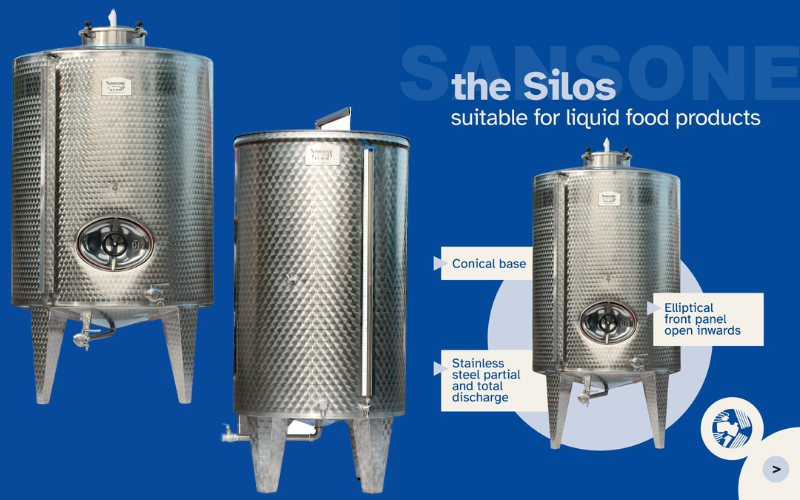
Now available in Australia through The Olive Centre, Sansone’s Heavy-Duty Silos with Conical Base and Easy Discharge and the Variable Capacity Silos (Sempre Pieno) represent the highest standard in food-safe stainless storage. Built entirely from AISI 304–316L stainless steel, these silos are purpose-built to safeguard liquids like olive oil, wine, honey, vinegar, and other food-grade materials while maintaining their integrity over time.
Each Sansone silo tank is manufactured in Italy under the company’s ISO 9001:2000 quality control standards. The design focus is simple but delivers absolute cleanliness and complete drainage.
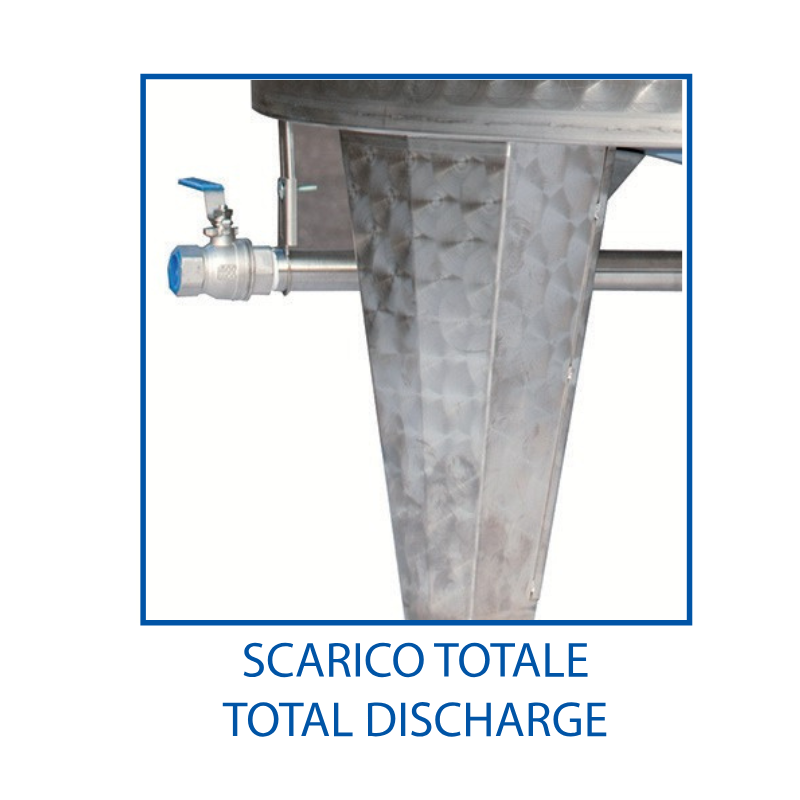
The conical base ensures total discharge of stored contents, preventing residues and eliminating the risk of contamination. Smooth, mirror-polished interiors allow effortless cleaning, while “Polished” or “marble” external finishes offer durability and aesthetic refinement.
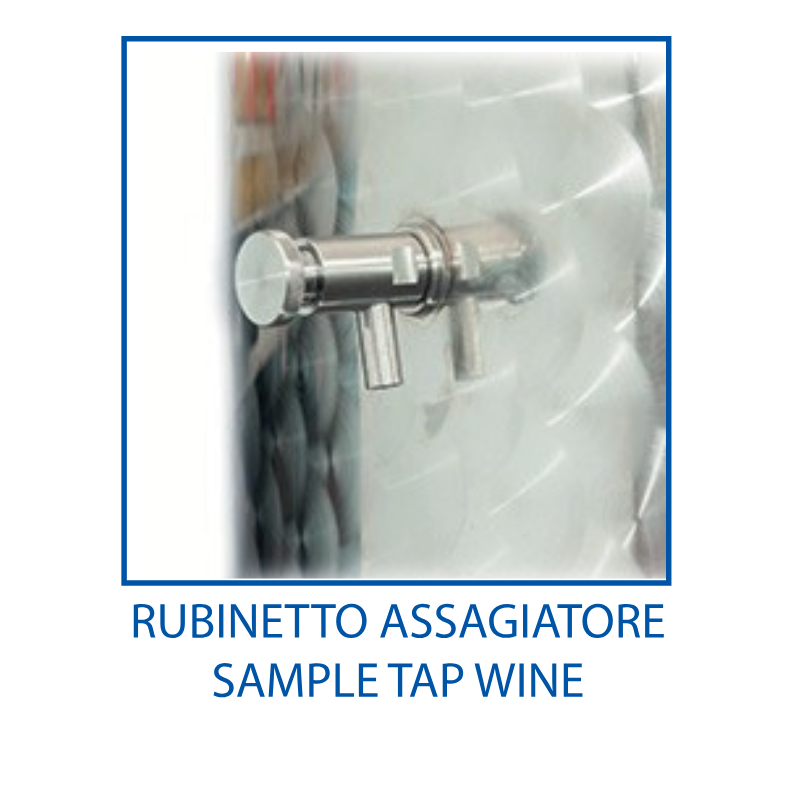
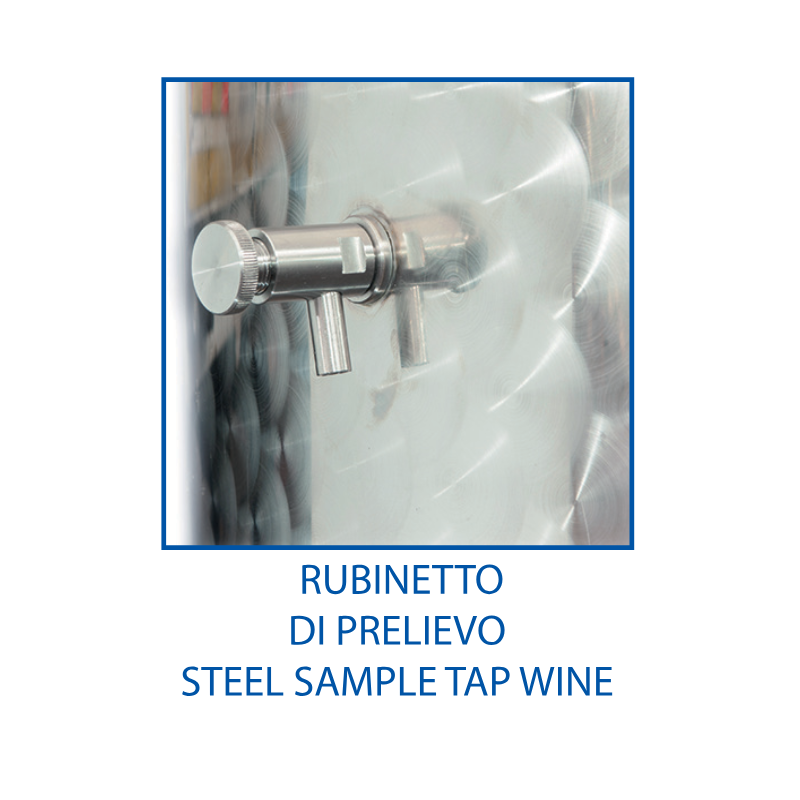
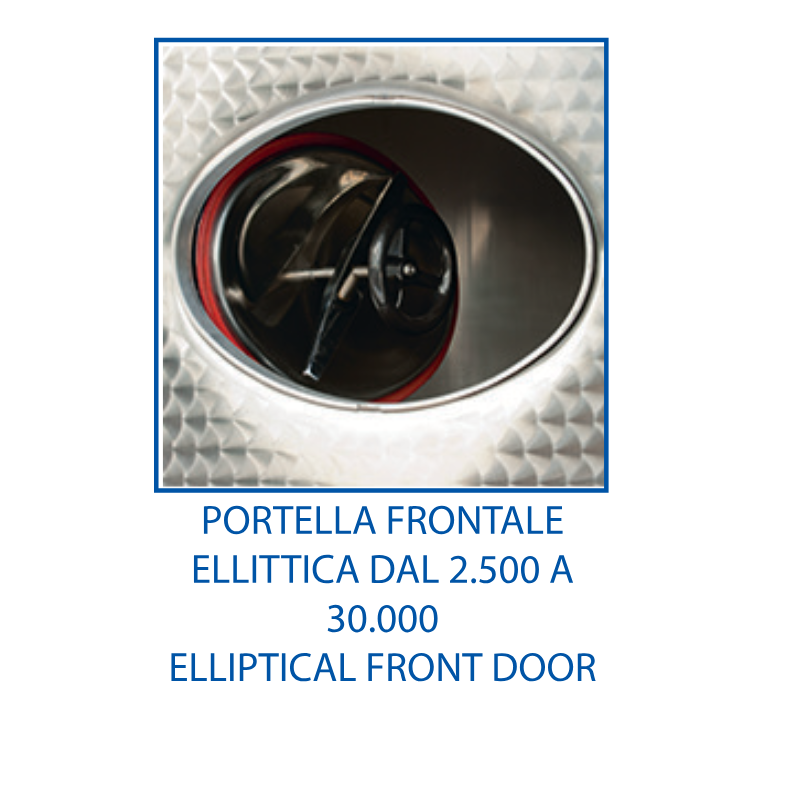
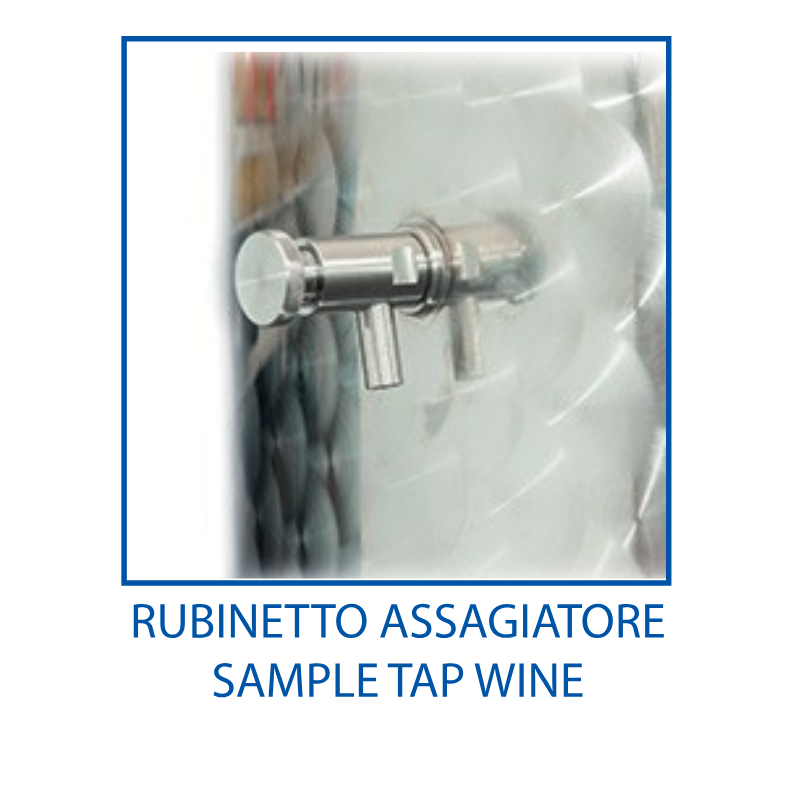
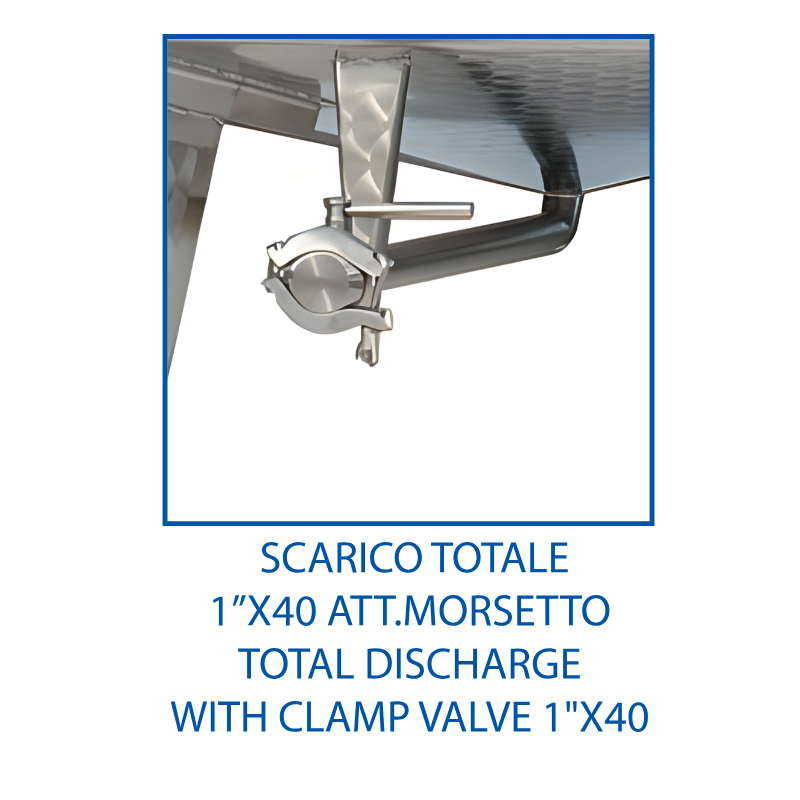
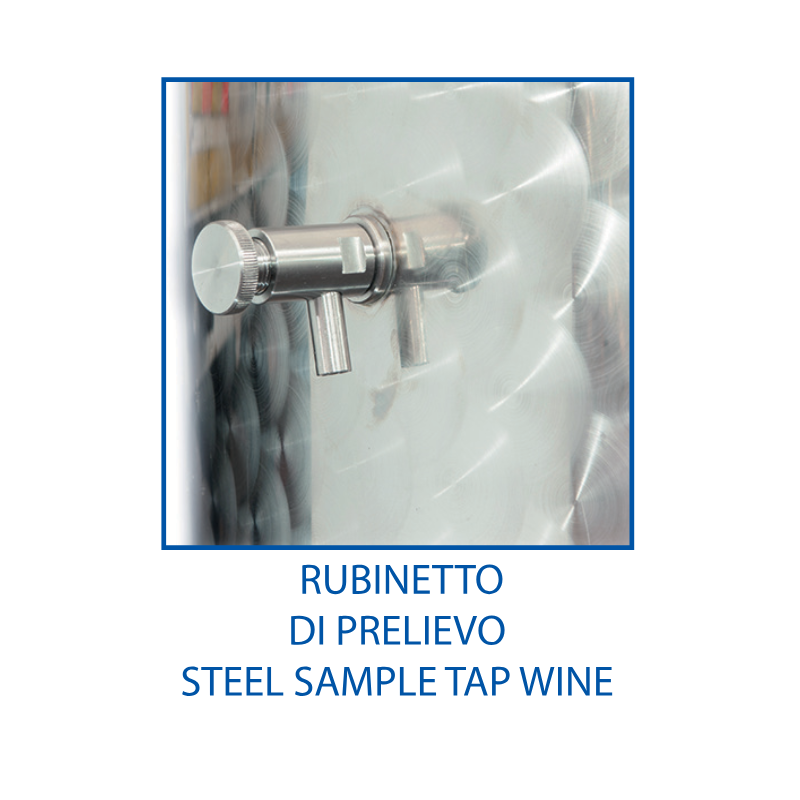
Sansone silo tanks are particularly suited for olive oil mills, cooperatives, and cellar doors, where the highest level of product protection is required. The elliptical or round inspection door, double-valve nitrogen system (for fixed capacity type), and stainless steel sampling tap provide users with complete control of the stored product from top to bottom.
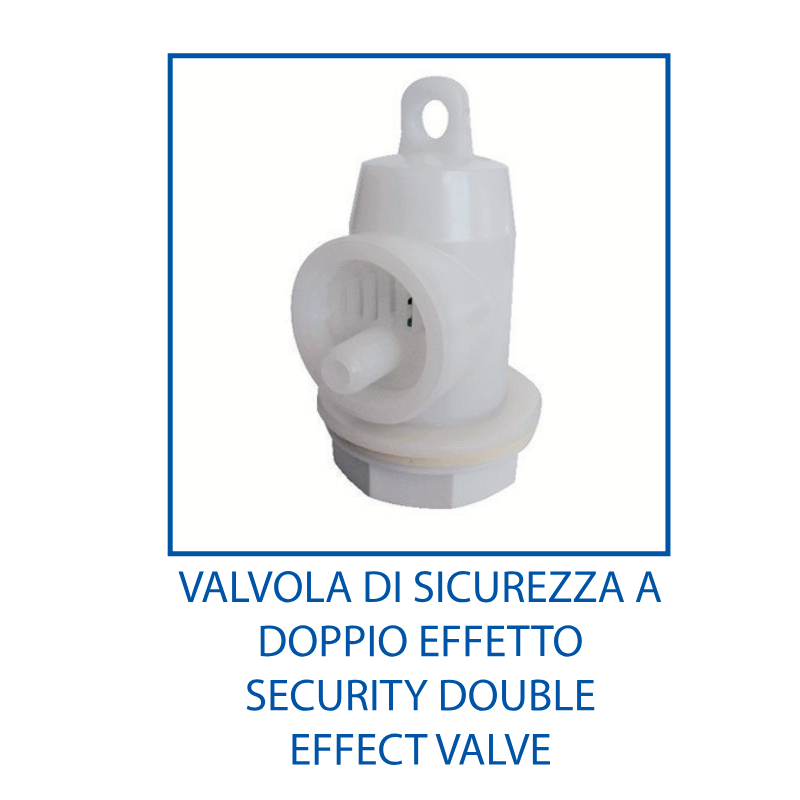
Sansone’s Storage Silos with Conical Base and Easy Discharge are designed for fixed installations that demand both hygiene and efficiency. Built from AISI 304 - 316L stainless steel, these silos are ideal for the hygienic storage of liquid foods in environments where contamination-free handling is critical. Each model features a fully welded conical base that ensures total emptying of the tank and minimises product in contact with sediment. The upper cover includes a nitrogen inlet valve, allowing an inert atmosphere for long-term storage without oxidation - especially valuable for olive oil.
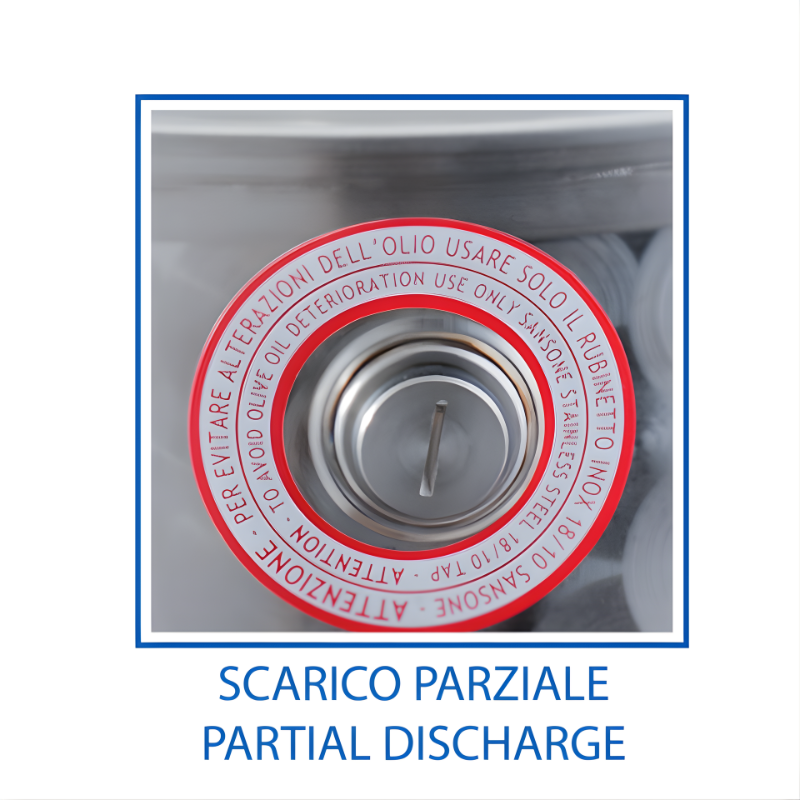
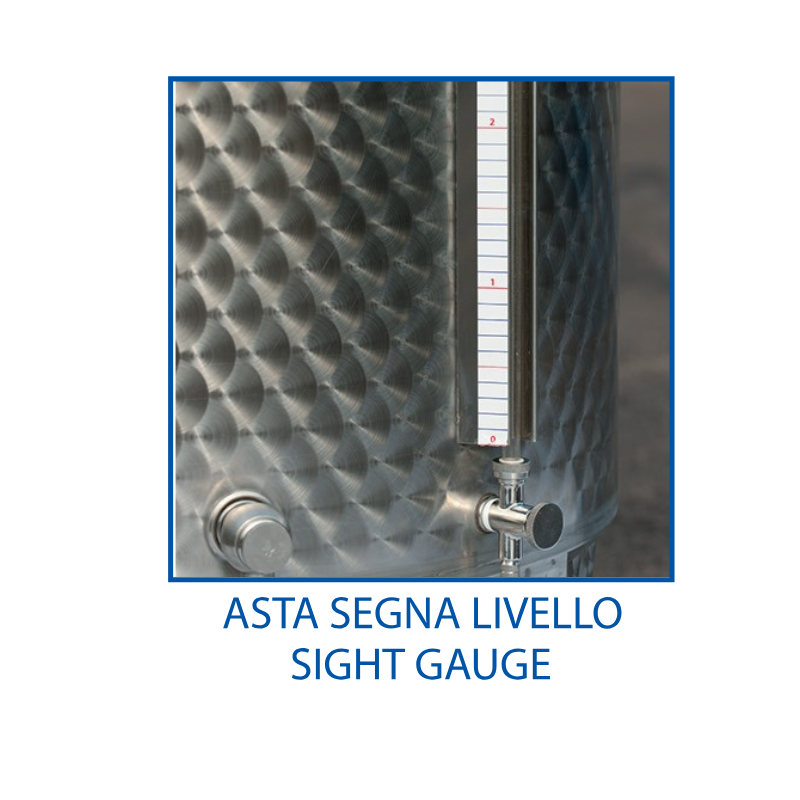
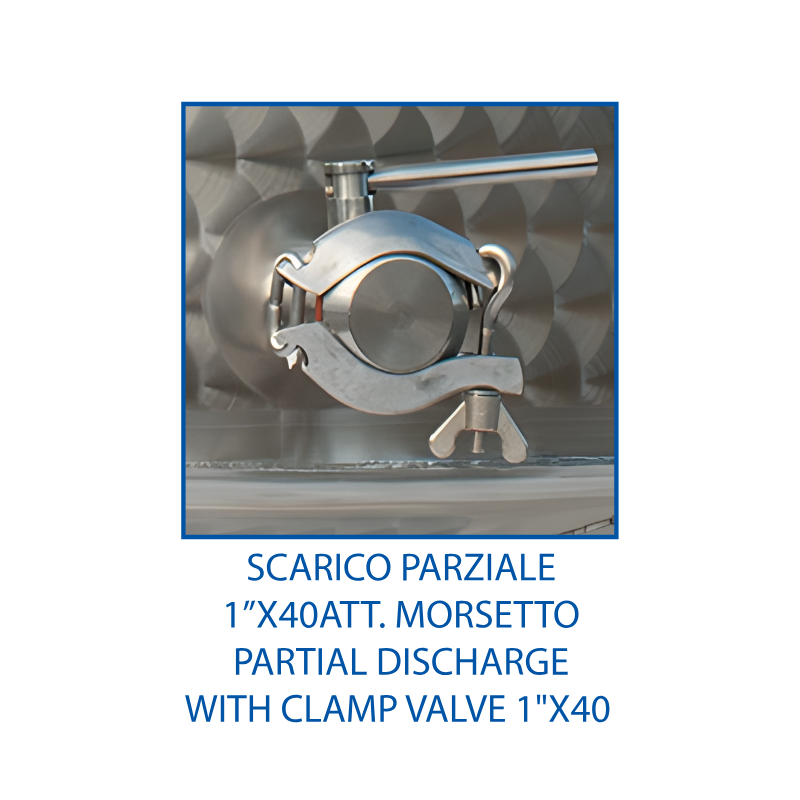
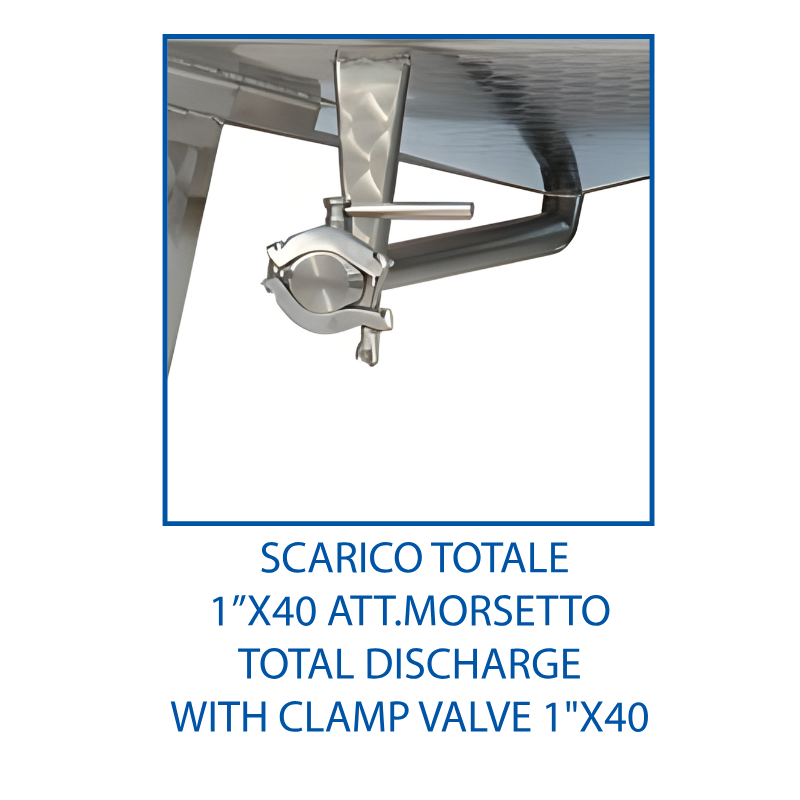
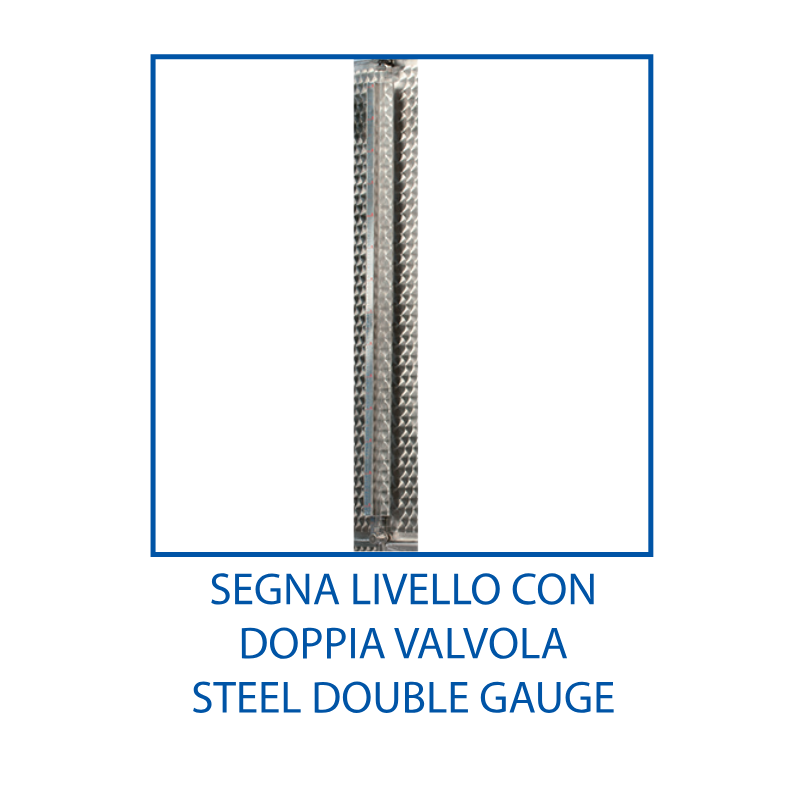
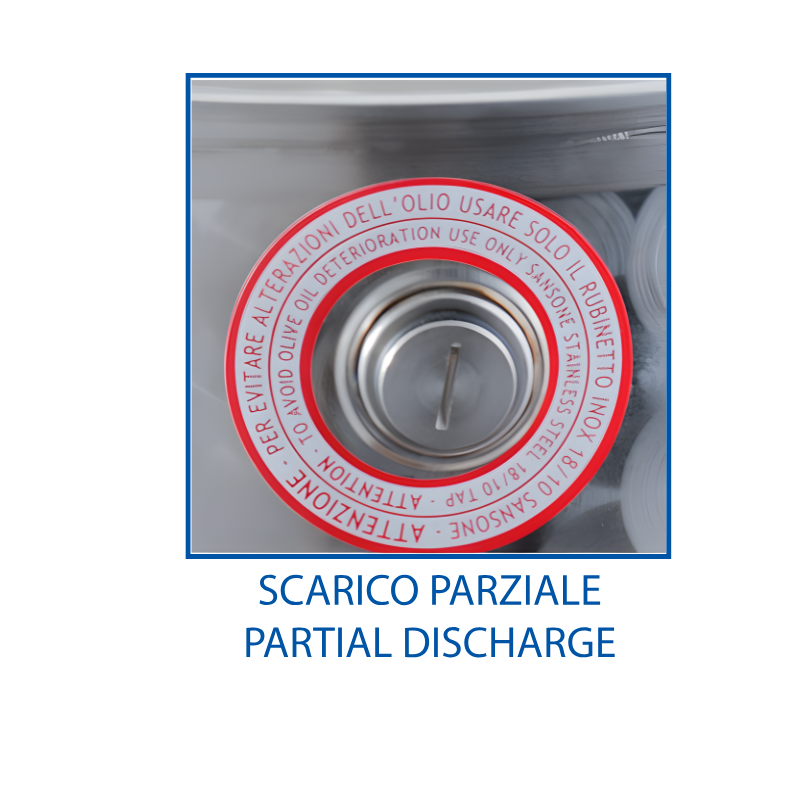
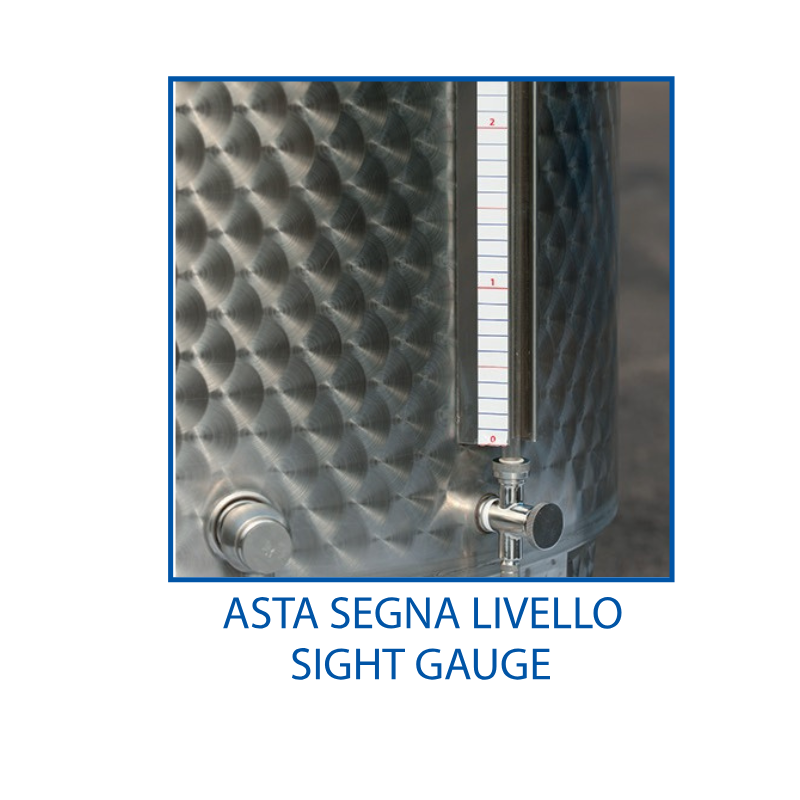
The silos are fitted with elliptical front doors, sight gauges, and total/partial discharge valves, making maintenance and inspection straightforward. Every unit rests on reinforced stainless steel legs for stability, ensuring long-lasting service under continuous use.
| Capacity (L) | Height (mm) | Base (mm) | Opening (mm) | Total Height (mm) |
|---|---|---|---|---|
| 1,000 | 1,500 | 950 | 950 | 2,300 |
| 1,500 | 1,500 | 1,100 | 1,100 | 2,600 |
| 2,000 | 1,500 | 1,270 | 1,270 | 2,300 |
| 2,500 | 2,000 | 1,270 | 1,270 | 2,800 |
| 3,000 | 2,000 | 1,430 | 1,430 | 2,800 |
| 5,000 | 2,500 | 1,600 | 1,600 | 3,400 |
Technical specifications sourced from Sansone Stainless Steel Silos documentation. Conical-base silos ensure total drainage and contamination-free storage for food-grade liquids.
These models are ideal for food processing, laboratory, and industrial settings. The seamless conical design ensures total evacuation of liquids while maintaining a contamination-free environment. Each silo undergoes rigorous testing to meet the most demanding quality standards, including leak-proof inspections and pressure-resistance validation.
Optional features include:
For producers who need flexible capacity management, Sansone’s Fixed Capacity Silos - also known as Silos Sempre Pieno - provide a reliable “always full” system that prevents oxidation and product spoilage.
Each tank features a floating stainless-steel lid that adjusts to the liquid level, ensuring no air is trapped between the product and cover. Combined with a conical base, the design facilitates total discharge and makes cleaning fast and efficient.
Manufactured from AISI 304 stainless steel, these silos are the benchmark for wineries and olive mills where maintaining product quality is crucial during storage or decanting. Optional accessories include a level indicator rod, floating arm, and adjustable support legs to guarantee perfect levelling.
| Capacity (L) | Height (mm) | Base (mm) | Opening (mm) | Total Height (mm) |
|---|---|---|---|---|
| 300 | 940 | 640 | 640 | 1,340 |
| 400 | 1,020 | 700 | 700 | 1,420 |
| 500 | 1,170 | 740 | 740 | 1,570 |
| 750 | 1,480 | 800 | 800 | 1,880 |
| 1,000 | 1,480 | 930 | 930 | 1,880 |
| 1,500 | 1,500 | 1,100 | 1,100 | 2,300 |
| 2,000 | 1,500 | 1,270 | 1,270 | 2,300 |
| 2,500 | 2,000 | 1,270 | 1,270 | 2,500 |
| 3,000 | 2,000 | 1,430 | 1,430 | 2,500 |
| 5,000 | 2,500 | 1,600 | 1,600 | 3,100 |
Data sourced from the Sansone Stainless Steel Silos PDF (Variable Capacity Series). Floating-lid Sempre Pieno design ensures oxidation-free storage and total discharge.
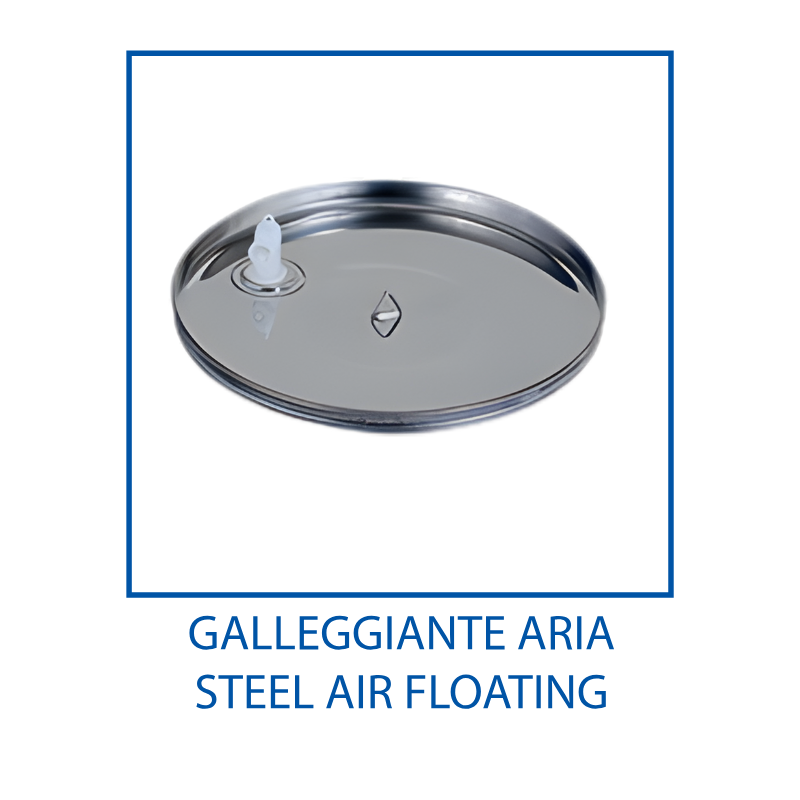
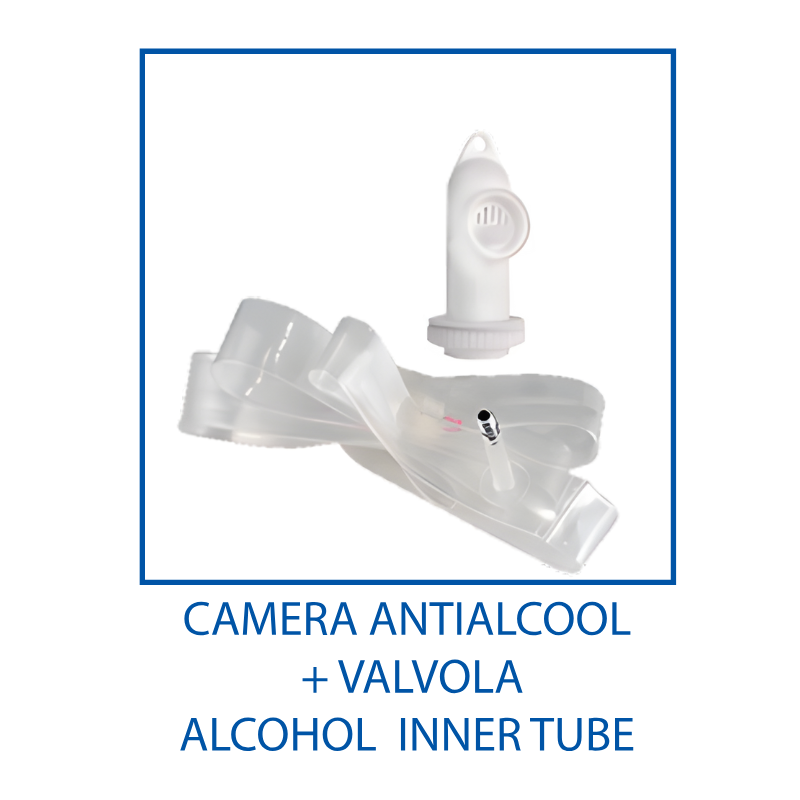
Each unit can be equipped with steel air floating lids, anti-alcohol chambers, and stainless pump groups with double valves. From small-scale honey producers to major wineries, these variable-capacity silos provide safe, stable, and efficient storage control.
To complement the Sansone Storage Silos with Conical Base and Easy Discharge, a selection of optional accessories is available to enhance performance, hygiene, and adaptability in food production. These Italian-engineered accessories are constructed from the same AISI 304–316L stainless steel as the silos, ensuring seamless integration and durability under continuous use.
Typical accessories include:
The Variable Capacity Silos (Sempre Pieno) can be upgraded with a wide array of optional accessories designed to provide maximum flexibility for wineries, olive oil mills, and honey producers. These fittings optimise storage management, allowing precise level control, air exclusion, and convenient product transfer.
Common optional features include:


Every Sansone silo is a result of over 40 years of Italian innovation and craftsmanship. The company’s mission remains unchanged - to offer containers that protect both product quality and the planet.
With 100% recyclable stainless steel and exceptional longevity, Sansone silos not only reduce environmental impact but also deliver significant long-term value for producers. Through The Olive Centre, Australian customers can access the full range, local after-sales support, and expert advice on installation, maintenance, and compliance.
Whether you’re preserving the finest extra virgin olive oil or fermenting honey wine, Sansone’s silos deliver unmatched quality and reliability that will stand the test of time.
Extra virgin olive oil (EVOO) is extremely sensitive to light, oxygen, heat and metal contact. Packaging, therefore, plays a direct role in how long an olive oil remains “extra virgin.” Major reviews from UC Davis emphasise that optimal packaging must reduce light exposure, oxygen ingress, and headspace, while also ensuring cool storage. At the same time, producers—especially small to medium Australian growers—must consider costs, machinery requirements, recyclability, consumer preferences, and minimum order quantities (MOQ). Below is the most complete and updated comparison of all common packaging formats.
PET offers convenience and low cost but has moderate oxygen permeability and allows light penetration, which accelerates oxidation. A 2023 study showed PET-stored EVOO experienced higher acidity, peroxide values, UV oxidation indices and sensory degradation over 12 months—especially at elevated temperatures.
Migration of PET oligomers and antimony into oil is within regulatory limits, but increases under heat.
rPET has a lower carbon footprint than glass, but Australian recycling for PET varies by region.
Metal cans provide total light protection and excellent oxygen barrier characteristics. UC Davis stresses that lined cans effectively prevent metal migration and protect quality.
Compared with BIB, cans may show slightly faster oxidation when half-empty, but still protect oil well if stored cool. A 24-month study found both cans and BIB maintained EVOO within legal quality limits.
Steel and aluminium have high recycling rates in Australia.
Many producers prefer cans because Australian consumers are increasingly concerned about soft plastics, especially given the collapse of local soft-plastic recycling schemes (e.g., REDcycle).
Best for: Bulk, foodservice, premium oils, export, and producers who want reliability without specialised equipment.
Glass is chemically inert. Coloured glass offers some UV and visible light protection—amber performs better than green - but clear glass accelerates photo-oxidation significantly.
Coloured glass slows degradation but still allows some light through, so shelf lighting and storage conditions matter.
Highly recyclable, but heavy to transport. Bottle breakage is an inconvenience for producers.
Best for: Premium retail oils with attention to storage conditions.
Research shows clear glass provides almost no light protection, leading to rapid losses in phenolics and faster oxidation.
UC Davis warns that clear glass should be avoided unless heavily covered by labels or cartons.
Best for: Fast-moving products or promotional oils kept strictly in the dark.
Bag-in-box offers some of the best oxygen protection because the collapsing bag limits headspace oxygen, and the cardboard blocks light. Numerous studies, including 12- to 24-month trials, confirm superior preservation of phenolics, freshness, and sensory properties compared with bottles and cans.
Plastic contact and disposal concerns hinder adoption, despite technical superiority.
Best for: Large producers with dedicated filling lines, subscription models, or export markets where BIB is accepted.
BOV packaging uses a hermetically sealed internal pouch separated from an external propellant. The oil never contacts the propellant; instead, it is dispensed by pressure.
Best for: High-end culinary oils, premium lines, foodservice, and producers wanting differentiation without investing in BIB equipment.
| Packaging Type | Light Protection | Oxygen Protection | Machinery Required | Recyclability (Australia) | Cost | Consumer Acceptance | Best Use Case |
|---|---|---|---|---|---|---|---|
| Cans (lined) |
★★★★★
|
★★★★☆
|
Easy | High | Medium | High | Bulk, premium, foodservice |
| Bag-in-Box |
★★★★★
|
★★★★★
|
Specialised | Low (soft plastics) | High (at scale) | Medium–Low | Long shelf life, export |
| Coloured Glass |
★★★☆☆
|
★★★★★
|
Easy | High | Higher | Very High | Retail premium |
| Clear Glass |
★☆☆☆☆
|
★★★★★
|
Easy | High | Higher | High | Fast turnover only |
| PET Plastic |
★☆☆☆☆
|
★★☆☆☆
|
Easy | Moderate | Low | Medium | Value lines, short shelf life |
| Bag-on-Valve (BOV) |
★★★★★
|
★★★★★
|
Moderate | Low–Moderate | Higher | Medium–High | Premium spray oils |
Selecting the most suitable packaging for extra virgin olive oil hinges on finding the right balance between quality preservation, consumer expectations, and production practicality. Among all options, lined metal cans stand out as one of the most reliable and efficient choices: they are easy to fill by weight, offer excellent protection from light and oxygen, avoid consumer concerns around plastics, and are highly recyclable in Australia. Coloured glass bottles remain the strongest retail performer, pairing good product protection with strong shelf appeal and flexible filling options - from hand-applied caps to automated capping machines that minimise leakage risks. Clear glass should only be used for fast-moving products due to its poor light protection.
While innovative systems like bag-on-valve offer outstanding oxygen exclusion and controlled dispensing, their higher cost and MOQ requirements mean they are best suited for premium or specialised product lines. PET plastic bottles can work for value-oriented, short-shelf-life oils kept in cool, dark environments, but they are not ideal for long-term storage or premium markets.
Overall, Australian producers benefit most by matching each packaging format to the oil’s intended shelf life, sales channel, and brand positioning. Thoughtful packaging selection not only safeguards quality but also streamlines production and aligns with evolving consumer and environmental expectations.
References
Valuing your olive oil processing machinery – from presses and decanters to tractors and harvesters – is an important task for Australian producers. Whether you’re a small boutique grove or a commercial olive operation, knowing what your equipment is worth helps with insurance, resale, and financial planning. This guide explains how to value used olive oil processing machinery (with notes on new equipment costs), covers multiple valuation methods, and offers a practical Australian context. We’ll also include example scenarios (like a decade-old olive press vs. a nearly new separator) and provide tips to maintain your gear’s value over time.
Olive oil production involves specialised machinery at harvest and processing time. Key processing equipment includes olive crushers or mills (to crush olives into paste), malaxers (which slowly mix the paste), and centrifugal decanters/separators (which separate oil from water and solids). Supporting items like pumps, olive washers, and filtration units are also part of the system. Many Australian groves also use standard farm equipment such as tractors, mechanical harvesters, pruning and spraying equipment, and irrigation systems. When assessing value, focus first on the core olive oil machinery, but remember that methods discussed here apply to your tractors, harvesters, and other farm gear as well.
Modern olive processing machinery is a significant investment. For reference, a small continuous-flow olive mill (e.g. 30 kg/hour throughput) might cost around A$20,000 new, while a large commercial plant (capable of ~1 tonne/hour) can run into the hundreds of thousands of dollars. Such figures underscore why proper valuation is essential – these assets represent major capital on the farm. Below, we outline several methods to evaluate what these machines are worth, especially as they age or when considering second-hand purchases.
Valuing used farm equipment is not an exact science – it’s often best to use multiple methods to triangulate a reasonable value. Common approaches include using depreciation schedules, comparing recent market sales, calculating value based on income or cost savings, considering insurance replacement cost, and accounting for residual (salvage) value. Each method gives a different perspective:
Depreciation is the loss in value of equipment as it ages. A simple way to estimate a used machine’s value is to start from its original cost and subtract depreciation. There are two main depreciation methods: straight-line (also called prime cost) and declining-balance (diminishing value). Straight-line depreciation assumes the asset loses value evenly over its useful life, while declining-balance depreciation assumes a higher loss in early years and less in later years.
For instance, if a small olive press was purchased new for $30,000 and has a 15-year life, straight-line depreciation would be ~6.67% per year (100/15). After 10 years (two-thirds of its life), it would be about 10 × 6.67% ≈ 66.7% depreciated. In simple terms, its book value might be roughly 33% of the original cost (around $10,000 in this example). This assumes no residual value; in practice, you might add a small salvage value (see Residual Value section) instead of depreciating to zero.
Example (Depreciation Method): You bought an olive mill for $100,000 new, which is now 10 years old. Using straight-line (15-year life), its book value would be roughly $100k × (5/15) = $33k remaining. Using diminishing value (13.33% yearly), its book value might be closer to $24k–$25k after 10 years. You could cite these as a range – perhaps saying the machine is “approximately $25k–$33k based on age” – then adjust up or down for condition. If your equipment’s been exceptionally well maintained or lightly used, it might fetch more than the book value; if it’s in rough shape, it could be less.
One of the most practical valuation methods is to see what the market is willing to pay for similar equipment. Check recent listings and sales of comparable olive oil machinery or farm equipment. In Australia, useful platforms include:
Example (Market Comparison): Suppose you own a 10-year-old press (same as above) and find two similar presses listed: one in NSW for $40k (fully serviced, ready for work) and one in SA for $30k (sold as-is, needs some repairs). If your machine is in good working order with maintenance records, the market approach might suggest a value in the high $30k’s. You’d then cross-check this against the $24k–$33k depreciation estimate – if the market seems to be paying a premium (perhaps due to a shortage of used presses), you might lean toward the upper end of the range. On the other hand, if no one is buying presses because many olive groves use custom processing services, you might have to price on the lower end to attract interest.
Another angle is to value equipment based on the income it produces or the savings it provides. This method essentially asks: How much is this machine worth to my farm’s profitability? There are a couple of ways to think about it:
Example (Income Approach): Consider a recently purchased separator (centrifuge) that cost $15,000 new and is only 2 years old. Depreciation might put it at $10k–$12k book value now. But you bought it to improve your oil quality and yield – and indeed, oil yields went up 5%, earning you an extra $5,000 in oil sales each year. If we assume it has at least 8 years of life left, that’s potentially $40k additional income coming. Even discounting future years, the value-in-use of that separator might be on the order of $30k. Of course, no one would pay $30k for a used unit when a new one is $15k, but this tells you that for your own insurance, you might want it covered for replacement cost, and that selling it would only make sense if you exit the business or get a bigger unit. In other words, the ROI approach here tells you the separator is “worth more to me on the farm than to anyone buying it,” so you’d hold onto it unless necessary.
From an insurance perspective, valuation is about ensuring you could replace the equipment if it’s damaged or lost. There are two main concepts used by insurers:
Where to find replacement costs? Contact dealers or check current price lists for the closest equivalent new model. For instance, if your 2008 olive mill is no longer sold, find the price of the current model with a similar capacity. Don’t forget to include freight to your location and installation costs in the replacement figure, as a new machine often involves these. In Australia, companies like The Olive Centre or Olive Agencies can provide quotes for new machinery. We saw earlier that small Oliomio units started around $19.5k a few years back – those prices can guide insurance values for hobby-scale equipment. For larger systems, get a formal quote if possible, since custom setups vary widely.
Also, consider partial loss scenarios: insurance may cover repairs. If you have an older machine, parts might be scarce, so even repairs could approach replacement cost. This is another reason some farmers insure older critical items for replacement cost if they can.
Tip: Document your equipment’s details (serial numbers, specs) and keep evidence of its condition. In an insurance assessment, having maintenance logs, photos, and appraisals can support your valuation. Insurers might depreciate based on a generic schedule, but if you can show your press was fully refurbished last year, you have a case for a higher value. As one farm insurer explains, typically anything over ~8–10 years might only get ACV coverage. If your gear is older but in mint condition or has an ongoing role generating income, discuss options with your insurer – you might opt for a higher agreed value or a policy rider for replacement.
No matter which method you use, don’t forget that machinery usually has some residual value at the end of its useful life. This could be as spare parts, scrap metal, or a second life in a lower-intensity setting. Incorporating residual value prevents undervaluing the asset (and avoids over-depreciating on paper).
When valuing for sale, you might actually set your asking price near the salvage floor if the item is very old. This makes the offering attractive to bargain hunters while ensuring you recover at least scrap value. On the flip side, if you’re buying used equipment, be wary of prices that are at or below typical scrap value – it could indicate the machine is only good for parts.
In summary, always account for the “leftover” value. For insurance, that might not matter (since a total loss is a total loss), but for appraisals and decisions like trading in vs. running to failure, knowing the salvage value helps. For example, if a decanter’s internals are shot, it might still have a salvage value of $5,000 for the stainless steel. That $5k is effectively the bottom-line value no matter what.
Example (Residual Value): You have a 15-year-old tractor that’s been fully depreciated on your books. However, it still runs and could be a backup or sold to a small farm. Checking online, you see similar 80 HP tractors from the mid-2000s selling for around $15,000. That’s the residual market value. Even if you only get $10k due to some issues, that’s far above scrap metal value (maybe a few thousand). Therefore, in your valuation, you wouldn’t list the tractor as $0 – you’d acknowledge, say, a $12k residual value in fair condition. This logic applies to olive equipment too: an old olive washer or oil storage tank might be fully written off in accounts, but it has residual usefulness that someone will pay for.
Each method has its strengths. The table below summarises and compares these approaches:
Each method yields a piece of the puzzle. In practice, when preparing a valuation (for example, for a financial statement or an insurance schedule), you might list multiple figures: “Depreciated value: $X; Likely market value: $Y; Replacement cost: $Z.” This gives a range and context rather than a single uncertain number
Let’s apply the above methods to two concrete scenarios to see how they complement each other:
Scenario 1: Valuing a 10-Year-Old Olive Oil Press
Background: You purchased a medium-sized olive oil press (continuous centrifugal system) 10 years ago for $100,000. It has been used each harvest, processing around 50 tonnes of olives per year. It’s well-maintained, though out of warranty now. You are considering upgrading to a newer model and want to determine a fair sale price or insurance value.
Scenario 2: Valuing a Nearly New Separator (Centrifuge)
Background: You bought a new centrifugal separator (vertical centrifuge for polishing oil) 1 year ago for $20,000. It’s a high-speed clarifier that improves oil quality. Unfortunately, you’re now restructuring your operations and might sell this unit. It’s in “as-new” condition. How to value it?
Valuing farm equipment in Australia comes with some local considerations that can affect prices and depreciation. Here are a few factors particularly relevant to Aussie olive producers:
Depending on your goal – insuring the asset, selling it, or accounting for it – you’ll approach valuation with a slightly different mindset and requirements. Here’s how to handle each:
By implementing the above steps, you not only retain the value of your olive oil machinery but can enhance it relative to similar-aged units on the market. A well-maintained 15-year-old olive press could outperform a neglected 10-year-old press, and its value would reflect that. Many buyers would rather pay more for the former, knowing it was cared for. Good maintenance is like money in the bank for equipment value.
Specialised machinery like over-the-row olive harvesters can hold their value well if maintained, though hours of use and local demand are key factors. For instance, the Colossus harvester pictured (built in Mildura, VIC) had logged about 7,735 hours – yet with components rebuilt and good upkeep, it remains a sought-after asset for large groves. When valuing such equipment, consider service history (e.g. newly rebuilt conveyors or engines), as major refurbishments can extend useful life significantly. Heavy machinery also benefits from many of the tips above: regular cleaning (clearing out olive leaves and dust), timely engine servicing (as per John Deere engine schedules in this case), and storing under cover in off-season all help preserve value. Usage hours are akin to mileage on a car – they directly impact value, but how those hours were accumulated (easy flat terrain vs. rough use) also matters. Keeping detailed records (hours of use per season, any downtime issues resolved) will support a higher valuation when selling to the next operator.
Finally, don’t underestimate the value of operational knowledge and support documents. If you’re handing off a complex piece of gear, providing training to the buyer or passing along your notes (like ideal settings for different olive varieties, or a log of any quirks in the machine and how to manage them) can make your item more attractive, thereby supporting your asking price. It’s not a tangible “value” in dollars, but it eases the sale and might tip a buyer to choose your machine over another.
Valuing olive oil processing machinery and farm equipment requires blending hard numbers with practical insight. By using depreciation formulas, checking market prices, considering the machine’s contribution to your farm, and factoring in replacement costs, you can arrive at a well-supported valuation range. Always adjust for the realities of the Australian market – our distances, climate, and industry size mean context is key. And remember, the way you care for and present your equipment can significantly sway its value.
Whether you’re insuring your olive press, selling a used tractor, or just updating your asset register for the accountant, a thoughtful valuation will pay off. It ensures you neither leave money on the table nor hold unrealistic expectations. Use the following checklist as a guide whenever you undertake a machinery valuation:
Valuation Checklist for Olive Machinery & Farm Equipment:
Valuing farm equipment is part art and part science. The science comes from formulas and data; the art comes from experience and understanding of how your machinery fits into the bigger picture. With the guidelines above, you have tools from both domains at your disposal. Happy valuing – and may your olive machinery serve you efficiently and profitably throughout its life!
Sources
CONSUMER EDUCATION
Extra Virgin Olive Oil (EVOO) is often hailed as a “liquid gold” in kitchens around the world – a term famously used by the ancient Greek poet Homer. For Australians, EVOO is more than just an ingredient; it’s a heart-healthy cooking staple and a link to centuries of Mediterranean tradition. This guide will explain exactly what EVOO is and how it differs from other olive oils, how it’s produced (from grove to bottle), its science-backed health benefits, and the many ways you can use it – both in your cooking and beyond. Along the way, we’ll share some interesting facts that highlight why this oil has been prized since antiquity. Let’s dive in!
By contrast, other grades of olive oil are lower in quality or more processed:
In summary, EVOO stands apart from other olive oils because it’s unrefined, of top sensory quality, and packed with natural compounds. If you drizzle a good EVOO on a salad or taste it on a spoon, you’ll notice a bright, complex flavour – something you won’t get from the flat, one-note taste of refined “olive oil” blends.
EVOO’s journey from tree to bottle is a fascinating combination of ancient tradition and modern food science. It all starts in the olive groves. Olives destined for high-quality EVOO are often hand-picked or gently shaken off trees (modern farms may use mechanical harvesters that vibrate the trunks or use catching frames). The timing of harvest is crucial: early in the season, when olives are green to purplish, they yield less oil, but it’s very rich in flavour and antioxidants; later harvest (ripe black olives) yields more oil but with mellower taste. Many premium Australian producers, much like those in the Mediterranean, opt for early harvest to maximise quality.
Once picked, speed is key – olives are quickly transported to the mill, because freshly harvested olives start to oxidise and ferment if they sit too long. Ideally, olives are pressed within 24 hours of harvest to prevent quality loss. At the mill, the olives are washed to remove leaves and dust, then crushed (pits and all) by either traditional stone mills or modern steel crushers. This creates an olive paste, which is then gently malaxed (slowly churned) for 20–45 minutes. Malaxation allows tiny oil droplets to coalesce, but it’s done under strict temperature control – this is where the term “cold-pressed” or “cold extraction” comes in. To qualify as cold-pressed, no heat above 27 °C is applied during extraction. Keeping the paste cool preserves aromatic compounds and nutrients; higher temperatures could extract a bit more oil, but at the cost of flavour and antioxidants. Australian and European producers alike adhere to this, as heat can reduce EVOO’s polyphenols and vitamin E (and increase oxidation)

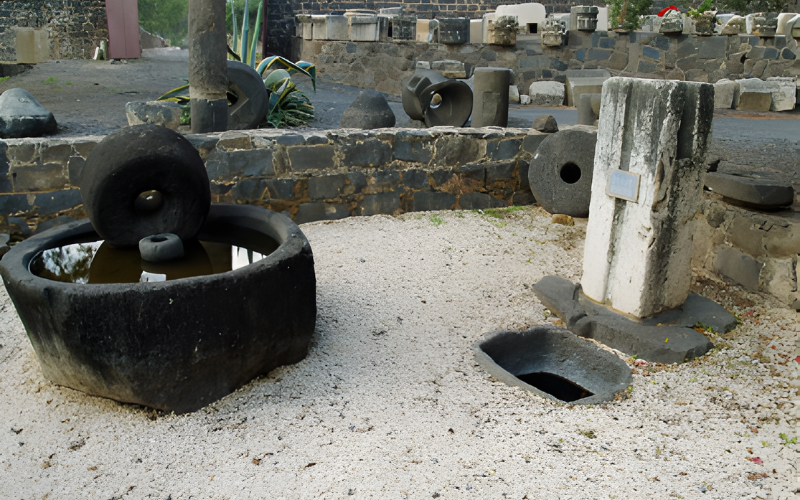
A Roman-era olive oil press in Capernaum, Israel. Ancient presses used large millstones to crush olives, and the oil was separated by gravity. Today, modern cold-pressing uses centrifuge extractors, but the goal remains the same – to physically squeeze oil from olives without chemicals or high heat, preserving quality. (photograph of a Roman-era olive mill in Capernaum)
After malaxation, the paste is pressed or, more commonly, centrifuged. Modern mills use a decanter centrifuge, which rapidly spins the olive paste to separate oil from water and olive solids. The result is fresh olive oil (plus some vegetable water). The oil may then be filtered or simply left to settle so that tiny particles and moisture drop out over time. Some artisan oils are unfiltered, yielding a cloudy appearance, but most commercial EVOOs are filtered for clarity and stability. Finally, the oil is stored in stainless steel tanks (ideally with minimal air exposure) and later bottled.
Throughout production, maintaining quality is paramount. At no point are solvents or refining used – EVOO is purely a natural juice. This careful process explains why EVOO is more expensive than generic cooking oil: it takes a lot of olives and care to produce. In fact, it typically takes around 4 to 6 kilograms of olives to cold-extract just 1 litre of EVOO (for some early harvest oils, even more). That represents roughly 8000–10,000 individual olives in each litre of premium oil! Such figures help us appreciate the effort and agricultural value inside each bottle of EVOO.
Australian EVOO note: Australia may be far from the Mediterranean, but it has a burgeoning olive oil industry of its own. Olives were first brought to Australia in the 1800s, and the industry remained small until a boom in the late 20th century. The Australian olive industry is over 150 years old, but it has expanded rapidly across all mainland states in recent decades. Today, Australia produces high-quality EVOOs, particularly in regions with Mediterranean-like climates (such as parts of South Australia, Victoria, and Western Australia). Aussie EVOOs often win awards for their robust flavours and purity, thanks to modern farming and milling techniques. So when you shop, know that some EVOO on the shelf – in addition to imports from Italy, Spain, Greece, etc. – is grown and pressed right here in Australia.
Extra Virgin Olive Oil isn’t just a tasty fat – it’s exceptionally good for you. Its health benefits are backed by a wealth of scientific research and have even been recognised by international health authorities. Here are some of the top evidence-based benefits:
Lastly, remember that EVOO is a fat and thus calorie-dense, so use it in place of other fats rather than simply adding on (to balance overall energy intake). But as fats go, EVOO is about the best you can choose for your health. It’s no surprise the Australian Dietary Guidelines and Heart Foundation include olive oil as a core part of a healthy eating pattern, encouraging people to swap butter and animal fats for olive or other plant oils. EVOO isn’t a miracle cure-all, but it is a potent, natural contributor to wellness – and a delicious one at that!
One of the beauties of EVOO is its culinary versatility. You can use it raw, you can cook with it, you can even bake with it. Here are some popular ways to integrate EVOO into your daily diet, along with tips particularly suited for Australian kitchens:
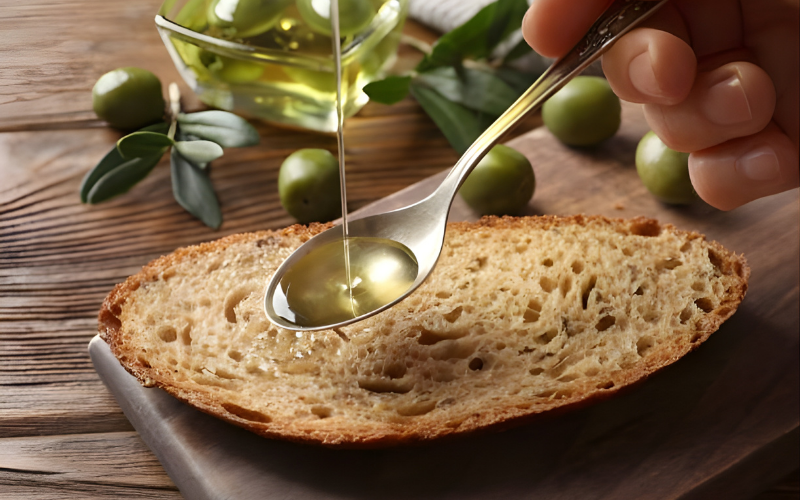
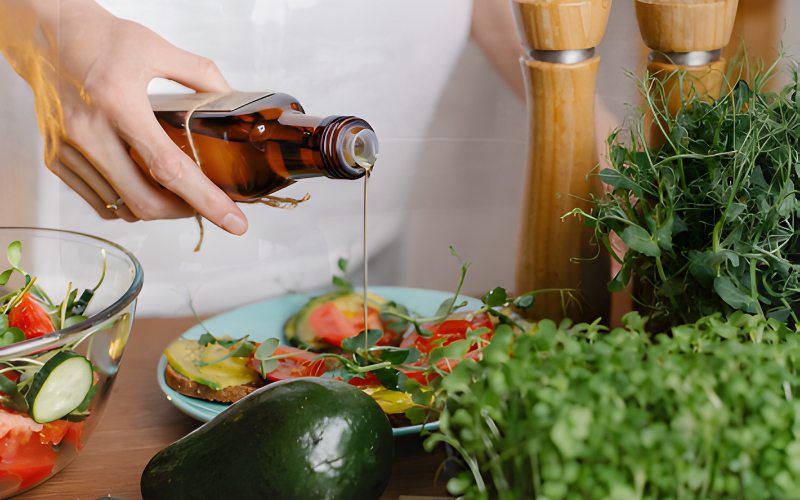
Drizzling extra virgin olive oil over a salad of avocado, tomato, and greens. Incorporating EVOO into daily meals can be as simple as using it to dress salads, dip bread, or finish cooked dishes – adding both flavor and healthy fats to the Australian diet.
Quick recipe ideas:
Olive oil’s usefulness goes far beyond food. Throughout history, olive oil has been used in daily life in myriad ways – and many of these uses are still relevant or just plain handy today. Here are some nonculinary applications of olive oil:
As you can see, a bottle of olive oil in the cupboard can double as a mini home remedy kit! One caveat: for non-food uses, you don’t necessarily need to use your finest extra virgin oil – a basic grade or older bottle that you don’t want to cook with can find a second life polishing your coffee table or deep-conditioning your hair. Food-grade olive oil for beauty and home use means you’re avoiding the petrochemicals found in some commercial products, which is a win for those with sensitive skin or who prefer eco-friendly options.
To round out our EVOO guide, here are some fun facts and bits of trivia that make olive oil even more fascinating:
Extra Virgin Olive Oil is truly a kitchen all-star – it elevates our food and supports our health. We’ve learned that EVOO differs from lesser olive oils in quality and production, coming straight from fresh olives without chemicals or refining. We’ve seen how it’s made, preserving its sensory and nutritional treasures. Science shows that incorporating EVOO into your diet can benefit your heart, reduce inflammation, and even help you enjoy your veggies more (because they taste better with a good drizzle!). And beyond cooking, olive oil proves its worth in our beauty routines and households.
For Australian consumers, the message is embrace EVOO: use it in your salad dressings, swap it for butter when you can, try it in new recipes – both traditional Mediterranean dishes and local Aussie favourites. With Australian olive oil production on the rise, you might even explore home-grown EVOOs, which can be world-class. Remember to store it well, use it generously but mindfully, and appreciate the story behind it – from ancient olive groves to your dinner table.
In summary, Extra Virgin Olive Oil is more than an ingredient; it’s a lifestyle choice towards better eating and living. So go ahead – enjoy that splash of liquid gold in your meals every day, and taste the difference it makes!
References (selected):