My Account
Sign-in / Join

Sign-in

Hi My Account

Dashboard

Logout

Cart

My Shopping Cart

Subtotal
${{total.toFixed(2)}}
QUOTE

30L Pickling Barrel with Tap

Delivery charges apply
Bulk Discounts Prices
Quantity Price
1 $58.08
Quantity

MC01-30L
  • Description
  • Features
  • Enquiry
  • Specifications
  • Blog
30 Litre Pickling Barrel with Tap – Food Grade Plastic

Delivery charges apply

Compact 30L food-grade pickling barrel with tap, ideal for small-batch table olive processing and recipe trials.

The 30 Litre Pickling Barrel with Tap is a practical, food-grade container designed for small-scale table olive processing. Manufactured from durable food-grade plastic, this barrel is ideal for trial batches, recipe testing or use in small groves. Supplied complete with a secure lid and integrated tap, it allows easy filling, draining, and brine management. Its compact size makes handling simple while maintaining hygienic storage conditions throughout the pickling process.

Where this product is used

This pickling barrel is commonly used in home olive processing, boutique groves, farm shops, and small commercial operations. It is suitable for brining and fermenting table olives, as well as other pickled products. For olive oil storage, stainless steel tanks are recommended instead.
 

30 Litre Pickling Barrel with Tap – Technical Specifications

Specification Details
Capacity 30 litres
Material Food-grade plastic
Colour White or black (subject to availability)
Lid Included
Tap Integrated drain tap included
Recommended use Table olive pickling and brining

Why choose this product

This 30L pickling barrel offers a convenient and hygienic solution for small-batch olive processing. The food-grade plastic construction ensures safe contact with brine and olives, while the built-in tap simplifies liquid changes and cleaning. Its manageable size makes it ideal for experimentation without committing to larger fermentation vessels.

Application guidelines

Wash the barrel thoroughly before use. Add olives and brine according to your chosen recipe, ensuring olives remain fully submerged. Use the tap to drain or refresh brine as required. Clean and dry the barrel after each batch to maintain hygiene and extend service life.

Frequently asked questions


General main key features

• Food-grade plastic suitable for brining and fermentation
• Integrated tap for easy draining and brine changes
• Compact size ideal for small batches and trials
• Supplied complete with lid and tap
• Easy to clean and handle
  • :
  • :
  • :
  • :
  • :

Pickling Olive Recipes

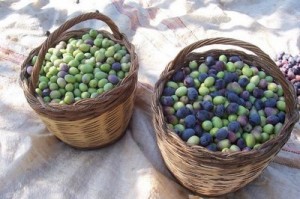
baskets-of-olives-300x199Often we are asked 'what is the best recipe for pickling or curing your own table olives' emphasising they couldn't be bothered changing the brine on a daily basis for a month! ?Fair enough because that's a lot of work. ?However, you might like to know there are different styles or preparations of Table Olives. ?Let me explain:
  1. Lye Treated Olives: ?Lye is essentially caustic soda. ?Yes, you heard right! ?Most people who have tasted olives associate the taste to resemble cardboard probably have eaten a Lye-treated olive. ?Lye treated olives can be treated green, turning colour or black. ?The colour of the olives is usually brilliant green or black (depending on the maturation stage of the fruit once they've been processed). ?This process is much quicker around 30 days.
  2. Naturally Brined Olives: ?Brine solution is made from salt and water and usually at about 11% concentration. ?Olives can be Green, turning colour or fully black. ?This process can take anywhere from 3 to 18 months depending on the variety and maturation point of the olive. ?A generous sized Jumbo Kalamata will be on the more lengthy side of production. ?Olives that are processed through brining are flavoursome and would be worth a try if you've only tried Lye treated olives.
  3. Dehydrated olives/shrivelled olives: ?Can be processed through a partial Lye treatment and then dehydrated in salt or by heat. ?A dehydrator can be used, however, the salt will help to de-bitter your olives and maybe give some salt flavour depending on time being treated. ?Olives can be green, turning colour or black for this process.
  4. Blackened Oxidated Olives: ?For this method, you can use Green olives or olives turning colour are preserved in brine (fermented or not) and darkened with or without Lye treatment. ?They need to be uniform in colour from brown to black. ?Olives darkened by this method should be sealed in containers and subjected to heat sterilisation process.
So, in a nutshell, most of the recipes you see will use one of these methods. ?It's about?

experimentation?and finding the recipe which suits your time allowance and more importantly tastes! Here are some recipes you might like to try (some take more time than others):

Read about: ?Slitting, Scratching or Cracking may be of interest to help speed-up the process.

Read about: ?Where to source the right tools for pickling on a smaller scale or machinery for larger production

What is Slitting, Scratching or Cracking Table Olives?

If you are looking to produce Table Olives you may want to practice the art of Slitting, Scratching or Cracking Olives!

Under natural fermentation, olives are subjected to brine solution. ?Some varieties of olives can take longer to endure the process of de-bittering and can be well in excess of 12 months. ?Talk about a labour of love!

The idea behind Slitting, Scratching and Cracking is to essentially allow easier entry for the brine solution to penetrate the olive, thus speeding up the time to cure your olives.

What is the difference between Olive Slitting, Scratching and Cracking?

Olive Slitting and Scratching means the same whereby with the machine or manual intervention an incision is made to the fruit either as a single cut or multiple incisions to the fruit. ?The Olives are usually placed into brine for partial or complete natural fermentation. ?Other additives like lemon, herbs, spices, vinegar or oil are added to extend the aroma and taste as these flavours also penetrate the flesh.

jkalskit2-300x224

Olive Cracking:? Olives undergo a process where the olive is hit with enough force that the olive cracks without the pit ejecting from the fruit (keeping the pit intact). ?Traditionally a beer bottle is used to crack/bruise olives.

cracked-olives-300x200

Slitting / scratching machines come in many forms... here is an outline of the technology: ?See link

https://youtu.be/GOCjA0bqBGo

See more about machines for Table Olive Processing

See more about machine for Slitting/Scratching olives


Perth Royal Olives Show reintroduces Table Olives

Olives WA is excited to announce the re-introduction of seven table olives classes into the?2017?Perth Royal Olives Show. Olive producers Australia-wide are invited to submit their table olives?and olive oil during the months of June and July into the 2017 Perth Royal Olives Show.

Competition Administrator and olive lover Karen Sanders said: ?This year has been a bumper season?for olives and olive oil and the Show is a great opportunity for olive growers to showcase the?outstanding quality and freshness of Australian grown and produced olives and olive oil.?

The table olive judging panel, led by one of Australia?s leading table olive specialists?Professor?Stan?Kailis, will assess entries in seven different classes based on methods of processing?and product type. In each class, judges will evaluate the attributes of the olives, including flavour?(bitterness, saltiness and acidity) as well as the aroma, appearance and texture.

?Our Australian olive growers have been producing excellent table olives and I?m looking forward to?tasting a variety of them for this year?s show,? said Professor Kailis. Entries for table olives open on?Friday 9 June and close Friday 30 June 2017.

The Perth Royal Olives Show Olive Oil judging will again run under the expert guidance of?Chief?Judge Isabelle Okis. ?After a tough year for West Australian olive growers last year, the 2017?harvest is looking exceptional! We are expecting high numbers of olive oil entries this year, and we?are hoping to taste some wonderful oils.? Olive oil entries open on 10 July and close on 4 August?2017.

Award winners for both table olives and extra virgin olive oils will be announced at a promotional?event in September 2017.

Entry packs are being released on the Olives WA and Perth Royal Show websites, containing details?on how and when table olive and olive oil entries can be submitted: www.oliveswa.com.au and?www.perthroyalshow.com.au/competitions/competition-entries/olives/

Alternatively, packs can be requested by contacting Olives WA on 9337 2810 or email:?admin@oliveswa.com.au.


For further media information contact:

Karen Sanders, Competition Administrator. T: 9337 2810 E: admin@oliveswa.com.au