My Account
Sign-in / Join

Sign-in

Hi My Account

Dashboard

Logout

Cart

My Shopping Cart

Subtotal
${{total.toFixed(2)}}
QUOTE

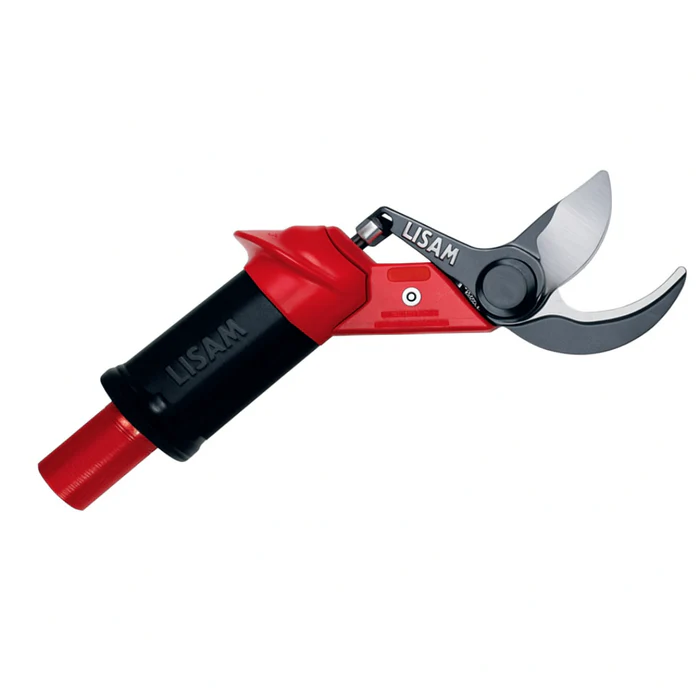
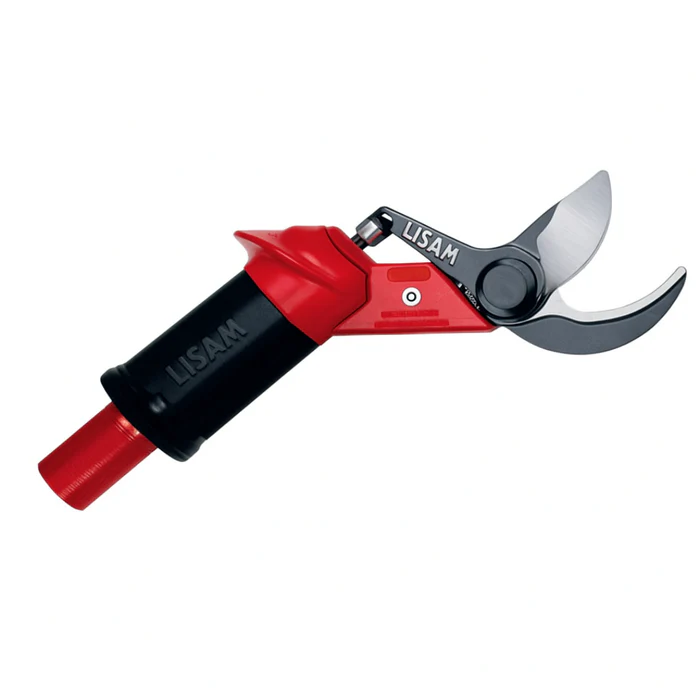
Lisam SLY Orchard Pole Pneumatic Shear Head - Extension Pruner

Shipping will be calculated at checkout or added separately.
Quantity

CAGT354
  • Description
  • Features
  • Enquiry
  • Specifications
  • Knowledge

Lisam SLY Orchard Pole Model Pneumatic Shear – Premium Italian Engineered Extension Pole Pruning Head

Shipping will be calculated at checkout or added separately.

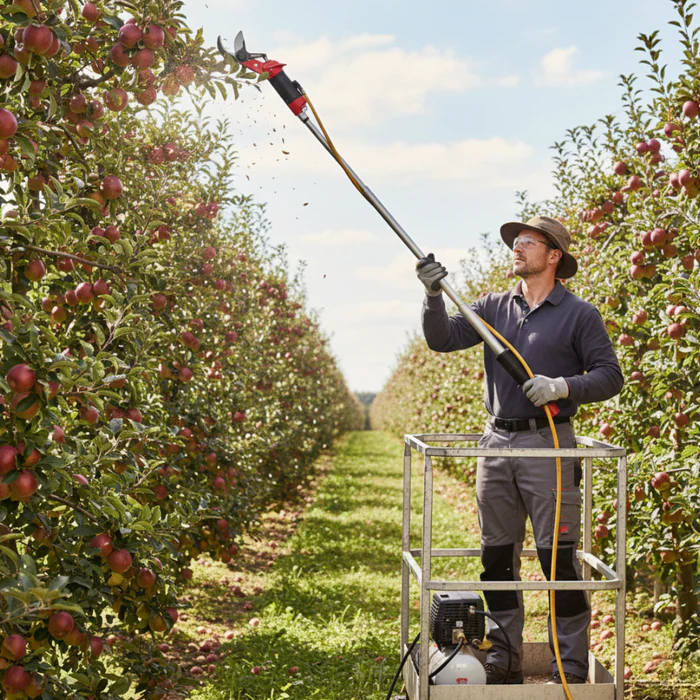
Reach higher and cut faster with the professional agricultural performance of the Lisam SLY Orchard Pole Model Pneumatic Shear (Model GT354). Engineered explicitly for high-altitude orchard thinning, citrus harvesting, and vineyard canopy management, this specialised pruning head delivers immense mechanical cutting power right where you need it, eliminating the safety hazards of ladder-based field maintenance.

This dedicated pole-mounted configuration is built using the legendary **Lisam SLY** cutting framework and is expertly pre-fitted with an integrated **pole connector**, with the standard hand-lever valve assembly removed. This streamlined design makes it ready to be fitted directly to your compatible pneumatic extension pole, integrating flawlessly into your existing compressed air lines. Crafted with a high-performance piston housing and a premium forged steel blade, the shear delivers lightning-fast, clean cuts that prevent bark tearing and protect tree health. Its rugged, lightweight build minimises top-heavy tipping leverage, ensuring maximum handling comfort and reducing operator shoulder fatigue during long overhead pruning shifts.

Best For: Professional orchardists, olive grove managers, commercial viticulturists, and high-volume contractors who require a powerful, durable, and pole-ready pneumatic cutting head for intensive overhead branch maintenance.

FEATURES – Pole-Ready Integration & Forged Steel Pneumatic Power

  • Seamless Pole-Mount Configuration: Comes pre-fitted with a dedicated pole connector sleeve with the manual hand-valve removed, allowing instantaneous adaptation to your choice of extension pole handles.
  • High-Velocity Piston Drive: Driven by compressed air to deliver instantaneous, high-torque cutting cycles, slicing through dense branches effortlessly with the single pull of a pole-base trigger.
  • Precision Forged Blades: Engineered with a premium, razor-sharp steel cutting blade that tracks perfectly to provide flush, clean cuts, minimising structural wood damage and promoting rapid plant healing.
  • Lightweight, Low-Vibration Engineering: Optimises weight distribution across the tool head to minimise user fatigue, allowing precise control and comfortable operation over extended all-day pruning shifts.
  • Industrial-Grade Italian Durability: Masterfully manufactured by Lisam to endure the punishing physical impact of commercial agricultural schedules, ensuring long-term field reliability.

Product Package INCLUDES:

  • 1 x Lisam SLY Orchard Pole Model Pneumatic Shear Head (Model GT354)
  • Pre-Installed Extension Pole Connector Interface
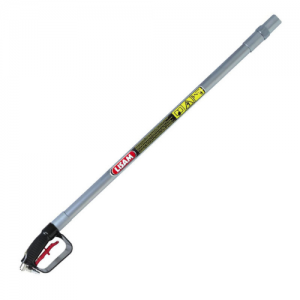
  • Note: Pneumatic extension poles, trigger valves, and air hoses are sold separately.

Technical Specifications

Specification Product Detail
Brand Lisam (Italy)
Model Number SLY Orchard Pole Model / GT354
Type Professional Pole-Mounted Pneumatic Pruning Shear Head
Base Design Framework Lisam SLY Series High-Efficiency Body Architecture
Mounting Hardware Pre-installed integrated pole connector socket; hand valve assembly removed
Blade Material High-Strength Precision Forged Steel
Power Source Compressed Air (Pneumatic Compressor Line Required)
Cutting Suitability Heavy-Duty Orchard Branch, Olive Grove, and Fruit Tree Pruning
Country of Origin Made in Italy
Product Features
  • Pole-mounted pruning shears designed for olive, citrus, and tall fruit trees
  • Reaches up to 4 meters in height when used with extension rods
  • Hardened steel blades for clean, precise cutting
  • Magnesium alloy body for strength and lightweight handling
  • Cuts branches up to 40 mm thick with ease
  • Operates efficiently at 8–10 bar working pressure
  • Air consumption: 90 l/min – compatible with most pneumatic systems
  • Lightweight design at only 0.80 kg for reduced operator fatigue
  • Built for reliable performance in all weather and temperature conditions
  • Compatible with Lisam’s full range of fixed and bayonet extension rods
  • :
  • :
  • :
  • :

How to Remove Sap Build-up from Saw Blades and Secateurs

TOOL MAINTENANCE

How to Remove Sap Build-up from Saw Blades and Secateurs

The teeth on Silky Saws are like super sharp little chisels that are dragged across the surface of a branch with each chisel taking a bite out of the wood it is cutting. Using Japanese ingenuity, saws cut on the pull stroke and to stop the saws binding they developed a process that is called among other things, taper or hollow grinding. What they did was get a big round grinding stone and ground their saw blades so the thickest part of the blade was at the teeth and it tapered into the middle of the blade and then thickened slightly to the top of the blade. This meant that the blade was thickest at the teeth, less thick at the top and thinnest in the middle. The grinding technique produced a saw that allowed a thinner saw to cut through a branch quicker, without binding.

When you cut green wood with a Silky Saw or pruning saws and Secateurs, you are going to get sap on the blade area. The more you cut, the more sap you are going to get a build-up of and it's most noticeable in the middle (from top to bottom) of the saw blade.  Remember how the middle of the blade is the thinnest part of the blade. It is easier for the sap to stick there as it isn?t being rubbed against as much. So that night, you put the saw back in the scabbard and pick it up again the next day and do some more pruning and shaping of trees and bushes. Overnight the sap dries and hardens and is easier for the sap to stick to the blade again the next day... so the process continues. Soon you think your saws are getting blunt because it is much harder than when you first purchased to cut through a branch. With all the sap build-up, you are trying to pull a blade through a cut that is now thinner than the blade with its sap build-up.

What is the Solution

The solution is 2 minutes of TLC for your saw blades at the end of the day with the Saw Cleaner solution. This anti-bacterial organic oil spray based on Tea Tree Oil is the solution for removing sap from Saw blades and sticky substances. We use it, we swear by it and we have used it to make sap covered Saws and Secateurs look and cut like new again.? ?View before and after images above.

Summary

Sap build up is often mistaken for blade dullness, but it is actually the main cause of reduced cutting performance in pruning saws and secateurs. Because the blade is thinnest in the middle, sap easily accumulates, hardens, and increases friction, making cutting more difficult while also increasing the risk of rust and corrosion.

Using the Saw Cleaner – Tea Tree Environmental Solution 100 mL Spray helps remove sap and resin, reduce bacteria and mould, and protect blades from rust. Regular cleaning with this natural tea tree–based formula supports tool hygiene, maintains sharp cutting performance, and extends the life of pruning equipment.

Mechanical Harvesting and the Role of Branch Inclination in Vibration Transmission - HUB

Trunk shakers apply forced vibration at the tree trunk, which propagates through the canopy and detaches ripe olives. However, the success of this process isn't solely dependent on the machine’s frequency or power. The geometry of the tree itself... particularly the inclination angle of its branches... plays a pivotal role in determining how efficiently that vibration moves through the canopy.....
Please log in to view the entire article

Rejuvenating An Olive Grove

A new grove owner near Taree, NSW, faces challenges reviving a mature olive grove on heavy clay soil in a high-rainfall region. Here’s a practical guide to restoring soil health, drainage, nutrition, and yield. The grove was abandoned and in need of rejuvenation. See what steps can be considered to bring an olive grove back.
Please log in to view the entire article

Managing Phytophthora Root Rot in Australian Olive Production

Phytophthora root rot is one of the most destructive diseases affecting Australian olive groves. Caused by several Phytophthora species thriving in waterlogged soils, it can lead to root decay, canopy collapse, and even total tree death if unmanaged. This guide explores how to identify symptoms, contributing factors, and the latest integrated management practices.
Please log in to view the entire article

Comprehensive Operational System for Professional Olive Producers

This comprehensive operational report outlines a full management system for professional olive producers, covering seasonal orchard tasks, planning, nutrition management, pest control, pruning, forecasting tools, budgeting, and technology integration.
Please log in to view the entire article

Optimising Olive Tree Health and Yield Through Effective Pruning

SMART PRUNING FOR STRONGER, HIGHER-YIELD OLIVE TREES

Optimising Olive Tree Health and Yield Through Effective Pruning

By Marcelo Berlanda, Agronomist & Consultant for The Olive Centre

“Olive trees must put out fresh growth each year to produce fruit.”

Training shapes the tree to support efficient harvesting and encourage early production

When trees reach the canopy size best suited to their environment, yields may begin to drop. This often happens because the inner canopy receives limited sunlight, leading to leaf loss and a reduced Leaf-to-Wood Ratio. If a tree grows beyond its ideal size, it creates challenges for mechanical harvesters. Excess height and width, along with thick branches, can strain or damage harvesting equipment, reduce fruit removal efficiency, and slow the harvest. Because olive trees need to produce new shoots annually to maintain fruiting, consistent growth is essential—and pruning becomes an important management practice. Pruning improves fruit size, oil content, light penetration, and the Leaf-to-Wood Ratio. It also stimulates fresh growth and lowers water and fertiliser demand. 

1- TREE TRAINING 

Purpose: Establish early productivity with stronger yields, extend the productive lifespan of the tree, enhance fruit quality, and prepare trees for the harvesting system used in the grove. 

Timing: Training occurs within the first three years of the tree’s development. 


In the first year, pruning is minimal (assuming nursery trees arrive with a good structure). Remove lower or overly vigorous branches that compete with the central leader. The goal is to maintain an upright main trunk with outward-growing horizontal branches. Water shoots should be removed so they do not compete for nutrients and moisture.

During the second and third years, gradually remove lower branches below approximately 600–1000 mm. 

A balance is essential. Removing too much canopy reduces the tree’s photosynthetic area, slowing its progress until new growth resumes.

Light pruning involves removing only small sections of foliage (such as a few short shoots), which keeps the tree stable. This can be done from August through late May. 

Heavy pruning removes larger amounts of foliage, prompting a stronger regrowth response but also increasing frost risk. Heavy cuts should generally be delayed until late September unless conditions are warm enough to begin earlier. 

Tree training may also include tying and skirting as part of shaping and preparation.

2- PRODUCTION 

This stage focuses on mature trees that have reached full size. The aim is to maintain balance so the tree can produce consistent, reliable crops each year.


Young trees contain many non-productive branches because they are still actively growing. Once these branches mature and begin producing fruit, they eventually become exhausted and stop fruiting. At that point, they need to be removed to make room for new productive growth and renewal of the canopy. 

LoIf the bloom is light, pruning should focus mainly on non-productive wood to preserve as much fruiting potential as possible. In years with heavy bloom, pruning can be more assertive without significantly reducing the crop. 

Timing: From bud break through early December.

3- AFTER HARVEST (CLEANING) 

The goal at this stage is to remove large damaged branches left behind after mechanical harvest. This step can be postponed by applying copper after harvest and waiting until spring to remove the affected wood.

Read More:Marcelo BerlandaMechanical PruningMechanical Harvesting

Relationship Between Production Per Tree, Productive Efficiency And Canopy Volume

This study examines how canopy volume influences olive production per tree and productive efficiency across traditional Portuguese olive varieties, providing guidance for pruning, water use and yield optimisation.
Please log in to view the entire article

Solar Parks vs Olive Groves: What’s Really Happening in Spain’s “Sea of Olives”

Spain’s push for solar energy is creating tensions in Andalusia as photovoltaic projects overlap with major olive-growing landscapes.
Please log in to view the entire article