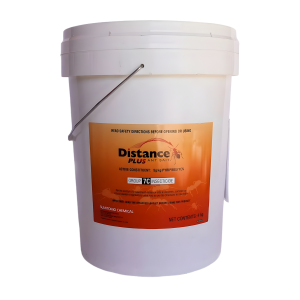
Using Distance® PLUS Ant Bait (Pyriproxyfen – IGR Technology)
Effective ant management plays an important role in Integrated Pest and Disease Management (IPDM) programs in olives and other agricultural crops. While ants do not directly damage olive trees, they significantly disrupt biological control systems - particularly in groves affected by black scale (Saissetia oleae).
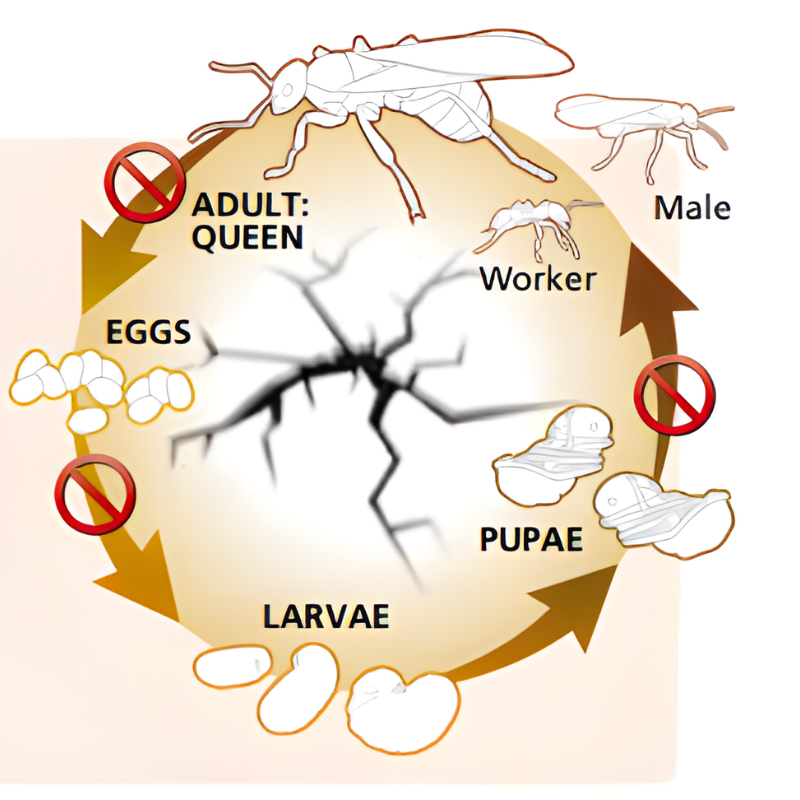
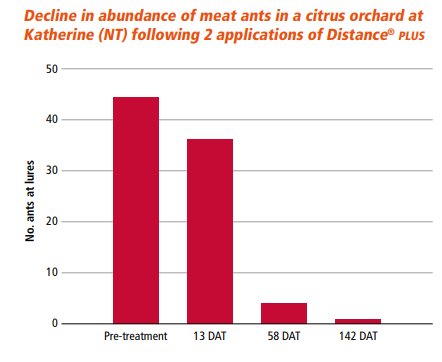
Distance® PLUS Ant Bait contains pyriproxyfen, an Insect Growth Regulator (IGR) that acts as a juvenile hormone mimic. Rather than killing ants immediately, it interferes with their life cycle by:
Preventing queens from producing viable offspring
Disrupting egg hatch
Preventing larvae from developing into reproductive adults
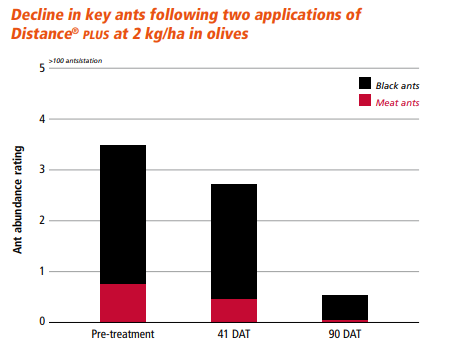
This results in a gradual decline in worker numbers and ultimately colony collapse. Because of its unique mode of action, control is progressive but long-lasting.
Unlike conventional contact insecticides, pyriproxyfen does not rely solely on acute toxicity. It suppresses the next generation, preventing colonies from recovering and reducing long-term reinfestation pressure.
Why Ant Control Matters in Olive Production
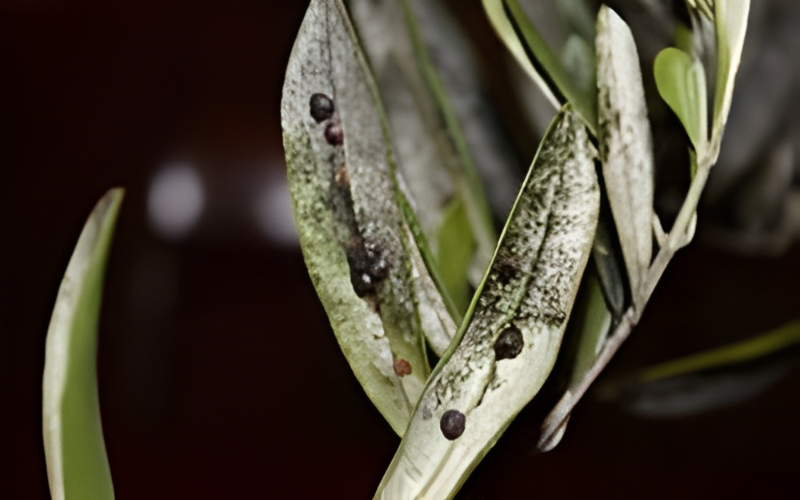
In Australian olive groves, ants play a critical role in the population dynamics of black scale (Saissetia oleae) — one of the most widespread insect pests of olives
Black scale produces honeydew, which attracts ants. In return for this food source, ants:
Protect scale insects from predators and parasitoids
Reducing ant activity improves access for natural enemies and supports an IPDM approach that minimises broad-spectrum insecticide use.
Ant–Homopteran Mutualism in Crops
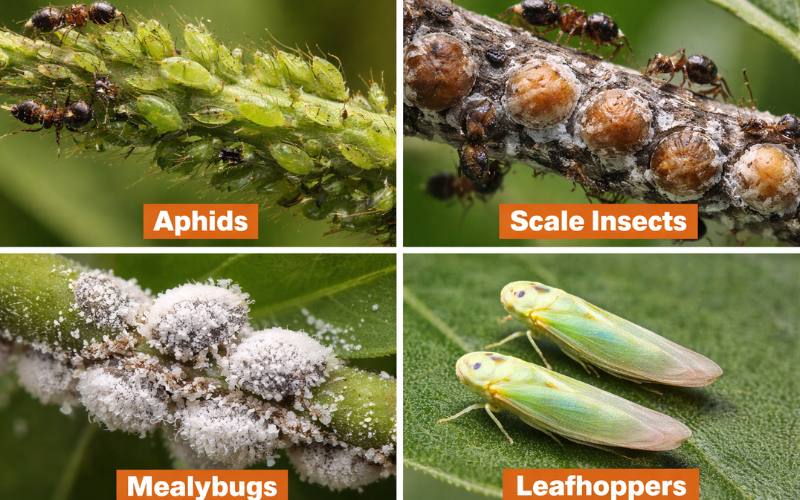
The ant–honeydew pest relationship is not unique to olives. Across many crops, ants protect sap-sucking insects such as:
Aphids: Aphids are small, soft-bodied sap-sucking insects belonging to the superfamily Aphidoidea. They are commonly known as greenfly or blackfly and are found worldwide, particularly in temperate regions. Aphids feed by inserting their specialised mouthparts into plant tissues to extract phloem sap, which can weaken plants, distort new growth, and reduce crop productivity. Many species reproduce rapidly, often through parthenogenesis (asexual reproduction), allowing populations to build quickly under favourable conditions. Aphids are also significant agricultural pests because they can transmit plant viruses and produce honeydew, a sugary secretion that promotes sooty mould growth and attracts ants.
Scale insects: Scale insects are small sap-sucking pests in the superfamily Coccoidea that attach to plant stems, leaves and fruit. Adult females are usually immobile and protected by a waxy or hard scale covering. They feed on plant sap, weakening growth, reducing yield and often producing honeydew that leads to sooty mould and attracts ants.
Leafhoppers: Leafhoppers are small, slender sap-feeding insects belonging to the family Cicadellidae. They are highly mobile and known for their ability to jump or “hop” when disturbed. Leafhoppers feed on plant sap using piercing-sucking mouthparts, which can cause leaf stippling, yellowing and reduced plant vigour. Some species are also important agricultural pests because they transmit plant pathogens, including bacteria and viruses.
Mealybugs: Mealybugs are soft-bodied, sap-sucking insects in the family Pseudococcidae. They are typically covered in a white, cotton-like wax that protects them from environmental stress and some insecticides. Mealybugs feed on plant sap, weakening growth, causing leaf yellowing and distortion, and reducing crop productivity. They also produce honeydew, which encourages sooty mould growth and attracts ants, further impacting plant health.
In exchange for honeydew, ants defend these pests against predators and parasitoids. The result can be:
Increased pest survival
Greater honeydew accumulation
Development of sooty mould
Reduced fruit quality and tree vigour
Research has consistently shown that excluding or suppressing ants leads to:
Increased beneficial insect activity
Reduced sap-sucking pest populations
Improved biological control outcomes
For example, Australian studies in citrus have shown that physically excluding ants can significantly reduce soft scale populations by allowing natural enemies to function effectively.
Baiting provides a practical and scalable alternative to physical exclusion in commercial olive groves.
Fit Within Integrated Pest and Disease Management (IPDM)
Modern olive IPDM systems emphasise:
Monitoring pest and beneficial populations
Understanding life cycles
Selecting targeted, least-disruptive control options
Because pyriproxyfen is an IGR, Distance® PLUS aligns well with IPDM principles:
Targets colony reproduction rather than causing immediate knockdown
Reduces disruption to beneficial species when used appropriately
Supports long-term biological control of black scale
Ant management is considered an important component of black scale biological control programs in Australia
Additional Applications
Distance® PLUS Ant Bait has been used effectively against:
Red imported fire ants
African big-headed ants (coastal brown ants)
Other species less attracted to traditional oil or corn-based baits
Always refer to current product labels and APVMA registrations for approved crops, rates and application timing.
Best Practice Recommendations
For optimal results in olives:
Monitor ant activity regularly, particularly during black scale crawler periods.
Apply bait when ants are actively foraging.
Integrate with black scale monitoring and control strategies.
Avoid unnecessary broad-spectrum insecticide use that may disrupt beneficial insects.
Effective ant management improves biological control performance and supports sustainable olive production.