My Shopping Cart
VALE
A pioneer and early national leader of the Australian olive industry
3 August 2026
Remembering a dedicated pioneer, national industry leader, olive grower and producer, community-minded businessman and recipient of the Medal of the Order of Australia
by Amanda Bailey
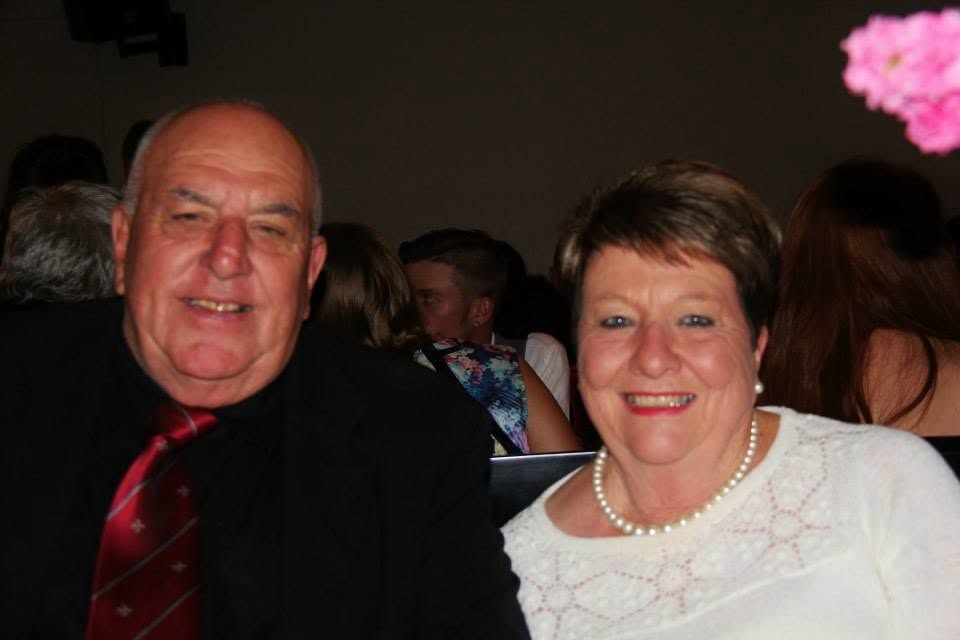
Les and Heather Parsons
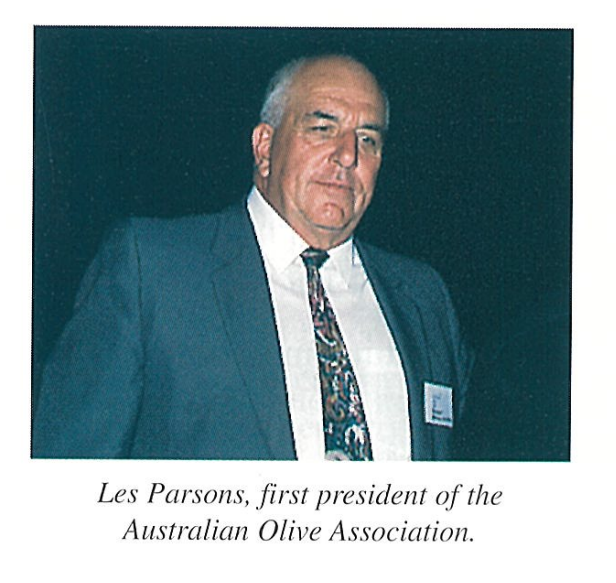
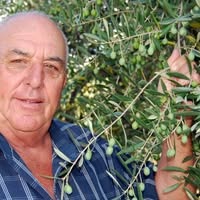
INVERELL, 3 August 2026 - The Australian olive industry is deeply saddened by the passing of Leslie ‘Les’ Parsons OAM, inaugural President of the Australian Olive Association and one of the founding leaders of the national industry. Les passed away in hospital on the morning of 3 August 2026.
For the olive community, Les’s death is the loss of far more than a respected grower or former office-holder. He stood at the centre of the industry’s formative years, when growers, nurseries, processors, researchers and regional associations were learning how to work as one national industry. He helped draft the first AOA constitution, became its first President, championed communication and research, and supported the early quality initiatives that helped Australian extra virgin olive oil earn credibility at home and abroad.
The circumstances in which Les became involved are important to understanding the scale of his contribution. During the early 1990s, Australia’s appetite for olive oil was growing rapidly, but its commercial olive sector was still young and fragmented. In the history Les later wrote with Ian Rowe, Australian olive-oil imports were recorded as rising from about seven million litres in 1978 to 15 million litres in 1992, and then to more than 30 million litres by 2000. Demand was building; the national knowledge, quality systems and industry infrastructure needed to meet it were not yet in place.
A national symposium, ‘Olives and Carobs for Landcare and for Profit’, held at Adelaide University’s Roseworthy Campus on 17–18 April 1994, became a catalyst. The 2005 account by Ian Rowe and Les Parsons records 160 participants, with another 100 turned away. A sales and marketing focus group captured the immediate need in a simple sentence: ‘We need to form an olive industry group to network information.’
That call led to an industry committee which met three times during 1994 and 1995. Its seven members were Farnell Hobman, Luigi Bazanni, Les Parsons, Michael Burr, Mac McCulloch, Ray Archer and Margi Kirkby. Together they drafted the first AOA constitution, adapting an existing horticultural constitution to the needs of olives, and identified the practical problems confronting the fledgling industry.
Those problems were fundamental: Australia had no federal or state quality standards for olives; growers had much to learn about which cultivars suited particular regions; and knowledge needed to move freely across long distances if the industry was to succeed. The committee also recognised something equally important - a strong optimism that olives had a bright future in Australia. Les helped turn that optimism into an industry organisation.
‘They said we wouldn’t make it, but here we are.’ - headline to article titled 'Ten years of the AOA', The Olive Press Magazine 2005
The first three regional olive associations were formed at Inverell, Moree and Kingaroy. The Roseworthy symposium followed in April, demonstrating enormous national interest and prompting the call for an industry group able to network information across Australia.
At the Grand Hotel in Mildura, about 100 people considered and adopted the proposed AOA constitution; 65 joined on the day. Les was elected President, with Max Tolson as Vice-President, Bill Lawson as Treasurer and Farnell Hobman as Technical Officer. Jane Ferrari was elected Secretary but was unable to take up the role, and Margi Kirkby became Secretary soon afterwards. The first issue of The Olive Press followed in September, giving the emerging industry its own national journal.
By September 1995, regional associations had formed in the Burnett Valley, Inverell, Moree, Clare and Little Swanport. The Australian Olive Association was formally established as the national peak body on 21 February 1996, with Les continuing as its inaugural President. By June there were at least 16 associations or grower groups; by September, 19. The national network was taking shape with remarkable speed.
The AOA held three-day harvesting and processing workshops at Wagga Wagga and Roseworthy, bringing international expertise to Australian growers. A two-day Mildura meeting of growers, processors, researchers and marketers identified strategies for the industry. The first National AOA Conference at Tanunda then helped secure support to develop a national Strategic Plan, while a national varietal olive grove was established at Roseworthy.
“We must all pull together if the industry is to get up and go.” - Les Parsons, Wagga Wagga, February 1997
Australia began the year with 21 regional olive associations. At the Wagga Wagga AGM and second national conference, debate centred on research funding, possible membership of the International Olive Oil Council (at the time known as IOOC) and better industry communication. Les’s appeal to ‘pull together’ expressed the cooperative principle at the heart of his presidency. By the Adelaide conference later that year, government departments were beginning to accept the AOA as the peak industry body, and the first five-year Strategic Plan was adopted.
The AOA Organoleptic Panel began training in Adelaide under Dr Luciano Di Giovacchino and was led by Dr Richard Gawel. It obtained authorisation from the International Olive Oil Council to assess olive oil to its standards. In the same year, the industry developed a draft Research and Development Plan for the next five years - linking scientific work, sensory assessment and commercial progress.
The AOA launched a Voluntary Quality Assurance Agreement for processors as an early step towards building Australia’s reputation for high-quality oil using international standards. At the fourth national conference in Kingaroy, Les and Mac McCulloch announced that they would not seek re-election to the Board, and Margi Kirkby also stood down. Their decision opened the way for a new Board to continue the work of the Association’s first leaders. Elected at Mildura in 1995, Les served the formally established Association as its inaugural President from 1996 until 1998.
Gwydir Olives installed New South Wales’ first full-scale olive-oil processing plant at Inverell in 1998 and officially opened it in May 1999. By January 1999, the AOA network comprised 27 regional olive associations and around 1,000 members. The Australian Olive Industry Research and Development Plan 1998–2002 was adopted and an AOA R&D Committee formed. Governance, research, quality systems and commercial processing were advancing together.
By January 2001, contemporary accounts placed the number of regional associations and grower groups at about 50. According to Chuck L’Heureux, who was AOA Secretary at the time, membership had reached around 2,200 by 2005. From the 65 people who joined at Mildura in 1995, that ten-year growth was extraordinary. In Winter 2005, Les and fellow past President Ian Rowe co-authored ‘Ten years of the AOA’ for The Olive Press. Their account preserved the names, decisions, problems and ambitions of the founding generation, and was later cited in a scholarly history of Australian olive cultivation when describing the Association’s founding priorities and 1997 strategic plan.
Originally published in Australian Olive Grower, Issue 20, January 2001.
The historical record shows the breadth of what Les and his fellow founders were trying to build. The AOA’s objectives covered olive growing, oil processing, pickling, value-adding and consumption; cooperation with regional associations and interest groups; research; education and the distribution of information to growers and the public; the distribution of superior genetic material; market research and promotion; and quality assurance throughout the industry.
That strategic list revealed a national-industry vision rather than a narrow membership agenda. The founders understood that better trees, better knowledge, better processing, credible standards, informed consumers and viable markets were interdependent. They also understood that no single region could achieve those things alone. The AOA was therefore derived as an ‘umbrella organisation’ for all facets of the industry, linking local initiative with national coordination.
The five-year Strategic Plan adopted in 1997 translated that concept into a national industry structure. Its long-range aspiration was that Australia would be ‘globally recognised as a producer of high quality and price competitive olive products’, able to supply at least half of domestic needs while also developing export markets. At the time, that was an audacious goal for a young industry. It set quality and competitiveness - not volume alone - as the terms on which Australian olive products should be known.
This is where Les’s standing in the Australian olive industry becomes foundational. He was President while the Association moved from constitution to capability: from a meeting of interested people to an accepted peak body; from isolated regional groups to a national network; from enthusiasm to a strategic plan, research priorities, technical training and the beginnings of quality assurance. Those foundations were collective achievements, but Les was one of the principal leaders responsible for creating the conditions in which they could happen.
From the beginning, Les understood that a successful industry needed sound technical knowledge as well as enthusiasm. In 1996, the AOA held intensive three-day workshops at Wagga Wagga and Roseworthy, organised by AOA Technical Officer Richard Whitey. International Olive Oil Council specialists Professor Juan Roman Izquierdo and Dr Luciano Di Giovacchino shared expertise in harvesting, processing and organoleptic assessment. Participants harvested olives in teams and processed them on a portable hydraulic press owned by the Kirkby and Birch families, while Dr Rod Mailer taught edible-oil chemistry and basic analysis. It was practical, hands-on capability-building at precisely the point when Australia needed it.
Research funding was also becoming an urgent national question. At the 1997 Wagga Wagga conference, Les reported extensive discussion about how the young industry could finance research and development. Members were asked to donate to a trust fund, while other levy options were debated. The eventual R&D Plan and committee gave the issue a more durable structure. Les’s contribution was therefore not confined to advocacy: he helped keep the industry focused on acquiring the evidence and technical skill needed to improve.
That work helped lay the foundations for one of the industry’s most important technical achievements: Australia’s pioneering olive-oil sensory panel. Training began in Adelaide in 1997 under Dr Di Giovacchino. Dr Richard Gawel, who became closely involved with the AOA during those formative Board years, recalls being tasked with establishing the first tasting panel at Wagga Wagga and serving as its panel leader.
The AOA and Olives South Australia funded Richard’s travel to Kalamata, Greece, for advanced panel-leader training undertaken in cooperation with the International Olive Oil Council. Les was AOA President at the time and, according to Richard, was instrumental in supporting the initiative. That investment connected the young Australian industry directly with international sensory practice and brought the knowledge home.
The commitment surrounding the panel was extraordinary. While Richard was lecturing in Adelaide, Margi Kirkby, Simon Johnson and Jenni Birch travelled from the Moree - Inverell region for training at their own cost. The panel obtained International Olive Oil Council authorisation to assess olive oil to its standards, and Richard led it for eight years. That pioneering work established the foundation from which today’s Wagga Wagga-based Australian Olive Oil Sensory Panel developed. It was about far more than judging oil: it created sensory expertise, a disciplined vocabulary and a shared technical commitment to quality - all essential to the reputation of Australian extra virgin olive oil.
Richard remembers Les as ‘the guy’ during those early years - larger than life, outspoken and a prominent figure in the emerging national industry. Although Les did not seek re-election to the Board when his presidential term ended in 1998, his connection with the industry remained strong through his work as a grower, producer, processor and advocate for olive-oil quality.
Les’s industry leadership was grounded in the practical realities of growing and making olive oil. As a Director of Gwydir Olives Pty Ltd, he helped develop a large-scale contract-processing operation for regional growers. Gwydir installed New South Wales’ first full-scale olive-oil processing plant at Inverell in 1998 and officially opened the facility in May 1999. At a time when processing access could determine whether fruit was turned promptly into quality oil, that regional capacity was a major piece of industry infrastructure.
In 1976, Les and his wife Heather made their home at Heather’s family property at Beaulieu, near Inverell on the Northern Tablelands of New South Wales. Over the years they developed Olives of Beaulieu, a family-owned grove, olive-oil business and welcoming cellar-door destination. It became a place of education as well as production, where visitors could tour the grove, taste the oil and better understand the character and quality of Australian extra virgin olive oil.
Set on the plateau’s well-draining red soils and favourable microclimate, Olives of Beaulieu brought together growing, production, value-adding and regional hospitality. The grove produced extra virgin olive oil and estate-made spice blends. Olives were harvested and crushed locally within 24 hours, reflecting Les and Heather’s care for freshness and quality. In 2004, their extra virgin olive oil received a Silver Medal at the Australian Olive Oil Awards.
Olives of Beaulieu embodied the industry model Les had advocated nationally: sound plant and grove management, rapid processing, attention to sensory quality, value-adding, consumer education and regional identity. In the 2005 history, Ian Rowe identified a major achievement of the first decade: producers of every scale had shown that Australia could make high-quality extra virgin olive oils accepted in domestic and highly competitive overseas markets. Les and Heather’s work at Beaulieu was part of that national story.
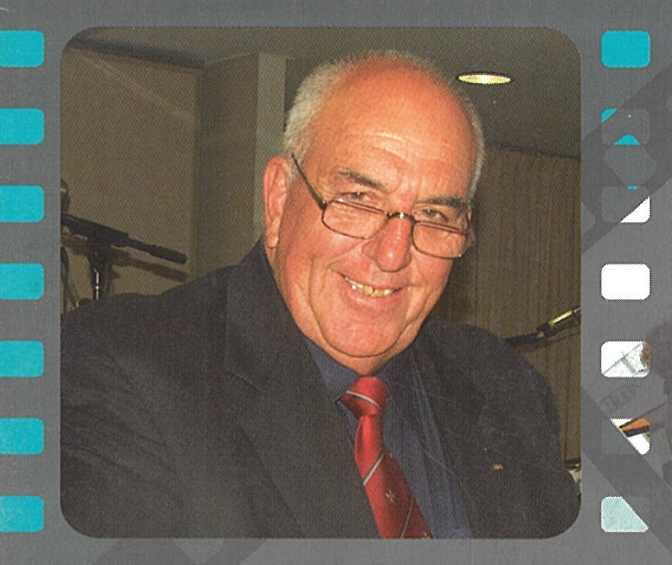
Les Parsons at the Australian Olive Expo 2005, featured in The Olive Press, Summer 2005.
Les championed regional produce more broadly. In 2010, as a committee member of Regional Development Australia Northern Inland, he took part in a chefs’ workshop showcasing local food and wine, with Olives of Beaulieu among the featured suppliers. His standing within the olive industry also endured: when long-serving AOA President Paul Miller reflected on his own tenure, he named Les among the predecessors whose legacy he hoped the organisation had honoured.
Les’s encouragement was personal as well as organisational. In words offered to Jayne Bentivoglio, he said: ‘Well done. What passion you have for growing olives, and producing wonderful oil.’ It was a simple but generous acknowledgement that captured his ability to recognise the dedication of others and celebrate their achievements.
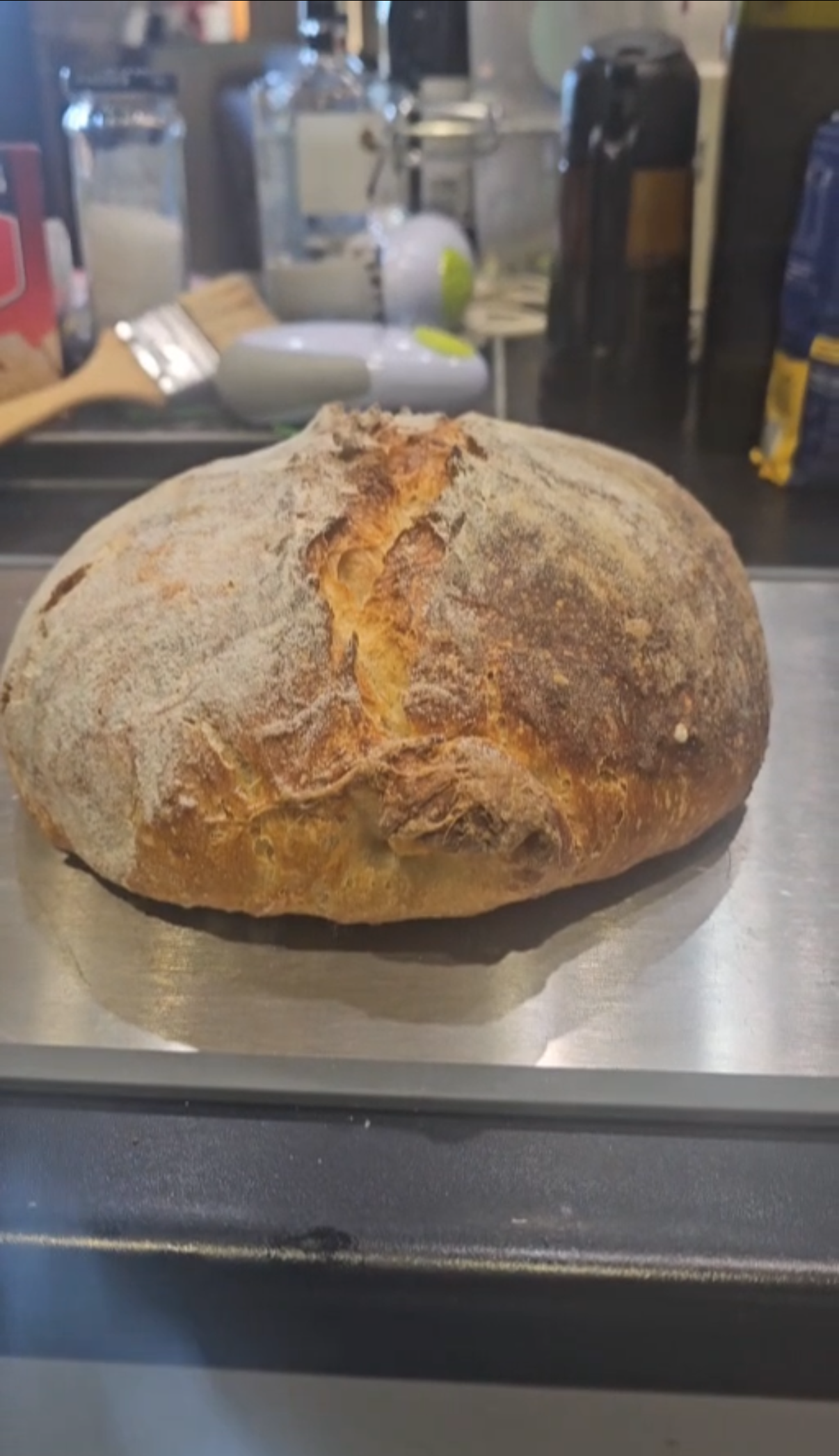
I dried the starter, sealed it in a zip-lock bag and posted it to him with detailed directions for reviving it and making bread. In time, Les sent me a photograph of the loaf he had baked. It was a wonderfully simple exchange, but one that captured his curiosity, determination and pleasure in learning something new - and his delight in sharing the result.
The sourdough loaf Les baked from starter sent to him by Amanda Bailey. Photograph supplied by Les Parsons.
Les’s working life also left a lasting mark on the wider Inverell community. In 1977, Les and Heather established Arlington in Inverell as an electric motor rewinding and repair service, beginning with one apprentice. Their son Rob joined the business in 1979, and the enterprise grew to service and repair an extensive range of motors, generators, pumps, welders, power tools and specialised equipment. In 2003, the business became part of the Gasweld group and continues today as Arlington Gasweld under the Parsons family.
In the 2021 Australia Day Honours, Les was awarded the Medal of the Order of Australia for service to the community of Inverell and to local government. His official citation records an extraordinary breadth of service: Inverell Shire councillor from 1980 to 1983 and again from 1987 to 1991; Chair of the Australia Day Committee from 1978 to 1989 and the Australian Bi-Centennial Committee from 1985 to 1988; former President of Inverell Pioneer Village; former Captain and Deputy Captain of the Inverell Bushfire Brigade; and Past President of the Inverell Macintyre Lions Club. His leadership also spanned tourism, regional development, business and the electrical apparatus service industry.
In 2023, RDA Northern Inland marked Les’s retirement as its longest-serving committee member after 21 years across the organisation and its predecessor board, remembering his wise and considered advice and exceptional knowledge of the region.
Across each part of Les’s life there was a common thread: he built things that endured. A family business. A grove and cellar door. Technical capability and confidence in Australian olive oil. Connections between growers. A stronger national organisation. His contribution was practical, generous and lasting, given not only for his own benefit but for the benefit of those around him and those who would follow.
Les’s place in the Australian olive industry was not simply that of a grower or contributor. He was a founder, pioneer and early national leader who helped bring growers together, shape the emerging industry, establish its quality culture and preserve its history for those who followed. His absence will be felt by those who knew him, worked alongside him and benefited from what he helped establish, but his legacy remains clearly visible in the industry, businesses and family he leaves behind.
His legacy is visible whenever growers from different regions meet under one national banner; whenever research and technical knowledge are shared openly; whenever an Australian oil is assessed with trained sensory discipline; and whenever quality is treated as the foundation of the market rather than an afterthought. These practices are now familiar parts of the industry. In Les’s years of leadership, they were ambitions that required vision, persuasion and people willing to do the work.
It was an absolute privilege to have known Les Parsons.
The funeral service to honour and remember the life of Leslie ‘Les’ Parsons OAM will be held on:
A livestream of the service will be available for those unable to attend in person. The venue details and livestream link will be shared as soon as they are confirmed.
The Australian olive industry joins Les’s family, friends and the wider Inverell community in remembering a remarkable man whose leadership, friendship and service touched so many lives.
Vale Les Parsons OAM ... a pioneer, leader and true friend of the Australian olive industry, whose legacy will endure for generations.